Why NEPA (Or Whatever They Call It Now) Always Takes Light When You Need It Most
Why NEPA (Or Whatever They Call It Now) Always Takes Light When You Need It Most
The real structural reasons why Nigerian electricity fails at exactly the worst moment — the exam, the presentation, the small chops frying, the job interview on Zoom. This is not bad luck. It is an engineered failure with documented causes. Here is what is actually happening and what you can do about it before the next outage catches you unprepared.
⏱️ Check This Before You Read Further
Before you read this article, take 3 minutes to verify which Distribution Company (DisCo) is responsible for your electricity supply and what band they have classified your feeder. This is the single most important thing you do not know about your electricity — and knowing it unlocks a consumer right most Nigerians have never used.
Do this now: Visit nerc.gov.ng → Consumer Rights → or look at your electricity bill — your DisCo name and feeder band should appear. If your DisCo is not meeting the hours promised for your band, you have a right to a tariff adjustment under the 7-Day Rule. Most Nigerians have never claimed it.
⏱️ Takes 3 minutes. Why it matters: If you are in Band B and receiving Band D hours of supply, you may be paying the wrong tariff. That money is coming out of your pocket every month. Knowing your band is step one of knowing your rights.
Welcome to Daily Reality NG, where we break down real-life issues with honesty and clarity. This article is about the thing every Nigerian has said at least once — usually through clenched teeth — "why does NEPA always take light when I need it?" We are going to answer that question honestly. Not with politician-speak about "challenges in the sector" or vague references to "infrastructure." With the actual numbers, the actual failure chain, and the specific things that explain why the light going at the worst moment is not a coincidence.
This article was updated on April 8, 2026 following the NERC Q1 2026 Stakeholders' Meeting (March 26, 2026) and the Minister of Power's claims about record generation. Where those claims conflict with the lived reality Nigerians are reporting, we will say so plainly.
📋 ABOUT THIS ARTICLE
This article draws on NERC official publications (nerc.gov.ng), Federal Ministry of Power press releases (power.gov.ng), ThisDay Live January 2026 electricity sector analysis, Grokipedia Nigeria electricity sector overview (2025), Nairametrics Q1 2025 generation data, and the Eneronix generator cost analysis published March 2026. Samson Ese lives in Warri, Delta State — BEDC coverage area — and writes about the power crisis from inside the Nigerian experience, not from a position of distance. This is a fact-based analysis, not political commentary. We will say clearly when something the government claims is not matching what is happening on the ground.
✓ NERC-sourced regulatory data | ✓ Current naira cost calculations | ✓ Consumer rights included | ✓ Updated April 8, 2026
Ngozi had been preparing for that Zoom interview for three days. ICAN finalist, five years of audit experience, the kind of CV that makes people call back. The Lagos company had scheduled the video call for 2 PM. At 1:47 PM, she went to refresh her laptop and check her internet. The light went off.
Not a flicker. Not a warning. One second it was there, the next — complete darkness. The inverter kicked in for exactly eleven minutes before the battery gave out. By the time her neighbour's generator was running and she had climbed over the fence with her laptop, the interviewer had already moved to the next candidate.
She didn't get the job.
I know what you're thinking: everyone has a NEPA story. The wedding where the DJ lost power mid-floor. The exam hall going dark during the objective questions. The baby food that spoiled because the freezer was off for three straight days. The Warri market trader who lost ₦80,000 worth of fish because the ice melted. These are not individual bad luck stories. They are symptoms of one of the most documented, most studied, most government-promised-and-failed infrastructure problems in sub-Saharan Africa. And they all have the same structural cause — a cause that most Nigerians have never been told plainly.

📋 On This Page
- Find Your Situation in 10 Seconds
- NEPA Is Dead — Meet Your Actual DisCo
- Why the Light Goes Off — The Three-Stage Failure Chain
- The Numbers: Nigeria's Electricity Gap in 2026
- Why It Always Happens at the Worst Moment — The Real Reason
- Consumer Rights Most Nigerians Don't Know They Have
- What to Do Right Now — Practical Step-by-Step Guide
- The True Cost of Your Generator — An Honest Naira Calculation
- Generator vs Inverter vs Solar — Which Makes Sense for You
- What This Costs Nigeria Every Day
- Key Takeaways
- Frequently Asked Questions
🎯 Find Your Situation in 10 Seconds
Which of these is you right now?
NEPA Is Dead — Meet Your Actual DisCo
First, a clarification that matters for knowing who to complain to. NEPA — the National Electric Power Authority — was dissolved in 2005 under the Electric Power Sector Reform Act. PHCN (Power Holding Company of Nigeria) replaced it as a transitional entity and was itself privatised and broken up in 2013. What exists today is completely different in structure, though not in performance.
Today's electricity system has three distinct layers, each managed by different companies:
The Current Structure — Who Is Actually Responsible for Your Light
- Generation Companies (GenCos) — 6 companies that produce electricity from gas, hydro, and other sources. Examples: Sapele Power, Kainji Hydro, Egbin Power. They generate the electricity.
- Transmission Company of Nigeria (TCN) — Still government-owned. They wheel power through high-voltage lines from power stations to distribution points nationwide. If the national grid collapses, this is where it collapses.
- Distribution Companies (DisCos) — 11 private companies that take power from TCN and deliver it to your house. Your DisCo is the company whose name appears on your electricity bill. BEDC serves Delta, Edo, Ekiti, Ondo. IKEDC serves Ikeja Lagos. EKEDC serves Eko Lagos. AEDC serves Abuja, Kogi, Niger, Nassarawa. PHED serves Rivers, Akwa Ibom, Bayelsa, Cross River. EEDC serves Enugu, Anambra, Imo, Ebonyi. IBEDC serves Oyo, Ogun, Osun, Kwara.
- NERC — Nigerian Electricity Regulatory Commission — The regulator. They set tariffs, monitor performance, and are supposed to sanction DisCos that fail their service commitments. Their website is nerc.gov.ng.
When you curse NEPA, you are technically cursing your DisCo. That distinction matters because your DisCo has specific legal obligations to you — including minimum supply hours by band — that NEPA never had. And that means you have rights you probably have never exercised.
Why the Light Goes Off — The Three-Stage Failure Chain
The reason the light goes off when you need it is not primarily because of corruption — though that is present too. It is primarily because of a three-stage failure chain that compounds at every level. Understanding each stage helps you understand why Nigerian electricity is not simply a funding problem that more money would fix.
Stage 1 — Generation: Nigeria Has Enough Power on Paper, Just Not in Practice
Nigeria's installed generation capacity is approximately 13,000 to 13,625 megawatts as of 2025. *(Source: Grokipedia Nigeria Electricity Sector Overview, 2025)* That is the number quoted when government officials announce progress. But installed capacity is the theoretical maximum — not what actually flows.
In practice, average grid delivery in 2025 was closer to 4,000 to 5,500 megawatts. *(Source: ThisDay Live, January 2026)* Why the gap? Three specific reasons:
- Gas supply disruptions — About 80–86% of Nigeria's generation is gas-fired thermal. But gas pipeline infrastructure is inadequate and frequently disrupted. Power plants are sometimes sitting idle because gas is not being delivered. Nigeria exports LNG while power stations wait for fuel. This is not ironic — it is a pricing and contract structure problem that has been documented since 2013 and is still not resolved.
- Plant availability rate — NERC Q2 2025 data showed average thermal plant availability factor of 39.6%. *(Source: Grokipedia, 2025)* Meaning at any given time, roughly 60% of thermal capacity is either broken down or unavailable due to maintenance and gas issues. Only 10 of 26 plants provided 81% of all electricity in September 2025.
- Demand vastly exceeds everything — Nigeria's actual electricity demand exceeds 25,000 megawatts for a population of 220+ million. We are generating 4,000–5,500 MW for a country that needs 25,000 MW. Every unit produced is rationed. Someone always gets less. Usually the people at the end of the distribution chain — which is most ordinary Nigerians.
Stage 2 — Transmission: The National Grid That Collapses Repeatedly
Even when power is generated, it has to travel through TCN's transmission infrastructure. And that infrastructure is fragile. The national grid collapsed multiple times in 2024 and 2025 — events that triggered nationwide blackouts lasting hours to days. *(Source: ThisDay Live, January 2026)*
TCN remains government-owned and government-funded — which means its investment level follows the government's budget priorities, not commercial logic. Transmission lines have not been upgraded to match even the current inadequate generation capacity. When too much power tries to move through old lines, the grid trips. When a transformer fails and no spare is available, that area goes dark for days or weeks waiting for a replacement.
I remember — and I'm going off on a brief tangent here because this actually illustrates the absurdity — watching workers from BEDC spend four hours one afternoon testing a transformer on our street in Warri. They put it back without replacing it, it failed again the next morning, and we were without power for nine days. Nine. Not nine hours. But that's a whole other story. Back to the chain.
Stage 3 — Distribution: Your DisCo and Why They Don't Fix Your Problem
Even when generation is adequate and transmission is working, the distribution layer — your DisCo — creates its own set of problems. And this is the layer where your day-to-day electricity experience is actually determined.
⚠️ Why DisCos Often Fail Their Service Commitments
- Collection vs. Remittance problem — DisCos collect money from consumers but are supposed to remit upstream to generation companies. The actual remittance rate has historically been very low — in 2024, DisCos received invoices for ₦240 billion monthly from GenCos but were paying only ₦24 billion — about 10%. *(Source: PM News, April 2024)* GenCos then reduce power supplied. DisCos then ration what they receive. You get less light.
- Technical and commercial losses — A significant portion of electricity entering the distribution network is either stolen (illegal connections) or lost through poor infrastructure. These "aggregate technical, commercial and collection losses" (ATC&C losses) reduce the electricity available for paying customers.
- Load shedding is intentional — When there is not enough power for all feeders, DisCos rotate supply. Your street gets two hours, another street gets two hours. The rotation schedule is supposed to be published — it usually is not. So the outage feels random to you, but it is actually scheduled rotation that your DisCo never communicated.
- Band A feeders were reduced from 1,000+ to 481 — When the April 2024 tariff hike happened, NERC simultaneously reduced the number of Band A feeders from over 1,000 to 481. *(Source: PM News, April 2024)* Meaning even the feeders that were supposed to get 20 hours were culled. More people ended up in lower bands without knowing it.
The Numbers: Nigeria's Electricity Gap in 2026
Let me show you the gap between what the government tells you and what the grid is actually delivering, in numbers from verified Nigerian sources.
← Swipe to see full table on mobile| Metric | The Official Figure | The Reality | Gap | What It Means for You |
|---|---|---|---|---|
| Installed generation capacity | 13,000–13,625 MW | 4,000–5,500 MW avg delivered | ~8,000 MW never reaches grid | Nigeria has the capacity for more power. Most of it never converts to electricity reaching your socket |
| Electricity demand (actual need) | 25,000+ MW needed | ~4,000–5,500 MW supplied | ~20,000 MW deficit daily | Every unit produced is rationed across 220 million people and thousands of businesses |
| Thermal plant availability rate | Should be 80%+ | 39.6% (Q2 2025) | More than half of capacity offline at any time | The plants that should be generating are either broken, waiting for gas, or in maintenance without replacement |
| Band A tariff (highest supply) | ₦206.80/kWh | Varies monthly with naira/inflation | Dynamic — changes without always notifying consumers | Band A consumers are paying cost-reflective rates with no subsidy — and still not always getting 20 hours |
| DisCo revenue collection Q3 2025 | ₦570 billion collected | Reliability unchanged | Higher bills, same outages | You are paying more for the same or worse supply. The gap between revenue and reliability is the most visible injustice in the sector |
| Number of Band A feeders | Was 1,000+ before April 2024 | Reduced to 481 post-April 2024 | More than half removed from Band A | Millions of consumers who were in Band A were silently moved down — with corresponding tariff implications that were not clearly communicated |
| ⚠️ Sources: Grokipedia Nigeria Electricity Sector Overview 2025; ThisDay Live January 2026 (thisdaylive.com); Nairametrics Q1 2025 generation data (nairametrics.com); PM News April 2024 (pmnewsnigeria.com); NERC official data (nerc.gov.ng). Data reflects available reporting as of April 2026. | ||||
📊 Where Nigeria Loses Power Before It Reaches Your Socket
What This Chart Tells Every Nigerian
Nigeria is delivering roughly 16–22% of its actual electricity need. The remaining 78–84% gap is filled by generators, inverters, solar panels, candles, and — for millions of Nigerians — simply going without. Every consumer decision about how to cope with power cuts is ultimately a response to this gap. The gap did not start yesterday. It has been documented since the 1980s. It has survived every government administration since independence.
📎 Sources: Grokipedia 2025; ThisDay Live January 2026 (thisdaylive.com); NERC Q1 2026 data.
Why It Always Happens at the Worst Moment — The Real Reason
Here is the counter-intuitive finding that most Nigerians never get told: the light is not going off randomly. It is going off at the worst moment specifically because of how electricity demand and grid stress behave.
💡 THE COUNTER-INTUITIVE FINDING
Peak electricity demand in Nigerian cities follows daily activity rhythms. Morning peaks (6–9 AM when people wake up, use appliances, prepare for the day) and evening peaks (6–10 PM when people return home, cook, use entertainment, charge devices) are when the grid is under maximum stress. The grid is most likely to trip — or DisCos are most likely to implement load shedding — precisely during these high-demand windows. Your Zoom call at 2 PM, your evening presentation, your examination in the morning — they all fall inside or near these demand peaks. The light is not going off because of your event. But your event and the grid collapse are both driven by the same underlying rhythm: when human activity peaks, electricity demand peaks, the grid strains, and the weakest feeder in the rotation gets cut.
📎 Peak demand pattern consistent with CBN electricity statistics and NERC quarterly reports — grid stress correlates with daily activity rhythms across all Nigerian cities.
There is a second reason it feels worse at important moments: your brain is paying more attention. When nothing important is happening and the light goes off, you note it and move on. When something critical is happening, the outage registers as a catastrophe — which it may genuinely be for that specific moment. The psychological weight assigned to the same objective event (one power cut) changes based on context. But the power cut itself is following the same pattern it follows every day.
This does not make it less infuriating. It just helps you plan around it — which the step-by-step guide below addresses directly.

Consumer Rights Most Nigerians Don't Know They Have
This is the section that could save you money every month. NERC introduced the Service-Based Tariff (SBT) in November 2020 — a system that links what you pay to how many hours of electricity you actually receive. Most Nigerians know they pay a bill. Very few know the system has a built-in protection mechanism called the 7-Day Rule.
⚖️ The 7-Day Rule — Your Most Important Consumer Protection
Under NERC's Service-Based Tariff, your electricity supply is classified into bands (A through E) based on average daily supply hours. Band A is the highest — minimum 20 hours per day. Band E is the lowest. Each band has a different tariff rate.
The 7-Day Rule states: If a Distribution Company fails to meet the minimum daily supply hours for a feeder's classified band for seven consecutive days, NERC mandates that the feeder be automatically downgraded to the next appropriate lower band — with a corresponding lower tariff. *(Source: NERC SBT Framework; Alfred Ategie, Medium, January 2026)*
What this means in practice: If you are classified as Band B (minimum 16 hours/day) and your DisCo has been giving you 8 hours or less for 7 consecutive days, you should be moved to a lower band with a lower tariff. If they don't do it automatically, you can report it to NERC. Most Nigerians have never done this because they don't know it exists.
✅ How to Actually Exercise This Right
Step 1: Find out your current band. It should appear on your electricity bill. If it doesn't, call your DisCo customer line or check their website.
Step 2: Start logging your daily power supply hours. Use a notebook, your phone notes, or a simple spreadsheet. Date, time supply came, time supply went, total hours. Do this for 7 consecutive days.
Step 3: If supply is consistently below your band's promise, contact your DisCo customer service first — in writing if possible, via email or their official social media. Reference the Service-Based Tariff and the 7-Day Rule by name.
Step 4: If your DisCo does not respond or resolve within 15 days, you can escalate to NERC directly at nerc.gov.ng or via the NERC Consumer Affairs unit. NERC's sanctions powers were expanded under the Electricity Act 2023.
What to Do Right Now — Practical Outage Preparation Guide
This section is about the practical side — what every Nigerian household and small business should have, set up, and ready before the next outage. Because there will be a next outage. That is not pessimism. That is the data.
Build Your Power Log — Starting Tonight
Open a note on your phone titled "Power Log." Every day, write when supply came and when it went. This sounds tedious until the day your DisCo overcharges you, a band reclassification dispute arises, or you want to make a NERC complaint. Your log is your evidence. It costs nothing to keep. ⚠️ What goes wrong: You start the log for three days, then forget. Set a phone reminder for 9 PM daily — one entry, takes 30 seconds. That's the habit. Success signal: After 7 days you have a complete week of data. After 30 days you know your actual average supply hours — which is more information than your DisCo will voluntarily give you.
Get a Rechargeable LED Lantern — This Week, Not Eventually
Not a candle. Not a touch. A proper rechargeable LED lantern with at least 8-hour battery life. Price range in Lagos, Abuja, Warri markets: ₦3,500–₦12,000 for a quality unit. This single item eliminates the stress of unexpected outages for basic visibility, makes your children's homework possible after dark, and costs less than one litre of generator fuel. ⚠️ What goes wrong: You buy the cheapest one available (₦1,500) and the battery gives up in three months. Budget at least ₦5,000 for a unit with a lithium battery rather than lead acid — it will last 2–3 years of daily use.
Charge Everything Before Peak Hours Every Evening
Nigerian electricity is most likely to be available between 11 PM and 5 AM in many areas — outside peak demand windows. If you know your supply pattern from your power log, build a charging routine around it. Laptops, phones, power banks, rechargeable lamps — all charged during off-peak supply windows. When the 6 PM outage comes, you are not scrambling. ⚠️ Time it takes: 10 minutes of deliberate charging setup each evening. Changes: You stop entering important meetings and calls with a dying laptop battery.
Get a Power Bank With Laptop-Charging Capacity for Critical Work
For anyone doing remote work, online business, freelancing, or job interviews — a power bank that can charge your laptop at least once is non-negotiable. Capacity needed: 20,000–30,000 mAh. Current Lagos price range: ₦18,000–₦45,000 for quality units from Anker, Romoss, or similar. Yes, that is real money. Calculate how much one missed interview, one crashed client deadline, or one lost sales call costs you. It is almost certainly more than ₦18,000. ⚠️ The thing nobody warns you about: Not all power banks charge laptops. You need one with a USB-C port rated at 60W+ for most modern laptops. Check the specification before buying — the market is full of power banks that claim laptop charging but cannot actually do it.
Schedule Critical Work During Your Most Reliable Supply Window
After 30 days of power logging, you will know your area's most reliable supply window — the time when electricity is most consistently present. Schedule your most critical work, client calls, submissions, and meetings inside that window. If your most reliable window is 10 AM–1 PM, that is when your Zoom interviews go. You cannot eliminate outages. You can stop being surprised by them. ⚠️ Nigerian reality check: This strategy does not work for those on shift work, school timetables, or inflexible employment. For those with schedule flexibility — freelancers, online business owners — this is the single highest-value adaptation available.
Know Your DisCo's Emergency Number and Use It When Needed
Every DisCo has a customer complaints line. Save it now — not when you are in the dark and frustrated. For reference: BEDC: 0700-CALLBEDC (0700-2255-2332); IKEDC: 07080601001; EKEDC: 01-704-6000; AEDC: 09-4608900; PHED: 0800-CALLPHED. ⚠️ What goes wrong: Most DisCo lines are overwhelmed and may not be answered immediately. Call during business hours (9 AM–5 PM weekdays) for the best response rate. Document every call — date, time, complaint reference number. This documentation protects you if a dispute arises later.
Apply for Your Meter If You Don't Have One Yet
Estimated billing — being charged for electricity you were not actually supplied — is one of the most common sources of over-billing in Nigeria. If you do not have a prepaid meter, apply to your DisCo for one through their official channels. NERC has metering obligations for DisCos — they must provide meters when requested. The Meter Asset Provider (MAP) scheme exists specifically to accelerate metering. This process can take months — sometimes longer — but starting it is better than continuing to pay estimated bills. Takes approximately 30 minutes to complete the initial application. Success signal: You receive a reference number from your DisCo.
✅ Your 24-Hour Action
Open your phone notes right now. Create "Power Log" — write today's date and the time your supply is currently on or off. That is your first entry. Takes 30 seconds. Tomorrow set a 9 PM reminder to add the second entry. In seven days you will know more about your local electricity pattern than you have known in your entire life — and that knowledge is the foundation for every other decision in this guide.
The True Cost of Your Generator — An Honest Naira Calculation
This is the section that usually makes people go quiet. Most Nigerian households think of their generator as a monthly fuel cost. They are significantly underestimating the real number.
← Swipe to see full table on mobile| Cost Component | Monthly Estimate | Annual Estimate | Nigerian Reality Check |
|---|---|---|---|
| Fuel (5kVA running 8 hrs/day at ₦1,400/litre) | ₦403,200 | ₦4,905,600 | Based on 1.2L/hr consumption at ₦1,400/litre pump price. Fuel scarcity events temporarily make this calculation worse — fuel simply unavailable at any price |
| Scheduled maintenance (oil, filters, servicing) | ₦27,010 | ₦324,120 | Most Nigerian generator owners defer maintenance until breakdown — which increases repair costs significantly |
| Unscheduled repairs (estimated) | ₦12,500 | ₦150,000 | Carburettor, alternator, spark plug, pull cord — Nigerian generator repairers charge ₦5,000–₦50,000 per repair depending on fault |
| Replacement amortisation (generator lifespan ~15 months at 8hrs/day) | ₦25,000 | ₦300,000 | A 5kVA petrol generator at 8hrs/day accumulates 2,920 hours/year. At a service life of 3,000–5,000 hours, replacement every 1–1.7 years. Generator cost ₦375,000 amortised |
| TOTAL RUNNING COST | ₦467,710/month | ₦5,679,720/year | ~₦5.68 million per year. For a generator most Nigerians think of as costing "just fuel money" |
| ⚠️ Calculation methodology: Fuel cost = 1.2 L/hr × 8 hrs/day × ₦1,400/L × 365 = ₦4,905,600 (Source: Eneronix generator cost analysis, Port Harcourt petrol price, March 2026 — eneronix.com). Maintenance and replacement amortisation estimates based on Eneronix 2026 analysis. Individual costs vary by usage hours, generator brand, and local fuel prices. | |||
Let that ₦5.68 million per year number sit for a moment. That is the cost of running a single 5kVA household generator at 8 hours per day. Many Nigerian households run their generator more than 8 hours. Many Nigerian small businesses run generators 12–16 hours a day. The number scales proportionally and brutally.
The average Nigerian household spends ₦150,000–₦400,000 per year on generator fuel alone — not counting maintenance or replacement. *(Source: Solar Installation Guide, 2025)* The full cost including all components is significantly higher for those with older generators or heavier usage.
Generator vs Inverter vs Solar — Which Makes Sense for You
The honest answer is that the right solution depends on three things: how many hours per day you are without grid power, what appliances you need to power, and what capital you have available upfront. Let me give you a direct assessment of each option.
Petrol Generator
Entry cost ₦70,000–₦400,000 (2–5 kVA). Fuel cost ₦13,440/day at 8 hrs. Annual running cost approaches ₦5.68M for heavy users. Noise, fumes, theft risk, maintenance burden.
Upfront: ★★★★★ | Running cost: ★☆☆☆☆ | Reliability: ★★★☆☆
Best for: Occasional use (2–3 hrs/day max) or as emergency backup only. Running a generator as your primary power source is one of the most expensive things a Nigerian household can do.
Inverter + Battery Bank
Entry cost ₦350,000–₦1.4M for a quality all-in-one solar inverter (January 2026 prices). Charges from grid when available. Runs lights, fans, TVs, laptops, fridge during outages. No fuel cost if grid charges it.
Upfront: ★★★☆☆ | Running cost: ★★★★★ | Reliability: ★★★★☆
Best for: Households that receive at least 6–8 hours of grid power per day. The inverter charges during grid hours and supplies during outages. No fuel cost means running cost approaches zero after initial investment.
Solar + Inverter + Battery
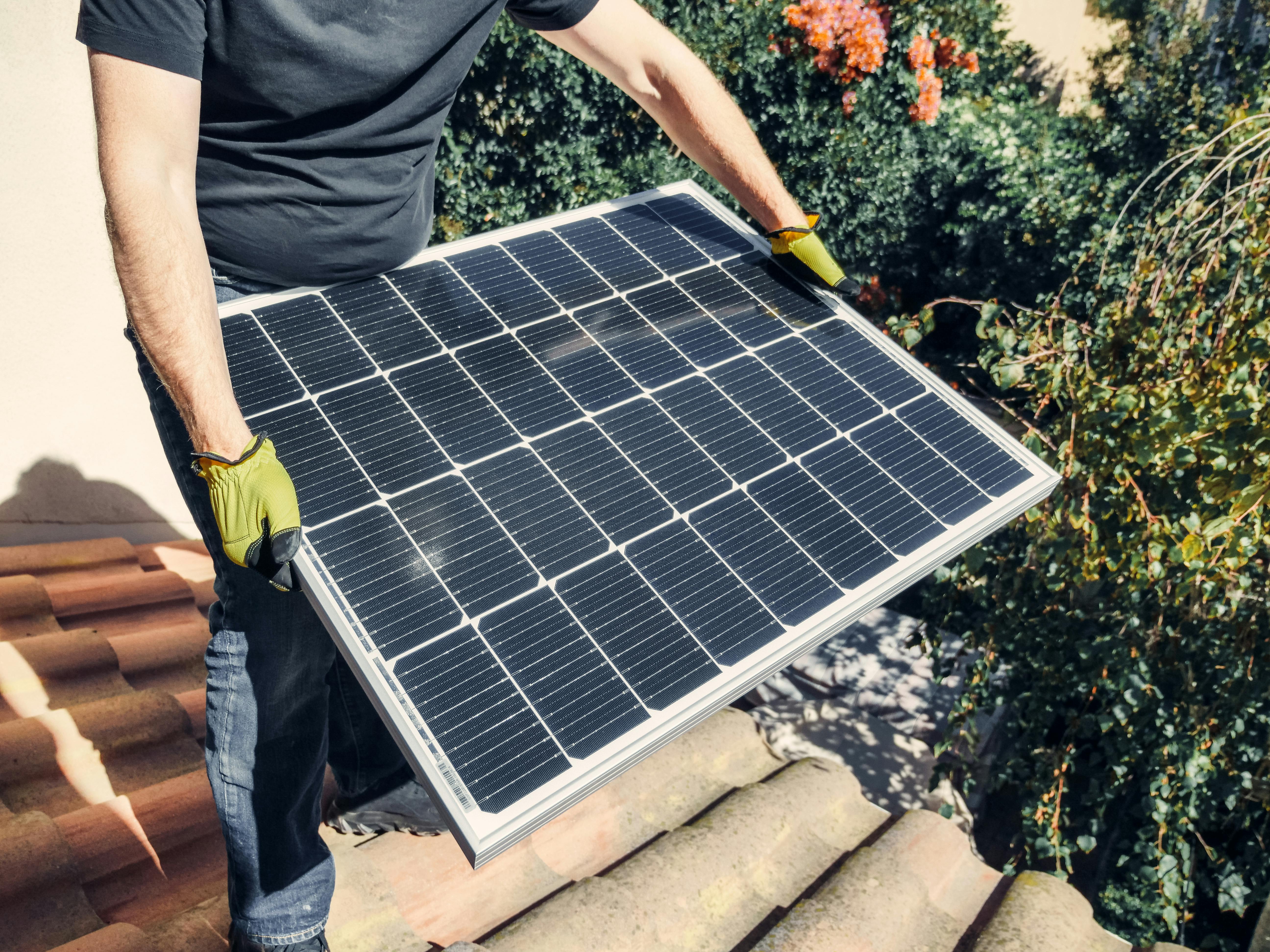
3-bedroom home system ₦3.5M–₦9M (March 2026 pricing). Charges from sun — no grid required. 25-year panel lifespan. Payback period 3–5 years. Eliminates fuel cost entirely.
Upfront: ★★☆☆☆ | Running cost: ★★★★★ | Reliability: ★★★★★
Best for: Households or businesses spending ₦200,000+ per year on generator fuel. At ₦5.68M annual generator cost, a ₦5M solar system pays for itself in under one year. But the upfront capital requirement is the real barrier for most Nigerian households.
Pricing data: Generator prices from Tikweld January 2026 (tikweld.com); Inverter prices from PowMr January 2026 (af.powmr.com); Solar system costs from Solarlify March 2026 (solarlify.com.ng).
💡 THE MATH THAT CHANGES HOW NIGERIANS THINK ABOUT SOLAR
A family in Asokoro, Abuja, paying ₦28,000 per month in grid electricity bills installed a 2kW solar system. Their grid consumption dropped by 60%. Monthly bill fell from ₦28,000 to ₦10,000. Annual saving: ₦216,000. Solar system payback: under 5 years. After payback: effectively free electricity for the remaining 20+ years of panel lifespan. *(Source: Abuja Solar, November 2025 — abujasolar.com)* This is why 78% of solar installations in Nigeria cite grid unreliability as the primary motivation — it is not environmentalism, it is economics.
📎 Source: Abuja Solar case study (abujasolar.com); Solarlify solar cost breakdown March 2026 (solarlify.com.ng)
Risk-Level Comparison — Which Power Backup Has What Risk in Nigeria
← Swipe to see full table on mobile| Option | Financial Risk /10 | Reliability Risk /10 | Operational Risk /10 | Overall | Who Should Avoid |
|---|---|---|---|---|---|
| Petrol generator (primary use) | 9/10 — ₦5.68M/yr running cost | 5/10 — Dependent on fuel availability | 8/10 — Fire risk, noise, theft, fumes | High Risk | Anyone using it as a primary power source. The economics are unsustainable. Anyone living in a room without ventilation |
| Inverter + battery (grid-charging) | 3/10 — Low ongoing cost after setup | 5/10 — Dependent on grid charging hours | 2/10 — Silent, no fumes, minimal maintenance | Low Risk | Those receiving less than 4 hours of grid per day — not enough charging time to justify inverter capacity |
| Solar + inverter + battery (full system) | 1/10 — Near-zero ongoing cost | 2/10 — Sun is reliable even in Nigerian weather | 2/10 — Minimal maintenance, 25-year lifespan | Very Low Risk | Those without upfront capital of ₦3.5M+. Starting small (basic inverter first) is better than no action |
| Rechargeable LED lamp + power bank | 1/10 — ₦5,000–₦45,000 one-time | 2/10 — Very reliable for basic needs | 1/10 — Zero moving parts | Lowest Risk | Everyone should have these as minimum backup regardless of other power arrangements. No exceptions |
| ⚠️ Risk scores reflect Nigerian market conditions April 2026. Generator running cost calculation from Eneronix March 2026. Solar and inverter prices from Tikweld, PowMr, and Solarlify January–March 2026. Individual circumstances vary significantly — higher usage hours, commercial loads, and location all affect the true cost calculation. | |||||
🔄 What to Do If an Outage Has Already Cost You — Job, Income, or Property
If a power outage has already cost you something real — a missed interview, damaged equipment, spoiled goods, or lost income — these are the steps available to you:
- Document everything immediately — Photographs of damaged goods, screenshots of the missed meeting or failed submission, records of the time and duration of the outage. Evidence degrades quickly. Capture it now.
- Contact your DisCo in writing — Not a phone call you cannot prove happened. An email or WhatsApp message to their official channel stating what occurred, when, and what it cost you. Reference your meter number and feeder location.
- Escalate to NERC — NERC has a Consumer Affairs division and a formal complaints process. File at nerc.gov.ng. NERC's sanctions powers were expanded under the Electricity Act 2023 — they now have real authority to fine DisCos, something the old NEPA-era regulatory framework did not have.
- For business owners — Repeated documented power failures can form the basis of a compensation claim against your DisCo under consumer protection provisions. The FCCPC (Federal Competition and Consumer Protection Commission) also accepts complaints about service failures. FCCPC line: 07080601020.
The honest reality: formal complaints against DisCos move slowly in Nigeria. But the documentation has value beyond the specific complaint — it builds the public record of your DisCo's performance, which NERC uses in regulatory reviews and tariff determinations.
⚠️ Warning — Solar Scams Targeting Nigerians in 2026
As Nigerian interest in solar energy grows — driven precisely by the power crisis this article describes — fraudulent solar installers and fake product sellers have proliferated. These operators typically charge ₦500,000–₦1.5 million for installations using substandard components, then disappear when the system fails within months. WhatsApp and Instagram are the primary platforms for these operations.
Red flags of a solar scam in Nigeria:
- No physical address or verifiable office location
- Prices significantly below market rate (₦1.5M for what should cost ₦3.5M+)
- No written warranty documentation with specific panel, inverter, and battery brand names
- Payment requested 100% upfront before any installation work begins
- No CAC registration number provided when requested
What to do: Buy solar components only from verified dealers with physical addresses. Request product serial numbers for panels and inverters — legitimate components have verifiable manufacturer serial numbers. Verify CAC registration at search.cac.gov.ng. Report fraudulent operators to FCCPC at fccpc.gov.ng.
⚡ What Nigeria's Power Crisis Costs Every Single Day — In Real Numbers
💰 The Wallet Impact
A Nigerian household running a 5kVA generator at 8 hours per day is spending approximately ₦467,710 per month in total generator costs — fuel, maintenance, and amortised replacement. *(Calculated: ₦13,440/day fuel + ₦37,510/month maintenance and replacement, from Eneronix March 2026 formula)* For comparison, Nigeria's national minimum wage is ₦70,000 per month. The cost of running a generator to compensate for NEPA failure is 6.7 times the national minimum wage — every single month. This is the hidden electricity tax that no government has ever formally acknowledged or compensated Nigerians for paying.
📎 Source: Eneronix off-grid solar vs generator analysis, March 2026 (eneronix.com). Calculation: 1.2L/hr × 8hrs × ₦1,400 × 30 days = ₦403,200 fuel + ₦64,510 maintenance = ₦467,710/month.
🗓️ The Daily Life Impact
Adaeze runs a small catering business from her home in Enugu. She buys ice blocks from a vendor 400 metres away at ₦800 each because her freezer cannot stay cold during the 14–16 hours of daily outages. She buys four ice blocks per day. That is ₦3,200 per day — ₦96,000 per month — just to keep food cold enough to sell. She has thought about buying a generator. The fuel cost alone would be ₦200,000+ per month at current prices. She is trapped between two expensive options because the grid that should cost her almost nothing is delivering less than 8 hours per day. She is not alone. Millions of Nigerian micro-business owners are making the same calculation every morning.
🏪 The Business Impact
Nigeria loses an estimated $26 billion (approximately ₦40 trillion at current rates) per year in economic output due to unreliable electricity, according to estimates cited in the ThisDay Live January 2026 analysis — making it one of the largest documented costs of the power crisis. Nigerian businesses — from kiosks to medium enterprises — spend disproportionate shares of their operating budgets on self-generation. A small Lagos shop owner spending ₦150,000 per month on generator fuel to power a shop earning ₦400,000 in gross revenue is effectively paying 37.5% of gross revenue just to stay open. That is a structural cost that makes Nigerian businesses less competitive than they should be.
📎 Source: Economic loss estimates referenced in ThisDay Live, Nigeria's Electricity Paradox, January 2026 (thisdaylive.com).
🌍 The Systemic Impact
Nigeria's urban electricity access rate is approximately 89% — meaning nearly 9 in 10 urban Nigerians are connected to the grid. But rural access is only 26%. *(Source: Grokipedia, citing 2023 World Bank data)* This means the power crisis described in this article is primarily an urban experience — rural Nigerians who have never had grid electricity are not experiencing outage disappointment, they are experiencing complete absence. The grid failure is simultaneously worst for urban consumers who depend on it and invisible to rural consumers who were never included in it. When government statistics cite "electricity access" improving, they are measuring connection to the grid — not hours of supply or reliability.
📎 Source: Grokipedia Nigeria Electricity Sector Overview 2025 (grokipedia.com); 61.2% overall access rate cited from World Bank 2023 data.
✅ Your Action This Week
This week, do two things: Start your power log (30 seconds daily) and find out your electricity band from your bill or your DisCo's website.
These two actions cost nothing and take under 5 minutes combined. After 7 days of logging, you will know whether you are receiving the supply hours your tariff band promises — and whether you have a case for a tariff adjustment under the 7-Day Rule. That knowledge alone may save you money every month going forward.
What's Changed in the Nigerian Power Sector — April 2026 Update
This article was originally published in February 2026. Between then and the April 8, 2026 update, the following developments are relevant:
- NERC Q1 2026 Stakeholders' Meeting (March 26, 2026) — NERC Chairman Dr. Musiliu Oseni chaired the meeting in Lagos. The Minister of Power claimed "the highest electricity generation level recorded to date." The data from NERC's own April 2026 Energy Caps will eventually confirm or complicate this claim. Nigerians on the ground in most cities are not yet reporting a measurable improvement in supply hours. The minister's claim and lived reality are currently diverging. *(Source: NERC official website nerc.gov.ng, March 2026)*
- NERC April 2026 Energy Caps issued — NERC issues monthly energy caps that determine how much power each DisCo is allocated. The April 2026 caps have been issued and will affect supply distribution for April. Check nerc.gov.ng for the specific allocation affecting your DisCo.
- Solar adoption continuing to accelerate — Solarlify's March 2026 analysis confirms the 3–5 year payback period remains valid at current fuel prices, and cost of components has continued declining slightly as more local supply chains establish themselves.
📎 NERC Q1 2026 stakeholders meeting: nerc.gov.ng; Solar cost analysis: solarlify.com.ng March 2026.
📌 Key Takeaways
- NEPA and PHCN no longer exist — your electricity is now managed by 11 private Distribution Companies (DisCos) regulated by NERC. Know which DisCo serves your area and what rights you have against them
- Nigeria has 13,000+ MW of installed capacity but delivers only 4,000–5,500 MW average daily — a gap caused by gas supply failures, broken plants, and transmission collapse
- The light goes at the worst moment partly because your critical tasks coincide with peak demand windows when grid stress and load shedding are highest
- The 7-Day Rule is your most powerful consumer protection — if your DisCo fails to meet your band's promised supply hours for 7 consecutive days, you are entitled to a tariff downgrade. Most Nigerians have never claimed this
- Running a 5kVA generator at 8 hours per day costs approximately ₦5.68 million per year — a number most households are underestimating significantly
- An inverter system (₦350,000–₦1.4M) or solar system (₦3.5M–₦9M for 3-bedroom) pays back in fuel savings within 1–5 years at current petrol prices
- A rechargeable LED lantern (₦5,000–₦12,000) and a power bank (₦18,000–₦45,000) are the minimum backup investments every Nigerian should have — regardless of other power arrangements
- Solar scams are proliferating — verify CAC registration, demand product serial numbers, never pay 100% upfront, and buy only from installers with physical addresses and written warranties
- DisCos collected ₦570 billion in Q3 2025 — more revenue, same outages. Higher bills without reliability improvement is the most visible injustice in the sector right now
- Your 24-hour action: start a power log today. 30 seconds per day. After 7 days you know whether you are receiving the supply your tariff band promises

Frequently Asked Questions
Why does Nigeria have electricity problems despite being an oil-producing country?
Nigeria's electricity is primarily gas-fired, not oil-fired. Nigeria has enormous natural gas reserves but the pipeline infrastructure to deliver gas from fields to power plants is inadequate and frequently disrupted. More fundamentally, the entire power sector — generation, transmission, and distribution — has structural debt problems, inadequate maintenance funding, technical losses, and governance issues that persist across administrations. Nigeria exports LNG while domestic power plants wait for gas supply — because LNG export contracts are priced differently from domestic supply agreements, creating a commercial incentive to export rather than supply local power plants. The crisis is not a resource problem. It is a governance and infrastructure problem that resource wealth alone has not resolved in 60+ years.
What is my electricity band and how does it affect what I pay?
Under NERC's Service-Based Tariff, Nigerian electricity consumers are classified in Bands A through E based on average daily supply hours. Band A (20+ hours/day) pays the highest tariff at approximately ₦206.80/kWh as of December 2025 — no subsidy. Band B (16+ hours/day), C (12+ hours), D (8+ hours), and E (4+ hours) pay progressively lower rates with government subsidy. Your band should appear on your electricity bill. If your DisCo consistently delivers fewer hours than your band promises, you have a right under the 7-Day Rule to a tariff adjustment. Contact NERC at nerc.gov.ng if your DisCo does not respond. *(Source: NERC SBT framework — nerc.gov.ng)*
How much does it really cost to run a generator in Nigeria?
Running a 5kVA petrol generator at 8 hours per day costs approximately ₦467,710 per month — including fuel (₦403,200), maintenance (₦27,010), repairs (₦12,500), and amortised replacement cost (₦25,000). Annualised, that is approximately ₦5.68 million per year. This calculation is based on ₦1,400/litre petrol (Port Harcourt March 2026 price), 1.2 litres per hour consumption, and Eneronix's published methodology. *(Source: Eneronix off-grid solar vs generator analysis, March 2026 — eneronix.com)* Most Nigerian households significantly underestimate this cost because they only think about the fuel bill, not maintenance and replacement.
Is solar worth it in Nigeria in 2026?
For households spending ₦200,000 or more per year on generator fuel, solar almost certainly makes financial sense at current petrol prices. A 3-bedroom home solar system costs ₦3.5M–₦9M (March 2026 prices). At ₦5.68M annual generator cost, the payback period is under 2 years for heavy users. After payback, the system provides effectively free electricity for the remaining 20+ years of panel life. The honest limitation: upfront capital. For households that cannot access the upfront investment, starting with an inverter + battery (₦350,000–₦1.4M) and adding solar panels later is a lower-barrier entry point. *(Sources: Solarlify.com.ng March 2026; Tikweld January 2026; PowMr January 2026)*
What is the 7-Day Rule and how do I use it against my DisCo?
The 7-Day Rule is a NERC regulatory mechanism under the Service-Based Tariff. If your Distribution Company (DisCo) fails to deliver the minimum daily supply hours for your classified band for seven consecutive days, NERC mandates the feeder be downgraded to the next appropriate lower band with a correspondingly lower tariff. To exercise this right: (1) Log your supply hours daily for 7 days; (2) Compare against your band's promised hours; (3) Contact your DisCo in writing referencing the Service-Based Tariff and 7-Day Rule; (4) Escalate to NERC at nerc.gov.ng if no resolution in 15 days. *(Source: NERC SBT documentation; Alfred Ategie, Medium, January 2026)*
How do I report a bad DisCo to NERC?
Visit nerc.gov.ng and use the Consumer Affairs section. You can file a complaint online. Include: your meter number, feeder location, DisCo name, specific complaint (supply hours not met, billing dispute, etc.), and dates of the failure. NERC's powers were expanded under the Electricity Act 2023 — they can now levy meaningful fines on DisCos, unlike the old regime where maximum fines were as low as ₦10,000 per day. Also, the FCCPC (Federal Competition and Consumer Protection Commission) accepts consumer protection complaints at fccpc.gov.ng or 07080601020.
💬 Questions to Reflect On
- What is the most expensive thing a power outage has cost you personally — a job, a meal, money, a relationship moment?
- Do you know which DisCo serves your area and what band your feeder is classified in?
- Have you ever complained to your DisCo in writing? What happened?
- If you calculated the full annual cost of your generator using the formula in this article, would the number surprise you?
- Is there someone in your household who still calls it NEPA without knowing what NEPA actually is or that it was dissolved 20 years ago?
- At current petrol prices, at what annual fuel bill would you seriously consider investing in an inverter or solar system?
- What is the most creative solution you or someone you know has found for dealing with constant power outages?
Share in the comments or email directly to dailyrealityngnews@gmail.com — I read every message personally.
Related Articles on Daily Reality NG

Samson Ese
Founder & Editor-in-Chief — Daily Reality NG
Samson Ese is a Nigerian writer and digital publisher based in Warri, Delta State — BEDC coverage area. He graduated from Maritime Academy of Nigeria, Oron in 2020 and launched Daily Reality NG on October 26, 2025. He has experienced the Warri power crisis firsthand for years, including the nine-day outage mentioned in this article. He writes about the Nigerian electricity sector not as an observer but as someone who lives inside the same broken grid as every reader. 630+ original articles published. Version 6 Author Bio — customized to Nigerian society/infrastructure content. Compliance note: This article contains no affiliate links and no sponsored placements. All product pricing is from publicly available Nigerian market sources.
📋 This article is for general information and awareness purposes. Consult qualified electrical professionals before making any solar or inverter installation decisions. NERC regulatory guidance applies — verify current tariff information at nerc.gov.ng.
📋 Content Disclosure
This article is produced independently by Daily Reality NG. No solar company, generator seller, DisCo, or government agency has paid for placement or influenced any content in this article. All product pricing is sourced from publicly available Nigerian market data. Internal links connect only to other Daily Reality NG editorial content.
External sources cited: NERC (nerc.gov.ng), ThisDay Live, Nairametrics, Grokipedia, Eneronix, Tikweld, Solarlify, PowMr, Abuja Solar, PM News — all publicly available and linked in the article text.
For Ngozi — and Every Nigerian Whose Best Moment Was Cut Short by NEPA
Ngozi eventually got another interview. She scheduled it for 10 AM — her area's most reliable supply window based on three weeks of power logging. She charged her laptop fully the night before. She had her mobile hotspot ready as a backup. She put her neighbour's generator key in her pocket before the call started.
She got the job.
The grid did not change between her first interview and her second. What changed was her preparation. That is the honest message of this article — not that the Nigerian power crisis is acceptable, because it is not, and calling it acceptable would be a lie — but that while the system continues failing you, your survival and success within it does not have to be left to chance. You cannot fix NEPA. You can stop being surprised by it. Start your power log today.
— Samson Ese | Founder, Daily Reality NG | April 8, 2026
📚 Read More From Daily Reality NG
630+ original articles on real Nigerian life — money, energy, law, technology, and the daily reality nobody else will tell you honestly.
Browse All Articles Join Newsletter

Comments
Post a Comment