Why Your Bank Charges You: CBN Rules Explained in 2026
This is independent editorial research by Daily Reality NG. No bank, fintech company or financial institution paid for the conclusions in this article. Banking tariffs and regulatory rules can change, so readers should confirm a disputed charge against the latest CBN publication and their bank's current tariff before taking action.
Updated August 28, 2026 · Originally published February 2, 2026 · Reading time: about 28 minutes
Why Your Bank Charges You for Everything (And How CBN Regulates It
That ₦10, ₦25, ₦50, ₦100 or ₦1,500 deduction may look too small to bother about. But repeated small charges can quietly become a meaningful part of what your bank account costs you each year.
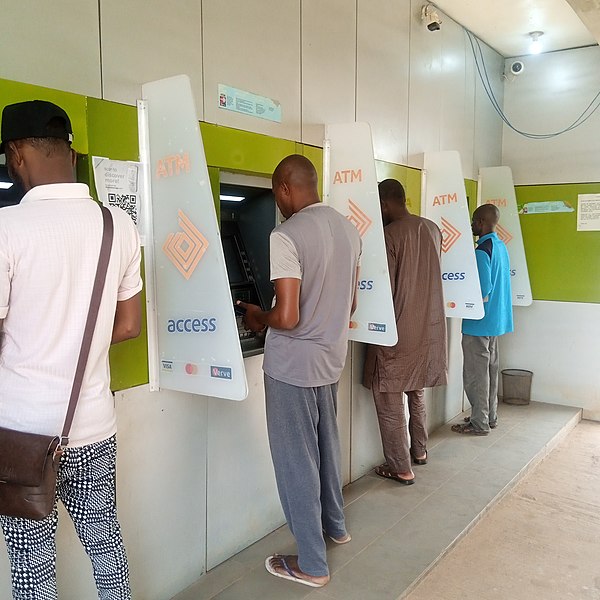
Illustrative image of Nigerian customers using ATM infrastructure. Image source: Bulls Gazette.
You are reading Daily Reality NG, an independent Nigerian publication built around practical explanations of money, banking, business, technology and everyday financial decisions. This guide was researched against current CBN regulatory material, not copied from another bank-charge article. The purpose is simple: help you understand what the deduction on your statement actually means, what the regulator permits, and what you can do when the explanation does not add up.
Daily Reality NG analysis focuses on the gap between a rule written in a circular and the question an ordinary customer asks after seeing a debit alert: "Why did my bank take this money?"
You check your account and see several deductions.
One says transfer fee. Another says VAT. Another looks like an electronic banking charge. A card-related deduction appears later. You may also see an ATM charge after withdrawing cash from another bank's machine.
You start wondering whether your bank is simply taking money because it can.
That is the wrong question.
The better question is: what service generated the charge, what rule permits it, what amount applies, and did the bank disclose it properly?
Nigerian banks charge customers because banking is a paid financial service: banks operate payment systems, cards, ATMs, branches, digital channels, account infrastructure and credit services. But banks do not have unlimited freedom to invent fees. The CBN regulates banking charges through its Guide to Charges and related consumer-protection rules.
The most important 2026 development is that the Guide to Charges by Banks and Other Financial Institutions in Nigeria, 2026 took effect on May 1, 2026, replacing the 2020 guide. It revised several charges and strengthened the framework around transparency, standardisation, negotiable charges and newer financial services.
So if your bank charges you, do not automatically assume the fee is illegal. But do not automatically assume it is correct either. Identify the charge first, compare it with the current tariff and CBN framework, then challenge it if the amount or basis does not make sense.
- Recognise the charge: identify the exact narration on your statement.
- Identify the service: transfer, card, ATM, account service, SMS, cash handling, loan or another product.
- Check the current tariff: do not rely on an old screenshot circulating on WhatsApp.
- Compare with the CBN framework: especially where the amount looks unusually high.
- Ask the bank for a written explanation: request the applicable tariff or regulatory basis.
- Escalate when necessary: use the bank's complaints process first and then the appropriate CBN consumer-protection channel.
Before disputing a charge, check the current CBN consumer-protection material and the latest Guide to Charges. The regulator's consumer-education guidance says customers have a right to be informed about banking products and charges, while the CBN's current publications area provides access to regulatory documents.
Check the CBN Consumer Education and Bank Customers' Rights guidance.
Table of Contents
- Why banks charge customers
- How CBN regulates bank charges
- What changed under the 2026 Guide
- The common charges you see
- Transfer charges explained
- ATM charges explained
- Card charges explained
- Account and maintenance charges
- Bank fee versus tax or levy
- The real cost of small deductions
- How to reduce bank charges
- How to challenge an unexplained charge
- How to escalate a complaint
- Real-world customer case study
- Common mistakes customers make
- Bank-charge audit checklist
- RWI: Read, Verify, Implement
- Your 24-hour action plan
- 15 frequently asked questions
- 15 related Daily Reality NG guides
Why Does Your Bank Charge You for So Many Things?
The frustration is understandable. You already deposited your money. The bank is using your account. Then you transfer money and see another deduction. You withdraw cash and see another. You request a card and pay another fee. A special statement may attract a fee. Some products have their own pricing.
The important distinction is between the cost of providing a banking service and an arbitrary deduction from a customer's account.
A bank is not simply a vault. Modern banking involves payment switches, account databases, cybersecurity systems, fraud monitoring, ATM infrastructure, card networks, settlement systems, mobile applications, USSD channels, customer support, compliance operations and physical infrastructure.
Every time money moves electronically, several systems may have to communicate before the transaction is completed. That does not mean the customer must pay every underlying cost. Regulatory rules determine how those costs may be recovered from customers.
This is why the correct approach is not "banks should never charge anything." The correct approach is transparent, regulated and understandable pricing.
The four questions behind every bank charge
- What service did I receive?
- Who is charging me?
- What tariff or rule permits the charge?
- Was I properly informed?
If you cannot answer those four questions, you should not simply accept an unexplained deduction as normal.
How CBN Regulates Bank Charges in Nigeria
The Central Bank of Nigeria has responsibility for maintaining a sound financial system and supervising regulated financial institutions. Its consumer-protection framework also recognises that bank customers need understandable information about financial products, services and charges.
The CBN's Bank Customers' Bill of Rights states that customers have a right to be informed. The bank is expected to provide complete, relevant and truthful information and explain contractual terms and charges before an agreement is concluded.
This matters because a fee is not made legitimate simply because it appears on a customer's statement. The bank should be able to explain the service behind it and the applicable basis for the deduction.
The CBN also publishes the Guide to Charges. The 2020 guide established the previous framework, while the 2026 guide superseded it from May 1, 2026.
| Regulatory layer | What it does | Why customers should care |
|---|---|---|
| CBN Guide to Charges | Provides the framework for charges, fees and rates on regulated financial products and services. | Helps customers determine whether a charge falls within an applicable regulated framework. |
| Consumer protection rules | Require appropriate disclosure and fair treatment. | You have grounds to ask what a deduction means and why it was applied. |
| Bank tariff | Shows the institution's applicable pricing for products and services. | Allows you to compare your actual deduction with the bank's stated price. |
| Customer complaint process | Provides the first formal route for resolving disputes. | Creates a documented record before regulatory escalation. |
The Big Change: Nigeria's 2026 Guide to Bank Charges
One of the most important facts for anyone reading this article in 2026 is that the old 2020 charge guide is no longer the primary framework. The CBN's 2026 Guide to Charges took effect on May 1, 2026 and superseded the earlier guide.
The revision reflects changes in how Nigerians bank. Since the previous guide, digital banking has expanded, payment services have evolved, new financial institutions have entered the market, and customers increasingly move money through mobile and electronic channels.
The 2026 framework covers a wider range of regulated institutions, including commercial banks, merchant banks, payment service banks, non-interest banks, microfinance banks, finance companies, primary mortgage banks, development finance institutions, credit guarantee companies and mobile money operators, among other institutions designated by the CBN.
One particularly important protection is that non-credit-related charges are to be applied to the extent of the available balance, with outstanding charges deferred until the account is funded, rather than automatically creating interest-bearing debt merely because the account was insufficiently funded.
The 2026 Guide did not simply increase every fee. It changed the structure of charges. Some recurring charges were removed, some transaction categories were reduced or capped, while other services became more expensive. That is why saying "CBN increased bank charges" or "CBN reduced bank charges" as a blanket statement is misleading.
The Main Types of Bank Charges You May See
The fastest way to understand your bank statement is to group deductions by service.
| Charge family | Examples | What to check |
|---|---|---|
| Transfers | Electronic transfer fees, interbank transaction charges | Transaction value, channel and applicable tariff. |
| ATM | Not-on-us withdrawal charges, applicable ATM surcharge | Whether the ATM belongs to your institution and the amount withdrawn. |
| Cards | Issuance, replacement and certain premium or foreign-currency card services | Card type and reason for the charge. |
| Account services | Account maintenance and special requests | Account type and current regulatory treatment. |
| Statements | Special statement requests | Whether the request is a normal periodic statement or a special request. |
| Credit | Interest, lending fees and other credit-related costs | Loan agreement, APR and applicable pricing. |
| Third-party/statutory items | Applicable taxes or levies | Whether the amount is actually the bank's fee or a statutory charge. |
Transfer Charges: Why Moving ₦5,000 Is Not the Same as Moving ₦500,000
Transfers are among the most visible bank charges because Nigerians now send money frequently through mobile apps, USSD, internet banking and other electronic channels.
Under the 2026 framework, qualifying electronic transfers up to ₦5,000 fall within a zero-charge category. Transfers above that amount move into higher applicable charge bands.
The important word here is qualifying. Customers should not assume that every debit appearing alongside a transfer is the transfer fee itself. A statement can contain different components, and taxes or other separately applicable charges may appear as separate entries.
Example: Ada sends ₦5,000
Ada makes a qualifying electronic transfer of ₦5,000. Under the 2026 framework's relevant transfer category, the transfer fee itself can fall into the zero-charge band. If Ada nevertheless sees a deduction, she should not immediately conclude that the bank has violated the rule. She should inspect the transaction narration and ask what the additional deduction represents.
Why your bank's app may show a different total
A customer may see a transaction amount, a service fee and a tax-related entry. The visual presentation can vary by bank and channel. The correct comparison is therefore not simply "I sent ₦20,000 and the account lost more than ₦20,000."
Compare the individual components.
- Transaction principal.
- Bank service fee.
- Any applicable tax.
- Any other disclosed third-party component.
- Total amount debited.
ATM Charges: When Is a Withdrawal Fee Allowed?
ATM charges have caused confusion for years because customers often assume every cash withdrawal should cost money.
In February 2025, the CBN reviewed ATM transaction fees under the then-extant Guide to Charges. The circular established that withdrawals from the customer's own institution's ATM were "on-us" transactions and attracted no charge under that framework.
For a withdrawal from another institution's ATM in Nigeria, the CBN set a charge of ₦100 per ₦20,000 for on-site ATMs. For off-site ATMs, the charge was ₦100 plus a surcharge of not more than ₦500 per ₦20,000, with the surcharge required to be disclosed at the point of withdrawal.
Because the 2026 Guide subsequently superseded the 2020 framework, customers should always verify the current treatment for the exact transaction rather than relying permanently on a 2025 screenshot.

ATM infrastructure is one of the banking services for which the applicable CBN rules determine customer charges. Image source: BizWatch Nigeria.
What "on-us" and "not-on-us" mean
On-us generally means the customer is using the financial institution's own ATM for its own customer transaction. Not-on-us means the customer's card or account is being used at another institution's ATM.
The distinction matters because ATM ownership and transaction processing affect the applicable tariff.
Card Charges: Issuance Is Not the Same as Maintenance
One of the most important changes customers should understand in 2026 is the difference between getting a card and maintaining a card.
Under the 2026 framework, standard or regular debit and credit card issuance or replacement is subject to a ₦1,500 charge. Premium debit, credit or hybrid cards can have negotiable pricing within the regulatory framework.
At the same time, maintenance charges on naira-denominated debit and credit cards were removed under the new framework.
| Card event | What you should understand | Customer action |
|---|---|---|
| Standard card issuance | 2026 framework provides a ₦1,500 charge. | Confirm the card category before paying. |
| Standard replacement | Can attract the applicable ₦1,500 charge. | Ask whether the replacement falls within the standard category. |
| Naira card maintenance | Recurring maintenance charge removed under the 2026 framework. | Question a deduction described specifically as naira card maintenance. |
| Premium card | Pricing may be negotiable within applicable limits. | Ask for the exact tariff before accepting the product. |
Account Maintenance: The Charge People Often Misunderstand
Account maintenance is different from card maintenance. This distinction is crucial.
A customer may hear that "card maintenance is gone" and assume every maintenance-related bank deduction has disappeared. That is not necessarily true because different products can have different regulatory treatment.
Current-account maintenance charges have historically been treated separately from debit-card maintenance. The 2026 framework changes their treatment and provides for a phased reduction toward elimination.
This is why the narration on your statement matters. Do not dispute a charge simply because it contains the word "maintenance." Identify what is being maintained.
Do not rely on old articles that say every Nigerian bank customer pays the same monthly maintenance charge. Bank charges are product-specific, and the regulatory framework has changed. An article published before May 1, 2026 may describe rules that have since been superseded.
Bank Fee vs Tax vs Levy: They Are Not Automatically the Same Thing
One reason customers believe banks "charge for everything" is that several deductions can appear around the same transaction.
A bank fee is a charge imposed by the financial institution for a service or product.
A tax is a statutory payment created under tax law.
A levy may represent another statutory or regulatory payment.
The bank may be the institution collecting or processing the amount, but that does not automatically mean every deduction is bank revenue.
How to investigate a confusing deduction
Do not investigate from the amount alone. The narration is your starting point.
A monthly or annual charge may relate to an earlier service event.
Request the bank's fee and any tax or statutory component separately.
Do not compare it with a random screenshot from social media.
The Hidden Cost Is Not Always the Fee Itself
The bigger problem with bank charges is often frequency.
Suppose someone pays an average of ₦50 in small avoidable charges 12 times every month. That is ₦600 per month and ₦7,200 per year.
Increase the average to ₦100 across 15 avoidable transactions per month and the annual total becomes ₦18,000.
The lesson is not that every fee is avoidable. Many legitimate services cost money. The lesson is that repeated behaviour creates a larger financial cost than any single deduction suggests.
| Average avoidable cost | Frequency | Monthly cost | Annual cost |
|---|---|---|---|
| ₦20 | 10 times/month | ₦200 | ₦2,400 |
| ₦50 | 12 times/month | ₦600 | ₦7,200 |
| ₦100 | 15 times/month | ₦1,500 | ₦18,000 |
| ₦200 | 10 times/month | ₦2,000 | ₦24,000 |
These are illustrations, not estimates of what a particular bank customer should pay. The point is to show why repeated small deductions deserve attention.
How to Reduce the Amount You Spend on Bank Charges
You do not need to become obsessed with every ₦10 deduction. You need a system.
1. Stop treating every transaction as identical
Compare the cost of your regular channels. If you transfer money several times every day, the cumulative difference between transaction bands can become significant.
2. Use the appropriate channel
Digital banking, USSD, ATM, branch and POS transactions can have different costs and limitations. Choose the channel according to the transaction rather than using one channel automatically for everything.
3. Reduce unnecessary cash withdrawals
Frequent ATM withdrawals can create unnecessary costs, especially when you repeatedly use another institution's ATM. Plan cash withdrawals where practical instead of withdrawing tiny amounts several times.
4. Review your account every month
A monthly statement review is more useful than trying to remember every deduction from memory.
5. Keep evidence
If you identify a suspicious charge, save the transaction reference, statement page, date, amount and bank response.
6. Do not allow old information to control your decisions
Banking charges change. The CBN's 2026 Guide itself replaced the 2020 framework. A screenshot from 2024 may be completely unsuitable for a 2026 dispute.
The CBN's own consumer guidance says customers have a right to receive information about banking products and charges. That means asking "what is this deduction for?" is not being troublesome. It is part of being an informed bank customer.
How to Challenge an Unexplained Bank Charge
The strongest complaint is specific. "You people are charging me too much" is weaker than "On August 25, my account was debited ₦X with the narration Y. Please identify the service, tariff and regulatory basis for this charge."
Download your statement
Get the relevant statement rather than relying only on the SMS or app notification.
Highlight the exact deduction
Record the amount, date, narration and transaction reference.
Ask for the tariff basis
Ask the bank to identify the current tariff or contractual provision under which the fee was applied.
Ask whether the charge is regulatory, contractual or statutory
This prevents the bank's own service fee from being confused with a tax or another statutory deduction.
Request reversal if the charge was wrongly applied
State the remedy you want. If the deduction is incorrect, ask for reversal and confirmation that the error will not recur.
Keep the complaint reference
A complaint without evidence is harder to escalate. Keep emails, screenshots, reference numbers and responses.
What If Your Bank Refuses to Resolve It?
The CBN's complaints guidance says customers should first report the problem to the financial institution where the issue originated. The bank should have a complaints mechanism, and the customer can escalate where the issue is not satisfactorily resolved.
The CBN describes the customer's right to redress as including a complaints mechanism that should be accessible, transparent, timely and convenient.
That creates a practical escalation ladder.
| Stage | What you do | What you keep |
|---|---|---|
| 1. Bank support | Report the charge. | Reference number and response. |
| 2. Bank escalation | Use the bank's formal complaints/escalation channel. | Copies of all correspondence. |
| 3. CBN escalation | Where appropriate, submit the unresolved complaint through the CBN consumer-protection process. | Evidence that you first complained to the institution. |
| 4. Other remedies | For complex contractual or legal disputes, obtain appropriate professional advice. | Complete transaction and contractual records. |
CBN complaints information is available through its consumer-protection pages: CBN Complaints Management.
Real-World Case Study: The Customer Who Thought the Bank Was Charging for Everything
Consider Emeka, a salary earner who notices that his account loses money several times during the month.
His first reaction is that the bank is taking money randomly.
He downloads the statement and categorises the deductions:
- Some relate to transfers.
- One relates to an ATM withdrawal.
- One relates to a card service.
- Another is a statutory component rather than the bank's own service fee.
Suddenly, the problem looks different. Instead of "my bank is charging me for everything," he now has four separate questions.
- Was the transfer charge correct?
- Was the ATM charge applicable?
- Was the card fee for issuance or maintenance?
- Was the statutory component correctly calculated?
That is the power of transaction classification. It turns anger into evidence.
Seven Common Mistakes Nigerian Bank Customers Make
Mistake 1: Assuming every deduction is a bank fee
Some deductions may be taxes, levies or other statutory components. Ask for a breakdown.
Mistake 2: Using old CBN information
Regulatory frameworks change. The 2026 Guide replaced the previous 2020 guide from May 1, 2026.
Mistake 3: Complaining without the transaction reference
Give the bank enough information to locate the transaction.
Mistake 4: Calling customer care but keeping no record
Keep the complaint number and follow up in writing where possible.
Mistake 5: Assuming a small charge is not worth disputing
The amount may be small, but repeated incorrect charges can accumulate.
Mistake 6: Confusing card maintenance with account maintenance
They are separate concepts and may have different regulatory treatment.
Mistake 7: Treating social-media graphics as regulatory documents
A WhatsApp image saying "CBN says..." is not the same as reading the CBN document itself. Always trace the claim back to the regulator.
Your Monthly Bank-Charge Audit Checklist
Once a month, spend 15 minutes checking your account.
- ☐ Download or review your statement.
- ☐ Search for repeated deductions.
- ☐ Group charges by type.
- ☐ Identify unfamiliar narrations.
- ☐ Compare unusual fees with the bank's current tariff.
- ☐ Check the relevant CBN framework for regulated charges.
- ☐ Ask questions about anything you cannot explain.
- ☐ Save complaint reference numbers.
- ☐ Track refunds or reversals.
- ☐ Review whether your banking habits are creating unnecessary costs.
RWI: Read, Verify, Implement
READ
Read the transaction narration and your bank's current tariff before deciding that a charge is wrong.
VERIFY
Verify the applicable rule against the latest CBN publication. For the current framework, start with the CBN's official publications and consumer-protection resources.
IMPLEMENT
Change the behaviour that is producing unnecessary fees, dispute charges that appear incorrect, and keep a monthly record of recurring banking costs.
Your 24-Hour Action Plan
- Tonight: open your banking app and identify the last 30 days of deductions.
- Circle the three largest recurring charges.
- Separate bank fees from taxes or other statutory deductions.
- Tomorrow morning: check the current bank tariff and CBN framework.
- Send one precise written question to your bank for any charge you cannot explain.
- Save the complaint reference.
- Set a monthly five-minute reminder to repeat the audit.
The goal is not to eliminate every banking fee. The goal is to stop paying blindly.
How Bank Charges Affect Different Nigerians
The salary earner
For someone receiving one salary every month, repeated fees can reduce the amount available for food, transport, savings and emergencies. The most useful strategy is to identify recurring charges rather than focusing only on one-off deductions.
The student
Students often make many small transfers, receive money from family and use ATMs or digital channels frequently. Small charges can therefore represent a larger proportion of available spending money.
The trader
A trader may receive and send many payments. Even modest charges can become operational costs when transaction volume is high. Traders should track charges as part of business expenses rather than treating them as invisible personal spending.
The freelancer
Freelancers dealing with local and foreign payments need to distinguish domestic transfer fees from foreign-currency service charges, conversion costs and third-party payment fees.
The small business owner
Businesses should examine whether their account type and transaction pattern remain appropriate. A business that performs hundreds of transactions should not manage banking costs the same way as someone who only receives a salary once a month.
Why "Free Banking" Does Not Always Mean Zero Cost
A bank may advertise a free account or free transfer category while other services attached to the account still have fees.
This is why customers need to distinguish between:
- free account opening;
- free transfers within a particular band;
- free electronic statements;
- free card maintenance;
- free card issuance;
- free ATM withdrawals;
- and free cash withdrawals from another institution.
These are different promises. One free feature does not automatically make every service free.
How to Read a Bank Tariff Like an Investigator
Bank tariffs can look intimidating because they contain many categories. You do not need to understand every line.
Use this sequence:
- Find the service. What did you do?
- Find the transaction category. Was it an electronic transfer, ATM transaction, card request or account service?
- Find the amount band. Some fees depend on transaction value.
- Check whether the fee is fixed, capped, minimum-based or negotiable.
- Check whether a tax or statutory component is separate.
- Compare your statement with the tariff.
The sixth step is where many disputes become much easier. Once you can show the bank the exact tariff line and the exact amount deducted, the conversation becomes specific.
What Does "Negotiable" Mean?
"Negotiable" does not mean "the bank can charge whatever it likes."
Under the CBN framework, where a charge is designated as negotiable, the financial institution is required to draw the customer's attention to the right to negotiate. The parties are expected to mutually agree on the applicable charge through a verifiable means.
Where the guide establishes a maximum or minimum for a negotiable charge, the agreed amount must remain within that regulatory boundary.
Therefore, if a bank says "this fee is negotiable," ask:
- What is the permitted range?
- What is the bank proposing?
- What is the basis for the proposal?
- How will the agreement be recorded?
What the 2026 Changes Mean for Ordinary Customers
The practical lesson from the 2026 framework is not simply that some charges increased and others decreased. The bigger change is that customers now have to understand banking prices by category.
| Customer assumption | Better way to think about it |
|---|---|
| "My bank can charge anything." | Charges operate within regulatory and contractual frameworks. |
| "CBN has banned bank charges." | Some charges remain permitted; the framework regulates them. |
| "All maintenance fees are gone." | Different maintenance concepts can have different treatment. |
| "Every ATM withdrawal is charged." | ATM charges depend on the transaction and applicable rules. |
| "Every deduction is the bank's profit." | Some deductions may be taxes or other statutory components. |
| "An old article is enough." | Always check whether a newer CBN framework has replaced it. |
When a Charge Is Not Necessarily Wrong
A responsible article about bank charges must also explain the other side.
Customers sometimes see an unfamiliar fee and immediately conclude that the bank has violated a rule. That conclusion can be premature.
A charge can be legitimate even when the customer did not personally remember agreeing to it, provided the relevant service, terms, tariff and disclosure requirements were properly satisfied.
The solution is not to assume either side is correct. Investigate.
This is particularly important with premium products, special services, foreign-currency services and credit facilities, where the pricing structure may differ substantially from a normal savings-account transaction.
When You Should Take a Charge Seriously
Pay particular attention when:
- the narration is impossible to understand;
- the bank cannot identify the service;
- the amount differs from the published tariff without explanation;
- the same charge appears repeatedly without a clear service;
- you were charged for a service you did not request;
- a supposed "negotiable" fee was never discussed;
- the bank refuses to provide the applicable tariff;
- the charge appears inconsistent with a current CBN rule;
- or a failed transaction resulted in a debit that was not properly reversed.
Failed Transactions and Charges: Do Not Ignore Them
A failed transaction creates a different problem from an ordinary service fee.
If a transfer fails but your account is debited, do not simply categorise the debit as a "bank charge." The principal amount and any applicable fee must be investigated separately.
Record the failed transaction reference, the amount, the time and the recipient information. Then contact the bank through its official complaints channel.
The CBN has also strengthened oversight of electronic transaction failures, including reporting requirements for financial institutions. That reflects the regulator's broader focus on payment reliability and consumer protection.
What Banks Are Expected to Do
Customers have responsibilities too. But the bank has important responsibilities around transparency.
The CBN's consumer-education material identifies the customer's right to be informed, the right to choose, the right to redress and the right to good service.
In practical terms, that means a customer should be able to understand what financial product they are buying and what charges attach to it.
It also means a complaint should not simply disappear after a customer-care call.
What Customers Are Expected to Do
Consumer protection works better when customers also keep their side of the bargain.
- Read account and product terms.
- Keep PINs and passwords secure.
- Provide accurate account information.
- Report suspected fraud or errors promptly.
- Repay credit facilities as agreed.
- Review statements regularly.
- Ask questions before accepting unfamiliar services.
A customer who never checks their statement gives themselves very little evidence when something goes wrong.
Daily Reality NG's Practical View: Stop Thinking About Bank Charges as Random Deductions
The better mental model is a banking cost map.
Your bank account has different activities. Each activity can have a different regulatory treatment.
Once you start mapping your account this way, the statement becomes easier to understand.
Transfer → transfer rules.
ATM → ATM rules.
Card → card rules.
Account → account rules.
Credit → lending rules.
Tax/levy → statutory rules.
That is the simplest way to move from confusion to control.
Source Verification and Editorial Methodology
Information verified and updated as of August 2026.
Daily Reality NG prioritised the Central Bank of Nigeria's regulatory and consumer-protection publications for this article. The 2026 Guide to Charges was treated as the current framework after its May 1, 2026 effective date, while the CBN's 2025 ATM circular was used only for historical context around the ATM-fee review.
The article deliberately avoids presenting old 2020 pricing as current simply because the old document remains available online. Where a rule has changed, the newer framework takes precedence.
Primary regulatory source: Central Bank of Nigeria.
CBN consumer-protection guidance: CBN Consumer Education.
CBN complaints guidance: CBN Complaints Management.
CBN documents: CBN Publications and Documents.
What This Article Does Not Claim
This guide does not claim that every bank in Nigeria charges the same amount for every service. Banks can have different products and tariffs within the applicable regulatory framework.
It also does not claim that every deduction is illegal simply because a customer does not recognise it.
Finally, this article is not a substitute for checking the current CBN document or obtaining professional advice where a large financial dispute is involved.
Frequently Asked Questions About Bank Charges in Nigeria
Bank charges can be confusing, especially when different fees appear on your statement, transaction notification or account history. The questions below address the most common concerns Nigerian bank customers have about fees, CBN rules, disputed charges and what to do when a charge appears incorrect.
Why do Nigerian banks charge customers for transactions?
Banks charge for some transactions and services because certain banking activities involve operating, processing, technology, network, settlement, compliance or service costs. However, a bank cannot simply invent any charge it wants. Applicable fees and charges are subject to the rules and guidelines issued by the Central Bank of Nigeria and other applicable regulations. Customers should therefore check the description and amount of a disputed fee rather than assuming every charge is automatically permitted.
Does the CBN regulate bank charges in Nigeria?
Yes. The Central Bank of Nigeria regulates banking operations and publishes guidelines governing applicable charges and fees. The specific rule that applies depends on the type of transaction or service involved and whether the charge falls within an approved category. Customers who believe a bank has charged them incorrectly can first complain to the bank and, where the issue is not satisfactorily resolved, escalate the complaint through the appropriate CBN consumer-protection channel.
Can a bank charge any fee it wants?
No. Banking charges are not simply whatever amount an individual bank chooses without regard to applicable rules. Charges must comply with the relevant regulatory framework, product terms and applicable consumer-protection requirements. The exact amount permitted depends on the transaction and the applicable CBN guidance. If a customer believes a fee is excessive, undisclosed or inconsistent with the applicable rules, the customer can request an explanation and challenge the charge.
Why was I charged a fee when I did not withdraw cash?
Not every bank charge is a cash-withdrawal fee. A statement can contain charges associated with transfers, cards, account services, electronic channels, alerts, maintenance or other services depending on the account and transaction involved. The first step is to identify the exact description of the charge on the transaction record. If the description is unclear, ask the bank to explain the fee and identify the applicable tariff or regulatory basis.
What should I do if my bank charges me incorrectly?
Start by documenting the transaction, including the date, amount, transaction reference and exact description of the charge. Contact your bank through its official complaint channel and clearly state why you believe the charge is incorrect. Keep the complaint reference and any response you receive. If the bank does not resolve the matter satisfactorily, you can escalate the complaint to the appropriate regulatory consumer-protection channel with evidence of your earlier complaint.
Can I ask my bank to reverse an incorrect charge?
Yes. If you believe a charge was applied in error, you can formally request a reversal. Explain the transaction clearly and provide the relevant evidence. A reversal is not automatic simply because a customer disputes a fee; the bank will normally investigate whether the charge was valid. If the investigation establishes that the charge was applied incorrectly, the bank may reverse or correct it in accordance with its procedures and applicable regulations.
How can I find out what a bank charge means?
Check the transaction description on your bank statement, account history or notification first. If the description is abbreviated or unclear, ask the bank for the full name, amount and basis of the charge. You can also request the applicable tariff or fee information for your account or service. Do not rely solely on social-media explanations because banking tariffs and regulatory requirements can change, and the exact transaction type matters.
Are bank transfer charges regulated in Nigeria?
Bank transfer charges fall within the wider regulatory framework governing banking fees and electronic transactions. The applicable fee can depend on the transaction channel, service involved and prevailing regulatory requirements. Because CBN rules and banking tariffs can be updated, customers should verify the current applicable charge from the bank's official tariff information and current CBN guidance rather than relying on an old fee table or a post circulating online.
Why do I sometimes see several charges on my bank statement?
Multiple charges can appear because different services or transactions may have generated separate fees. For example, a customer may see a transaction-related fee alongside another charge connected with an account service or electronic banking facility. The important point is to examine each entry individually rather than treating every deduction as one charge. If two charges appear to relate to the same service or transaction, ask the bank to explain why both were applied.
Can a bank deduct money from my account without explaining the charge?
A bank statement or transaction record should provide enough information for customers to understand account activity, although some descriptions may be abbreviated. If you see an unexplained deduction, you should request clarification from the bank. Ask for the transaction reference, description, amount and applicable basis for the deduction. If the explanation is unsatisfactory or you believe the deduction breached applicable requirements, formally dispute it and retain evidence of the complaint.
How long should I wait before escalating a bank complaint?
You should first give the bank an opportunity to investigate and resolve the complaint through its official complaint process. Keep the complaint reference number and records of communication. The appropriate escalation timeframe can depend on the nature of the complaint and the applicable regulatory procedure. Rather than relying on a fixed period from an old article, check the current CBN consumer-protection guidance when deciding when and how to escalate an unresolved complaint.
Where can I complain about an unresolved bank charge?
Your first complaint should normally be directed to the bank through its official customer-service or complaint-resolution channel. If the bank fails to resolve the matter satisfactorily, the complaint can be escalated to the Central Bank of Nigeria through its recognised consumer-protection complaint process, subject to the applicable requirements. Keep evidence such as statements, transaction references, correspondence and your bank complaint reference because supporting documentation can help the regulator understand the dispute.
Can bank charges reduce my savings significantly?
Yes. Small recurring charges can become meaningful over time, particularly when an account has frequent transactions or several paid services attached to it. The solution is not necessarily to avoid banking services altogether. Instead, review your statement regularly, identify recurring fees, understand which services generate them and use lower-cost transaction options where appropriate. Monitoring charges helps you distinguish unavoidable regulatory or service fees from costs that may be reduced through better account and transaction choices.
How can I reduce the amount I spend on bank charges?
Start by reviewing several months of account activity and grouping your charges by type. Identify which fees occur most frequently and determine whether they are linked to transfers, cards, cash withdrawals, alerts or other services. Then compare the available account and transaction options offered by your bank. Avoid unnecessary transactions, check fees before using unfamiliar services and regularly review your bank's current tariff information. The objective is not to avoid legitimate charges but to eliminate unnecessary costs and detect incorrect ones.
What is the best way to monitor bank charges every month?
Set aside a few minutes each month to review your bank statement or transaction history. Record every fee, its date, amount and description, then compare unusual deductions with the applicable tariff and the transaction that generated them. Investigate charges you cannot explain instead of allowing them to accumulate. If you identify a potentially incorrect deduction, complain promptly and keep the reference number. Regular monitoring turns bank charges from an unnoticed expense into a manageable part of your personal-finance budget.
Key Takeaways
- Banks can charge for regulated services, but they do not have unlimited freedom to invent fees.
- The CBN regulates banking charges through its Guide to Charges and related consumer-protection rules.
- The 2026 Guide took effect on May 1, 2026 and replaced the 2020 framework.
- Naira-denominated debit and credit card maintenance charges were removed under the 2026 framework.
- Standard debit and credit card issuance or replacement is subject to a ₦1,500 charge under the 2026 framework.
- Qualifying electronic transfers up to ₦5,000 fall into a zero-charge category under the 2026 framework.
- ATM charges depend on the transaction type and applicable CBN rules.
- A bank fee is not automatically the same thing as a tax or statutory levy.
- Customers have a right to information about banking products and charges.
- If a charge looks wrong, identify the exact narration, ask for the tariff basis and keep the complaint record.
- Start complaints with the bank before escalating through the appropriate CBN process.
- The most effective way to reduce unnecessary banking costs is to identify recurring patterns rather than obsess over individual tiny deductions.
Final Word: Your Bank Account Should Not Be a Mystery
The real problem is not that Nigerian banks charge money for services. Banking is infrastructure, and infrastructure costs money.
The problem begins when customers cannot tell what they are paying for, why they are paying it, whether the amount is permitted, or how to challenge it.
The 2026 CBN framework gives customers a fresh reason to stop relying on old assumptions. Some charges changed. Some were removed. Some were revised. Some remain applicable to specific products and services.
So the next time your phone vibrates with a debit alert, do not immediately think, "My bank has charged me again."
Think:
What service was this? What rule applies? What did my bank disclose? Is the amount correct?
That four-question habit is more valuable than memorising dozens of fees.
Because the goal is not to avoid every legitimate cost of banking.
The goal is to understand every naira leaving your account.

About the Author
Samson Ese is the Founder and Editor-in-Chief of Daily Reality NG, an independent Nigerian digital publication based in Warri, Delta State. My editorial work focuses on Nigerian fintech, banking, personal finance, business, technology and practical consumer information.
For this article, the research emphasis was regulatory rather than promotional: current CBN material was prioritised so readers can distinguish between what a bank chooses to price, what a customer agrees to, and what the regulator permits.
This article is educational information, not personalised financial, legal or banking advice. Individual bank tariffs, account agreements and regulatory requirements can change. If you are disputing a substantial amount or dealing with a complex contractual matter, obtain appropriate professional advice and verify the latest position directly with the relevant institution or regulator.


Comments
Post a Comment