Small Business Survival Tips for Nigeria's 2025 Economy
Disclosure: This article does not promote or recommend any lender, tax consultant, or financial product. It reflects independent editorial research based on public CBN, tax reform, and SMEDAN information. No commercial relationship is tied to this content.
Disclaimer: This article provides general business information as of July 2026 based on publicly available sources. It is not tax, legal, or financial advice. Verify specifics with SMEDAN, the Nigeria Revenue Service, or a licensed accountant before making significant business decisions.
📰 Independent Nigerian Digital Publication — Editorial Research Notice
Small Business Survival Tips for Nigeria's 2025 Economy
📅 Originally published November 19, 2025 · 🔄 Updated July 31, 2026 · ✍️ Samson Ese · ⏱️ 28 min read · 📂 Nigerian Business & Entrepreneurship
⏱️ Check This Before You Read Further
If your business isn't formally registered with CAC yet, most of what this article recommends — SMEDAN financing, tax exemptions, state support programmes — requires that first step. Confirm your registration status before reading further; it changes which sections apply to you most urgently.
Takes 2 minutes to check. Could unlock access to support you didn't know you qualified for.
Welcome to Daily Reality NG. This is a genuine update, not a rewrite of the same generic "cut costs, save money" advice you've read elsewhere. Nigeria's business environment changed materially between when this piece first ran in November 2025 and now — a new tax law took effect January 1, 2026, interest rates have stayed brutal, and the CBN's own survey data tells you exactly what's actually strangling small businesses right now, ranked by severity.
Editorial Research Notice — Daily Reality NG: This feature draws on CBN Monetary Policy Committee communiqués, the Nigeria Tax Act and Nigeria Tax Administration Act 2025, statements from Taiwo Oyedele (Chairman, Presidential Committee on Fiscal Policy and Tax Reforms), CBN business survey data reported by Leadership Newspaper, SMEDAN financing details from the Nigeria Business Summit 2026, and reporting from Punch, Blueprint, Zawya, and SabiBusiness — all verified July 2026.
📍 Find Your Starting Point
| Your Situation | Jump To |
|---|---|
| You're informal and unsure if registering is worth it now | The New Tax Reform — What Actually Changed |
| You're considering a bank loan at current rates | The Interest Rate Reality |
| You want to know what's actually squeezing you most | The Real Constraint Ranking |
| You want financing options beyond a standard bank loan | Alternative Financing That Actually Works |
| You just want the action steps | Practical Steps This Month |
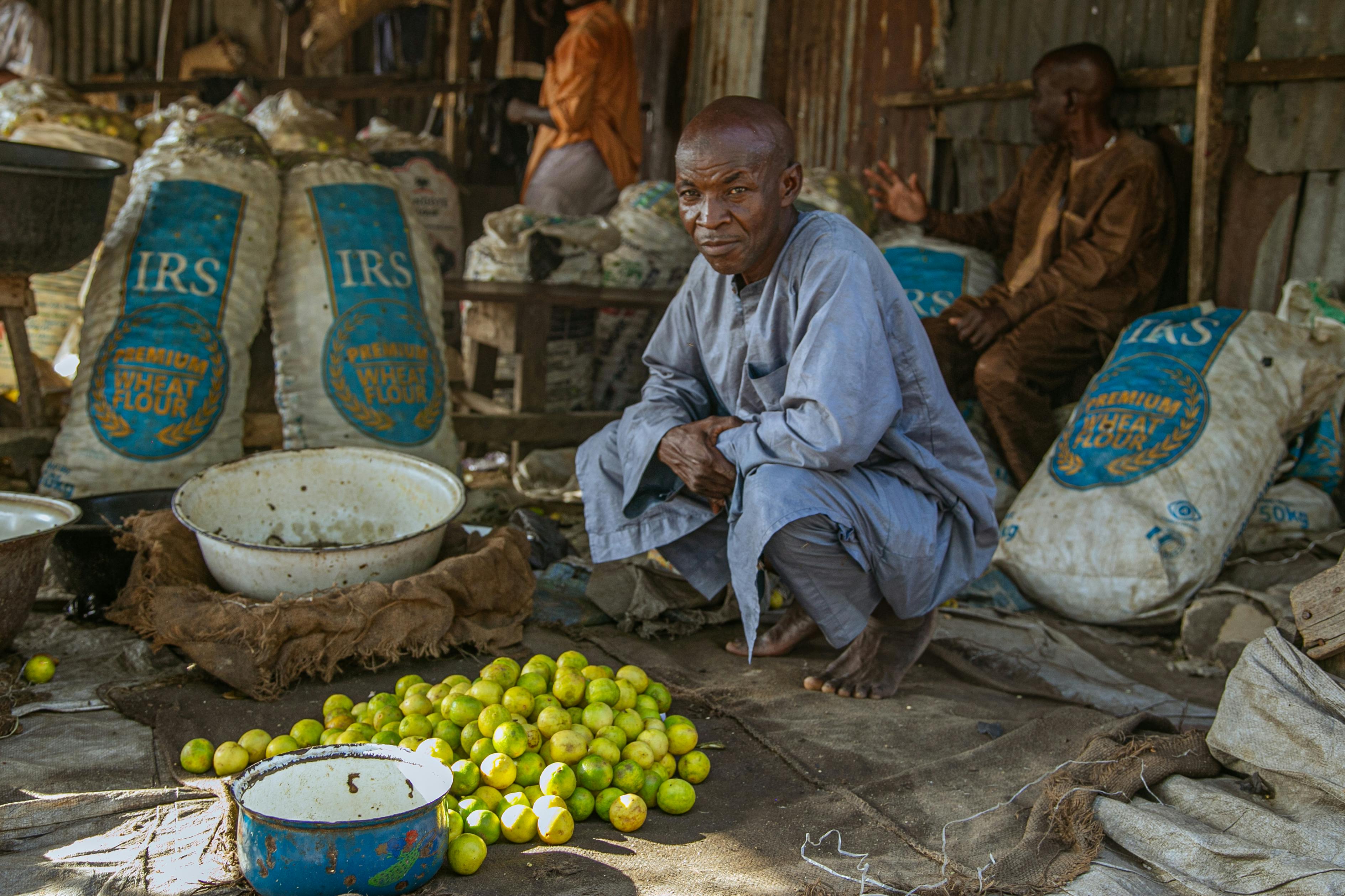
Kemi Olayemi bakes bread and pastries in Ibadan. Before January 2026, she was paying three separate taxes in a single month — local government, state, and a market levy — on top of high flour costs and unreliable power. "If this new law truly removes multiple taxes," she told a reporter, "that's more money I can use to buy flour and hire another staff." That's not an abstract policy debate for Kemi. It's the difference between staying afloat and hiring her first employee.
This article exists because most "small business survival" content recycles the same vague advice — "cut costs," "diversify income," "network more" — without engaging with what actually changed in Nigeria's economic and regulatory environment between late 2025 and mid-2026. A lot changed. This piece walks through it specifically.
📋 Table of Contents
- The New Tax Reform — What Actually Changed
- The Interest Rate Reality
- The Real Constraint Ranking
- Alternative Financing That Actually Works
- The Power Cost Problem
- Why Formalization Now Matters More
- Sector-Specific Notes
- What Nigerian Business Owners Get Wrong Right Now
- Practical Steps This Month
- What's Changed Since November 2025
- Frequently Asked Questions
📋 The New Tax Reform — What Actually Changed
This is the single biggest structural change affecting Nigerian small businesses since this article was first published, and most survival guides haven't caught up to it yet. The Nigeria Tax Act and Nigeria Tax Administration Act 2025 took effect January 1, 2026, and it fundamentally restructures how small businesses are taxed.
The Uncomfortable Truth: Taiwo Oyedele, Chairman of the Presidential Committee on Fiscal Policy and Tax Reforms, revealed the scale of the old problem plainly: Nigerian businesses officially paid over 60 different taxes and levies — but unofficially, when informal and unauthorized local collections were counted, that number exceeded 200. The new reform's stated goal is reducing this to single digits.
| Before Jan 1, 2026 | After Jan 1, 2026 | What Changed |
|---|---|---|
| Company income tax applied broadly | Businesses under ₦100 million annual turnover: ₦0 company income tax | Direct relief for the vast majority of small operators |
| Personal income tax from most earners | Individuals earning under ₦800,000/year: exempt | Protects artisans, market traders, freelancers specifically |
| Tertiary Education Tax (3%) + NITDA (1%) + NASENI (0.25%) + Police Trust Fund (0.005%) = 4.255% | Single unified development levy: 4% | Slightly lower, and dramatically simpler to track and pay |
| Multiple agencies, unclear who could legally collect what | Single Unified Tax Identification Number (UTIN); approved schedule defines what each government tier can collect | Anything not on the schedule is now explicitly illegal |
| Cash collections, roadblocks, on-the-spot demands common | Explicitly prohibited; all payments through traceable, approved channels | Removes the mechanism most harassment and extortion relied on |
⚠️ Sources: Nigeria Tax Act and Nigeria Tax Administration Act 2025; Taiwo Oyedele statements via Zawya, December 2025; SabiBusiness and Remote Solutions Africa tax reform analysis, 2026.
A Real Example: Amaka runs a catering business in Enugu with ₦65 million in annual revenue. Under the old system, she paid an estimated ₦8-10 million annually in various business taxes and levies. Under the new system, because her turnover sits below the ₦100 million threshold, she pays zero company income tax — though she must still formally register, obtain a UTIN, and remit any applicable employee income taxes. That's not a hypothetical saving; it's the reform's stated design purpose, working as intended for a business exactly her size. 📎 Source: SabiBusiness, 2026 Tax Reform Complete Guide.
Oyedele has been direct about enforcement too: "Any agency or official acting outside the law is doing so illegally and will be sanctioned." Whether enforcement holds consistently at the local government level — where most of the old harassment actually happened — remains the honest open question analysts are still watching through 2026.
💰 The Interest Rate Reality
While tax relief is genuinely improving, financing costs have not. The CBN's Monetary Policy Committee held its benchmark rate at 26.5% at its July 20-21, 2026 meeting — the 306th MPC meeting — meaning commercial lending rates for SMEs commonly exceed 30%.
| Date | MPR | Direction |
|---|---|---|
| Before Feb 2024 | 18.75% | Baseline before tightening cycle |
| Feb–Nov 2024 | Rising to 27.5% | Six consecutive hikes |
| Feb–Jul 2025 | Held at 27.5% | Tight stance maintained |
| Sep 2025 | Cut to 27% | First cut of the cycle |
| Feb 2026 | Cut to 26.5% | Second cut |
| Jul 2026 | Held at 26.5% | Current rate as of this writing |
⚠️ Source: CBN MPC communiqués, cited by Punch, "SMEs Struggle for Credit Amid High Interest Rates," May 2026.
Innocent Orji Egwuonwu, Managing Director of Ojay's International, put it bluntly at the 2026 Nigeria Business Summit: "Interest rates of over 30 per cent make it very difficult for SMEs to survive, and collateral requirements are often unrealistic for young businesses." A Lagos-based SME finance consultant went further: "In reality, most MSMEs have stopped seeking bank loans... When you add high borrowing costs to rising fuel prices driven by global tensions, it becomes a losing game."
📊 The Real Constraint Ranking
A CBN business survey gives a precise, ranked picture of what's actually holding Nigerian businesses back — worth knowing so you can prioritize your own limited time and money correctly.
| Constraint | CBN Survey Score | What This Means Practically |
|---|---|---|
| Insecurity | 70.1 | Top-ranked impediment nationally — affects logistics, staffing, and physical premises decisions |
| Multiple taxation | 69.7 | The specific problem the 2026 tax reform directly targets — worth tracking whether it actually improves for you |
| Inadequate power supply | 69.3 | A direct, controllable-to-a-degree cost line rather than a pure policy problem |
⚠️ Source: CBN business survey, reported by Leadership Newspaper, May 2026.
🏦 Alternative Financing That Actually Works
Given that most SMEs have effectively given up on standard bank loans, here's what's genuinely accessible right now.
SMEDAN Cluster-Based Financing
SMEDAN's model groups small businesses together to reduce individual collateral requirements, sometimes offering zero-interest or blended financing. Mr. Odii of SMEDAN has explained that access to finance is often cited as the main challenge, but formalization frequently determines whether financing becomes possible at all — meaning this route is closed to unregistered businesses.
State-Level Programmes
Terms vary significantly by state. Anambra State, for example, offers SME funding of up to ₦10 million through partnerships with financial institutions, SMEDAN, and development finance institutions, alongside tax relief, free education initiatives, and procurement policies favoring locally produced goods, according to the state's Commissioner for Trade and Industry. Don't assume your state offers the same terms — confirm directly.
The Access Gap: Only about 1 in 4 Nigerian SMEs actually access existing government support programmes, even when funding is available. This isn't primarily a funding shortage — it's an awareness and formalization gap, which is a genuinely fixable problem for an individual business owner, unlike interest rates or global oil price shocks.
⚡ The Power Cost Problem
With power ranked among the top three national business constraints, and Middle East-linked fuel price volatility pushing diesel and petrol costs higher through early 2026, power is one of the few constraints an individual business can partially, directly manage — through diesel cost auditing, hybrid solar options where upfront capital allows, or simply pricing power costs into your product rather than silently absorbing them.
📝 Why Formalization Now Matters More
Formalization used to carry a real cost-benefit tension for small Nigerian businesses — registering meant exposure to the exact multiple-taxation harassment the old system enabled. The 2026 reform changes that calculation directly: the exemption thresholds (₦100 million company income tax exemption, ₦800,000 personal income tax exemption) were specifically designed, per SabiBusiness's analysis, to protect small, low-revenue businesses rather than punish formalization. Combined with SMEDAN and state financing requiring registration as a precondition, staying informal now carries a higher opportunity cost than it used to.
🏭 Sector-Specific Notes
| Sector | Specific Pressure Point | What to Watch |
|---|---|---|
| Manufacturing | Highest-cited combination of finance access and power constraints per Nigeria Business Summit panelists | SMEDAN cluster financing specifically designed for this collateral gap |
| Retail/market trading | Historically most exposed to informal, on-the-spot local levy collection | New law's ban on cash roadside collection — track whether this holds locally |
| Food/catering | Directly exposed to both fuel-driven input cost inflation and the new tax exemption thresholds | Likely direct beneficiary if turnover sits under ₦100 million |
💭 What Nigerian Business Owners Get Wrong Right Now
| What People Assume | What's Actually True | What This Means |
|---|---|---|
| "The new tax law doesn't apply to me since I'm informal" | The exemptions specifically target small, low-revenue businesses — but you must formally register and get a UTIN to benefit | Staying informal now forfeits real, designed-for-you relief |
| "Bank loans are still the main financing route" | Most MSMEs have effectively stopped pursuing bank loans given 30%+ rates | SMEDAN cluster financing deserves first consideration for most small operators |
| "Falling inflation means costs are coming down" | 15.1% inflation (Feb 2026) still means rising prices, just more slowly than before | Don't budget as if costs are decreasing — they're still increasing |
| "Multiple taxation is fully solved now" | The law prohibits it, but Oyedele himself acknowledged fears of continued abuse by state/local agents during the transition | Track your actual experience through 2026 rather than assuming the law alone fixed enforcement |
🛠️ Practical Steps This Month
- Confirm or complete CAC registration. This is the gate behind nearly every benefit described above — tax exemptions, SMEDAN financing, state programmes.
- Get your UTIN. The new unified system replaces old scattered tax IDs — this is now your single reference point across all tax types.
- Check your specific state's SME programme directly. Anambra's ₦10 million offering won't apply if you're in Lagos, Rivers, or elsewhere — terms differ by state.
- Before taking any bank loan, run the real math. Can your margin genuinely absorb 30%+ interest? If not, prioritize SMEDAN's cluster financing route.
- Document any illegal levy demands. Under the new law, anything outside the approved collection schedule is explicitly illegal — keep records if local agents continue old practices.
- Audit your power costs as a distinct line item. With power ranked among the top three national constraints, treat diesel/generator costs as a specific number to manage, not a vague background expense.
🔄 What's Changed Since November 2025
This piece was first published in November 2025, before the Nigeria Tax Act took effect. Updating it in July 2026, the single biggest development is that January 1, 2026 rollout — genuinely restructuring small business taxation with real exemption thresholds, not just political promises. Interest rates have moved only marginally (27.5% → 26.5% MPR across two small cuts), remaining a serious constraint. The CBN's constraint ranking (insecurity, multiple taxation, power) has stayed consistent, giving a reliable framework for where to focus limited attention through the rest of 2026.
📌 Key Takeaways
- The Nigeria Tax Act 2025, effective January 1, 2026, exempts businesses under ₦100 million turnover from company income tax and individuals under ₦800,000 from personal income tax.
- Businesses officially paid 60+ taxes before reform; unofficially, over 200 — the new law aims to cut this to single digits and explicitly bans cash roadside collection.
- CBN's MPR sits at 26.5% as of July 2026, with SME lending rates commonly above 30% — most MSMEs have effectively stopped seeking bank loans.
- CBN's own survey ranks insecurity (70.1), multiple taxation (69.7), and power (69.3) as the top three business constraints.
- Only 1 in 4 SMEs access existing government support — an awareness and formalization gap, not a funding shortage alone.
- Formal CAC registration is now the gate behind nearly every real benefit — tax exemption, SMEDAN cluster financing, and state programmes.
❓ Frequently Asked Questions
What is the current CBN lending rate environment for Nigerian SMEs?
The MPR is held at 26.5% (July 2026), with commercial SME lending rates commonly exceeding 30%.
How many taxes did Nigerian businesses officially pay before the 2026 reform?
Officially over 60, unofficially over 200 including informal local collections, per Taiwo Oyedele.
What changed under Nigeria's 2026 tax reform for small businesses?
Businesses under ₦100 million turnover are exempt from company income tax, individuals under ₦800,000 are exempt from personal income tax, and multiple levies consolidated into a single UTIN system.
Is multiple taxation now illegal in Nigeria?
Yes — the new laws explicitly prohibit multiple taxation and unauthorized levies by any government tier, with sanctions for violating agencies.
What is SMEDAN's cluster-based financing model?
A group-lending approach reducing individual collateral requirements, sometimes offering zero-interest or blended financing.
Why do only about 1 in 4 Nigerian SMEs access government support?
Commonly due to limited awareness and lack of formal registration, which most programmes require.
What are the top constraints on Nigerian business activity per CBN?
Insecurity (70.1), multiple taxation (69.7), and inadequate power supply (69.3).
Is inflation actually improving for small businesses?
It moderated to ~15.1% by February 2026 — meaning slower price increases, not falling prices.
How does the reform affect a business earning ₦65 million annually?
It falls below the ₦100 million threshold, so it owes zero company income tax, but must still register and obtain a UTIN.
What replaced the old separate education and development levies?
A single unified 4% development levy replaced four separate levies previously totaling 4.255%.
Do state governments still collect their own taxes?
Yes — states retain authority over state-level taxes like land use charges, while federal taxes flow through the Nigeria Revenue Service.
What percentage of Nigeria's GDP comes from SMEs?
Nigeria's ~40 million SMEs contribute over 48% of GDP and about 76% of employment.
Should a Nigerian SME take a bank loan at current rates?
Only if margins can absorb 30%+ interest — most MSMEs have stopped pursuing bank loans given current costs.
How can a business reduce exposure to power supply problems?
Audit diesel/generator costs specifically, explore solar/hybrid options, and price power costs into products rather than absorbing them silently.
Is it worth formally registering an informal business now?
Generally yes — formalization is required for SMEDAN and government financing, and the new tax thresholds specifically protect small, low-revenue businesses.
Thank you for staying with this all the way through — this update took real digging into a tax law most business owners are still catching up on, and I wanted you to have the specifics, not just the headline. If one thing from this article deserves your attention this week, let it be your CAC status. Nearly everything else in here sits behind that single step.
— Samson Ese | Founder, Daily Reality NG
Related reading: our guides on SME loan collateral requirements and CAC registration go deeper into the formalization steps above. For financing alternatives, see agricultural loans in Nigeria and NIRSAL MFB loans. For the tax side, our piece on Nigeria's tax reform for digital earners covers related ground. If power costs are your biggest pain point, see hidden generator costs every Nigerian should know and solar vs generator real numbers. And if you want the full story behind this publication, here's how I built Daily Reality NG.

Samson Ese — Founder, Publisher & Editor-in-Chief, Daily Reality NG. Warri, Delta State, Nigeria. I write about Nigerian business reality with the actual policy details, not recycled generic advice.
[Author bio included on every article for E-E-A-T transparency and AdSense compliance.]
© 2025–2026 Daily Reality NG — Empowering Everyday Nigerians | All posts are independently written and fact-checked by Samson Ese based on real experience and verified sources.


Comments
Post a Comment