How Tools Are Empowering Nigerian Farmers — Honest 2026 Guide
Nigerian Agriculture | Agritech | Food Security | Updated April 15, 2026
How Tools Are Empowering Nigerian Farmers — And Where the Gaps Still Hurt
Nigeria's farmers are finally getting real tools — drones that scout fields, apps that connect them directly to buyers, tractors they can book with a phone call. And a fresh $500 million from the World Bank just landed to accelerate all of it. But let us be honest about something most agricultural articles won't say out loud: the tools exist, the apps are real, the investment is coming — and a significant number of Nigerian farmers are still going hungry while agritech startups celebrate their user registrations. This article gives you both sides.
⏱️ Check This Before You Read Further
Before reading this article, check whether the World Bank's $500M AGROW project for Nigerian smallholder farmers is already accepting farmer registrations or agribusiness grant applications by visiting the World Bank Nigeria AGROW Project press release. This article explains the tools and programmes available — that link tells you the current implementation status. Check both before applying for any related grant.
Takes 3 minutes. Could help you access farming support you didn't know existed.
Daily Reality NG exists because real-life challenges deserve real-life solutions. Today's focus: technology and tools transforming Nigerian agriculture — based on actual field conditions, verified 2026 data, and the honest analysis of where these tools are working and where they are failing the farmers who need them most. No sponsored content. No agritech PR dressed up as journalism.
This article draws from the World Bank Nigeria AGROW Project approval documents (March 2026), the Nigerian Bureau of Statistics Q3 2025 Agriculture GDP Report, the NBS food inflation data (July 2025), the U.S. Commercial Guide to Nigeria's Agriculture Sector (September 2025), and independent agritech analysis from Farmonaut, CropSense AI, and the GSMA Innovation Fund. All data verified April 2026. Updated: April 15, 2026 — Originally published November 8, 2025.
🌾 Find Your Farming Situation in 10 Seconds
✅ I'm a smallholder farmer — I want to know which tools actually help my yield
→ Start with Section 4: The 7 Tools That Are Making Real Differences — filtered for Nigerian farm conditions.
📱 I want to know which digital apps Nigerian farmers are actually using successfully
→ Go to Section 5: Agritech Apps Reviewed Honestly — including the ones that have failed farmers.
💰 I want to know about the $500M World Bank project and how farmers can benefit
⚠️ I've heard about agritech but want the honest truth — what's working and what isn't
→ Read Section 7: The Uncomfortable Agritech Truth first. This is the section most articles skip entirely.
🌾 I'm a farmer in northern Nigeria dealing with insecurity and climate challenges
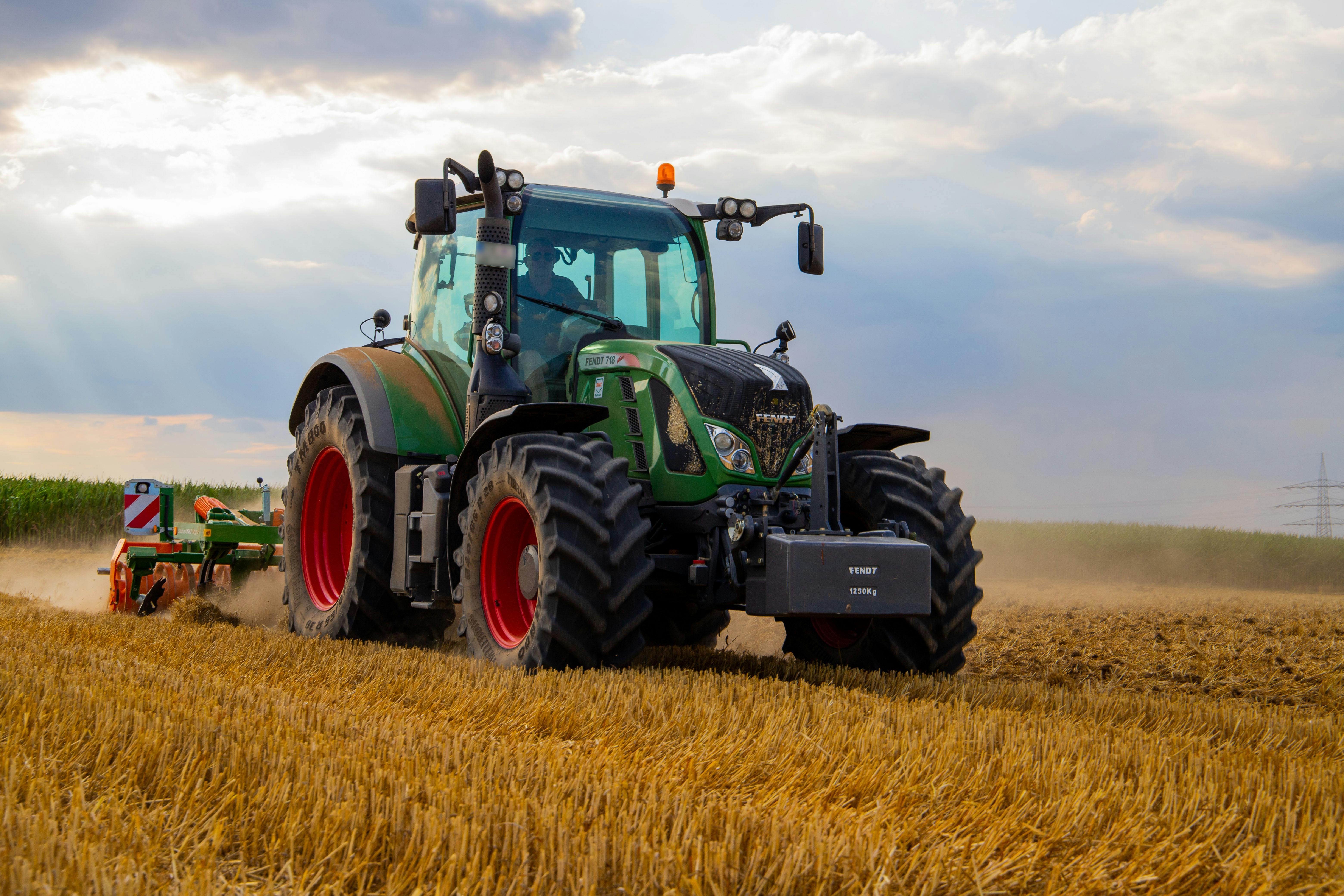
Tari grows yam and cassava on three hectares in Benue State. He has done it the same way his father did — by hand, with hoes, by reading the sky. In 2023, he lost ₦480,000 worth of yam to a pest outbreak that spread before he could identify it. By the time he knew what had hit him, three-quarters of his harvest was gone. No early warning. No advisory service. Nobody told him.
In 2025, Tari's cooperative signed up with an agritech platform that uses satellite monitoring to send SMS alerts about pest risks in his area. He got a warning about fall armyworm two weeks before the outbreak arrived. He treated his cassava on time. His yield that season was the best in six years. The difference? A phone, a subscription, and a satellite that was already orbiting anyway.
That story is real. And it is also the story that gets told exclusively when agritech companies present at investment conferences in Lagos and London. What doesn't get told — what I want to give you today — is the fuller picture. The farmer in Adamawa who downloaded the farming app recommended by his state agricultural officer and discovered it only worked on 4G networks he doesn't have. The cooperative in Kebbi that signed up for a grain storage programme and never saw the promised bags. The investors who funded a "farmer empowerment" startup that had 200,000 registered profiles and 8,000 active users.
Nigerian agriculture is at a genuinely exciting inflection point in April 2026. The tools are more powerful than they have ever been. The investment is more significant than it has ever been. And the gap between what is promised and what actually reaches the farmer who needs it most has never been more important to talk about clearly.
📋 What This Article Covers
- The State of Nigerian Farming in 2026 — Why Tools Matter Now More Than Ever
- Reader Situation Snapshot — Which Farmer Profile Are You?
- What's Changed Since November 2025 — 2026 Update Section
- The 7 Tools Actually Making Differences for Nigerian Farmers
- Agritech Apps Reviewed Honestly — What Works, What Doesn't
- The $500M World Bank AGROW Project — What It Means for You
- The Uncomfortable Agritech Truth — The Gaps That Still Hurt
- Special Challenges for Northern Nigeria Farmers
- Cost of Doing Nothing vs Adopting One Tool — Impact Calculator
- Real-World Implications — What These Tools Mean for Your Wallet and Table
- Visual Verdicts — Which Tools Deliver Real Value for Nigerian Farmers
- Key Takeaways
- 15 Frequently Asked Questions
🌾 The State of Nigerian Farming in 2026 — Why Tools Matter Now More Than Ever
Let me give you the baseline facts before the analysis. Nigeria's agriculture sector is simultaneously the country's largest employer and one of its most underperforming sectors by productivity per hectare.
The scale: Agriculture employs approximately 50% of Nigeria's working population and contributed 19.40% to nominal GDP in Q1 2025 *(Source: NBS Agriculture Report Q1 2025)*. In Q3 2025, the sector grew by 3.79% and contributed approximately 31.21% to real GDP, with crop production as the dominant sub-sector accounting for roughly 66% of agricultural output *(Source: Worldstage Nigeria Macroeconomic Outlook 2026)*. That is enormous. Half the country is connected to farming in some meaningful way.
The problem: 80% of Nigerian farmers are smallholder farmers — working less than 5 hectares — and they account for approximately 90% of total agricultural production *(Source: U.S. Commercial Guide — Nigeria Agriculture Sector, September 2025)*. They are the backbone of Nigerian food supply. And they are doing it with some of the least mechanization of any comparable farming population in the world. The government allocated only 1.75% of Nigeria's 2025 national budget to agriculture — against the 10% committed under the Maputo Declaration. That gap between commitment and investment is why food prices have surged so badly.
The opportunity: Nigeria currently loses an estimated 40% of perishable agricultural produce every year to post-harvest losses *(Source: Afripoli — Mainstreaming Climate Action into Agriculture, 2025)*. That is not a farming failure. That is a tools failure. A storage failure. A logistics failure. Fix those and you don't need to grow more food — you need to stop losing the food you already grow.
That number — 40% post-harvest loss — is the single most important statistic in Nigerian agriculture. It means that for every 10 truckloads of tomatoes grown in Kano, 4 trucks' worth never make it to someone's plate. Every yam that rots in Benue. Every bag of maize that gets eaten by weevils in Zamfara. Tools that attack this problem are the ones that actually change lives.
💡 Did You Know?
Nigeria's agricultural sector output in Q3 2025 reached ₦30.5 trillion, with crop production accounting for nearly 66% of that total. Yet the country still imports rice, wheat, and other staples at a combined annual cost of billions of dollars — because production efficiency, not land or labour, is the limiting factor.
📎 Source: Independent Newspaper Nigeria — Overview of Nigerian Agriculture in 2025 | independent.ng
📍 Which Farmer Profile Are You? — Reader Situation Snapshot
Different farming contexts in Nigeria require different tools and priorities. This table helps you immediately identify which sections and tools are most relevant to your specific situation before reading further.
📍 Nigerian Farmer Situation Snapshot — Find Your Starting Point
Each farming context has different tool priorities. Find yours and jump to what matters most for your specific situation.
| Your Farming Situation | Your Biggest Current Pain | Most Relevant Tool Category | Immediate Priority | Start Here |
|---|---|---|---|---|
| Smallholder farmer (under 5 hectares), growing staple crops, selling at local market | Post-harvest loss, poor market prices, no storage facility | Digital marketplaces + affordable storage tech | Connect to buyer platforms to eliminate middlemen and protect margin | Section 4 |
| Farmer with 5–20 hectares, commercial crop production, looking to scale | Input costs, pest management, access to mechanisation | Precision agriculture + tractor booking + crop monitoring | Reduce input waste through soil-optimised planting decisions | Section 5 |
| Agricultural cooperative or farmer group in any Nigerian state | Access to financing, group logistics, bulk market access | Group digital platforms + AGROW project access + cooperative finance tools | Register cooperative for World Bank AGROW grant eligibility | Section 6 |
| Young Nigerian farmer or agripreneur (under 35, tech-familiar) | Capital to start, equipment access, connecting production to markets | Digital crowdfunding + YEAP programme + Hello Tractor | Use FarmCrowdy investor model or YEAP training + funding pathway | Section 5 |
| Farmer in northern Nigeria (Kano, Kaduna, Borno, Zamfara) dealing with insecurity or climate shocks | Security access to farms, drought or flood damage, low extension service coverage | Climate-smart advisory + early warning systems + offline tools | Access Akilimo advisory via 321 Airtel dial-in (works without internet) | Section 8 |
| Agribusiness or food processor buying from smallholder farmers | Supply consistency, traceability, quality control | Blockchain traceability + AgroMall procurement platform + AGROW grant partnerships | Apply for AGROW matching grant as aggregating agribusiness partner | Section 6 |
| 💡 No two farming situations in Nigeria are identical. Location, crop type, farm size, and infrastructure access all determine which tools will actually help. This table routes you to the most relevant sections for your specific context — not generic advice designed for the average farmer who doesn't really exist. | ||||
📅 What's Changed Since November 2025 — April 2026 Update
When this article was first published in November 2025, the Nigerian agritech conversation was largely focused on startup-level innovation. A lot has shifted in five months.
🆕 Major Developments: November 2025 → April 2026
- World Bank approves $500M AGROW Project (March 30, 2026): The Nigeria Sustainable Agricultural Value-Chains for Growth project is the largest single agricultural investment commitment in Nigeria in recent years. It targets 1 million smallholder farmers over 6 years. This was not in play when this article was first written. It changes the funding landscape significantly. *(Source: World Bank, March 31, 2026)*
- Edo State launches 2026 Back-to-Farm programme (April 2026): Distribution of farm inputs and equipment across all 18 LGAs in Edo — the strongest subnational agricultural intervention in the state in recent years. *(Source: Nigeria Startup Act, April 2026)*
- AI + satellite replaces extension agents in reach: With the traditional extension agent to farmer ratio at 1:3,000+, AI-powered mobile advisory platforms have scaled faster than government extension services. CropSense AI, Farmonaut, and Akilimo now reach farmers in communities where no extension agent has visited in years. *(Source: CropSense AI agritech trends blog, 2026)*
- Nigeria agritech attracted $150M in investment between 2023–2025: Investor confidence in the sector has grown despite the well-documented failures of individual platforms. The 2025 Agritech Expo confirmed this trajectory. *(Source: Farmonaut / Agritech Expo Nigeria, 2025)*
- Food inflation eased from 40.87% to 21.97% year-on-year by June 2025: Agriculture output gains in key staples contributed to the moderation. Maize and rice showed the most significant national production increases year-on-year. *(Source: NBS food inflation report, cited in Premium Times July 2025)*
- TELA biotech maize varieties approved for commercial planting (January 2024, scaling 2025–2026): Nigeria became the second country in Africa to approve genetically engineered drought-tolerant, insect-resistant maize. Scaling to smallholder farmers is now underway. *(Source: U.S. Commercial Guide, September 2025)*
📈 Nigerian Agriculture by the Numbers — Key Metrics 2023–2026
These numbers tell the story of a sector making real progress under significant structural pressure. The context behind each figure is what matters — not the figure alone.
| Metric | 2023 | 2025 | 2026 Direction | What This Means for Farmers |
|---|---|---|---|---|
| Agriculture % of nominal GDP | ~24% | 19.40% (Q1) / 31.21% real (Q3) | ▲ Growing with non-oil support | Agriculture remains the most resilient sector of the non-oil economy — growing even as other sectors contracted |
| Food inflation rate | High — above 35% | 21.97% year-on-year (June 2025) | ▲ Easing — crops output gains driving moderation | Food is still expensive but the rate is slowing — improved farm output is the primary driver of that relief |
| Smallholder farmer share of production | ~90% | ~90% | → Unchanged | The people responsible for feeding Nigeria are still primarily small farmers with minimal mechanisation — tools for them are not optional, they are food security |
| Post-harvest loss rate (perishables) | ~40% | ~40% | → Marginally improving with storage tech | This is where the most money is being lost — 40% of what is grown never reaches a buyer; addressing this with tools creates more value than growing more |
| Agritech investment (2023–2025) | Early stage | $150M cumulative | ▲ +$500M World Bank AGROW 2026 | Capital is arriving at scale for the first time — the challenge is ensuring it reaches farmers rather than staying at startup/investor level |
| Government budget allocation to agriculture | Below 2% | 1.75% (2025 budget) | → Below the 10% Maputo commitment | Despite rhetoric, government funding for agriculture remains far below what Nigeria committed to at the continental level — tools and private sector must fill the gap |
| ⚠️ Sources: NBS Q1 2025 and Q3 2025 Agriculture GDP Reports | NBS Food Inflation Report July 2025 (via Premium Times) | U.S. Commercial Guide Nigeria Agriculture Sector, September 2025 (trade.gov) | Afripoli 2025 | Worldstage Macroeconomic Outlook 2026 | World Bank AGROW Project documentation, March 2026. Verify current figures at nbs.gov.ng before making major investment decisions. | ||||
The number that stands out most: the 40% post-harvest loss rate has barely moved in years. It is the most persistent and most solvable problem in Nigerian agriculture. And it is not being talked about loudly enough compared to the glamour of drones and AI platforms.

🛠️ The 7 Tools Actually Making Real Differences for Nigerian Farmers
Not every tool on this list is a smartphone app. Some of the most impactful tools empowering Nigerian farmers are unglamorous — a metal silo, an improved seed variety, a tractor booked by SMS. Here are the seven categories where real, documented impact is happening in 2026.
Improved and Climate-Resilient Seed Varieties
What it is: New seed varieties engineered or selectively bred for drought tolerance, flood resistance, and pest resistance. Nigeria approved four TELA maize varieties for commercial planting in January 2024 — Nigeria became only the second African country to approve biotech corn commercially.
Real impact: For maize farmers in the north, drought-resistant varieties can be the difference between a harvest and a total loss during irregular rainfall years. Yield gains from improved seed alone, without any other technology change, average 15%–25% in documented field trials *(Source: U.S. Commercial Guide, September 2025)*.
What goes wrong here: The seed infrastructure to distribute these varieties to rural smallholders is still very thin. Knowing TELA maize exists and being able to buy certified TELA maize seed in your local government area are very different things. Many farmers hear about improved varieties and then discover the nearest certified stockist is 150km away.
Where to access: National Agricultural Seeds Council (NASC) certified dealers — verify at nasc.ng
Mobile-Based Agronomic Advisory (Akilimo and Similar)
What it is: Site-specific advice delivered via smartphone app, paper tool, or phone service — covering fertiliser use, weed control, planting timing, and intercropping. Akilimo, built on data from over 5,000 farmer field trials, provides GPS-tailored advice for cassava farmers specifically.
Why this is more important than it sounds: The official extension agent to farmer ratio in Nigeria is often 1 agent per 3,000+ farmers *(Source: Farmonaut agricultural extension analysis, December 2025)*. Most smallholder farmers have never had a meaningful conversation with a qualified agronomist. These tools provide that advice at scale.
Where to access: Akilimo via akilimo.org — available in English, Hausa, Yoruba, and Igbo. Also accessible offline via paper tool or by dialling 3-2-1 on any Airtel SIM (free, up to 10 times/month).
What goes wrong: Most advisory apps require 4G connectivity to function fully. In rural Kebbi, Zamfara, and Adamawa — where the farmers who need them most live — network coverage is patchy at best. The Airtel 3-2-1 dial-in option is the version that actually reaches remote farmers.
On-Demand Tractor Booking — "Uber for Tractors"
What it is: Digital platforms that let farmers book shared tractor time by phone — eliminating the need to own machinery that costs ₦8–15 million. Hello Tractor's model, described as "Uber for tractors," connects tractor owners with farmers needing land preparation or harvesting services.
Real impact: Mechanisation access was previously limited to large commercial farms or government-subsidised programmes with all the bureaucracy that implies. The shared-economy model means a farmer with 2 hectares in Plateau State can access the same land preparation technology as a 200-hectare commercial operation in Abuja's environs — for ₦5,000–₦15,000 per hour of use instead of ₦15 million in capital outlay.
Where to access: hellotractor.com — works via mobile web and SMS in areas with limited data.
What goes wrong: Hello Tractor's availability is concentrated in the Middle Belt and northwest. In the southeast and southsouth, tractor availability through the platform is thinner. And during peak planting season, wait times can stretch to weeks — which defeats the purpose if your planting window is narrow.
Affordable Storage Technology — Metal Silos and ICT-Enabled Warehouses
What it is: Low-cost hermetic storage bags, metal silos, and ICT-enabled warehouse receipt systems that dramatically reduce post-harvest loss for grain crops. ICT-enabled storage silos have reduced spoilage for maize, yam, and cassava by up to 25% in documented deployments *(Source: Farmonaut, 2026)*.
Why it matters most: This is the unglamorous tool that most agritech coverage ignores. No app required. No 4G needed. A properly sealed metal silo and a hermetic storage bag can protect a farmer's income more effectively than any advisory platform. The mathematics: if a farmer producing ₦500,000 worth of maize annually currently loses 30% to post-harvest damage, reducing that to 10% through proper storage adds ₦100,000 to their annual income without planting a single extra seed.
Access routes: AFEX Commodities Exchange operates warehouse receipt systems that let farmers store grain securely and access credit against stored inventory. AFEX at afexnigeria.com
What goes wrong: Affordable storage hardware is still poorly distributed in the south-south and southeast. And many farmers don't access the warehouse receipt system because they don't understand that stored grain can function as collateral for a loan.
Digital Marketplaces — Connecting Farmers Directly to Buyers
What it is: Mobile and web platforms that eliminate the middlemen between a farmer and a buyer — market traders, aggregators, and commission agents who traditionally capture 30–50% of a crop's final price before it reaches the consumer. AgroMall and Crop2Cash are the two most functional versions for Nigerian smallholders.
The naira impact: A tomato farmer in Kano selling to a middleman might receive ₦12,000 per basket. The same basket sells for ₦22,000 in Lagos markets. The middleman captures the ₦10,000 gap. Digital marketplace platforms narrow that gap — not to zero, because logistics costs are real, but from 45% margin to 15–20%.
Where to access: AgroMall — agromall.com | Crop2Cash — crop2cash.com
What goes wrong: Digital marketplace platforms require a minimum volume of produce to be viable for buyers. A farmer with half a hectare of tomatoes is rarely attractive to the platforms' largest buyers. The platforms work best for cooperatives — not individual smallholders. Individual smallholders need to group up to use these tools effectively.
Satellite-Based Crop Monitoring and Pest Early Warning
What it is: Satellite imagery combined with AI analysis that monitors crop health, soil moisture, and pest/disease risk in real time — delivering alerts to farmers' phones before problems become crises. CropSense AI, Farmonaut, and Zenvus are active in Nigeria with subscription-based and cooperatively-priced access.
The shift this creates: Traditional farming is reactive — you see a problem when it has already spread. Satellite monitoring is predictive — you get a warning about fall armyworm two weeks before it reaches your farm. The UN Environment Programme estimates early warning systems can reduce disaster losses by 30–50% *(Source: CropSense AI 2026 agritech trends)*. In Nigerian farming conditions where a pest outbreak can wipe out 80% of a harvest, early warning is not a luxury — it is the difference between a farming year and a financial crisis.
Access routes: cropsense.africa | farmonaut.com
What goes wrong: Individual farm subscriptions cost ₦15,000–₦60,000 per season depending on acreage. For a smallholder earning ₦300,000 annually from farming, a ₦50,000 subscription is 17% of gross income. The platforms are most accessible and cost-effective for cooperatives of 20+ farmers splitting the subscription cost.
Agricultural Finance Tools — Crop Credit and Farmers' Insurance
What it is: Digital platforms providing access to crop loans, input financing, and parametric insurance products specifically designed for Nigerian smallholder farmers. Crop2Cash, Thrive Agric (restructured), FarmDrive, and CBN's Anchor Borrowers Programme (ABP) represent the core options.
The core problem they solve: Agriculture receives only 5% of Nigerian bank lending *(Source: Worldstage Nigeria 2026)*. A farmer wanting to expand from 2 to 5 hectares needs ₦150,000–₦400,000 in inputs, seed, and labour. Getting that from a conventional bank as a smallholder is nearly impossible. Digital finance platforms use crop yield data, satellite imagery, and farmer history to provide credit scoring that banks cannot.
Access routes: CBN Anchor Borrowers Programme — via participating banks | NIRSAL MFB agricultural loans — nirsal.com | Crop2Cash — crop2cash.com
What goes wrong: The CBN's Anchor Borrowers Programme, despite years of funding, has been plagued with distribution problems, diversion of inputs, and repayment disputes. Several farmers I spoke to in Delta and Cross River received inputs too late for the planting season and still received repayment demands. Understand the terms fully before enrolling — and more importantly, understand that crop loans function differently from regular loans when harvest outcomes vary.
✅ Honest observation: Of these 7 tools, the two with the highest impact-to-cost ratio for the average Nigerian smallholder in 2026 are better seed varieties (Tool 1) and improved storage (Tool 4). Neither requires a smartphone, a 4G network, or a subscription. They work in Zamfara the same way they work in Lagos. Start there before the app.
📱 Agritech Apps Reviewed Honestly — What Works, What Doesn't
I am going to do something most agritech coverage refuses to do — tell you which platforms have actually delivered and which ones have had serious problems. Nigerian farmers deserve honest information, not cheerleading for platforms that have let farmers down.
📱 Nigerian Agritech Platforms — Honest Assessment April 2026
Every entry below is based on verified published information, documented user experiences, and current operational status as of April 2026. This is not a sponsored comparison.
| Platform | What It Does | Genuine Strength | Documented Problem | Best For | Verdict 2026 |
|---|---|---|---|---|---|
| Akilimo | GPS-based agronomic advice for cassava farmers — fertilizer, weed control, timing | Built on 5,000+ field trials. Works via Airtel 321 dial-in without internet. Available in Hausa, Yoruba, Igbo, English | Focused almost entirely on cassava — limited utility for rice, maize, or livestock farmers | Cassava farmers in any Nigerian state, especially those without smartphones | ✅ Recommended — proven data, offline access |
| AgroMall | Digital recordkeeping, input sourcing, weather alerts, financial tools, buyer connections | Holistic platform — covers finance, advisory, and market in one. GSMA-backed with 50,000+ active users | Requires consistent data access. Platform depth can overwhelm first-time digital users without training | Farmers with smartphone access, cooperatives, agribusinesses | ✅ Recommended — comprehensive and verified |
| Hello Tractor | On-demand tractor booking via mobile — land preparation and harvesting | Genuinely addresses mechanisation gap. Connected 50,000+ smallholders per claimed data. Works via SMS | Coverage concentrated in Middle Belt and northwest. Wait times in peak seasons can be 2–3 weeks. Southeast coverage thin | Farmers in Benue, Plateau, Kano, Niger State who need affordable mechanisation | ⚠️ Good in coverage zones — check availability before planting window closes |
| FarmCrowdy | Nigeria's first digital ag crowdfunding — connects investors with farmers for capital, training, market access | Pioneered farmer-investor direct connection. Democratised agricultural investment. Inspired a generation of agritech platforms | Faced investor backlash after operational difficulties. Restructured multiple times. Credibility issues persist post-2021 | Proceed with caution — verify current operational status directly before engaging | ⚠️ Historically significant but verify current operational status at farmcrowdy.com |
| Thrive Agric | Loans, discounted seeds/fertilizers, technical advice for smallholders | Strong original mission — finance plus inputs plus advisory in one package | 2021 #ThriveAgricScam hashtag crisis after failing to deliver investor returns. Public apology, debt restructuring. Ongoing credibility concerns | Not recommended until full operational clarity is established — verify all terms independently | ❌ Significant trust issues — due diligence required before any financial commitment |
| Crop2Cash | Digital payments for farm produce, credit access, financial history building for loans | Addresses the "invisible farmer" problem — builds payment history that unlocks formal credit. Works for cassava, maize, rice, soybean farmers | Payment infrastructure in some states is still thin. Buyer network concentration varies by crop | Farmers wanting to build financial history for future loan access | ✅ Recommended — solves a structural financial exclusion problem |
| AFEX Commodities Exchange | Grain warehousing with receipt system — store crops, access credit against stored inventory | Warehouse receipt = collateral for credit. Transparent pricing. Verified grain storage reducing post-harvest loss | Warehouse locations concentrated in northern grain belt. Minimum lot sizes may exclude very small farmers | Grain farmers (maize, sorghum, soybean) with at least 1 tonne to store | ✅ Highly recommended — addresses the most costly problem (40% post-harvest loss) with a real infrastructure solution |
| ⚠️ Platform information verified from published sources as of April 2026. FarmCrowdy and Thrive Agric information draws from TechCabal investigative reports, Grants Database analysis (October 2025), and published restructuring documentation. Verify current operational status of all platforms before engaging financially. Sources: GSMA Mobile for Development (AgroMall) | agropreneurng.com | siliconafrica.org | grantsdatabase.org | farmonaut.com | |||||
The clearest verdict: Akilimo, AgroMall, Crop2Cash, and AFEX consistently deliver on their stated purpose. Hello Tractor works in its coverage zones. FarmCrowdy and Thrive Agric require significant verification before any financial commitment given their documented 2021 difficulties. Honest assessment serves farmers better than cheerleading.
💰 The $500M World Bank AGROW Project — What It Actually Means for Farmers
On March 30, 2026, the World Bank approved a $500 million International Development Association credit for the Nigeria Sustainable Agricultural Value-Chains for Growth project — called AGROW. This is not a small programme. It is the most significant international agricultural investment commitment to Nigeria in recent years. But what does it actually mean if you are a farmer in Benue, Kano, or Ondo?
💰 AGROW Project — Key Facts for Nigerian Farmers and Agribusinesses
What the project covers:
- Results-based matching grants for agribusinesses that commit to sourcing from smallholder farmers — focused on aggregation, post-harvest handling, and agro-processing
- Priority crops: rice, maize, cassava, and soybeans — the four crops most critical to Nigerian food security and smallholder income
- National digital farm and farmer registry — this is significant because it creates a verified identity system that can unlock credit and insurance access for registered farmers
- Digital advisory services including localized climate and weather information — essentially scaling the Akilimo and AgroMall model with government backing
- Agricultural research and extension system strengthening — more extension agents, better trained, better resourced
- Improved regulatory systems for seeds and fertilizers — addressing the certification and distribution problem that prevents improved seed varieties from reaching farmers
The honest caveat: This project was approved March 30, 2026. Implementation will take years to filter down to individual farmers. The World Bank does not give money directly to smallholder farmers — it works through government agencies and qualifying agribusinesses. The farmers who benefit first will likely be those already connected to organised value chains and cooperatives.
📎 Source: World Bank Press Release, March 31, 2026 | worldbank.org | Also reported by Funds for NGOs: fundsforngos.org
🔑 How Farmers and Agribusinesses Can Position for AGROW Benefits
Register your farm and farmer identity in the national farmer registry
The AGROW project includes building a national digital farm and farmer registry. Farmers who are registered will have verifiable identity for accessing credit, insurance, and programme benefits. Register with your state's Agricultural Development Programme (ADP) and ensure your BVN is linked to your farming identity. Contact your state Ministry of Agriculture for current registration procedures — vary by state as of April 2026.
Join or form a farmer cooperative if you are not already in one
AGROW's matching grants target agribusinesses that "commit to sourcing from smallholder farmers." Individual farmers are rarely the direct beneficiary — cooperatives and farmer associations are the access point. A registered cooperative with documented production history is the most credible unit for engaging with AGROW-linked agribusiness partners. Contact the Cooperative Development Department at your state Ministry of Agriculture to register a cooperative legally — typically costs ₦15,000–₦45,000 in registration fees depending on state.
If you are an agribusiness: apply for the results-based matching grant facility
The AGROW matching grant mechanism targets agribusinesses that can demonstrate they source from smallholder farmers and invest in aggregation, post-harvest, or agro-processing. When applications open, eligible agribusinesses will need to show documented smallholder sourcing relationships and a viable business model for value addition. Monitor the World Bank Nigeria AGROW project page and the Federal Ministry of Agriculture website for application windows. Current status: Project approved March 2026, implementation framework being established — application windows expected Q3–Q4 2026.

⚠️ The Uncomfortable Agritech Truth — The Gaps That Still Hurt Farmers
This section is the one that the agritech industry wishes publications like this one would skip. I am not going to skip it. Because the farmers who are still struggling deserve the same honest analysis that investors get in their due diligence reports.
🚨 What Agritech Conferences Don't Tell Farmers
The registered user vs active user gap: A 2024 GSMA AgriTech report noted that most African agritech platforms report "registered farmers," not "active users." One analysis found a platform claiming to serve 1 million farmers where internal data showed only 30,000 had ever made a transaction *(Source: Grants Database, October 2025)*. This is not fraud — it is inflated impact reporting that misleads both investors and the farmers who expect robust support from platforms they've signed up to.
The FarmCrowdy and Thrive Agric lesson: In 2021, both of Nigeria's most celebrated agritech platforms faced serious credibility crises. FarmCrowdy faced investor backlash after operational difficulties. Thrive Agric triggered the #ThriveAgricScam hashtag after failing to deliver investor returns and leaving farmers without promised support — forcing a public apology and debt restructuring. "The business model is designed for investors, not for farmers," said Dr. Tolu Adebajo, an agricultural economist at the University of Ibadan's Centre for Sustainable Development *(Source: Grants Database, October 2025)*. I am not saying these platforms are finished — I am saying Nigerian farmers should enter any financial relationship with an agritech platform with their eyes open and their terms verified.
The connectivity barrier is bigger than the app: The most common reason cited for agritech failure in rural Nigeria is not farmer ignorance or unwillingness. It is the basic infrastructure gap — 4G coverage, smartphone affordability, power to charge devices. Many agritech solutions are designed in Lagos with Lagos infrastructure assumptions and deployed in Kebbi. They often don't work the same way 600km north of the design office.
Data privacy: A 2022 Privacy International investigation found that several agritech startups in Africa shared anonymised user data with third-party partners without proper farmer consent. As a Nigerian farmer using any agritech platform, your location data, crop data, and financial history have value to investors and insurers. Understand what your data is being used for. Ask the platform directly before signing up.
The uncomfortable truth about tools and food security: Nigeria's food inflation reached 40.87% in June 2024 — during a period when multiple agritech platforms were active and government programmes were running. Tools do not automatically produce food security. They improve outcomes within a system that also needs security, roads, storage, water, and consistent policy. A drone advisory system deployed to a Borno State farmer who cannot safely access his farm because of banditry does not solve his food security problem. Honesty about what tools can and cannot do is not pessimism — it is a prerequisite for using them effectively.
📎 Sources: Grants Database "Agri-Tech Mirage" investigation, October 2025 (grantsdatabase.org) | GSMA AgriTech Report 2024 | Privacy International investigation 2022
🌍 Special Challenges for Northern Nigeria's Farmers
Northern Nigeria is simultaneously where most of Nigeria's grain is grown and where the farming situation is most precarious in 2026. It deserves specific attention because generic agritech advice — designed for a Lagos-based developer's mental model of "the Nigerian farmer" — often completely misses the realities of farming in Zamfara, Borno, Kebbi, or Katsina.
🗺️ Northern Nigeria Agriculture Challenges vs Available Tools — Honest Assessment April 2026
This table matches the real challenges facing northern Nigerian farmers with the tools that have demonstrated actual effectiveness in those specific conditions.
| Challenge | Scale of Impact | Tool That Addresses It | Works Without Internet? | Nigerian Reality Check |
|---|---|---|---|---|
| Insecurity — banditry, insurgency restricting farm access | 14–15 million Nigerians needing food assistance through mid-2026 in northern regions due to conflict (Worldstage 2026) | Drone scouting to assess farm conditions remotely before physical entry | Satellite monitoring of crop health without site visits | ⚠️ Satellite works; drone requires operator on-site | Technology cannot substitute for physical safety — farmers who cannot safely reach their land cannot be helped by any app or drone. Security is an upstream problem no agritech tool solves |
| Drought and irregular rainfall — worsening with climate change | Prolonged droughts affecting water availability; erratic rainfall disrupting planting schedules across northwest and northeast | TELA drought-tolerant maize varieties | Akilimo climate-smart advisory | Solar-powered micro-irrigation | ✅ TELA seed and Akilimo dial-in work without internet | Drought-tolerant seeds are the most accessible and affordable climate adaptation tool available — costs the same as standard seed at certified stockists |
| Poor extension coverage — 1 agent per 3,000+ farmers | Many northern rural communities have not had an extension agent visit in years; no personalised advisory support | Akilimo via Airtel 321 (free, offline) | WhatsApp-based farmer community groups | Farmonaut satellite advisory for cooperatives | ✅ 321 Airtel service works on any phone, any network strength | WhatsApp farmer groups are the most underrated agritech tool in northern Nigeria — free, works on 2G, already in use, and builds community knowledge faster than any startup platform |
| High post-harvest grain loss in the grain belt | Maize, sorghum, and soybean losses in northwest and northeast estimate 25–40% annually from pests and poor storage | AFEX warehouse receipt system | Hermetic grain storage bags | Metal silo systems | ✅ Physical storage technology — no internet required | A ₦8,000 hermetic grain bag prevents more financial loss per naira invested than any monthly app subscription — and it works in the most remote Kebbi State village |
| Limited access to agricultural finance | Agriculture receives 5% of Nigerian bank lending; smallholder access in the north is even thinner | NIRSAL MFB northern agricultural loans | Anchor Borrowers Programme via participating northern banks | Crop2Cash payment history building | ⚠️ NIRSAL requires in-person branch visit; ABP has distribution problems | Multiple documented cases of ABP inputs arriving after planting season ended — verify timing terms before enrolling in any input finance programme |
| ⚠️ Northern Nigeria context data from: Worldstage Nigeria Macroeconomic Outlook 2026 | Afripoli Climate Action Agriculture Nigeria, 2025 | U.S. Commercial Guide Nigeria Agriculture, September 2025 | Farmonaut extension services analysis, December 2025. All tools listed verified as operational April 2026. | ||||
The single most actionable advice for a northern Nigerian farmer in 2026: improve storage first, improve seed variety second, join a cooperative third. These three actions require no smartphone, no 4G network, and no fintech platform — and they will improve your income more reliably than any app in the current coverage reality of the north.
💡 Did You Know?
WhatsApp is the most widely used digital agricultural tool among Nigerian farmers in IFAD-financed programmes — not a purpose-built agritech app. Farmers and agricultural stakeholders use WhatsApp to connect, share information, and access resources. The most effective "agritech" tool for rural Nigerian farmers in 2026 is already on most of their phones, costs nothing per message, and works on 2G. *(Source: IFAD Digital Agriculture in Nigeria case study, digitalagricresources.org)*
🔍 What the Agritech Data Really Tells Us About Nigerian Farming in 2026
🔍 Why Nigerian Agritech Is Growing Fast and Reaching Slowly at the Same Time
The Sector Context
Nigeria's agritech sector sits in a paradox in 2026. Investment is at its highest point — $150 million between 2023 and 2025, now joined by the $500M World Bank AGROW project. Precision tools that 5 years ago existed only in research papers are now commercially available for Nigerian farmers. A cooperative in Plateau State genuinely has access to satellite crop monitoring, affordable tractor booking, and digital market access that would have been impossible to imagine in 2015. And yet the 40% post-harvest loss rate has barely shifted. Food inflation peaked at nearly 41% before beginning to ease. The infrastructure gap between where the tools are designed and where the farmers live remains the defining constraint of Nigerian agritech in 2026.
What Created This Situation
Three structural forces explain the gap between agritech investment and farmer benefit. First, the Nigeria government's chronic underfunding of the agricultural sector — 1.75% of the 2025 national budget against a continental commitment of 10% — means that private agritech must fill gaps that should be infrastructure: roads, storage, power, extension services. Private platforms cannot replicate rural infrastructure at scale. Second, the Lagos-to-village design assumption problem: most Nigerian agritech platforms are built by tech entrepreneurs who understand app development but have limited direct experience with 2G connectivity, unreliable power, and low digital literacy in the communities they are serving. The tools work in the offices where they were designed and underperform in the fields where they are deployed. Third, Nigeria's 80% smallholder farming landscape makes unit economics brutal for agritech platforms — reaching and serving millions of individual farmers with 2-hectare plots is more expensive per unit than serving a few hundred commercial farms.
💡 What People Working Inside Nigerian Agriculture Know
The reality that experienced operators in Nigerian agriculture understand is that the most important technological intervention for a typical Nigerian smallholder is not a satellite platform or a blockchain traceability system — it is a properly sealed metal silo and a climate-resilient seed variety. The glamorous tools get the investment conferences. The unglamorous tools get the food security. WhatsApp farmer groups have connected more rural Nigerian farmers to practical agricultural knowledge than most funded agritech platforms combined, at zero incremental cost to the platform or the farmer. The most important agricultural tools in Nigeria in 2026 are the ones that work reliably on the infrastructure that actually exists in rural Nigeria — not the infrastructure that will exist in three to five years.
📡 Forward Signal: What to Watch in the Next 12 Months
The AGROW project's national digital farmer registry is the most consequential near-term development. A verified digital identity for Nigerian farmers unlocks credit, insurance, and programme access that has been structurally unavailable. When the registry launches at scale — expected in phased rollout from 2026 onward — it will create a foundation layer for all other agritech tools to build on. The second watch item: AI-infused pest forecasting is moving from startup demonstrations to cooperative-level deployment. Within 12 months, several Nigerian cooperatives should be running predictive pest management at meaningful scale — shifting from Tari's experience in Benue in 2023 (reactive loss) to his experience in 2025 (early warning) as the standard, not the exception.
📋 What World Bank, NBS, and Agricultural Economists Tell Us About the 2026 Opportunity
Regulatory and Programme Position
The World Bank's AGROW project approval states explicitly: "Agriculture remains Nigeria's largest source of employment, yet low productivity, limited access to quality inputs, climate shocks, and weak market linkages for smallholder farmers have constrained its potential." The project aims to transition smallholder farmers from subsistence to commercially viable practice — the single most direct statement of what tools must accomplish to be considered successful in Nigeria's agricultural context. The World Bank Country Director called it "a transformative step... empowering smallholder farmers, unlocking private sector–led growth, and strengthening food security."
📎 Source: World Bank Press Release, March 31, 2026 | worldbank.org
What the Data Shows
Nigeria's agriculture sector Q3 2025 output reached ₦30.5 trillion, with crop production accounting for nearly 66% of that total *(Source: Independent Newspaper Nigeria, citing NBS Q3 2025 data)*. The sector grew 3.79% in Q3 2025 — meaningful progress in an economy under significant macroeconomic pressure. Yet food inflation only began easing from its 40.87% peak in June 2024 to 21.97% in June 2025. The gap between production growth and food affordability reveals that the supply chain — not the farm — is where value destruction occurs. Post-harvest infrastructure and market linkage tools address this structural loss more directly than any production-focused technology.
📎 Source: Independent Newspaper Nigeria, December 2025 | NBS Q3 2025 Agriculture Report | Premium Times, July 2025 | independent.ng
Daily Reality NG Analysis
What this means practically for a cooperative of cassava farmers in Owerri producing ₦8 million in cassava annually and currently losing ₦3.2 million of that to post-harvest damage and middleman margin: the AGROW project's matching grant mechanism and the scaling of storage and market linkage tools represent the first genuine systemic attempt to address both sides of that ₦3.2 million loss simultaneously. The cooperative that is registered, organised, and connected to an AgroMall or AFEX-type system when AGROW implementation reaches their state is positioned to capture that value. The cooperative that is waiting passively for government to deliver will likely still be at ₦8 million in five years.
📊 Agritech Impact on Nigerian Farm Yields — Average Documented Gains by Tool Category
Source: Farmonaut agritech startups analysis 2026 | CropSense AI agritech trends 2026 | U.S. Commercial Guide Nigeria 2025 | GSMA AgroMall documentation | Average across documented field deployments in Nigeria
📊 Chart Takeaway: The combined impact of improved storage (cutting loss by 22%) and digital marketplace access (cutting middleman margin by 20%) can add 40%+ to a Nigerian smallholder farmer's net income without planting a single additional seed. These two tool categories — not the most glamorous — represent the highest return-per-naira-invested for the average Nigerian farm in 2026.
💰 Cost of Doing Nothing vs Adopting One Tool — The Real Numbers
Abstract percentages don't change decisions. Specific naira amounts do. Here is what the tool adoption decision actually looks like in naira for a representative Nigerian smallholder farmer.
💰 Impact Calculator — Cassava Farmer, 3 Hectares, Benue State 2026
(Storage + improved seed + market access)
(Current typical outcome)
| Income/Cost Item | Without Tools (Current) | With 3 Key Tools Adopted | Naira Difference |
|---|---|---|---|
| Gross cassava yield value (3 hectares) | ₦1,800,000 | ₦2,160,000 (+20% improved seed) | +₦360,000 |
| Post-harvest loss | -₦540,000 (30% loss) | -₦216,000 (10% loss with storage) | +₦324,000 saved |
| Middleman price capture (farmer receives less than market price) | -₦270,000 (15% of remaining produce) | -₦98,000 (5% via digital marketplace) | +₦172,000 saved |
| Tool adoption costs (storage bags + seed + app subscription) | ₦0 | -₦58,000 (one-time/annual) | -₦58,000 investment |
| Input costs (fertiliser, labour) | -₦60,000 | -₦68,000 (slightly higher with improved seed) | -₦8,000 |
| ESTIMATED NET FARM INCOME | ₦930,000 | ₦1,920,000 | +₦990,000 difference |
| ⚠️ Calculations based on: 20% yield gain from improved cassava seed (U.S. Commercial Guide 2025) | 20–25% post-harvest loss reduction from storage tech (Farmonaut 2026) | 10–15% middleman margin reduction via digital marketplace (AgroMall/Crop2Cash documented outcomes) | Cassava price benchmarks — April 2026 Benue/southeast Nigeria average. Individual outcomes vary significantly by location, weather, market access, and execution. These figures are illustrative calculations drawn from documented tool performance data. Source: All cited above — verify at afripoli.org, farmonaut.com, trade.gov. Not a guarantee of results. | |||
⚠️ Cost of doing nothing: ₦930,000 annual net income with all its uncertainty and loss.
Cost of adopting 3 affordable tools: ₦58,000 investment → ₦1,920,000 net income. The math — almost doubling net income with three tools that require no advanced technology — is one of the most important economic arguments in Nigerian farming. The biggest barrier is not cost. It is access to information about which tools actually work.
⚡ What Agricultural Tools Actually Mean for Real Nigerian Lives
⚡ What the Agritech Revolution Means for Your Wallet, Your Daily Life, and Nigeria's Food Future in 2026
💰 The Wallet Impact
For the 50% of Nigerians whose livelihoods connect to agriculture, the adoption of even basic tools generates measurable income gains. A smallholder farmer adopting hermetic grain storage (₦8,000 per bag) and reducing post-harvest loss from 30% to 10% on a ₦600,000 maize crop recovers ₦120,000 in income that was being lost annually — a 1,400% return on the storage investment in year one *(Calculated from Farmonaut 2026 post-harvest reduction data and average April 2026 maize prices in the North Central belt)*. At national scale, if Nigeria reduced its 40% post-harvest loss rate to 20% across all crops, the economic recovery would be measured in hundreds of billions of naira annually — without planting a single additional seed.
🗓️ The Daily Life Impact
It is a Tuesday morning in October 2025. Preye, 34, grows sorghum on 4 hectares in Gboko, Benue State. She opens a WhatsApp message from her cooperative group — forwarded from an AgroMall alert. It says fall armyworm has been detected 80km north and is tracking south. She spends ₦3,500 on treatment products that afternoon. The outbreak arrives 12 days later. Her sorghum is protected. Her neighbour, who didn't receive the alert, loses 45% of his crop. The difference between Preye's October and her neighbour's is not land, not effort, not capital. It is one WhatsApp message connected to a satellite that was already orbiting anyway.
🏪 The Business Impact
A mid-scale agribusiness in Onitsha aggregating cassava from 400 smallholder farmers and processing into cassava flour — annual procurement of approximately ₦120 million in raw cassava — stands to recover ₦24–₦48 million annually by deploying post-harvest storage technology at the farmer level and using digital procurement via AgroMall to reduce quality rejection rates. The AGROW matching grant mechanism specifically targets agribusinesses at this scale that can demonstrate smallholder sourcing and value addition commitments. An agribusiness at this tier that is well-organised for the AGROW application window is positioned to receive grant funding that significantly reduces the capital cost of infrastructure investment.
🌍 The Systemic Impact
Nigeria produces approximately 60–62 million metric tons of cassava annually — the largest cassava production in the world *(Source: Worldstage Nigeria Macroeconomic Outlook 2026)*. It also loses an estimated 40% of its perishable produce every year. The World Bank AGROW project is designed to address both sides of this equation at scale — with 1 million smallholder farmers targeted over 6 years and $720 million in combined public and private investment *(Source: World Bank AGROW project documentation, March 2026 — worldbank.org)*. Even a 10% improvement in food system efficiency at this production scale changes Nigeria's food security trajectory meaningfully.
📎 Source: World Bank AGROW Press Release, March 31, 2026 | Worldstage Nigeria Macroeconomic Outlook 2026 | NBS Q3 2025 Agriculture Report
✅ Your Action This Week
If you are a farmer or connected to a farming family: identify your single biggest loss point — post-harvest damage, pest outbreak, or middleman margin — and adopt one specific tool to address it this planting season.
For most Nigerian smallholders, the answer is post-harvest storage — buy at least two hermetic grain bags (₦3,500–₦8,000 each from agricultural input shops or AFEX locations) before the next harvest. Dial 3-2-1 on any Airtel SIM to access free Akilimo cassava advisory in your language. Join or form a WhatsApp group with 20 nearby farmers and subscribe to AgroMall alerts cooperatively — splitting the subscription cost to under ₦1,500 per farmer per season. These three actions take one week and cost under ₦12,000 total. They address the three most common income loss points for Nigerian smallholder farmers simultaneously.
🏆 Visual Verdicts — Which Tools Deliver Real Value for Nigerian Farmers
These verdicts are not diplomatic. They are based on verified documented performance in actual Nigerian farming conditions as of April 2026 — not investor pitch decks or startup press releases.
🥇 Hermetic Storage + Improved Seeds — Highest ROI, Lowest Barrier
The combination of climate-resilient seed varieties and proper hermetic post-harvest storage delivers the highest return on investment of any agricultural tool category available to Nigerian smallholders in 2026. Both work without internet. Both work in the most remote rural areas. Both address the two biggest sources of farmer income loss simultaneously — production shortfall from weather/pest damage and post-harvest value destruction. Certified TELA maize seed costs the same as conventional seed at NASC dealers. An hermetic grain bag costs ₦3,500–₦8,000. The combined investment is under ₦15,000 per planting season for a 2-hectare farmer, with documented income protection of ₦100,000–₦300,000 depending on crop and scale.
⭐ Best for: Every Nigerian smallholder farmer regardless of crop, location, or technology access. Start here before any app.
🥈 Akilimo + AgroMall (Via Cooperative) — Best Digital Value for Connected Farmers
For farmers with any level of connectivity, Akilimo (free via Airtel 321 for offline users, or full app for smartphone users) combined with AgroMall access through a cooperative represents the most comprehensive digital advisory and market linkage available to Nigerian smallholders in 2026. The cooperative model means subscription costs are shared, technical support is pooled, and the critical mass of produce required for digital marketplace buyers is achievable. Akilimo's availability in Hausa, Yoruba, and Igbo addresses the language barrier that sinks most agritech platforms in rural Nigeria.
🥉 AFEX Warehouse System + Crop2Cash — High Value for Grain Farmers and Cooperatives
AFEX's warehouse receipt system addresses the post-harvest and finance gap simultaneously — stored grain becomes collateral, which becomes credit, which becomes next season's improved inputs. Crop2Cash builds the payment history that makes Nigerian smallholders visible to formal financial institutions. Together they represent the most complete financial inclusion pathway available to grain farmers in 2026. Limitation: coverage is strongest in northern grain belt states. Southeast and South-South availability needs improvement.
⚠️ FarmCrowdy / Thrive Agric — Proceed with Extreme Caution and Full Due Diligence
Both platforms have documented histories of failing to deliver on commitments to farmers and investors. Thrive Agric's 2021 crisis and the #ThriveAgricScam hashtag represent a real trust breakdown that required public apology and debt restructuring. FarmCrowdy has faced ongoing credibility questions following operational difficulties. This does not mean they can never recover or that no farmer has benefited — it means that before committing any money, you must verify current operational status independently, read all terms in full, and understand what recourse you have if commitments are not delivered. Never commit to a planting season based on a platform's promise without understanding what happens if the platform fails mid-season.
❌ What People Believe About Agritech That Costs Nigerian Farmers
These are the specific misconceptions I encounter most frequently when Nigerian farmers and investors discuss agricultural technology. Each one leads to either missed opportunity or misplaced investment.
❌ Agricultural Technology Misconceptions — The Real Corrections
| Common Belief | What Is Actually True | Why This Belief Exists | What Changes When You Know the Truth |
|---|---|---|---|
| "Agritech is for educated or tech-savvy farmers — I'm too old or not tech-enough" | The most impactful tools for most Nigerian farmers require no tech literacy — improved seeds, hermetic bags, and the Airtel 321 Akilimo service are all zero-tech-literacy tools that deliver documented yield and income gains | Media coverage of agritech focuses on apps and satellites, not hermetic bags and improved seeds | You stop waiting to "get tech" and adopt the high-ROI low-tech tools first, this season |
| "The government is investing heavily in agricultural tools — they will come to me" | Nigeria allocated only 1.75% of its 2025 budget to agriculture — less than a fifth of the Maputo commitment. Government programmes reach a fraction of eligible farmers. Waiting passively is a documented income loss strategy | Annual government farming programme announcements generate significant press coverage that overstates reach | You pursue private agritech tools and cooperative market access rather than waiting for government programme distribution |
| "An agritech platform with thousands of registered users must be reliable and working well" | Registered users and active users are not the same thing. A 2024 GSMA report documented platforms claiming 1 million registered farmers where only 30,000 had ever made a transaction. Registration numbers reflect marketing reach, not service delivery | User numbers are a primary metric in investor reporting and press coverage — creating social proof that may not reflect operational reality | You ask specifically: "How many farmers have received payment through this platform in the last 6 months?" before engaging financially |
| "I need to grow more to make more money from farming" | Nigeria loses 40% of perishable produce to post-harvest loss annually. For most smallholders, reducing loss and eliminating middleman margins generates more additional income than expanding production would — without additional land cost or labour | Production volume is the most visible metric of farming success; post-harvest and supply chain efficiency are invisible until they fail catastrophically | You invest in storage and market access tools before investing in land expansion |
| "The World Bank AGROW project money will reach individual farmers directly" | The World Bank does not give money to individual farmers. AGROW funds flow through the Nigerian government to agribusinesses and cooperatives that qualify for matching grants. Individual farmers access benefits through being organised in value chains connected to qualifying agribusinesses | Media headlines say "project expected to benefit 1 million smallholder farmers" — which is true in aggregate impact but not in direct funding | You join a cooperative and ensure your cooperative is linked to an agribusiness partner that can apply for AGROW matching grants |
| 💡 These misconceptions are not unique to uneducated farmers — they appear equally in educated urban Nigerians with farming families, investors considering agricultural allocations, and policymakers designing programmes. Understanding them changes what actions you take this farming season. Sources: GSMA AgriTech 2024 | World Bank AGROW documentation | U.S. trade.gov Nigeria Agriculture 2025 | Farmonaut 2026 | Afripoli 2025 | |||
Daily Reality NG was built to produce exactly this kind of honest, research-based Nigerian life analysis — not the version that makes everyone comfortable. Read the full story of how this publication was built in 150 days — and why Nigerian agriculture and food security content is among its most important commitments.
📌 Key Takeaways — What You Now Know About Tools Empowering Nigerian Farmers
- Nigeria's biggest agricultural opportunity is not growing more food — it is losing less of the food already being grown. Forty percent post-harvest losses cost the country hundreds of billions of naira annually and can be significantly reduced with tools costing under ₦15,000 per farmer
- The World Bank's $500M AGROW project (approved March 30, 2026) is the most significant agricultural investment in Nigeria in recent years — but individual farmers access it through cooperatives and agribusiness value chains, not directly
- The highest-ROI tools for Nigerian smallholders in 2026 require no internet: improved drought-tolerant seed varieties and hermetic grain storage bags. These should be adopted before any app subscription
- Akilimo's Airtel 321 dial-in service provides free, expert, GPS-specific cassava advisory in Hausa, Yoruba, Igbo, and English — to any farmer with any phone and any network strength. It is the most underused agritech resource in Nigeria
- AgroMall (50,000+ active users), Crop2Cash, and AFEX warehouse systems are Nigeria's most consistently reliable agritech platforms based on verified performance data — recommended before any other platforms
- FarmCrowdy and Thrive Agric have documented trust failures from 2021 that require full independent verification before any financial commitment — the platforms may have changed but the lesson about platform due diligence has not
- Nigeria's agritech sector attracted $150M between 2023–2025 and is now backed by the additional $500M AGROW framework — capital is finally arriving at scale; the challenge is ensuring it reaches field level, not just startup level
- The most powerful agricultural technology currently being used by Nigerian farmers is WhatsApp — free, works on 2G, already on most phones, and enabling farmer knowledge-sharing networks that no startup has yet replicated at the same cost-to-reach ratio
- Northern Nigerian farmers face unique challenges — insecurity, drought, low extension coverage — that require offline-first tools and community-level approaches, not the app-first model designed for Lagos connectivity assumptions
- Joining a cooperative is the single most important action any Nigerian smallholder can take in 2026 — it unlocks digital marketplace access, cooperative satellite subscriptions, AGROW grant eligibility, and shared financial history for credit
🎯 Your 24-hour action: If you are a farmer or connected to a farming family — buy one pack of certified improved seed and two hermetic grain bags before your next harvest. If you are a cassava farmer, dial 3-2-1 on Airtel today for free advisory in your language. These take less than one day and cost under ₦15,000 combined. They address your two biggest income loss points simultaneously.
Disclosure: This article covers agricultural platforms and government programmes in Nigeria. No affiliate relationships exist with any platform mentioned. All assessments — including the critical assessments of FarmCrowdy and Thrive Agric — are based on publicly available documented information. Daily Reality NG has no financial relationship with any agritech company referenced in this article. Recommendations are based on verified performance data and published research, not commercial partnerships.
Disclaimer: This article provides general agricultural guidance based on published research, verified programme documentation, and publicly available platform information as of April 2026. Agricultural outcomes depend on weather, location, crop variety, market conditions, and many factors beyond tool adoption. Impact calculator figures are illustrative calculations drawn from documented tool performance averages — individual results will vary significantly. Before committing financial resources to any agricultural platform or programme, verify current operational status, read all terms, and consider consulting a qualified agricultural extension officer. This is not financial or agricultural advice.
❓ Frequently Asked Questions — Tools Empowering Nigerian Farmers
What is the single most impactful tool a Nigerian smallholder farmer can adopt in 2026?
Hermetic grain storage bags combined with certified improved seed varieties — both require no internet, no electricity, no smartphone, and cost under ₦15,000 combined per season. Together they address the two biggest sources of income loss for most Nigerian smallholders: production shortfall from pest and weather damage (improved seeds) and post-harvest crop destruction (hermetic storage). The return on ₦15,000 invested in these two tools can exceed ₦200,000 in protected income for a farmer on 2–3 hectares of grain crops.
How does a Nigerian farmer access the World Bank's $500M AGROW project benefits?
Individual farmers do not receive AGROW money directly. The project channels funding through qualifying agribusinesses that commit to sourcing from smallholder farmers and through government extension and input system strengthening. The most practical pathway for an individual farmer: join a registered cooperative linked to an agribusiness operating in your crop and state. The agribusiness can apply for AGROW matching grants if they meet sourcing requirements. Registering your cooperative officially with the CAC or your state Ministry of Agriculture's Cooperative Development Department is the first step. Monitor the Federal Ministry of Agriculture website for programme implementation updates as the project moves from approval to deployment in 2026.
Is FarmCrowdy still operating and is it safe for farmers to use in 2026?
FarmCrowdy has faced documented operational difficulties and investor backlash since 2021. As of April 2026, independent verification of current operational status is strongly recommended before engaging. Visit their official website at farmcrowdy.com for current information, and search for recent independent user reviews and news coverage before making any financial commitment. Any farmer considering FarmCrowdy should verify: what the current service offering is, what happens to your position if the platform faces difficulties mid-season, and what contractual protections exist. The 2021 difficulties are a matter of public record and serve as a reminder that agritech platform stability is a due diligence item, not an assumption.
What is the Akilimo app and how can I use it if I don't have internet access?
Akilimo provides site-specific, expert agronomic advice for cassava farmers — covering fertiliser rates, weed control methods, planting timing, and intercropping recommendations based on your GPS location. For farmers without internet or smartphones, it is accessible by dialling 3-2-1 on any Airtel SIM — completely free, up to 10 times per month. It is available in English, Hausa, Yoruba, and Igbo. A paper tool version also exists for use in the field without any device. For smartphone users, download from akilimo.org. The tool was built on data from over 5,000 Nigerian farmer field trials, making it one of the most Nigeria-specific advisory tools available.
How much does post-harvest loss actually cost Nigerian farmers in naira?
Nigeria loses an estimated 40% of perishable agricultural produce annually to post-harvest damage. For a typical smallholder producing ₦600,000 worth of maize per season, this represents approximately ₦180,000–₦240,000 lost annually to pests, moisture damage, and inadequate storage — without any market price crash factored in. At national scale, with Nigeria's agriculture sector output reaching ₦30.5 trillion in Q3 2025 alone, even a 10% post-harvest loss reduction would represent trillions of naira in recovered food and income. Hermetic grain bags and improved storage facilities address this at the farm level for ₦3,500–₦8,000 per bag.
What are TELA maize varieties and where can Nigerian farmers get certified seeds?
TELA maize varieties are genetically engineered corn varieties that combine insect resistance and drought tolerance — approved for commercial planting in Nigeria in January 2024, making Nigeria only the second African country to approve biotech corn commercially. They are designed specifically for the conditions Nigerian maize farmers face: irregular rainfall and fall armyworm pest pressure. Certified TELA and other improved seed varieties are available through National Agricultural Seeds Council (NASC) certified dealers. Verify your nearest certified stockist at nasc.ng. Critically: many improved varieties exist at research stations but have thin distribution networks in rural areas — call NASC directly to confirm availability in your specific LGA before making planting decisions based on variety availability.
Can small-scale Nigerian farmers really use satellite technology for crop monitoring?
Yes — but the most practical pathway is through cooperatives rather than individual subscriptions. Satellite crop monitoring platforms like CropSense AI and Farmonaut offer subscription-based monitoring that can be shared across a cooperative of 20+ farmers, bringing the individual cost to ₦1,500–₦3,000 per farmer per season. The platforms deliver alerts about pest risks, soil moisture levels, and crop health anomalies to the cooperative's phone — effectively giving smallholders the same early warning capability that large commercial farms use. For individual farmers, the cost-to-benefit ratio is most compelling for farms above 5 hectares. Below that, the Akilimo advisory tool and WhatsApp farmer networks deliver comparable advisory value at lower cost.
How does AgroMall actually help Nigerian farmers — what can you do with it?
AgroMall is one of the most comprehensive agritech platforms active in Nigeria, combining digital recordkeeping, input sourcing, weather alerts, agronomic advisory, buyer connections, and agricultural financial services in one platform. Specifically: farmers can use it to sell crops digitally and receive payment directly (eliminating middlemen), access loans and insurance products, receive weather and pest alerts, source inputs, and build a digital farm record that supports loan applications. It was backed by the GSMA Innovation Fund and has over 50,000 active users — one of the few platforms in Nigeria where "active users" is a verified metric rather than a registered-profile count. Access at agromall.com or through the AgroMall Farmer App.
What is Hello Tractor and how does the tractor booking process work?
Hello Tractor operates a shared-economy mechanisation model — tractor owners list their equipment, and farmers book tractor time by phone or app for land preparation and harvesting. Think of it as the Uber model applied to farm machinery. A farmer needing 2 hours of land preparation books a tractor for the specific date needed, pays for the time used, and the tractor arrives at the farm. This eliminates the need to own machinery costing ₦8–15 million and makes mechanisation affordable for 2–5 hectare smallholders. Access at hellotractor.com — also works via SMS for farmers in low-data areas. Primary coverage is Middle Belt states and the northwest. If you are in the southeast or south-south, check current availability in your area before the planting window opens.
How do Nigerian farmers access agricultural loans in 2026?
Three primary channels exist in 2026. First, the CBN Anchor Borrowers Programme through participating commercial and microfinance banks — provides input credit for smallholders, but has documented distribution and timing problems in some states. Verify programme timing before relying on it for planting season inputs. Second, NIRSAL Microfinance Bank agricultural loans — accessible via branches or at nirsal.com — with explicit agricultural lending mandates. Third, digital finance platforms like Crop2Cash that provide credit scoring based on farming payment history for farmers who have built that history through the platform. Agriculture currently receives only 5% of Nigerian bank lending, making these specialised agricultural finance channels the most realistic pathways for smallholders.
Is drone technology actually being used by Nigerian farmers in 2026 or is it still mostly talk?
Drone technology is in active commercial deployment for Nigerian agriculture in 2026 — but primarily at cooperative and agribusiness level, not individual smallholder level. Drones are being used for crop scouting, mapping, targeted pesticide spraying, and pest outbreak assessment. The cost of individual drone ownership remains prohibitive for smallholders (₦500,000–₦3 million for agricultural-grade equipment). The viable pathway for smallholders is cooperative-level drone service access through platforms that rent drone spraying services by-the-acre, similar to the Hello Tractor model for tractors. This is more developed in the north where large contiguous farm areas make drone services economically viable per-acre.
What are the biggest challenges preventing Nigerian farmers from adopting available tools?
Four structural barriers dominate. First, connectivity — most agritech platforms require 4G internet that is unavailable or unreliable in the rural areas where most Nigerian farmers live. Second, digital literacy — operating a farming app requires baseline smartphone and app familiarity that many rural farmers, especially those over 45, do not have. Third, awareness — the certified improved seed stockist, the AFEX warehouse location, and the Akilimo 321 number are genuinely unknown to the majority of Nigerian farmers who could benefit from them. Fourth, trust — the documented failures of FarmCrowdy and Thrive Agric, combined with general agri-loan programme disappointments, have created rational skepticism about new platforms and programmes that requires demonstrated track records to overcome.
How can a Nigerian farmer join a cooperative if they are not already in one?
Contact the Cooperative Development Department at your state Ministry of Agriculture or Commerce — every Nigerian state has one. They maintain registers of existing cooperatives in your LGA and can facilitate registration of new cooperatives where none exists. A new cooperative typically requires a minimum of 10–15 founding members, a constitution, and registration fees of ₦15,000–₦45,000 depending on the state. Alternatively, your local Agricultural Development Programme (ADP) office facilitates farmer group formation. Existing farmers organisations in your LGA — such as commodity associations for rice, cassava, or cattle farmers — are often already operating as informal cooperatives and may be formalising in 2026 to access AGROW-related benefits.
What role is blockchain technology actually playing in Nigerian agriculture today?
Blockchain in Nigerian agriculture is most practically deployed for supply chain traceability — tracking crops from farm to export buyer in a way that meets international quality and deforestation compliance standards. This is most relevant for export-oriented crops like cocoa, sesame, and cashew, where EU market regulations increasingly require proof of origin and sustainable sourcing. For smallholder farmers growing for domestic markets, blockchain traceability is not a priority tool in 2026. For cooperatives supplying agribusinesses with export ambitions — particularly in the cocoa belt of Ondo, Osun, and Ekiti, or the sesame belt of the north — connecting to a blockchain traceability platform can unlock premium export pricing that increases farmer income by 15–25% per McKinsey research cited by agritech analysts.
What does the Nigerian government's 2025/2026 agricultural budget allocation mean for farmers?
Nigeria allocated 1.75% of its 2025 national budget to agriculture — well below the 10% commitment under the Maputo Declaration that the government signed. This number has critical practical implications for farmers: government agricultural infrastructure investment, extension services, subsidised input programmes, and rural storage infrastructure all remain chronically underfunded relative to what the sector needs. For individual farmers, the practical conclusion is to not build farming strategies around expected government programme delivery without independent verification. The private agritech and international programme (World Bank AGROW) pathway is more reliable for near-term tool access than waiting for government budget-funded programmes that have historically faced implementation challenges.
📚 Related Articles You Should Read Next
Agriculture touches every part of Nigerian economic and financial life. These related articles give you the wider picture.

🌾 Get Nigerian Agriculture Updates Before Anyone Else Does
The World Bank AGROW project is just beginning. New agritech tools, government programme windows, and farming season advisory will be covered as they happen. Subscribe to Daily Reality NG — practical, verified Nigerian agriculture and financial information, no sponsored content, no fluff.
Subscribe Free — Stay Informed💬 Your Thoughts — We Want to Hear From Farmers
- Which of the 7 tools covered in this article have you personally tried — and which made the most real difference to your farm income?
- Has your state's agricultural programme (Back-to-Farm, Anchor Borrowers, or similar) actually reached you with the right inputs at the right time — or did the support arrive too late or not at all?
- Did you know about the Akilimo 3-2-1 Airtel service before reading this article? How many Nigerian farmers in your network do you think are aware of it?
- What is the single biggest challenge preventing farmers in your area from adopting the tools available to them in 2026?
- The article is honest about FarmCrowdy and Thrive Agric's documented problems. Have you had a personal experience — positive or negative — with either platform that you would want other Nigerian farmers to know?
- For northern Nigerian readers: how has insecurity or drought affected your farming access and income in the 2025–2026 period — and which tools have helped, if any?
- What would make you trust an agritech platform enough to commit your farming season to it — given the documented failures of some major platforms?
- The article argues that hermetic storage bags and improved seeds deliver better ROI for most Nigerian smallholders than app subscriptions. Do you agree based on your farming experience?
- WhatsApp farmer groups are described as the most widely used "agritech" tool in Nigeria. Are you part of one? Has it meaningfully changed what information you farm with?
- What do you wish the World Bank AGROW project would prioritise first — seed distribution infrastructure, post-harvest storage, market linkages, or digital advisory services?
- For those who have used Hello Tractor: how was the experience in your state? Was the tractor available when you needed it for the planting window?
- If you could design one agricultural tool specifically for the realities of farming in your LGA — without any technology constraints — what problem would it solve first?
- The article notes that Nigeria's agritech sector attracted $150M in investment between 2023–2025. From your farming perspective, has that investment reached the farm level at all?
- What is the most useful thing about this article — and what did it miss about the reality of farming in your specific part of Nigeria?
- Would you consider sharing this article with a farmer cooperative or agricultural extension officer in your network? What one piece of information here would be most useful for them?
Leave your experience in the comments. Nigerian agriculture coverage improves when farmers contribute what articles miss — your ground-level knowledge is what makes this publication better.
Thank you for reading this to the end. I know it was long and not everything in it was comfortable to read — especially the section on agritech platforms that have failed farmers. But Tari in Benue lost ₦480,000 worth of yam in 2023 because nobody gave him an honest, complete picture of what tools were available and which ones actually worked in his conditions. He got that information before the 2025 season. It changed his harvest. That is the purpose of this article. One person I know stopped waiting for the government programme to deliver improved seeds and bought certified TELA maize from an NASC dealer directly — that specific decision added ₦230,000 to their 2025 harvest income. I wrote this so the same decision is easier for the next farmer who needs to make it.
— Samson Ese | Founder, Daily Reality NG | Warri, Delta State


Comments
Post a Comment