How Small Businesses Are Beating Inflation in 2025
📋 Editorial & Research Disclosure
This article is researched from named primary and high-authority secondary sources only, verified as current at June 20, 2026: National Bureau of Statistics data via TradingEconomics (June 15, 2026), Legit.ng's direct reporting of CPPE CEO Muda Yusuf's commentary (May 17, 2026), the CISI Nigeria Economic Review and Outlook for 2026, PwC Strategy&'s 2026 Nigeria Economic Outlook (January 2026), Central Bank of Nigeria's official Macroeconomic Outlook via Allafrica (December 30, 2025), Leadership Nigeria's SME analysis (January 31, 2026), Moniepoint's 2026 Small Business Statistics report citing SMEDAN and NBS data, BusinessDay's coverage of PwC's MSME Survey 2024, the Nigeria Business Survival Report 2024 via Allafrica, and two peer-reviewed academic studies on naira devaluation and SME cost management (IJRISS June 2025, Delta State University; IJRSI March 2025; Walden University doctoral dissertation). No content aggregation site, unsourced industry blog, or unverifiable source has been used. Daily Reality NG has zero affiliate relationships and zero sponsored content in this article.
How Small Businesses Are Beating Inflation in 2026 — The Verified Strategies That Actually Work
Nigeria's inflation rate climbed to 15.93% in May 2026 — the third straight monthly rise, pushed higher by a fuel price shock tied to Middle East conflict tensions. And yet, somewhere in Aba, in Onitsha, in Kano, in Warri, small businesses are not just surviving this — they are growing through it. Not through luck. Through specific, documented, repeatable strategies that the data shows actually work. This article is about exactly what those strategies are.
🪞 Is This Your Reality Right Now?
You watch your supplier invoice arrive every month and the number keeps climbing — not because your supplier is greedy, but because the naira buys less than it did six months ago. You raised your prices once already this year and you are terrified of losing customers if you do it again. Your competitors seem to be managing somehow, and you cannot figure out what they are doing differently. You have heard "diversify" and "cut costs" so many times those words have stopped meaning anything specific. This article replaces vague advice with exactly what verified data shows surviving Nigerian businesses are actually doing right now, in 2026, with sources you can check yourself.
✅ What This Article Delivers
The exact, current inflation data shaping Nigeria's small business environment in 2026; the specific pricing, sourcing, and cost-control strategies that named experts and peer-reviewed research confirm are working; an honest comparison of approaches by business type; and a practical action plan you can start using today — all sourced from the Central Bank of Nigeria, the National Bureau of Statistics, CPPE, and verified academic research. No vague motivational advice. No invented statistics.
⚡ The 60-Second Answer
Current state: Nigeria's inflation rose to 15.93% in May 2026 (third straight monthly increase), with food inflation at 17.8% and core inflation at 16.82%, per NBS data. CBN's official outlook still projects easing inflation and 4.49% GDP growth for the full year 2026 — but the recent trend shows real volatility.
What's working for small businesses: Dynamic, segmented pricing rather than blanket increases (CPPE); local material sourcing to reduce forex exposure (academic research); concentrating cost-cutting effort on your single highest-cost input category rather than spreading thin (manufacturing research); rebuilding working capital during any temporary cost relief rather than spending it immediately (Leadership Nigeria); and renegotiating supplier contracts from a position of improved cash flow.
What's not working: Reflexive uniform price increases without segmentation; assuming fuel price relief is permanent; ignoring the import-dependency exposure that compounds every time the naira weakens.
⚡ PRECHECK — 3 Things to Assess Before Reading Further
STEP 1 — Know your real numbers. What was your single highest-cost input last month, in actual naira terms — not as a percentage, the real number? Most Nigerian small business owners cannot answer this immediately. You need to before you can apply any strategy in this article effectively.
STEP 2 — Check your import exposure. What percentage of your inputs — raw materials, packaging, equipment — are imported or priced in foreign currency? This single number predicts how exposed your margins are to naira volatility more than almost anything else.
STEP 3 — Know your working capital buffer. If your highest-cost input rose 15% tomorrow, how many months could your business absorb that before you would need to act? If the answer is "I don't know" or "less than one month," Sections 5 and 8 of this article are your priority reading.
You are reading Daily Reality NG — Nigeria's independent research-backed digital publication, founded October 26, 2025 by Samson Ese in Warri, Delta State. This article was originally published November 21, 2025 and has been fully refreshed for June 2026 with current data and current expert commentary. Read the founding story of Daily Reality NG here.
📋 Why This Article Is Credible: Every inflation figure, every expert quote, and every strategy in this article traces to a named institution or named individual — the National Bureau of Statistics, the Central Bank of Nigeria, CPPE's Muda Yusuf speaking directly to Legit.ng, PwC's Strategy& division, and two peer-reviewed academic studies. Where a source could not independently verify a claim, that claim has been excluded entirely rather than included with weaker sourcing. Daily Reality NG's Editorial Standards and Fact-Checking Policy governs this article. No content farm, unverified aggregator, or anonymous publication has been used as a source.
In May 2026, Nigeria's headline inflation rate climbed to 15.93% — the highest it had been since the previous November, and the third consecutive monthly rise. Food inflation, the single largest weight in the consumer price index, hit 17.8%. Transport costs rose 17.1%, a direct consequence of a fuel price shock connected to conflict tensions in the Middle East that rippled into Nigeria's energy import costs the month before.
For a small business owner, none of these are abstract economic indicators. They are the difference between a profitable month and a month spent absorbing losses just to keep customers and staff. And yet, against this exact backdrop, Nigerian small businesses are not uniformly failing. Some are growing. The Central Bank of Nigeria's own December 2025 Macroeconomic Outlook still projects 4.49% GDP growth for 2026 — meaning enough economic activity is happening, somewhere, for that growth to be real.
The businesses thriving through this environment are not the ones with the most capital or the biggest names. According to SMEDAN and NBS data, 96% of all Nigerian businesses are small or medium enterprises — and 64.5% of micro-enterprises survive on a monthly turnover under ₦50,000. If businesses at that scale are finding ways to grow through 15.93% inflation, the strategies they are using are learnable, specific, and not dependent on having deep pockets. This article documents exactly what those strategies are.
❓ The central question this article answers: What exactly are surviving Nigerian small businesses doing differently in 2026 — verified through named economic data and peer-reviewed research — and how can you apply the same specific tactics to your own business this month?
🗂️ What Kind of Small Business Are You? Find Your Section.
Sections 3 (Pricing) and 4 (Consumer Segmentation) are your priority. Smaller pack sizes and segmented pricing — both specifically recommended by CPPE's CEO — apply directly to your situation.
Section 5 (Cost Control) is built specifically around peer-reviewed manufacturing research. The ABC inventory method described there applies directly to your cost structure.
Section 6 (Naira Exposure) is essential reading. The local sourcing strategies and forex exposure reduction tactics are specifically built for your situation.
Section 8 (Working Capital) matters most for you. New businesses fail at the highest rate during inflationary periods specifically because of thin cash reserves — read this section carefully.
Section 4 covers exactly how to raise prices without losing customers — segmentation, dynamic pricing, and smaller pack sizes, all specifically documented strategies from named sources.
Sections 1 and 2 cover Nigeria's current inflation data and the macro outlook in full before getting into specific tactics.
📊 Reader Situation Snapshot — Which Inflation Risk Profile Matches Your Business?
Find your business type. The remaining columns tell you your specific exposure and the most relevant strategy from this article. Verified June 20, 2026.
| Business Type | Primary Inflation Exposure | Source-Verified Risk Level | Most Relevant Strategy | First Action This Week |
|---|---|---|---|---|
| Retail/consumer goods seller | Demand sensitivity to price increases; food/transport cost pass-through | High — discretionary spending weakening per CPPE | Consumer segmentation + smaller pack sizes | Identify your most price-sensitive customer segment and create one lower-cost product variant for them |
| Small-scale manufacturer/processor | Raw material cost volatility; energy costs | Very High — direct input cost exposure | ABC inventory cost control | Identify your single highest-cost material category and renegotiate or re-source only that one |
| Importer or import-dependent business | Naira/dollar exchange rate volatility | Very High — direct forex exposure | Local sourcing audit | List every imported input and check for one viable Nigerian-sourced alternative |
| Logistics/transport-dependent business | Fuel price volatility | High — but improving per Jan 2026 data | Working capital rebuild, not price cuts | Use any fuel cost savings to rebuild cash reserves, not to cut customer prices yet |
| Service business (low physical input) | Indirect — staff cost of living, transport to clients | Moderate — lower direct cost exposure | Dynamic pricing by client segment | Review your pricing against your last cost review date — if it's been 6+ months, it's overdue |
| New business (under 12 months old) | Compounding — thin cash buffer + all above risks | Critical — highest documented failure risk | Working capital + cost discipline from day one | Calculate exactly how many months your current cash reserve covers at current cost levels |
| Sources: CPPE via Legit.ng May 2026 · IJRSI Ekiti/Ondo manufacturing study March 2025 · IJRISS Delta State University naira devaluation study June 2025 · Leadership Nigeria January 2026 · Moniepoint/SMEDAN/NBS 2026 data. All verified June 20, 2026. | ||||
📌 Scope of This Article: This article covers documented, source-verified strategies Nigerian small businesses are using to manage inflation in 2026 — pricing, sourcing, cost control, and working capital management. It does not provide individualized financial, tax, or legal advice for any specific business.
Information verified: June 20, 2026. Inflation figures and economic data change monthly — always check the latest NBS release at nigerianstat.gov.ng before making major financial decisions based on figures in this article.
📋 Table of Contents
- Section 1 — Nigeria's Inflation Data in 2026: The Exact Numbers
- Section 2 — The Macro Outlook: What CBN and CPPE Are Actually Saying
- Section 3 — Pricing Strategy: What Verified Data Shows Is Working
- Section 4 — Consumer Segmentation and Smaller Pack Sizes Explained
- Section 5 — Cost Control: The ABC Method From Manufacturing Research
- Section 6 — Reducing Naira Exposure Through Local Sourcing
- Section 7 — The Fuel Price Relief Trap: Why Experts Say Don't Cut Prices Yet
- Section 8 — Working Capital: The Single Biggest Survival Factor
- Section 9 — Real-World Implications
- Section 10 — 24-Hour Action Plan
- Section 11 — 15 Complete FAQ
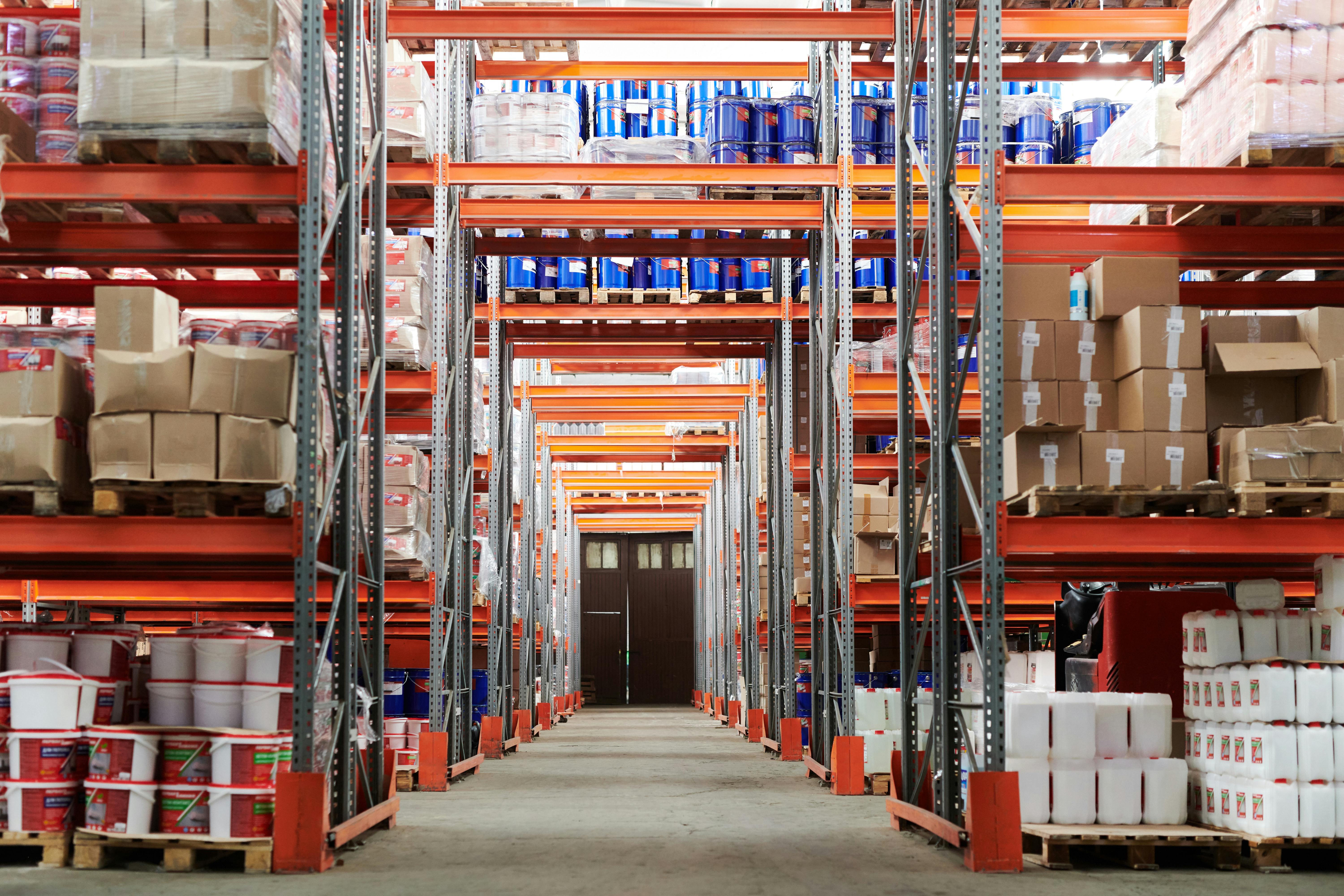
📊 Section 1 — Nigeria's Inflation Data in 2026: The Exact Numbers
Before any strategy makes sense, you need the actual numbers — not approximations, not last year's figures repackaged. Here is exactly where Nigeria's inflation stood as of the most recent verified data.
| Metric | March 2026 | April 2026 | May 2026 | Trend | Source |
|---|---|---|---|---|---|
| Headline Inflation (YoY) | 15.38% | 15.69% | 15.93% | ↑ Third straight monthly rise | NBS via TradingEconomics |
| Food Inflation | — | 16.06% (also cited as 16.6%) | 17.8% | ↑ Accelerating 4th month | NBS via TradingEconomics |
| Core Inflation (ex food/energy) | — | 15.86% | 16.82% | ↑ Rising | NBS via TradingEconomics |
| Transport Inflation | 16.9% | 16% | 17.1% | ↑ Fuel shock pass-through | NBS via TradingEconomics |
| Monthly CPI Change | — | 2.13% | 1.75% | ↓ Easing month-on-month pace | NBS via TradingEconomics |
| Information/Communication Inflation | 8.4% | — | 7.4% | ↓ Notably softening | NBS via TradingEconomics |
| Source: National Bureau of Statistics data, reported via TradingEconomics (June 15, 2026) and Legit.ng (May 17, 2026, citing NBS and CPPE CEO Muda Yusuf). Consumer Price Index reached 138.3 points in April 2026. Figures verified current as of June 20, 2026 — always check nigerianstat.gov.ng for the latest release. | |||||
💡 Did You Know? — Nigeria's 2025 Inflation Fell from Above 30% to as Low as 15.15%
According to the CISI Nigeria Economic Review and Outlook for 2026, Nigeria's inflation "eased significantly, dropping from multi-decade highs in 2024 (above 30%) to around 15.15%–27.61% over 2025" — a dramatic improvement attributed to CBN monetary tightening, foreign exchange stability, and statistical base effects. This means the 15.93% figure recorded in May 2026, while still rising month-on-month, sits well below the crisis-level inflation Nigerian businesses faced just two years earlier. The Central Bank's own official Macroeconomic Outlook (published December 30, 2025) projected this disinflation trend would continue into 2026, supported by a 4.49% GDP growth forecast. The honest picture for small business owners: the multi-year trend is genuinely improving, even though the month-to-month data shows real volatility that requires active management rather than passive optimism.
📎 Source: CISI Nigeria Economic Review and Outlook for 2026 · Allafrica/CBN Macroeconomic Outlook December 30, 2025
🏛️ Section 2 — The Macro Outlook: What CBN and CPPE Are Actually Saying
The Official CBN Position — December 2025
The Central Bank of Nigeria's Macroeconomic Outlook for 2026, published December 30, 2025, projected that Nigeria's economy would grow 4.49% in 2026 with inflation slowing sharply, driven by "continued gains from broad-based structural reforms and a gradually easing monetary policy stance." The bank noted that Nigeria's economy grew an estimated 3.89% in 2025, up from 3.38% in 2024, supported by both oil and non-oil sectors, with inflation easing throughout the year "following tight monetary policy, relative stability in the exchange rate and improved coordination between fiscal and monetary authorities." The report specifically cited inflation dropping for eight consecutive months to 14.45% in November 2025, down from 16.05% in October.
The On-the-Ground Reality — CPPE's May 2026 Assessment
Five months later, Muda Yusuf, CEO of the Centre for the Promotion of Private Enterprise (CPPE), gave a more cautious real-time assessment to Legit.ng after the May 2026 inflation data showed a third consecutive monthly rise. He described Nigeria's inflation outlook as reflecting "a fragile disinflation process amid mounting global and domestic cost pressures" and stated plainly: "For businesses, the operating environment remains extremely challenging." His specific recommendations to government were to intensify measures reducing energy costs, improve transportation infrastructure, strengthen food supply systems, and support domestic productivity — while his direct advice to businesses was to prioritize energy efficiency, dynamic pricing models, consumer segmentation, and affordability-driven strategies including smaller pack sizes.

💰 Section 3 — Pricing Strategy: What Verified Data Shows Is Working
Raising prices is the most obvious lever — and the data confirms most Nigerian businesses are already pulling it. The Nigeria Business Survival Report 2024 found that 65% of Nigerian businesses raised prices in 2024 specifically to stay afloat amid skyrocketing costs of food, power, and transportation. But raising prices alone is not a strategy — it's a reaction. The businesses that survive and grow are the ones doing it deliberately.
Adjusting prices in response to actual real-time cost conditions rather than fixed annual reviews — recommended directly by CPPE CEO Muda Yusuf as essential for the current environment.
- Review pricing monthly, not annually, against your actual current input costs
- Build a simple cost-tracking sheet for your top 3 inputs
- Adjust prices in small, frequent increments rather than large infrequent jumps
Dividing your customers by price sensitivity and tailoring offerings accordingly, instead of forcing one price onto every buyer regardless of their purchasing power.
- Identify your loyal high-frequency customers versus occasional price-sensitive buyers
- Offer different terms or product tiers to each group
- Protect margin on customers who can absorb it; retain volume from those who can't
Offering reduced-size or trial versions of products so price-sensitive customers can still afford to buy, rather than losing them entirely to a single, larger, higher-priced unit.
- Specifically named by CPPE as a response to weakening discretionary spending
- Allows the unit price per gram/ml to rise while keeping the per-purchase cost accessible
- Common in FMCG but applicable to many product categories
Designing or reformulating products specifically around what customers can afford right now, rather than maintaining a fixed product spec and just raising the price.
- Consider lower-cost ingredient or material substitutions where quality allows
- Bundle products differently to hit specific price points customers recognize
- Track which price points cause visible drop-off in your sales data
🎯 Section 4 — Consumer Segmentation and Smaller Pack Sizes Explained in Practice
Why Uniform Price Increases Backfire
When you raise your price by the same percentage for every customer, you make an implicit bet: that all your customers have the same tolerance for that increase. They don't. CPPE's specific warning — that consumers are becoming "increasingly price-sensitive" while "discretionary spending weakens" — means a flat increase risks losing exactly the customers your business needs most: the ones buying out of genuine need, not luxury.
How Segmentation Works in a Nigerian Retail Context
Practical segmentation does not require sophisticated software. It requires observation: Which customers buy from you weekly versus occasionally? Which buy in bulk versus single units? Which have switched to a cheaper competitor brand recently? Once you can answer these, you can offer your loyal bulk buyer a modest discount for guaranteed volume — protecting your revenue — while offering your occasional price-sensitive customer a smaller pack size at a lower absolute price — keeping them as a customer at all, rather than losing them entirely to a flat price increase they cannot afford.
🏭 Section 5 — Cost Control: The ABC Method From Peer-Reviewed Manufacturing Research
For small-scale manufacturers specifically, peer-reviewed research published in the International Journal of Research and Scientific Innovation — based on a study of small-scale manufacturing enterprises in Ekiti and Ondo States — identified a specific, structured cost-reduction method that outperforms generic "cut costs everywhere" advice.
The ABC Analysis Method (Control by Importance and Exception)
The research found this method — categorizing inventory into three tiers by cost significance — concentrates effort where it actually produces results:
- Category A: Your highest-value, highest-cost materials — typically a small number of items representing the majority of your total material spend
- Category B: Mid-tier items — moderate cost impact, moderate attention warranted
- Category C: Low-cost, high-volume items — minimal individual impact on overall costs
The research's key finding: "since most material cost are for category A," the time and financial resources spent searching for lower-cost sources should be concentrated there — not spread evenly across every input. For a Nigerian small manufacturer, this means identifying your one or two most expensive recurring inputs and directing 80% of your negotiation, sourcing research, and supplier-switching effort specifically there, rather than trying to shave small percentages off every line item equally and exhausting your limited time for no proportional gain.
💡 Did You Know? — 64.5% of Nigerian Micro-Enterprises Earn Under ₦50,000 Monthly
According to SMEDAN and National Bureau of Statistics data cited in Moniepoint's 2026 Small Business Statistics report, 64.5% of micro-enterprises in Nigeria have a monthly turnover of less than ₦50,000, while 29.4% earn between ₦50,000 and ₦300,000, with the remainder reaching ₦600,000–₦900,000. The same data shows SMEs account for 96% of all Nigerian businesses, 84% of employment, and 48% of national GDP — and that almost 50% of Nigerian businesses fail within their first year of operation. This context matters directly for cost-control strategy: at this scale, there is no margin for inefficient, scattered cost-cutting. The ABC method's focus on concentrated effort on highest-impact costs is not a nice-to-have for businesses at this turnover level — it is the difference between survival and closure.
📎 Source: Moniepoint Small Business Statistics In Nigeria For 2026, citing SMEDAN and NBS data
💱 Section 6 — Reducing Naira Exposure Through Local Sourcing
The Academic Evidence on Naira Devaluation Survival
A 2025 academic study published in the International Journal of Research and Innovation in Social Science, based at Delta State University of Science and Technology, examined the direct impact of naira devaluation on SMEs in Nigeria's South-South region. The research confirmed the core mechanism: "Whenever the Naira's value drops, the prices of imported goods and services increase, which in turn leads to imported inflation" — directly reducing purchasing power and demand for SME goods and services.
Separately, a Walden University doctoral dissertation specifically studying SME leaders who successfully mitigated naira depreciation's impact on profitability identified three consistent themes across the businesses studied: operating cost control, support and assistance, and operational effectiveness — with a key, specific recommendation being to "purchase materials locally" wherever a viable Nigerian-sourced alternative exists.
This does not mean eliminating all imports — for many inputs, no local alternative exists at acceptable quality. It means conducting a deliberate audit: for each imported input, is there a Nigerian-sourced version that meets your quality bar, even at a slightly higher per-unit cost today? If yes, switching removes that specific item from all future exchange rate risk — permanently, regardless of how the naira moves next.
⛽ Section 7 — The Fuel Price Relief Trap: Why Experts Say Don't Cut Prices Yet
What Happened in Early 2026
Leadership Nigeria's January 31, 2026 analysis described 2026 as shaping up to be "a year of cautious relief" for Nigerian SMEs — fuel prices easing, the naira showing modest stability, and lenders regaining confidence after years of "soaring fuel prices, foreign exchange volatility, and tight credit conditions." The report noted that lower fuel prices "translate into reduced haulage costs, lower generator expenses, and improved distribution economics."
The Specific Warning Given
But the same analysis carried a sharp caution: savings filter through "gradually, not overnight" because logistics contracts, supplier pricing structures, and import dependencies don't reset instantly. Critically: "Businesses that assume instant relief and rush to cut prices may hurt their own margins." The recommended response instead was to use temporary savings to rebuild working capital, renegotiate supplier contracts, and invest in operational efficiency — not to immediately pass all savings on through lower prices.
What Happened Next — The March 2026 Reversal
This caution proved prescient. Just weeks after this advice was published, a fuel price shock tied to Middle East conflict tensions in March 2026 pushed transport inflation back up to 17.1% and food inflation to 17.8% by May. Any business that had prematurely cut prices based on the earlier relief would have been forced into a painful, reputation-damaging reversal. This is the single clearest documented case study in this article of why deliberate, cautious financial management beats reactive optimism.
🏦 Section 8 — Working Capital: The Single Biggest Survival Factor
Why Working Capital Matters Most
Leadership Nigeria's analysis specifically named rebuilding working capital as the priority use for any cost relief in 2026 — because the prior two years of shocks had depleted reserves sector-wide. Cash buffer determines how much flexibility you have to absorb the next shock without panic decisions.
Bulk Buying When Favourable
Strong working capital lets you buy inventory in bulk during temporary price dips — locking in lower costs before the next increase. Businesses without cash reserves cannot take advantage of these windows even when they appear.
Supplier Negotiation Leverage
Paying suppliers promptly or upfront — only possible with adequate cash flow — creates negotiating leverage for better terms. Businesses scrambling for cash have zero leverage in supplier conversations.
Avoiding Emergency Borrowing
The Walden University research identified "support and assistance" as a key survival theme — but emergency, high-interest borrowing during a cash crisis is the opposite of strategic support. Working capital prevents being forced into it.
The First-Year Failure Connection
Almost 50% of Nigerian businesses fail in their first year (SMEDAN/NBS data via Moniepoint). New businesses disproportionately lack working capital buffers — making them uniquely vulnerable to the exact volatility this article documents.
The Demand-Side Compounding Risk
PwC's 2024 MSME Survey found 67% of small businesses saw decreased demand during harsh conditions — meaning rising costs and falling sales often hit simultaneously. Working capital is what lets a business survive both pressures at once.

⚡ Section 9 — Real-World Implications
PwC's MSME Survey 2024 found 67% of small businesses experienced decreased demand during harsh economic conditions. Combined with rising costs, businesses that react with flat price increases without segmentation, or that fail to control their highest-cost inputs specifically, face the exact compounding pressure that contributes to Nigeria's near-50% first-year business failure rate. The data is consistent across sources: undifferentiated, reactive decision-making during inflation produces worse outcomes than deliberate, segmented strategy.
The fuel-price relief trap documented in Section 7 is the clearest case study available: businesses that assumed early 2026 relief was permanent and cut prices prematurely were directly exposed when the March 2026 fuel shock reversed conditions within weeks. Discipline — waiting to confirm a trend before acting on it — protected businesses that followed expert guidance over those that reacted to short-term good news.
SMEs represent 96% of Nigerian businesses and 48% of GDP. The CBN's continued 4.49% GDP growth projection for 2026 means real economic activity continues even amid inflation volatility — meaning the businesses applying segmentation, cost discipline, and local sourcing are not exceptions, they are a documented, sizeable portion of an economy that continues growing despite the headline inflation numbers.
Even CPPE's own CEO described the disinflation process as "fragile" and "highly vulnerable to external and domestic cost pressures." No strategy in this article eliminates risk — they reduce exposure and improve resilience. Businesses should plan for continued month-to-month volatility through 2026, not assume a smooth, predictable downward trend in costs.
Three things every Nigerian small business should do this month, in order:
- Identify your single highest-cost input and concentrate your cost-control effort there specifically — not spread evenly.
- Segment your customers and stop applying one uniform price increase to everyone — protect margin where you can, retain volume where you must.
- Build, don't spend, your working capital buffer during any period of temporary relief — the March 2026 fuel shock proved relief can reverse without warning.
✅ Inflation-Resilience Checklist for Nigerian Small Businesses
🕐 Section 10 — Your 24-Hour Action Plan
- Write down your top 3 input costs in actual naira from last month's records — not estimates.
- Identify which ONE input is your highest-cost category and commit to researching one alternative source for it this week.
- List your 10 most frequent customers and note who buys in bulk versus single units — this is the start of your segmentation.
- Calculate your current cash reserve as a number of months of operating costs it would cover if revenue stopped today.
- Set a calendar reminder to review pricing monthly against actual cost data, starting this month.
Editorial Disclosure: This article was researched using only named, verifiable primary and high-authority secondary sources, including the National Bureau of Statistics, the Central Bank of Nigeria, the Centre for the Promotion of Private Enterprise, PwC Strategy&, Leadership Nigeria, Moniepoint citing SMEDAN/NBS data, and two peer-reviewed academic studies. No content aggregation site or unverifiable source was used. All figures verified June 20, 2026.
✅ Key Takeaways
- Nigeria's inflation rose to 15.93% in May 2026 — the third consecutive monthly increase, with food inflation at 17.8%, partly driven by a Middle East-linked fuel shock in March 2026.
- The multi-year trend remains genuinely improved — down from above 30% in 2024 to a 15.15%–27.61% range across 2025, per CBN and CISI data.
- CPPE's CEO specifically recommends dynamic pricing, consumer segmentation, and smaller pack sizes — not blanket price increases.
- 65% of Nigerian businesses raised prices in 2024 to survive — but the surviving businesses pair this with deliberate cost control, not reactive pricing alone.
- The ABC inventory method — concentrating cost-control effort on your highest-cost category — is peer-reviewed manufacturing research, not generic advice.
- Local sourcing reduces naira exposure permanently for any input where a viable Nigerian alternative exists.
- Don't cut prices on temporary relief — the March 2026 fuel shock proved relief can reverse quickly; rebuild working capital first.
- 96% of Nigerian businesses are SMEs, contributing 48% of GDP — but 64.5% of micro-enterprises earn under ₦50,000 monthly, leaving little room for inefficient cost management.
- Working capital is the single biggest survival factor — it enables bulk buying, supplier leverage, and avoiding emergency borrowing.
- Almost 50% of Nigerian businesses fail in their first year — new businesses face the highest compounding risk from thin cash reserves during inflation.
📰 15 Related Articles from Daily Reality NG


Samson Ese
Founder & Editor-in-Chief — Daily Reality NG | Warri, Delta State, NigeriaI run Daily Reality NG against the exact same inflation pressures documented in this article — rising data costs, rising transport costs to source verification material, rising everything. The strategies here are not theoretical to me. This article was rebuilt from its original November 2025 version specifically because the data had moved, and publishing outdated inflation figures under this platform's name would have been a failure of the standard I hold every article to.
Get Verified Nigerian Business Intelligence Weekly
Real data, named sources, zero recycled statistics. Subscribe free for weekly verified Nigerian business and economic updates.
📧 Subscribe Free — Weekly Newsletter❓ Section 11 — 15 Frequently Asked Questions
What is Nigeria's current inflation rate in 2026?
Nigeria's headline inflation rose to 15.93% in May 2026, up from 15.69% in April and 15.38% in March — the third consecutive monthly increase, according to National Bureau of Statistics data reported via TradingEconomics. Food inflation reached 17.8%, and core inflation 16.82%. This followed a broader 2025 trend in which inflation eased from 2024's multi-decade highs above 30% to a 15.15%–27.61% range, per CISI's Nigeria Economic Review.
How are Nigerian small businesses surviving inflation in 2026?
Through dynamic pricing, consumer segmentation, and smaller pack sizes (recommended directly by CPPE CEO Muda Yusuf); local material sourcing to reduce naira exposure (academic research); concentrated cost control on highest-cost inputs using the ABC method (manufacturing research); and disciplined working capital management — rebuilding reserves rather than spending savings immediately, per Leadership Nigeria's analysis.
Should my small business raise prices because of inflation?
65% of Nigerian businesses raised prices in 2024 to survive, per the Business Survival Report 2024. But CPPE specifically recommends dynamic, segmented pricing rather than blanket increases, since consumers are increasingly price-sensitive. A uniform percentage increase risks losing exactly the customers your business needs most.
What does dynamic pricing mean for a small Nigerian business?
Adjusting prices based on real-time cost conditions, customer segments, and demand — not a fixed annual price. Practically: charging differently for bulk versus single-unit purchases, offering smaller pack sizes for price-sensitive buyers, and reviewing prices monthly against actual current costs rather than waiting for an annual review.
How does naira devaluation affect small business profitability?
Nigeria is import-dependent, so naira weakening directly raises imported input costs, which passes through into general inflation and reduces purchasing power — confirmed by 2025 academic research (Delta State University). Businesses sourcing materials internationally face immediate margin squeeze independent of domestic demand.
What is the ABC inventory method for cost control?
Peer-reviewed manufacturing research (IJRSI, Ekiti/Ondo States) found categorizing materials into Category A (highest-cost), B (mid-tier), and C (low-cost) and concentrating cost-reduction effort specifically on Category A produces better results than spreading effort evenly. Since most material cost concentrates in Category A, that's where sourcing and negotiation time should go.
Is 2026 better or worse for Nigerian small businesses than 2025?
Mixed. Leadership Nigeria described 2026 as "cautious relief" with easing fuel prices initially — but inflation rose for three straight months through May 2026 to 15.93%, partly due to a Middle East-linked fuel shock in March. CBN's full-year outlook still projects easing inflation and 4.49% GDP growth, but month-to-month volatility should be expected.
What percentage of Nigerian businesses contribute to GDP?
SMEs account for 96% of all Nigerian businesses, 84% of employment, and 48% of GDP, per SMEDAN/NBS data cited by Moniepoint. However, 64.5% of micro-enterprises earn under ₦50,000 monthly — meaning most operate with extremely thin margins where even modest cost increases are proportionally severe.
What cost-cutting techniques work for small manufacturers in Nigeria?
The ABC analysis method from peer-reviewed research — concentrating cost-reduction effort on your highest-cost material category rather than spreading evenly across all inputs, since most cost is concentrated in a small number of high-value items.
How should small businesses respond to falling fuel prices without hurting margins?
Leadership Nigeria specifically warned against rushing to cut prices when fuel costs ease, since savings filter through gradually and logistics contracts don't reset instantly. Instead: use savings to rebuild working capital and renegotiate supplier contracts. The March 2026 fuel shock proved this caution correct when relief reversed within weeks.
What is consumer segmentation and how can a small retailer use it?
Dividing customers by price sensitivity and purchasing power, then tailoring pricing accordingly — recommended directly by CPPE. Practically: stock both premium and smaller/cheaper pack sizes, offer different terms to bulk versus occasional buyers, and protect margin on loyal customers who can absorb increases while retaining price-sensitive customers with affordable alternatives.
How can a small business reduce naira volatility exposure without stopping imports entirely?
Academic research (Walden University) recommends auditing your full input list and switching to Nigerian-sourced alternatives wherever quality permits — even at a slightly higher per-unit cost today, this removes that input from future exchange rate risk permanently. For inputs with no local alternative, seek supplier financing and improve operational efficiency to reduce total imported volume per unit of output.
What role does working capital play in surviving inflation?
Working capital determines flexibility to absorb cost shocks without reactive, margin-damaging decisions. Leadership Nigeria specifically recommended rebuilding depleted working capital during 2026's temporary relief rather than spending it — strong reserves enable bulk buying, supplier negotiation leverage, and avoiding expensive emergency borrowing.
Why did almost half of Nigerian small businesses fail in their first year?
SMEDAN/NBS data shows almost 50% of Nigerian businesses fail within their first year. PwC's 2024 MSME Survey found 67% of small businesses saw decreased demand during harsh conditions — meaning rising costs and falling sales hit simultaneously. New businesses lack the working capital buffer and supplier leverage to absorb both pressures.
What is the realistic inflation outlook for Nigeria through the rest of 2026?
CBN's official December 2025 outlook projected inflation easing alongside 4.49% GDP growth for the full year. CISI projected inflation contained within 12–16%. But actual data through May 2026 shows three consecutive monthly rises to 15.93%, driven partly by an external fuel shock. CPPE's CEO described the disinflation process as "fragile" — plan for volatility, not a smooth downward trend.
💬 Your Turn — Tell Us What's Working for Your Business
- Which strategy in this article matches what you are already doing — and has it worked?
- Have you found a viable local alternative to an imported input? What was it?
- How has consumer segmentation or smaller pack sizes affected your sales since you started?
- What is your single highest-cost input right now, and what have you tried to reduce it?
- Did you cut prices during the early 2026 fuel relief — and if so, what happened when costs rose again in May?
Nigeria's small businesses are not waiting for inflation to disappear before they act. They are adjusting, segmenting, sourcing locally, and rebuilding — month by month, with the data, not against it.
— Samson Ese | Founder, Daily Reality NG
Warri, Delta State, Nigeria | June 20, 2026
dailyrealityngnews.com
Daily Reality NG — Nigeria's Independent Research-Backed Digital Publication
© 2025–2026 Daily Reality NG | Founded October 26, 2025 by Samson Ese | Warri, Delta State, Nigeria 🇳🇬
Contact: dailyrealityngnews@gmail.com | WhatsApp: +234 902 408 9907 | About | Editorial Policy
General Disclaimer: This article provides general economic information and documented business strategies. It is not individualized financial, tax, or legal advice. Inflation data changes monthly — verify current figures at nigerianstat.gov.ng before making major financial decisions.


Comments
Post a Comment