
8 Signs Your Mechanic Is Lying to You About Your Car
Information verified and updated as of September 2026. This article is an evidence-based consumer guide, not an accusation against Nigerian mechanics as a profession. A mechanic can make a genuine diagnostic mistake without deliberately lying. The warning signs below are about patterns of unexplained claims, pressure, inconsistent explanations, poor documentation and refusal to provide reasonable evidence.
8 Signs Your Mechanic Is Lying to You About Your Car
Quick answer: The biggest warning sign is not that a mechanic gives you a diagnosis you do not like. It is that the diagnosis cannot be explained, demonstrated, documented or consistently connected to the symptoms your vehicle actually has. If the mechanic keeps changing the story, demands expensive parts without showing why they failed, treats a scan code as proof that a particular part is bad, refuses an itemised estimate, or pressures you to approve work before you understand the evidence, stop and ask for a second opinion.
Reading time: 35–45 minutes | For: Nigerian car owners, used-car buyers, families, drivers, small-business owners and anyone paying for vehicle repairs.
Use this three-question test
- What exactly has failed?
- What evidence proves that part or system has failed?
- What happens if I do not replace it today?
If the answer to all three is clear, specific and consistent, you have something to evaluate. If the answer is mostly “trust me,” “that is how these cars behave,” “we have to change this first,” or “if we don't do it now the whole car will spoil,” you need more information before authorising expensive work.
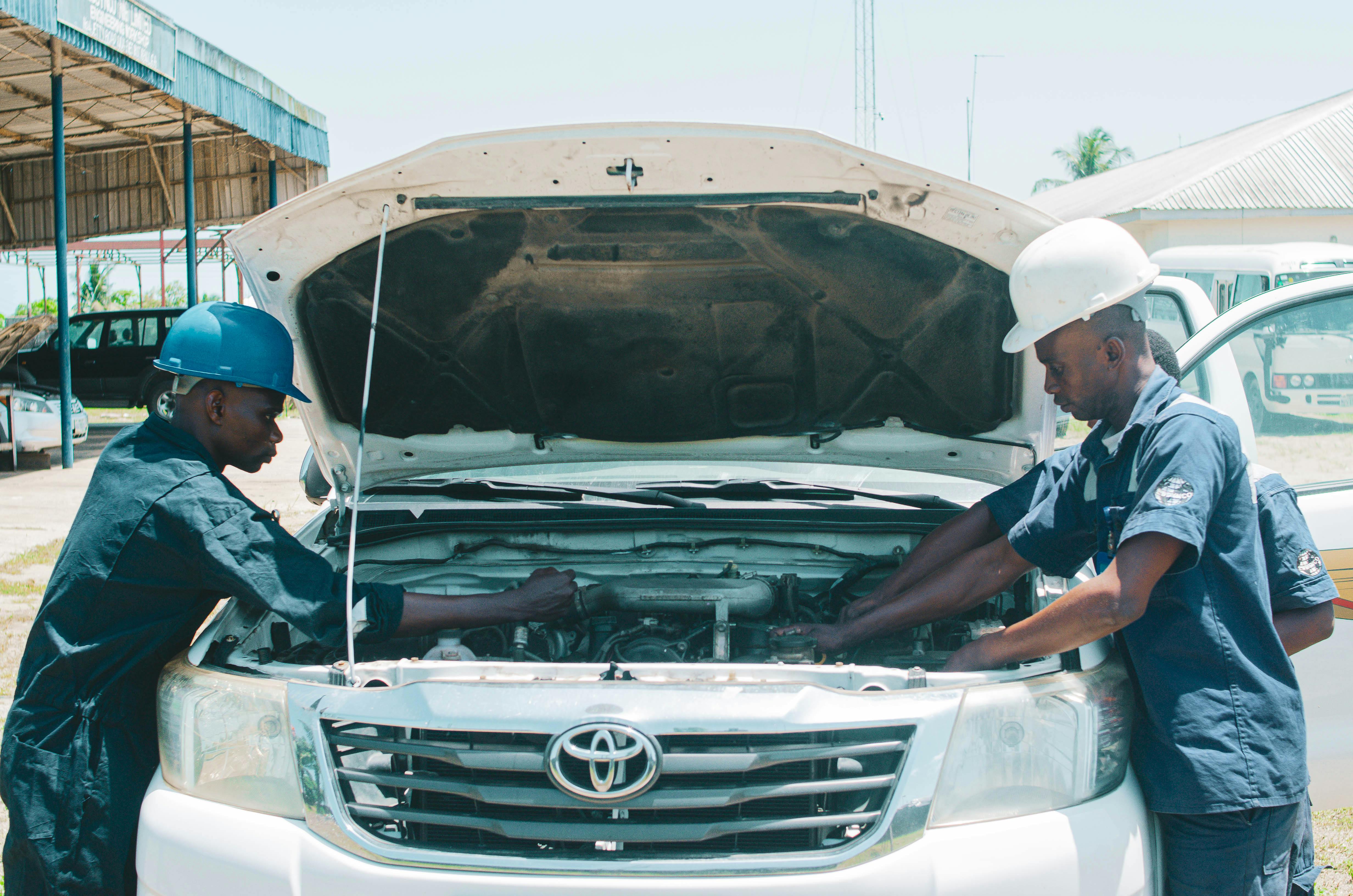
Car repair is one of those areas where information imbalance can become expensive very quickly. The mechanic can see the engine bay, hear the noise, operate the diagnostic equipment and understand terminology that the owner may never have learned. The owner, meanwhile, may simply know that the car is overheating, shaking, consuming fuel, making a noise or refusing to start.
That imbalance does not automatically mean the mechanic is dishonest. It does mean the owner needs a way to ask intelligent questions without pretending to be a technician.
This guide therefore does something more useful than telling you to “find a trustworthy mechanic.” It gives you a method for separating three different situations: a mechanic who is probably telling the truth, a mechanic who may be guessing, and a mechanic whose behaviour gives you a legitimate reason to question the diagnosis or the commercial transaction.
Table of Contents
- The real problem: you are paying for a diagnosis you cannot independently see
- First, do not confuse lying with being wrong
- Sign 1: The diagnosis changes every time you ask for evidence
- Sign 2: A scan code is treated as proof that one particular part is bad
- Sign 3: Expensive parts are condemned without a proper test or explanation
- Sign 4: Every problem suddenly becomes an emergency
- Sign 5: The mechanic keeps replacing parts until something works
- Sign 6: There is no clear written or itemised estimate
- Sign 7: The old part, failed component or evidence is never shown to you
- Sign 8: The story, price or responsibility changes after you have paid
- What Nigerian car owners need to know about consumer protection
- How a proper diagnosis should actually develop
- What an OBD scanner can and cannot tell you
- How to read a mechanic's estimate without being a mechanic
- New, used, refurbished and aftermarket parts: what the mechanic should tell you
- When a second opinion is worth the money
- Eight Nigerian scenarios and how to respond
- Daily Reality NG mechanic-trust decision matrix
- The 25-question mechanic honesty checklist
- Your 24-hour action plan
- Your seven-day vehicle repair reset
- Your 30-day car-maintenance evidence system
- Common mistakes car owners make when dealing with mechanics
- What to do when a repair becomes a consumer dispute
- Key takeaways
- 15 frequently asked questions
- Related Daily Reality NG resources
- Author and editorial accountability
Do not authorise the next expensive repair until you can state the diagnosis in one sentence
Write this down: “The mechanic says the problem is ______ because ______, and the proposed repair is ______.” If you cannot fill those blanks, you are not yet in a good position to approve the work. Ask for the missing explanation or obtain another assessment.
The real problem: you are paying for a diagnosis you cannot independently see
Imagine a common Nigerian car-owner situation.
Your vehicle begins making a strange noise. You take it to a workshop. The mechanic opens the bonnet, listens for thirty seconds, asks somebody to start the engine and then gives you a sentence that immediately changes your day: “Your engine is bad.”
You ask what is wrong.
“Everything is weak.”
You ask what must be replaced.
“We need to start changing things.”
You ask how much.
“Let's open it first.”
That is the moment many owners lose control of the transaction.
The problem is not necessarily that the mechanic is lying. The problem is that you are being asked to spend money before you understand the evidence.
There is another version. You arrive with a check-engine light. The mechanic plugs in a scanner, reads a code and immediately announces the name of an expensive component. You are told that changing it will solve the problem. You approve the replacement. The light returns. A second component is blamed. You pay again. Then a third component appears on the list.
Again, the mechanic might be dishonest. Or the mechanic might be diagnosing by trial and error.
For the owner, the practical response is almost the same: stop treating certainty as proof.
A confident statement is not the same thing as a demonstrated diagnosis.
That distinction is the central idea behind this article.
The Daily Reality NG test
A trustworthy repair conversation should normally move from symptom → inspection → evidence → diagnosis → repair recommendation → estimate → approval → repair → verification.
A suspicious conversation often moves from symptom → expensive part → pressure → payment → another problem.
The difference is not how many technical words the mechanic uses. The difference is whether the reasoning is visible and consistent.
For background on how Daily Reality NG approaches evidence, accountability and Nigerian-specific reporting, readers can review the publication's About page and Welcome Message. Those pages explain the publication's editorial standards and named-author accountability.
First, do not confuse lying with being wrong
This is the most important qualification in the entire article.
Cars can be difficult to diagnose. Modern vehicles contain mechanical, electrical, electronic, hydraulic, fuel, cooling, transmission and control systems that interact with one another. One symptom can have several possible causes.
A mechanic can therefore make a reasonable diagnosis and still be wrong.
That is not automatically a lie.
Suppose a vehicle has intermittent starting problems. The mechanic suspects the battery. The battery tests badly and is replaced. The problem continues. Later, further testing identifies a wiring fault. The first diagnosis was incomplete, but it does not necessarily mean the mechanic deceived the owner.
Now consider a different situation. The mechanic says the battery is definitely bad, refuses to show any test result, refuses to explain what was measured, insists that the owner must buy a particular battery immediately, and becomes angry when asked whether another cause has been ruled out.
That behaviour deserves scrutiny.
The strongest consumer strategy is therefore not “catch your mechanic lying.” It is make unsupported certainty difficult to sell to you.
| Situation | What may be happening | What you should ask |
|---|---|---|
| Mechanic makes an initial diagnosis that later proves wrong | Normal diagnostic uncertainty or incomplete testing | “What evidence led to the original diagnosis, and what new evidence changed it?” |
| Mechanic refuses to explain the diagnosis | Poor communication, weak process or possible concealment | “Please explain the failed component and the test that identified it.” |
| Mechanic keeps adding expensive parts without a documented reason | Trial-and-error repair or commercial pressure | “What result will confirm that this replacement was necessary?” |
| Mechanic gives a clear diagnosis, evidence and estimate | Much healthier repair process | Confirm parts, labour, warranty and approval limits. |
This distinction protects honest mechanics too. The purpose of this article is not to teach customers to distrust every workshop. It is to teach customers to demand enough information to make a sensible decision.
Sign 1: The diagnosis changes every time you ask for evidence
One of the strongest warning signs is not a changing diagnosis by itself. Diagnoses can change as new information becomes available.
The warning sign is a diagnosis that changes without a clear explanation of what changed the diagnosis.
Imagine this sequence:
- “The problem is the alternator.”
- You ask why.
- “Actually, it may be the battery.”
- You ask what test was done.
- “Let's change the battery first.”
- You ask whether the charging system was tested.
- “Now I think the wiring is bad.”
- You ask what evidence proves the wiring fault.
- “Just bring money; we will find it.”
At this point, the problem is not that the mechanic has not found the fault yet. Complex faults can take time.
The problem is that the diagnostic path is invisible.
A professional diagnostic process should be able to communicate uncertainty honestly. “I have ruled out A and B, but C and D are still possible” is a much stronger statement than “I know what it is” followed by a new answer every thirty minutes.
What a trustworthy mechanic can say
A mechanic might reasonably tell you:
- “The symptom points toward the charging system, but I need to test it before recommending a replacement.”
- “The scan produced this fault code, but the code does not by itself prove the component has failed.”
- “There are two plausible causes. The cheaper diagnostic test will help us separate them.”
- “The first repair did not solve the issue. Here is what we learned from that result.”
Those statements are not weakness. They are signs that the person understands the difference between evidence and assumption.
What you should ask
Do not ask, “Are you sure?” That question often produces another “yes.”
Ask:
This forces the conversation toward observable work rather than confidence.
You want the result, not merely the name of the part.
This reveals whether the mechanic is narrowing the problem or simply guessing.
This is one of the most powerful questions because it tests whether the diagnosis is evidence-based.
If the mechanic can answer these calmly and specifically, a changing diagnosis may simply reflect honest troubleshooting.
If every question produces irritation, another unexplained part, or a demand for immediate payment, pause the repair.
Sign 2: A scan code is treated as proof that one particular part is bad
This is one of the most important modern car-repair warning signs.
Many owners assume that when a mechanic connects a scanner and receives a diagnostic trouble code, the car has essentially announced which part needs replacement.
That is not how diagnosis should be understood.
On-board diagnostics systems monitor vehicle systems and store diagnostic trouble codes when certain conditions are detected. EPA documentation explains that the system detects and records faults and provides information that technicians can use during diagnosis. The code is an important clue, but it belongs inside a larger diagnostic process.
The practical point is simple:
A code is evidence. It is not automatically a shopping list.
If a mechanic tells you, “The scanner said sensor X, therefore sensor X must be replaced,” ask what additional test confirmed that the sensor itself failed.
There are many reasons a fault code can appear. Depending on the vehicle and code, the underlying issue could involve wiring, connectors, voltage, communication, another component affecting the system, or the component named in the code.
Technical service material available through NHTSA illustrates this principle. Some communication-related diagnostic codes can have multiple possible causes, including connections, wiring, power, grounds or control modules. That is why diagnosis involves more than reading the code description.
The same principle applies to a Nigerian car owner standing beside a workshop scanner.
The five questions to ask after a scan
- What exact code did the scanner produce?
- What system does the code relate to?
- Does the code identify a failed component or a condition the computer detected?
- What additional test confirmed the suspected part?
- Will the mechanic re-scan or verify the vehicle after the repair?
You do not need to memorise hundreds of codes. You simply need to understand that a diagnostic scanner is a diagnostic tool, not an automatic replacement-order machine.
When this becomes a serious red flag
Be particularly cautious when the mechanic:
- refuses to tell you the code;
- refuses to explain what system produced it;
- cannot explain why the code points to the proposed part;
- immediately demands an expensive replacement;
- clears the code and tells you the problem has been fixed without addressing the underlying cause;
- keeps replacing components after the same fault returns without explaining the new evidence.
EPA guidance has long emphasised that diagnostic information should support proper repair and verification rather than unnecessary replacement. That principle remains useful even though individual vehicle systems and manufacturer procedures differ.
For a Nigerian owner, the practical lesson is not “argue with the mechanic about OBD.” It is: ask the mechanic to distinguish the code from the diagnosis.
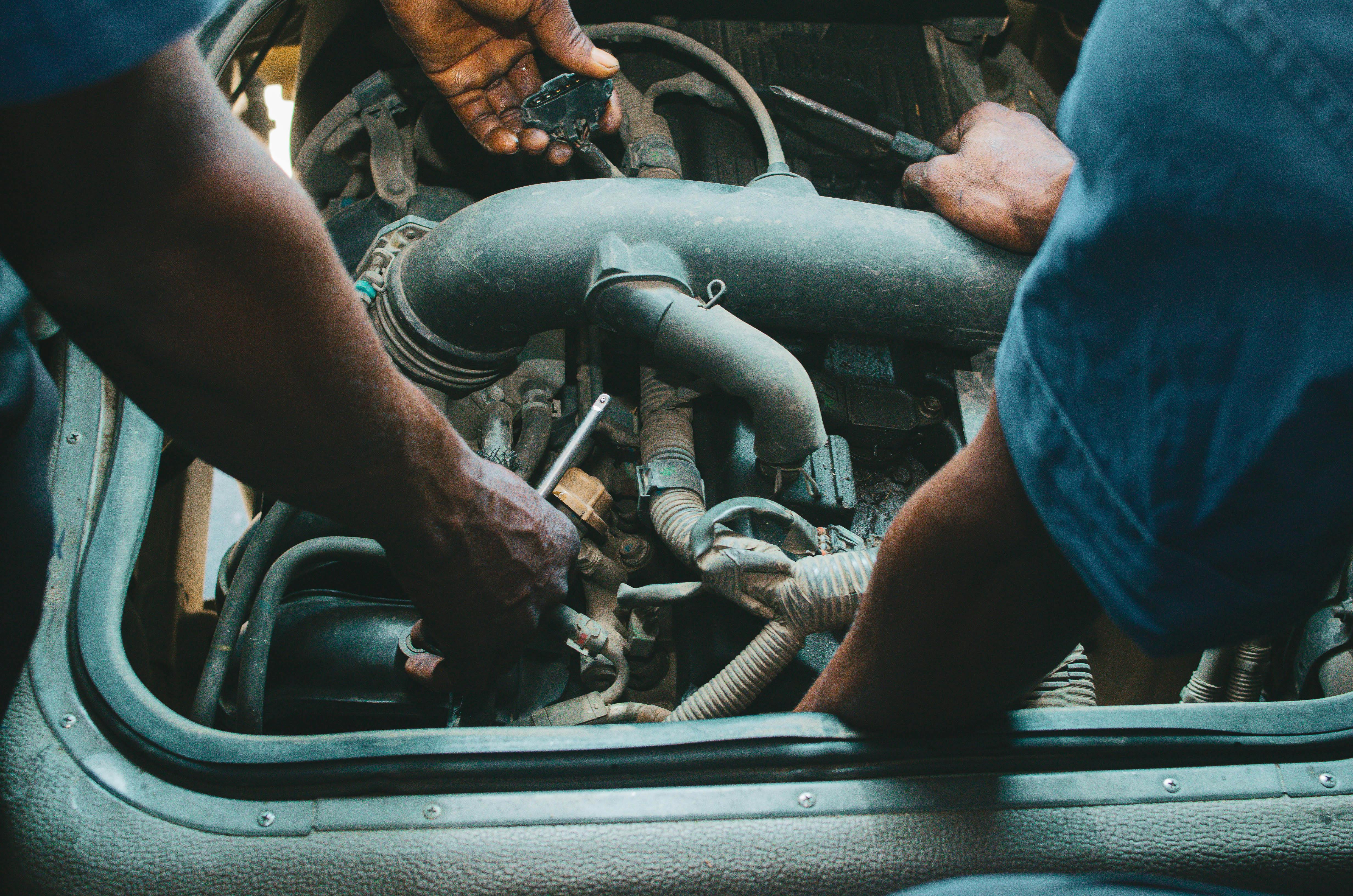
Sign 3: Expensive parts are condemned without a proper test or explanation
“This part is bad” sounds definitive. The question is: how was that conclusion reached?
There are obvious physical failures where the evidence can be straightforward. A visibly broken component is different from an internal or intermittent fault that requires testing.
The danger comes when a mechanic uses the customer's lack of technical knowledge to turn a suspicion into certainty.
Suppose your air-conditioning system is not cooling properly. A mechanic immediately says the compressor is bad and quotes a large amount for replacement.
That might be correct.
But a responsible diagnosis should consider the system as a whole. Depending on the vehicle and symptom, problems can involve refrigerant condition, leaks, electrical controls, fans, pressure, sensors, compressor operation or other components.
You are not asking the mechanic to give you a university lecture. You are asking for the reasoning behind a major expense.
The “show me what failed” rule
When practical and safe, ask the mechanic to show you the failed component or explain the test result.
Consumer repair guidance from organisations such as Consumer Reports and AAA similarly recommends clear explanations, written estimates and second opinions for major or unexpected repairs. AAA specifically notes that a second opinion can help confirm or dispute an initial diagnosis.
The request is reasonable:
“Please show me what you found and explain why this part has to be replaced.”
You are not accusing anyone.
You are asking to understand what you are purchasing.
When the explanation is technically correct but still incomplete
Sometimes a mechanic can show you a worn component but the owner still needs to know whether that component is actually responsible for the complaint.
A worn part may genuinely need replacement while a separate issue causes the main symptom.
This is why the better question is not simply:
“Is this part bad?”
It is:
“Does this failed or worn part explain the problem I brought the car in for?”
That distinction can prevent a situation where an owner spends heavily replacing several legitimately worn components without solving the original complaint.
Sign 4: Every problem suddenly becomes an emergency
Urgency can be legitimate.
A serious brake, steering, tyre, fuel-system or other safety problem should not be treated casually. If a vehicle may be unsafe to drive, the responsible response is to follow qualified professional advice and avoid driving it until the safety issue has been addressed.
The red flag is manufactured urgency.
That is when almost every recommendation is presented as “today or disaster,” without a clear explanation of what makes the issue immediately dangerous.
Examples include:
- “If you don't change this now, your engine will scatter.”
- “You must buy this part immediately or the car will stop tonight.”
- “Don't take it anywhere else; another mechanic will spoil the car.”
- “Pay now before I even finish checking it.”
- “If you ask questions, you will waste time and the problem will become worse.”
These statements are not diagnoses. They are pressure.
Ask the urgency question
“What specifically makes this repair urgent, and what is the consequence if I wait until tomorrow?”
A competent mechanic should be able to distinguish between:
- Do not drive: a potentially unsafe condition.
- Repair soon: a problem that could worsen or cause secondary damage.
- Monitor: an issue that needs attention but is not necessarily an immediate emergency.
- Routine maintenance: scheduled or preventive work.
Not every problem has the same time horizon.
This is particularly important for Nigerian drivers because the financial pressure of car ownership can already be high. A driver who believes every recommendation is an emergency may end up approving work without comparing prices, confirming parts or obtaining a second assessment.
The safer rule
If the issue genuinely concerns brakes, steering, severe overheating, fuel leakage, major vibration or another condition that could make driving unsafe, do not use this article as permission to keep driving. Get professional advice about the vehicle's safety and use appropriate recovery or towing arrangements if necessary.
The consumer-protection principle is not “ignore urgent mechanics.” It is “ask them to explain why the situation is urgent.”
Sign 5: The mechanic keeps replacing parts until something works
This is the classic “parts cannon” problem.
The vehicle has a fault. Instead of establishing the cause, one component is replaced. The problem remains. Another component is replaced. The problem remains. Another is replaced.
Eventually something works—or the owner stops paying.
There are situations where replacing a component is a legitimate diagnostic step. Experienced technicians sometimes use known-good components or controlled tests to isolate a fault. But there is a major difference between a deliberate diagnostic strategy and random replacement at the customer's expense.
The question that exposes the difference
Ask:
“Before I approve this part, what result will tell us whether this was the cause?”
If the answer is essentially “we will see,” ask what happens if the repair does not solve the issue.
Then ask:
“If this does not fix the problem, who bears the cost of the part?”
That question is particularly important when the proposed part is expensive.
A better diagnostic agreement
For complicated problems, establish the process before approving major spending:
- Define the symptom.
- Identify the suspected system.
- Agree on the diagnostic work required.
- Separate diagnostic charges from repair charges.
- Set an approval limit.
- Require additional approval before spending beyond that limit.
- Ask how the repair will be verified afterward.
This does not require a complicated contract. Even a WhatsApp message confirming the agreed scope and amount can create a clearer record than a purely verbal conversation.
For example:
Customer: “Please diagnose the starting problem first. Do not replace any major component without telling me the test result and getting my approval. Diagnostic charge agreed at ₦X. If the repair is recommended, send parts and labour separately before proceeding.”
The exact diagnostic price will vary by vehicle, location, workshop and complexity. The point is the structure, not the number.
Sign 6: There is no clear written or itemised estimate
One of the easiest ways to lose control of a repair transaction is to agree to “something around ₦200,000” and discover later that the bill is ₦340,000.
A written estimate is not proof that a mechanic is honest. But the refusal to provide a reasonable breakdown before major work is a serious warning sign.
Consumer guidance on auto repair consistently recommends written estimates and clear identification of parts and labour. The FTC advises consumers to request written estimates, while AAA recommends detailed repair orders and clear instructions about approval before additional work.
Nigeria's FCCPC also states that consumers have rights concerning understandable information, disclosure of material facts and written transaction records where practicable.
What should appear on your estimate?
| Item | What you should want to know |
|---|---|
| Diagnosis | What condition is being diagnosed and whether diagnostic work is separately charged. |
| Part | Exact component name and, where relevant, brand or specification. |
| Part condition | New, used, refurbished, aftermarket or original-equipment equivalent. |
| Part price | The amount being charged for the component. |
| Labour | What work is being performed and the labour charge. |
| Consumables | Fluids, seals, clips or other materials where separately charged. |
| Additional work | What requires your approval before the bill increases. |
| Warranty | What, if anything, is guaranteed and for how long. |
A vague estimate such as “engine work — ₦450,000” gives you very little information.
A clearer estimate might separate:
- diagnostic charge;
- parts;
- labour;
- machining or specialist work, if applicable;
- fluids and consumables;
- taxes or other applicable charges;
- additional work requiring approval.
The objective is not bureaucracy for its own sake. It is to make it possible to compare what you were told with what you were charged.
One phrase every owner should use
“Please tell me the maximum amount you will spend without contacting me again.”
Then put that agreement in writing.
Sign 7: The old part, failed component or evidence is never shown to you
There is a simple psychological reason this matters.
When a mechanic tells you a part is bad, you are being asked to trust information you cannot directly observe. Seeing the removed part or receiving a clear explanation does not prove the mechanic's entire story, but it gives you another piece of evidence.
If a major component is being replaced, ask:
“Can I see the old part after removal?”
The answer will depend on the nature of the work. Some parts may be exchanged as part of a supplier's core-return arrangement. Some may be discarded. Some may be needed for warranty or technical reasons. Some repairs may not leave a simple “bad part” sitting on the workbench.
So again, the rule is not “a good mechanic must always hand you the old part.”
The better rule is:
For a significant repair, the customer should be able to understand what was found, what was replaced and why the replacement was necessary.
If the mechanic refuses to explain anything and treats questions as disrespect, that is different from saying, “The supplier requires us to return this component, but I can show you photographs and explain the failure.”
Transparency can take different forms.
Useful evidence can include
- the removed component;
- a photograph of the damaged or worn area;
- a diagnostic report;
- a measurement or test result;
- a manufacturer or service procedure relevant to the diagnosis;
- a written explanation of what was found.
Do not demand evidence that cannot reasonably exist. Demand an explanation appropriate to the repair.

Sign 8: The story, price or responsibility changes after you have paid
This is often where a repair dispute becomes much more serious.
Before payment:
“The job will cost ₦180,000.”
After payment:
“We discovered another thing.”
Then:
“You need another ₦90,000.”
Then:
“The original part was not the problem.”
Then:
“The car already had that fault.”
This is where documentation becomes powerful.
If the scope of work changed because a genuine additional fault was discovered, the mechanic should be able to explain what was discovered and why the additional work was necessary.
The problem is not the existence of additional repairs. Cars often reveal additional faults once work begins.
The problem is unauthorised expansion of the job combined with weak explanation.
The approval boundary
Before work begins, establish a boundary:
“Do not carry out additional work above ₦X without my approval.”
That one sentence can prevent many disputes.
If the workshop later discovers something important, ask for:
- the new problem;
- the evidence;
- the additional work required;
- the additional cost;
- the consequence of delaying it;
- your options.
You can then make a decision.
Another major warning: “The part we installed is not responsible”
Sometimes a new component genuinely does not solve the underlying problem. That can happen in complicated diagnosis.
But if a workshop repeatedly installs expensive parts without establishing why they are needed, the customer should not automatically absorb unlimited trial-and-error costs.
Ask for the diagnostic record.
Ask what the original evidence showed.
Ask what new evidence changed the conclusion.
Ask what the workshop proposes next.
And if the repair has become expensive, seek an independent second opinion.
What Nigerian car owners need to know about consumer protection
Car repair is not a special zone where normal consumer expectations disappear.
Nigeria's Federal Competition and Consumer Protection Commission states that consumers have rights relating to understandable information, disclosure of material facts and prices, fair dealings, accurate representations and transaction records where practicable.
The FCCPC also says businesses must not provide misleading or deceptive information and that consumers have rights concerning the quality and safety of goods and services.
That matters because a repair transaction is not only about whether a vehicle eventually moves.
It is also about what service was represented, what the customer agreed to, what was supplied, what was charged and whether the service was performed fairly.
Important Nigerian consumer point
The FCCPC identifies a consumer as an individual who purchases, uses, maintains or disposes of products or services. Its consumer-rights framework includes information, price disclosure, fair dealings, accurate representations and records of transactions where practicable.
Read the official FCCPC consumer rights and responsibilities guidance for the current wording.
What this does not mean
It does not mean that every disagreement with a mechanic automatically proves consumer-law wrongdoing.
A repair can fail. A component can fail again. A diagnosis can be wrong. A vehicle can have several unrelated problems. Prices can legitimately change when additional work is discovered and authorised.
The stronger case is where there is evidence of misleading representation, undisclosed charges, poor documentation, refusal to honour agreed terms or other conduct that falls within consumer-protection concerns.
If the workshop dispute becomes serious
Keep:
- receipts;
- estimates;
- WhatsApp messages;
- bank-transfer evidence;
- photographs;
- diagnostic reports;
- parts invoices where available;
- names and contact details of the workshop;
- the vehicle's repair history;
- any independent second opinion.
First give the business an opportunity to resolve the complaint. If that does not work, the FCCPC provides a complaint-resolution system through its website and allows consumers to attach supporting documents. Its official complaint-handling guidance explains that documentation such as receipts, agreements and correspondence can support a complaint.
See the FCCPC complaint-handling procedure for the current process.
For general publication accountability and correction communication, readers can also use the Daily Reality NG Contact page, although Daily Reality NG is not a substitute for a regulator, lawyer, qualified technician or formal dispute-resolution process.
How a proper diagnosis should actually develop
A useful way to understand automotive diagnosis is to think of it as a funnel.
You begin with a broad symptom.
You collect information.
You narrow possible causes.
You test those causes.
You identify the most supported explanation.
You repair it.
You verify the result.
This does not mean every workshop uses the exact same process. Manufacturer procedures, vehicle age, fault complexity and available equipment differ. But the underlying logic should remain understandable.
| Stage | What should happen | Customer's useful question |
|---|---|---|
| 1. Complaint | Driver describes what the vehicle is doing. | “What did you understand my complaint to be?” |
| 2. Initial inspection | Technician examines relevant systems and conditions. | “What did you observe?” |
| 3. Testing | Relevant diagnostic tests narrow possible causes. | “What did the test show?” |
| 4. Diagnosis | The technician identifies the most supported cause. | “Why does that explain the symptom?” |
| 5. Estimate | Parts and labour are explained. | “What is the total and what requires approval?” |
| 6. Repair | Approved work is performed. | “What exactly are you replacing or repairing?” |
| 7. Verification | The vehicle is checked to determine whether the complaint has been resolved. | “How will we know the repair worked?” |
Notice what is missing from that table: confidence.
A mechanic can sound extremely confident and still have a weak diagnosis.
A careful mechanic can sound cautious because the evidence is not yet complete.
Judge the process, not the performance.
What an OBD scanner can and cannot tell you
Because diagnostic scanners have become more common, many vehicle owners now believe they can solve a problem by simply reading the code.
That is an oversimplification.
OBD systems monitor certain vehicle systems and can detect conditions that trigger diagnostic trouble codes. The scanner provides access to information stored by the vehicle's control system.
But the scan is one part of diagnosis.
EPA material explains that OBD systems can identify malfunctions and store diagnostic trouble codes, while repair technicians use those codes together with diagnostic procedures to identify and correct faults.
Technical information available through NHTSA demonstrates why a code can have multiple possible causes. For example, communication faults can involve connections, wiring, power, grounds or control modules rather than one automatically failed component.
What you should ask to see
You do not need to demand proprietary workshop software or technical documents. A reasonable request is:
- the code or codes found;
- the system involved;
- whether the code is current, pending or historical where the equipment provides that distinction;
- what additional tests were performed;
- what repair is being recommended;
- how the repair will be verified.
A mechanic who explains this clearly is giving you a better foundation for the decision.
The dangerous misunderstanding
The dangerous misunderstanding is:
Code name = failed part.
A more accurate mental model is:
Code = computer-detected condition that helps guide diagnosis.
That one distinction can save an owner from unnecessary parts replacement.
For technical background, the EPA's OBD II test procedures explain how diagnostic trouble codes and readiness information are handled. The EPA also provides consumer information on check-engine lights and OBD diagnosis.
How to read a mechanic's estimate without being a mechanic
You do not need to understand every mechanical term on an invoice.
You need to understand the commercial structure.
Separate diagnosis from repair
These are different services.
Diagnosis answers: what is causing the problem?
Repair answers: what will we do about it?
Sometimes the diagnostic fee is included in the repair. Sometimes it is separate. Neither approach is automatically wrong.
What matters is that you know the arrangement before the work begins.
Separate parts from labour
If an invoice says “repair — ₦300,000,” you have little ability to compare it with another quotation.
If it says:
- Part A — ₦X
- Part B — ₦Y
- Labour — ₦Z
- Consumables — ₦Q
- Total — ₦R
you can ask much better questions.
Ask whether the price is firm or an estimate
There is a difference between:
“This is the estimate.”
and:
“This is the maximum approved amount unless we contact you.”
The second statement creates a much clearer approval boundary.
Ask about warranty
Do not assume that every repair has the same warranty.
Ask:
- Is the part covered?
- Is labour covered?
- For how long?
- What conditions void the warranty?
- Who handles a defective replacement part?
Get the answer in writing.
The FTC's general auto-repair guidance similarly recommends comparing repair shops, understanding diagnostic charges and obtaining written estimates. The precise legal requirements can vary by jurisdiction, so Nigerian customers should rely primarily on Nigerian consumer law and the actual agreement they enter into.
New, used, refurbished and aftermarket parts: what the mechanic should tell you
One of the easiest ways for a repair bill to become confusing is for the customer to assume that “replacement part” means “brand-new original part.” It does not necessarily mean that.
Depending on the vehicle and repair, a workshop may recommend:
- new original-equipment parts;
- new aftermarket parts;
- used parts;
- refurbished or remanufactured components;
- locally sourced alternatives.
There can be legitimate reasons for each option. Availability, vehicle age, cost, manufacturer support and the importance of the component can all matter.
The problem is when the customer is not told what is being installed.
Ask these four questions
- “Is this part new or used?”
- “What brand or specification is it?”
- “What warranty comes with it?”
- “Is this the part you quoted originally?”
If the part is significantly cheaper or more expensive than the original estimate, ask why.
The issue is transparency, not automatically preferring the most expensive part.
For example, a 15-year-old vehicle may not always require the same purchasing decision as a newer vehicle still supported by a manufacturer network. The appropriate choice depends on the component and the vehicle.
For safety-critical components, however, do not choose purely on price. Ask a qualified technician to explain the specification and suitability for your exact vehicle.
When a second opinion is worth the money
Some owners are afraid that seeking another mechanic will insult the first one.
It does not have to.
A second opinion is a normal way of managing uncertainty, especially when the proposed repair is expensive, unexpected or difficult to reverse.
AAA's repair guidance recommends considering a second opinion for costly repairs and notes that another assessment can either confirm the first diagnosis or identify a different explanation.
Get a second opinion when:
- the proposed repair is very expensive relative to the value of the vehicle;
- the diagnosis was made after only a quick glance;
- the mechanic cannot explain the evidence;
- the diagnosis has changed repeatedly;
- several parts have already been replaced without solving the problem;
- you feel pressured to pay immediately;
- the estimate suddenly increased substantially;
- the repair involves major engine or transmission work;
- you simply do not understand why the recommended repair is necessary.
How to seek a useful second opinion
Do not tell the second mechanic the entire first mechanic's theory and ask them to confirm it. Start with the vehicle's actual symptoms.
For example:
“The vehicle has been doing X. The first workshop diagnosed Y and quoted ₦Z. I would like an independent assessment of the symptom and the diagnosis. Please tell me what you find before I tell you what the first workshop recommended.”
This reduces the chance that the second person simply follows the first diagnosis.
If both mechanics independently reach the same conclusion and provide compatible evidence, your confidence should increase.
If they disagree, ask each one to explain the evidence.
Do not automatically choose the cheaper answer.
Cheap and wrong is expensive.
Expensive and unsupported is also expensive.
The goal is the best-supported repair.
Eight Nigerian scenarios and how to respond
Scenario 1: “Your engine is finished” after a two-minute inspection
Your response: Do not argue. Ask what evidence supports the conclusion, what tests were performed and what other causes have been ruled out. If the proposed repair is major, seek another assessment before authorising major spending.
Scenario 2: “The scanner says the sensor is bad”
Your response: Ask for the code and ask what additional test confirmed that the sensor itself failed. A code can guide diagnosis without automatically proving the named component is defective.
Scenario 3: “Buy this part now; we will know later”
Your response: Ask what result will confirm that the part was necessary and what happens if the replacement does not solve the problem.
Scenario 4: “If you leave here, the engine will scatter”
Your response: Ask what specific safety or mechanical condition makes the vehicle unsafe. If the concern is genuine, follow professional advice about not driving. If the statement is only pressure without explanation, pause and seek another assessment.
Scenario 5: “The price is ₦150,000” becomes ₦280,000
Your response: Ask for the original estimate, the newly discovered problem, evidence of the new issue and the additional approval you supposedly gave. Do not rely on memory when written messages exist.
Scenario 6: “Don't worry about the receipt”
Your response: Request a written record of the transaction. A receipt or invoice gives you something to compare against the work performed and supports a complaint if a dispute develops.
Scenario 7: The same fault returns immediately
Your response: Return to the workshop and ask what was repaired, how the repair was verified and whether the original diagnosis remains supported. If the answer is unclear, obtain an independent diagnosis.
Scenario 8: “I am the mechanic; you don't need to understand”
Your response: You do not need to understand every technical detail. But you have every reason to understand what you are paying for, why it is recommended, what it costs and what outcome is expected.
Daily Reality NG mechanic-trust decision matrix
This is an original decision framework for this article. It is not a legal test and it does not determine whether a mechanic is guilty of dishonesty. It helps a vehicle owner decide whether to continue, pause or obtain another assessment.
| Signal | Low concern | Medium concern | High concern |
|---|---|---|---|
| Diagnosis | Clear and consistent | Changes but explained | Changes without evidence |
| Testing | Relevant testing explained | Some testing unclear | Major repair based mainly on guess |
| Scanner | Code interpreted with other tests | Limited explanation | Code treated as automatic proof of failed part |
| Estimate | Itemised | Partly itemised | No meaningful breakdown |
| Extra work | Requires approval | Workshop calls occasionally | Work added without approval |
| Parts | Condition and price explained | Some details unclear | Customer discovers part type after payment |
| Communication | Questions welcomed | Mechanic is rushed | Questions trigger intimidation or pressure |
| Verification | Repair checked after work | Basic confirmation | No attempt to confirm whether repair solved complaint |
How to use the matrix
If most signals are in the low-concern column, you may have a normal repair relationship.
If several are medium, slow down and ask questions.
If multiple major issues are in the high-concern column, do not automatically accuse the mechanic of lying. Instead, reduce your exposure to further unsupported spending and seek another assessment.
The 25-question mechanic honesty checklist
Save this list on your phone before your next major repair.
- What exactly is the customer's reported symptom?
- What did you observe during inspection?
- What system do you believe is causing the problem?
- What test supports that conclusion?
- What other possible causes have you considered?
- What have you ruled out?
- If you used a scanner, what code appeared?
- Does the code identify a failed part or a condition that needs further diagnosis?
- What additional test confirmed the suspected component?
- What exactly needs to be repaired?
- What exactly needs to be replaced?
- Is the replacement part new, used, refurbished or aftermarket?
- What brand or specification is the part?
- How much is the part?
- How much is labour?
- Are there other charges?
- What is the maximum amount I am authorising?
- Will you contact me before doing additional work?
- What happens if the repair does not solve the original complaint?
- How will you verify that the repair worked?
- Is there a warranty?
- Can I receive an invoice or written record?
- Can I see the removed component where practical?
- Would you recommend a second opinion for this major repair?
- What should I monitor after collecting the vehicle?
You do not have to ask all 25 questions every time you change engine oil. The checklist is designed for situations where the diagnosis is complicated, expensive or disputed.
Your 24-hour action plan
If you are currently sitting with a mechanic who has just announced an expensive problem, do this before paying for major work.
Write down the diagnosis
Do not rely on memory. Record the exact component or system the mechanic says is responsible.
Ask what evidence supports it
Ask what was inspected, measured, scanned or tested.
Request the estimate
Separate parts and labour. Confirm whether the price is an estimate or an approved maximum.
Set the approval boundary
Tell the workshop not to add major work without contacting you first.
Photograph the vehicle condition
Photograph the dashboard, body condition and relevant visible areas before major work where appropriate. This is useful documentation, not an accusation.
Save every message
Keep estimates, WhatsApp messages, receipts and transfer confirmations.
Get a second opinion if the risk is high
Especially for major engine, transmission or other expensive work, independent confirmation can be worth the cost.
Your 24-hour rule: If you cannot explain the proposed repair, its evidence and its maximum approved cost to another person in one minute, you probably need more information before authorising major spending.
Your seven-day vehicle repair reset
If you have repeatedly had confusing repair experiences, do not wait for the next breakdown before changing your process.
Day 1: Build the vehicle file
Create one folder on your phone. Store the vehicle registration information, service history, invoices, photographs and major repair records.
Day 2: Record current symptoms
If the vehicle has a recurring issue, write down when it happens, what the car is doing, whether the engine is hot or cold and any dashboard warnings. Do not exaggerate the symptoms.
Day 3: Identify two repair options
Know who your normal mechanic is and identify another reputable workshop capable of assessing major repairs. The point is not to switch constantly. It is to avoid having only one source of information.
Day 4: Create your approval rule
Decide that major repairs require an itemised estimate and your explicit approval before work proceeds.
Day 5: Review previous bills
Look at your previous invoices. Can you tell which parts were installed? Can you distinguish labour from parts? Do you know what was actually repaired?
Day 6: Learn your car's basic maintenance schedule
Use the vehicle manufacturer's documentation where available. Maintenance schedules are more reliable than workshop folklore.
Day 7: Establish your repair communication template
“Please diagnose the problem and send me the diagnosis, evidence, parts required, parts condition, labour charge and total estimate before major work. Do not exceed the approved amount or add major work without contacting me.”
This simple structure turns a vague repair conversation into a documented transaction.
Your 30-day car-maintenance evidence system
The most powerful protection is not learning how to repair a car yourself. It is creating a history that makes unexplained stories harder to sustain.
Keep five records
- Service date
- Mileage or vehicle-use record
- Work performed
- Parts installed
- Amount paid
Add photographs for major work where useful.
Over time, this becomes your vehicle's evidence trail.
If a mechanic later says, “We changed that part three months ago,” you can check.
If a mechanic says, “The vehicle has never had this service,” you can check.
If another workshop says, “This component was recently replaced,” you can check.
Documentation reduces uncertainty.
Do not turn your record into an accusation file
The purpose is not to hunt your mechanic.
A good maintenance record helps an honest mechanic too. It prevents repeated work, gives the technician historical information and makes it easier to understand recurring faults.
Good documentation protects both sides.
Common mistakes car owners make when dealing with mechanics
Mistake 1: Choosing only by the cheapest quote
The cheapest repair can become the most expensive if the wrong part is installed or the underlying problem is not solved.
Mistake 2: Choosing only by confidence
A mechanic who sounds certain is not necessarily more competent than one who says, “I need to test that.”
Mistake 3: Refusing to pay diagnostic fees
Diagnosis is skilled work. A proper diagnostic process may take time and equipment. Refusing every diagnostic charge can push workshops toward guesswork or rushed work. Ask what the fee covers instead.
Mistake 4: Authorising everything verbally
Important approvals should be written down.
Mistake 5: Not asking about the part
Ask whether it is new, used, refurbished or aftermarket.
Mistake 6: Assuming the first failed part caused everything
Cars can have multiple faults. A repair can be necessary without being the entire solution.
Mistake 7: Continuing to drive an unsafe vehicle just to obtain a second opinion
A second opinion is useful, but it is not worth creating a safety hazard. If the first diagnosis concerns a potentially dangerous brake, steering, fuel or other condition, get appropriate professional guidance before moving the vehicle.
Mistake 8: Fighting instead of documenting
Anger rarely improves a repair diagnosis. Clear questions, written approvals and records usually do more.
Mistake 9: Treating every mechanic as dishonest
This is another mistake. Good mechanics exist, and difficult faults genuinely exist. The goal is not permanent suspicion. The goal is informed trust.
What to do when a repair becomes a consumer dispute
Start with the workshop.
Explain the problem clearly. Refer to the estimate, invoice or messages. State what you believe was agreed and what outcome you are requesting.
For example:
“The agreed work was X at ₦Y. The vehicle still has the original complaint. I would like the workshop to explain what was diagnosed, what was repaired and what remedy is now being proposed.”
That is stronger than:
“You people have cheated me.”
Even if you are extremely frustrated.
Build your evidence file
- Original complaint
- Diagnosis
- Estimate
- Approval
- Payment
- Repair performed
- Post-repair symptom
- Workshop response
- Second opinion, if obtained
The FCCPC's complaint process explains that consumers can submit supporting documents such as receipts, agreements and correspondence. The Commission's official guidance also says the consumer should first engage the provider before escalating a complaint.
If you believe the matter involves misleading information, unfair dealings or another consumer-protection issue, consult the current FCCPC process directly rather than relying on an old social-media post.
Read the official Federal Competition and Consumer Protection Act resource page and the FCCPC FAQ for current consumer-protection information.
What Daily Reality NG would check first
If reviewing a repair dispute as an editorial case, the first question would not be “Is the mechanic bad?”
It would be:
- What did the customer originally report?
- What did the mechanic initially diagnose?
- What evidence supported that diagnosis?
- What was authorised?
- What was actually performed?
- What was paid?
- What happened afterward?
- What does an independent assessment say?
That sequence protects the reader from turning suspicion into an unsupported accusation.

The detail most car owners miss: a mechanic can be honest and still cost you money
This is where the conversation gets more interesting.
Not every expensive repair is a scam.
Not every failed repair is evidence of dishonesty.
Not every mechanic who cannot immediately identify a difficult fault is incompetent.
And not every second opinion that produces a different diagnosis proves that the first mechanic lied.
Mechanical diagnosis contains uncertainty.
The consumer's job is therefore not to eliminate uncertainty. That is impossible.
The consumer's job is to manage uncertainty before money is committed.
Think in terms of uncertainty levels
| Uncertainty level | Example | Best customer response |
|---|---|---|
| Low | Clearly visible failed component with matching symptoms | Confirm cost and proceed if comfortable. |
| Moderate | Diagnostic evidence points strongly toward one system but alternatives remain | Ask what test will confirm it and what the repair costs. |
| High | Multiple possible causes and no decisive test yet | Pay for proper diagnosis or seek a second opinion before major replacement. |
| Very high | Mechanic cannot explain diagnosis but demands major payment | Pause major work and seek independent assessment. |
This is the core original decision principle of this article:
The less certain the diagnosis, the more important it becomes to control how much money you commit before additional evidence is obtained.
That does not mean refusing to pay for diagnosis.
It means paying for information before paying for expensive parts when the cause is uncertain.
Illustrative calculation: how a “small” diagnostic mistake can become a large bill
Consider a hypothetical example. These figures are deliberately illustrative and are not a claim about current Nigerian workshop prices.
A vehicle owner is told that three components may need replacement:
- Part A: ₦120,000
- Part B: ₦85,000
- Part C: ₦70,000
- Labour and related work: ₦45,000
Total:
₦120,000 + ₦85,000 + ₦70,000 + ₦45,000 = ₦320,000.
If the underlying fault could have been identified through a more targeted diagnostic process costing an illustrative ₦25,000, the difference between information-first and parts-first thinking becomes obvious.
This does not mean every diagnostic process will cost ₦25,000. It does not mean the three parts were unnecessary. It demonstrates the economic principle:
Illustrative principle: When diagnosis is uncertain, spending a smaller amount to reduce uncertainty can sometimes be financially rational before committing to a much larger repair bill.
The right question is therefore not “How much is the diagnostic fee?”
It is:
“What information will I receive for that fee, and will that information reduce the risk of unnecessary repair spending?”
Nigeria-specific reality: why the same car can produce very different repair experiences
Nigeria does not have one single workshop model.
A vehicle owner might use:
- a roadside mechanic;
- a neighbourhood workshop;
- a specialist independent garage;
- a dealership or authorised service centre;
- an electrical specialist;
- an air-conditioning specialist;
- a transmission specialist;
- a body-repair shop;
- a mobile technician.
The tools, training, parts access and diagnostic equipment can differ significantly.
That variation means you should not judge competence solely by the physical appearance of a workshop.
A small workshop can contain an excellent technician.
A polished workshop can still provide poor communication.
The stronger indicators are:
- diagnostic reasoning;
- appropriate equipment for the vehicle;
- clear estimates;
- transparent parts information;
- documented approvals;
- reasonable communication;
- repair verification;
- consistent treatment of customers.
This is why “go to a big garage” is not a sufficient answer.
The real goal is to find a workshop whose process is trustworthy for the type of vehicle and problem you have.
Five mechanic myths Nigerian car owners should stop believing
Myth 1: “A mechanic who has worked for 20 years cannot be wrong.”
Experience is valuable, but experience does not eliminate diagnostic error. Modern vehicles also contain systems that require equipment and information beyond traditional mechanical intuition.
Myth 2: “If the scanner names the part, replace the part.”
A scan result should be interpreted within the vehicle's diagnostic process. A code can identify a condition or system without proving that a particular component has physically failed.
Myth 3: “The cheapest mechanic is the smartest choice.”
Repair cost is only one variable. A cheap repair that fails quickly can cost more than a correctly diagnosed repair.
Myth 4: “A second opinion means you do not trust your mechanic.”
For expensive or uncertain repairs, a second opinion can be sensible risk management.
Myth 5: “If the car is running again, the repair must have been correct.”
A temporary improvement does not necessarily prove that the underlying problem was correctly diagnosed. Ask what was repaired and how the result was verified.
The bookmark test: save these five rules
- Never confuse confidence with evidence.
- A scan code is a clue, not automatically a failed part.
- Separate diagnosis from repair.
- Set a written approval limit before major work.
- For expensive or uncertain repairs, consider an independent second opinion.
If you remember nothing else from this article, remember those five.
Key takeaways: what the investigation reveals
The biggest lesson is surprisingly simple.
You do not need to become a mechanic to protect yourself from a bad repair decision.
You need to become a better customer.
A better customer asks what failed, what proves it failed, what the repair will cost, what type of part will be installed and what happens if the repair does not solve the original problem.
A better customer does not automatically accuse a mechanic when a diagnosis changes. Instead, the customer asks what new evidence changed the diagnosis.
A better customer understands that an OBD code is valuable information but not automatically a verdict on a component.
A better customer does not accept “emergency” as a substitute for an explanation.
A better customer keeps receipts and messages.
A better customer knows when a second opinion is worth paying for.
Most importantly, a better customer understands the difference between trust and blind trust.
Trust is earned by consistent evidence, communication and results.
Blind trust is simply giving someone else control over a decision you do not understand.
The Daily Reality NG bottom line
Do not ask only, “Is my mechanic trustworthy?” Ask, “Does this repair process give me enough evidence to make an informed decision?”
If the answer is yes, proceed carefully and keep your records. If the answer is no, slow down. Ask better questions. Get the estimate in writing. And when the repair is expensive or uncertain, get another qualified opinion before committing more money.
That approach does not make you anti-mechanic.
It makes you an informed vehicle owner.
15 Frequently Asked Questions
How can I tell if my mechanic is lying to me?
Look for patterns rather than one isolated statement. Strong warning signs include changing diagnoses without new evidence, expensive parts recommended without supporting tests, refusal to provide a reasonable estimate, unexplained urgency, unauthorised additional work and unwillingness to explain what was repaired. None proves dishonesty by itself, because mechanics can also make genuine diagnostic mistakes.
Can a mechanic be wrong without actually lying?
Yes. Vehicle diagnosis can involve uncertainty, particularly when a fault is intermittent or multiple systems can produce similar symptoms. A mechanic can make a reasonable initial diagnosis that later proves incorrect. The important question is whether the mechanic honestly explains what evidence supported the original conclusion and what new evidence changed it.
Does a diagnostic scanner automatically identify the bad part?
No. A diagnostic scanner reads information produced by the vehicle's onboard systems, including diagnostic trouble codes. Those codes can help narrow the problem, but they do not always prove that the component named in a code has physically failed. Additional inspection and testing may be necessary before replacement is justified.
Should I ask my mechanic to show me the failed part?
For a significant repair, it is reasonable to ask what was found and, where practical, to see the removed component or supporting evidence. Some parts may need to be returned to suppliers or may not provide obvious visual proof of failure. The important issue is that the workshop should be able to explain why the replacement was necessary.
When should I get a second opinion from another mechanic?
A second opinion is particularly sensible when a repair is expensive, the diagnosis is unclear, several parts have already been replaced without solving the problem, the explanation keeps changing, or the recommendation was made after a very limited inspection. The second mechanic should ideally assess the symptoms independently rather than simply being asked to confirm the first diagnosis.
Is it normal for a mechanic to charge a diagnostic fee?
Yes, a diagnostic fee can be legitimate because diagnosis can require technician time, equipment and testing. What matters is that the customer knows the fee before authorising the work and understands what it covers. A diagnostic charge should not automatically be treated as evidence of dishonesty, just as a free diagnosis does not automatically mean the repair recommendation is trustworthy.
What should be included in a car repair estimate?
A useful estimate should identify the work being recommended, relevant parts, parts prices, labour and other material charges where applicable. It should also make clear whether additional work requires your approval and whether the stated amount is an estimate or an agreed maximum. Ask about parts condition, warranty and any diagnostic charge before major work begins.
What should I do if the repair price suddenly increases?
Ask what new problem was discovered, what evidence supports it, what additional work is required and whether you approved that additional work. Compare the new amount with the original estimate and your written messages. If the increase is substantial and the explanation is unclear, pause further non-essential spending and consider obtaining an independent assessment.
Can a mechanic legally charge me for work I did not approve?
The legal position depends on the facts, the agreement and applicable Nigerian consumer law. Do not assume that every additional repair is automatically unlawful or automatically acceptable. Keep evidence of what you authorised and what was performed. Nigeria's FCCPC provides consumer-protection information and a complaint process for disputes involving goods and services.
Should I always choose the cheapest mechanic?
No. Price matters, but it is only one part of the decision. A cheap repair can become expensive if the diagnosis is wrong, the part is unsuitable or the problem returns. Compare the diagnostic process, parts specification, labour, warranty, communication and total expected cost rather than choosing solely from the lowest initial quotation.
How do I stop a mechanic from adding repairs without permission?
Set an approval limit before work begins. Tell the workshop in writing that additional major work must be discussed with you before it is performed. Keep the estimate and your approval messages. If the mechanic later discovers another fault, ask for an explanation and revised estimate before authorising the additional work.
What if two mechanics give me different diagnoses?
Do not automatically choose the cheaper or more confident answer. Ask each mechanic what evidence supports the diagnosis, what tests were performed and what alternatives were ruled out. If possible, ask the second mechanic to assess the vehicle independently without being told the first mechanic's theory. Differences should be resolved by evidence rather than personality.
What should I do if the same problem returns after repair?
Return to the workshop with the original invoice and explain exactly what symptom has returned. Ask what was repaired, how the repair was verified and whether the original diagnosis still holds. If the workshop cannot provide a convincing explanation or proposes another expensive repair without clear evidence, consider an independent second opinion before authorising additional work.
How can I protect myself before giving my car to a mechanic?
Record the vehicle's condition, dashboard warnings and visible damage where appropriate. Keep a written description of the complaint, obtain an estimate, clarify diagnostic charges, identify the parts and labour, establish an approval limit and keep payment evidence. These steps create a record that helps both the owner and the workshop understand what was agreed.
Where can I complain if a Nigerian repair workshop refuses to resolve a consumer dispute?
Start by giving the business an opportunity to resolve the matter and preserve your documents. If the issue remains unresolved and appears to involve consumer-protection concerns, you can review the Federal Competition and Consumer Protection Commission's current complaint process. The FCCPC states that consumers can submit supporting documents such as receipts, agreements and correspondence through its complaint-resolution system.
The car repair reality people rarely show you
Online car content often makes ownership look simple: buy the car, change the oil, replace the battery and drive.
Real ownership is messier.
A vehicle can develop an intermittent fault that refuses to appear when the mechanic tests it. A part can fail earlier than expected. A replacement part can arrive late. A diagnosis can change after a new symptom appears. A repair can reveal another problem that was already present.
None of that automatically means someone is cheating you.
The real protection is having a process that can absorb uncertainty without allowing uncertainty to become an unlimited bill.
That is the point of this article.
You are not trying to know more about engines than your mechanic.
You are trying to know enough about the transaction that you can recognise the difference between “we have not found it yet” and “give me money and we will keep changing parts until something works.”
Research and verification sources
This article was built from source verification rather than from copying competing mechanic articles. Primary and high-authority sources were used to establish consumer-rights, repair-estimate, diagnostic and OBD principles. The Nigerian consumer-protection discussion relies primarily on FCCPC material; automotive diagnostic explanations are supported by EPA and NHTSA technical material; general repair-consumer guidance was cross-checked against FTC and AAA material.
Nigerian consumer protection
- FCCPC — Consumer Rights and Responsibilities
- FCCPC — Complaint Handling Procedure
- FCCPC — Official FAQs
- FCCPC — Federal Competition and Consumer Protection Act Resource
Automotive repair and diagnostic guidance
Source-use principle: The sources establish facts and consumer-protection principles. The original scenarios, decision matrix, checklists, calculations, diagnostic questions and practical frameworks in this article were created specifically for Daily Reality NG and are not presented as copied examples from those sources.
Author, E-E-A-T and editorial accountability

Samson Ese
Founder & Editor-in-Chief, Daily Reality NG
Warri, Delta State, Nigeria
Samson Ese is the founder and editor of Daily Reality NG, an independent Nigerian digital publication focused on practical explanations of money, business, technology, law and everyday Nigerian decisions.
This article was researched specifically for the vehicle-repair topic and updated on September 08, 2026. It does not claim firsthand mechanical experience that the publication did not perform. Where this article discusses technical automotive diagnosis, the discussion is based on published technical and consumer guidance and is deliberately framed for the vehicle owner rather than as a substitute for a qualified technician's inspection.
Read the full Daily Reality NG author profile for publication and author information.
Disclaimer and disclosure
This article is for general educational and consumer-information purposes. It is not a substitute for a qualified mechanic's physical inspection of a vehicle, manufacturer service information, legal advice or emergency safety guidance. Vehicle faults differ by make, model, year, engine, transmission and condition. Never continue driving a vehicle that a qualified professional has determined may be unsafe simply because an online article suggests another possibility.
Examples and calculations in this article are illustrative unless explicitly identified as documented facts. No mechanic, workshop or vehicle owner is accused of wrongdoing by implication. A warning sign is a reason to ask better questions, preserve evidence or obtain another assessment—not proof of criminal or dishonest conduct.
Before your next major repair, write down the symptom, diagnosis, evidence, parts, labour, maximum approved amount and verification plan.
If the repair is expensive and the explanation still does not make sense after you ask reasonable questions, get a second qualified opinion.


Comments
Post a Comment