Teaching Kids About Money: When to Start the Naira Talk
Originally published: January 28, 2026 | Updated: August 28, 2026 | Reading time: 25–30 minutes
Teaching Kids About Money: When to Start the Naira Talk
Here is the uncomfortable part: many children do not receive a deliberate money education. They simply watch adults use money and copy what they see.
A child may learn that money disappears when someone taps a phone. Another may learn that asking repeatedly eventually produces cash. Another may learn that expensive things equal success. Another may learn that talking about money is embarrassing. Another may learn that saving is something adults do “when there is enough money.”
Those are financial lessons too.
The question is whether they are the lessons you intended to teach.
- If your child is under 7, focus on money recognition, choices, waiting and simple saving.
- If your child is roughly 7–12, focus on budgeting, earning, needs versus wants, comparison and goals.
- If your child is a teenager, add digital money, privacy, banking concepts, opportunity cost, debt, investing basics and financial planning.
- If you are already late, do not panic. Financial education is not a one-day conversation. It is a repeated household practice.
- Why the naira talk should start before the first salary
- What financial literacy actually means for a child
- The Nigerian age-by-age money map
- How to teach the value of the naira
- Teaching needs, wants and trade-offs
- Allowances, gifts and pocket money
- Teaching children how money is earned
- How to make saving practical
- When and how to introduce budgeting
- Teaching digital money safely
- Teaching borrowing and debt without frightening children
- When to introduce investing
- Talking about family money without oversharing
- Money-teaching mistakes parents should avoid
- The Daily Reality NG family money framework
- 24-hour, 7-day and 30-day action plans
- 15 frequently asked questions
- Editorial disclosure and source note
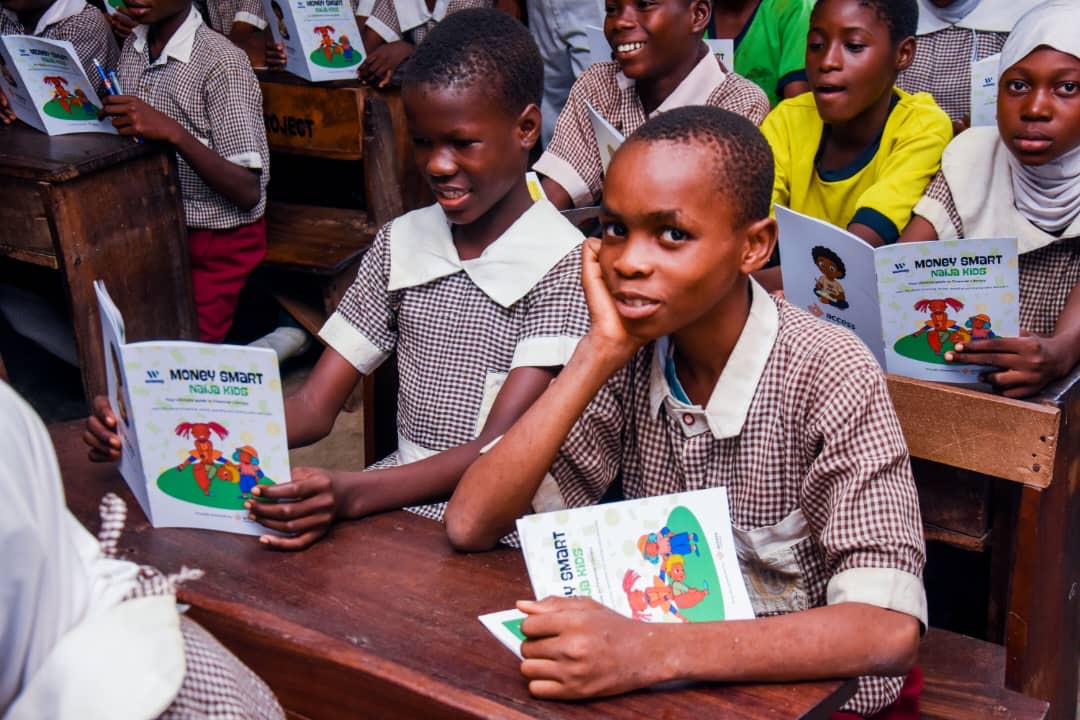
Financial education becomes more useful when children connect classroom concepts with decisions they recognise in daily life.
Why the Naira Talk Should Start Before the First Salary
The biggest mistake parents make is treating financial education as a conversation that begins when a child gets a job.
By then, many financial habits are already being formed.
A child has spent years observing whether adults compare prices, whether purchases are planned, whether money is discussed calmly, whether debt is treated casually, whether saving is visible, whether giving is expected and whether a person's worth is connected to what they can afford.
That does not mean a child's early behaviour determines their adult financial future. It means the environment provides repeated opportunities to learn.
The Central Bank of Nigeria's financial-literacy work recognises the importance of youth and school-based financial education. CBN materials describe initiatives designed to inculcate sound financial habits and skills in children and young people, including school outreach and financial-literacy curriculum development.
International evidence points in the same direction. The OECD's PISA 2022 financial-literacy research found that students who discussed saving or purchasing decisions with their parents were associated with stronger financial-literacy performance. The finding does not mean every family conversation automatically creates wealth. It means the home environment is part of financial education.
That distinction is important.
You are not trying to predict your child's future income. You are building the mental equipment they will eventually use to make decisions about whatever income they have.
Financial literacy includes knowledge, skills, attitudes and the ability to apply them to real decisions. A child who knows how to put money into a savings box but cannot explain why they are saving has learned a behaviour. A child who can compare two choices, understand the trade-off and choose deliberately is developing financial judgement.
What Financial Literacy Actually Means for a Child
Financial literacy sounds like an adult phrase. For children, it can be translated into a much simpler question:
“Can this child make a sensible decision when money is involved?”
That decision could be tiny. It could be whether to spend ₦1,000 immediately or save it toward something larger. It could be whether buying a second snack means having less money for transport. For an older teenager, it could be whether an online purchase is affordable, whether a transfer request is suspicious or whether borrowing is actually necessary.
| Money skill | Child-friendly meaning | Real Nigerian practice |
|---|---|---|
| Value | Money can buy things, but money is limited. | Compare two snacks or school items. |
| Saving | Keep some money for later. | Save toward a book, toy or personal goal. |
| Budgeting | Decide where money will go before spending it. | Plan a small allowance. |
| Opportunity cost | Choosing one thing means giving up another possible use. | Spend now or keep the money for a larger goal. |
| Income | Money can come from work or other legitimate sources. | Explain wages, business revenue and gifts. |
| Risk | Some choices can lose money or create problems. | Explain why suspicious offers should be avoided. |
| Digital money | Money can move electronically even when no cash changes hands. | Explain transfers, transaction records and privacy. |
The goal is progression. You do not explain compound interest to a four-year-old because you want to sound financially responsible. You explain waiting.
You do not start a six-year-old with a lecture about investment diversification. You explain that money kept for a future purpose gives them more choices later.
You do not teach a teenager about debt by saying, “Loans are bad.” You explain that borrowing moves a financial obligation from the future into the present.
The Nigerian Age-by-Age Money Map
There is no universal age at which every child becomes ready for a particular money concept. Development, family circumstances and the child's actual exposure to money matter.
Still, an age map gives parents a useful starting point.
| Approximate age | Primary lesson | What to practise | What not to overload them with |
|---|---|---|---|
| 3–5 | Money exists and choices have limits. | Counting, simple saving, choosing one item. | Loans, investments, complex household finances. |
| 6–8 | Money can be saved, spent or given. | Small goals, simple allowance, price comparison. | Detailed income information. |
| 9–12 | Planning improves choices. | Budgets, delayed gratification, earning, needs and wants. | High-risk financial products. |
| 13–15 | Money has consequences beyond today. | Digital payments, records, budgeting, scams, opportunity cost. | Unsupervised financial accounts or products. |
| 16–17 | Financial independence requires planning. | Income, taxes as a concept, banking, debt, investing principles, career choices. | Pressure to make adult financial decisions prematurely. |
The ages are a guide, not a rulebook. A financially curious ten-year-old may be ready for concepts that another child encounters later.
How to Teach the Value of the Naira
Do not teach the value of the naira by making children recite denominations.
Teach value through decisions.
Suppose a child has ₦2,000. You can say:
“You can spend all of it today. You can save all of it. Or you can divide it. What are you trying to achieve?”
The lesson is not the perfect percentage. The lesson is that money represents limited purchasing power.
This becomes particularly important in Nigeria because prices can change. A child who grows up believing that ₦5,000 always represents the same amount of purchasing power may struggle to understand why the family changes brands, quantities or shopping habits.
You do not need to frighten children with economic statistics. You can simply explain that prices change and families therefore have to make choices.
One of the strongest money lessons available to a Nigerian parent is the ordinary shopping trip. Instead of saying “This is expensive,” ask the child what makes the purchase expensive relative to the family's plan. A ₦2,500 item is not automatically expensive or cheap. Its effect depends on what the household planned to do with the money and what other priorities compete for it.
Teaching Needs, Wants and Trade-Offs
“Needs versus wants” is one of the most repeated pieces of financial advice on the internet. The problem is that children often hear the words without learning how to apply them.
Instead of asking, “Is this a need or a want?” every time, teach three questions:
- What problem does this purchase solve?
- What happens if we do not buy it today?
- What else could this money do?
That third question is the most powerful because it introduces opportunity cost.
If a child spends ₦3,000 on one item, that ₦3,000 cannot simultaneously be used for another purchase or savings goal.
That does not mean the purchase is wrong.
Sometimes spending on a want is perfectly reasonable. The objective is not to raise children who feel guilty whenever they buy something enjoyable. The objective is to raise children who understand that enjoyment has a cost and can therefore be planned.
| Situation | Weak lesson | Better lesson |
|---|---|---|
| Child wants an expensive snack | “No, that is wasteful.” | “You can buy it, but what will you give up to afford it?” |
| Child wants a new phone | “Phones are not important.” | “What problem does the new phone solve, and is that problem worth the cost?” |
| Child receives cash gift | “Save everything.” | “Let's decide what portion has a purpose before spending.” |
Allowances, Gifts and Pocket Money
Giving a child money is not automatically financial education.
The learning comes from what happens around the money.
If a child receives ₦1,000 and immediately spends it, the parent can simply replace it later. That teaches very little.
If the child receives ₦1,000, chooses a small amount for immediate spending, saves part for a target and later reviews the result, the same ₦1,000 becomes a learning tool.
Should allowance be weekly or monthly?
For younger children, shorter periods can make the connection between decisions and consequences easier to understand. A child who spends everything on Monday and has nothing on Friday can see the consequence quickly.
Older children can gradually move toward longer planning periods.
| System | Best learning opportunity | Potential weakness |
|---|---|---|
| No regular allowance | Parent controls financial exposure. | Fewer opportunities for independent practice. |
| Small regular allowance | Repeated budgeting practice. | Child may treat it as guaranteed entitlement. |
| Allowance plus optional paid tasks | Can demonstrate earning and responsibility. | Can accidentally teach that every household responsibility deserves payment. |
A useful compromise is to separate family responsibility from optional earning opportunities.
Cleaning one's room, helping with basic household responsibilities and behaving responsibly can be part of being a family member. Optional tasks beyond normal expectations can sometimes be paid if the parent chooses.
Teaching Children How Money Is Earned
A child needs to understand something simple but powerful:
Money usually has an economic story behind it.
Someone worked for wages. A business sold something. A professional provided a service. A parent received income from employment. A relative gave a gift. An investment generated a return. These are not the same thing.
Children should learn the difference between earning and receiving.
A birthday gift is receiving money. Completing a legitimate paid task is earning money. Interest or investment returns are returns on capital, subject to the risks and terms of the product.
That distinction prevents a common adult misconception: believing that money simply appears whenever you need it.
For older children, this is also where conversations about skills become useful. Explain that employers and customers pay for value, time, expertise, reliability or a combination of these.
How to Make Saving Practical
The first saving lesson should not be “save because saving is good.”
Give saving a job.
A child saves more effectively when they know what the money is for.
Keep it concrete enough for the child to understand.
For example, an illustrative goal could be ₦10,000.
If the child saves ₦1,000 each time they receive ₦2,000, the child can see progress.
A simple chart can be more powerful than a lecture.
Ask what made saving easy or difficult.
Illustrative calculation: If a child saves ₦1,000 ten times, the total is ₦10,000 before considering any return or loss. The important lesson is not the amount. It is that repeated small decisions can produce a measurable result.
This is also why parents should avoid constantly rescuing a child from every spending mistake. A small, safe mistake can be educational.
If a child spends their entire allowance on Monday and has no money later in the week, the solution is not necessarily to immediately replace the money. The better response may be to discuss what happened and what the child could change next time.
When and How to Introduce Budgeting
Budgeting is simply deciding what money is supposed to do before the money disappears.
For children, start with three buckets:
As the child grows, add more sophisticated categories:
The percentages do not need to be universal. A family with different circumstances may choose different allocations.
The lesson is the architecture.
Money arrives → assign priorities → spend deliberately → review what happened.
That cycle is more valuable than memorising a particular budgeting formula.
A simple teenager's budget exercise
Suppose a teenager receives an illustrative ₦20,000 for a month.
| Category | Illustrative allocation | Purpose |
|---|---|---|
| Immediate spending | ₦8,000 | Controlled day-to-day choices. |
| Goal saving | ₦6,000 | Build toward a defined target. |
| Giving | ₦2,000 | Practise generosity within limits. |
| Flexible reserve | ₦4,000 | Handle unexpected small needs. |
This is not a recommended universal formula. It is an illustrative exercise showing how a teenager can assign a job to money before spending it.
Teaching Digital Money Safely
This is where modern financial education becomes very different from the childhood money education many Nigerian parents received.
A child may grow up seeing money move without seeing cash.
A parent taps a phone. A transfer succeeds. A notification appears. The child's mental model can become: “Money is just a number on a screen.”
That is dangerous if not corrected.
Digital money is still money. A transfer creates a financial transaction. A card payment spends money. A balance can fall. A transaction can be disputed. A scam can exploit trust. A password or PIN can protect access.
The five digital-money lessons every teenager should understand
- A PIN is private. It should not be casually shared.
- One-time passwords and verification codes are sensitive. A legitimate person should not pressure a child into revealing security credentials.
- Transfers leave records. Digital transactions should not be treated like invisible cash.
- Online offers can be deceptive. A screenshot of a payment or profit claim is not proof that an opportunity is legitimate.
- Digital convenience can increase spending speed. Removing the physical feeling of handing over cash does not remove the financial consequence.
The objective is not to make teenagers afraid of banking technology. It is to make them competent users of it.
The OECD's financial-literacy framework explicitly includes digital and foreign currencies, online and mobile payments, bank cards, accounts, value-for-money decisions and protecting financial information. The modern money lesson therefore cannot stop at the traditional kolo.
Teaching Borrowing and Debt Without Frightening Children
Children should not be taught that every form of borrowing is evil.
They should be taught that borrowing creates an obligation.
For a young child, the lesson can be as simple as borrowing a toy and returning it when promised.
For an older teenager, you can explain:
Borrowing means receiving something now while accepting a future obligation.
When money is borrowed, the borrower may have to repay the original amount plus interest, fees or other costs depending on the arrangement.
That means borrowing changes future choices.
Imagine an illustrative teenager who has ₦10,000 available next month and agrees to repay ₦4,000 from that future money. The ₦4,000 is no longer available for other purposes. That is the concept parents need to communicate.
Older teenagers should also learn that a small periodic payment does not automatically mean a cheap loan. The total amount repaid matters.
This is a particularly useful lesson before adulthood, when advertising, peer pressure and easy digital access can make borrowing appear simpler than it really is.
When to Introduce Investing
Investing should come after basic financial concepts, not before them.
A child who does not understand saving, risk and opportunity cost is not ready for a complicated investment pitch merely because someone says it will “make money.”
For younger children, teach the idea:
Some money can be used now. Some money can be kept for later. Some money can be put into something that may grow but can also involve risk.
Teenagers can gradually learn:
- the difference between saving and investing;
- why investments have different levels of risk;
- why returns are not guaranteed merely because a product advertises a target;
- why diversification matters;
- why time horizon matters;
- why regulation and verification matter;
- why an attractive return should never be the only question.
Parents should be especially careful with online investment claims. The right lesson is not “trust this app.” It is “verify who is offering the product, what the product actually does, what regulator applies and what risks you are accepting.”
For Nigerian financial products, current regulatory information should be checked directly with the relevant regulator before money is committed.
Talking About Family Money Without Oversharing
Financial transparency does not mean telling a five-year-old every detail about the household's income, debt or private financial problems.
Children need enough information to understand decisions without being burdened by adult responsibilities.
For example, instead of saying:
“We cannot afford anything because everything is terrible,”
a parent could say:
“We have several things we need to pay for this month, so we have to choose what comes first.”
The second explanation teaches prioritisation without transferring adult anxiety to the child.
What younger children need to know
- Money is limited.
- Adults work or operate businesses to earn money.
- Households have priorities.
- Not every desired purchase can happen immediately.
What teenagers can gradually understand
- Income and expenses.
- Why emergencies require reserves.
- Why debt reduces future flexibility.
- Why financial decisions involve trade-offs.
- Why privacy and security matter.
- Why education and skills are economic assets.
The objective is age-appropriate honesty.
Money-Teaching Mistakes Parents Should Avoid
1. Making money a taboo subject
If every money question is answered with “you are too young,” children may eventually learn about money from friends, influencers or strangers online instead.
Better approach: answer the part of the question that is appropriate for their age.
2. Teaching saving without teaching spending
A child who is told only to save may eventually associate money with restriction.
Better approach: teach purposeful spending, saving and giving together.
3. Using shame as a financial lesson
Calling a child “wasteful” or “bad with money” can turn a correctable behaviour into an identity.
Better approach: criticise the decision, not the child's character.
4. Giving money without giving responsibility
Money becomes a stronger teacher when the child has some controlled responsibility for the decision.
5. Treating wealth as proof of virtue
Children should not learn that richer people are automatically smarter, better or more worthy.
Money is a resource, not a measure of human value.
6. Teaching investing before basic money management
Investment language can sound exciting. But without understanding risk, fees, liquidity and time horizon, a teenager can mistake complexity for sophistication.
7. Making every chore transactional
If every helpful action receives cash, children may struggle to distinguish responsibility from paid work.
8. Hiding every financial mistake
Parents do not need to expose children to adult distress, but appropriate lessons from mistakes can be valuable.
“We bought this without checking the price carefully, and we learned to compare first” can be a better lesson than pretending adults never make mistakes.
The Daily Reality NG Family Money Framework
To make the lessons practical, Daily Reality NG recommends thinking about childhood financial education through seven questions.
Gift, work, business income, allowance or another legitimate source?
If there is no purpose, spending can become automatic.
What else could the same money accomplish?
Does today's decision affect tomorrow's choices?
Introduce risk at an age-appropriate level.
Use receipts, simple records or a savings tracker.
The review is often more valuable than the original decision.
This framework can be used with a child's first ₦500 and later with a teenager's first substantial income. The numbers change. The thinking remains.
Three Original Nigerian Household Scenarios
Scenario A — The birthday ₦10,000
Illustrative scenario: A 10-year-old receives ₦10,000 as a birthday gift. Instead of deciding everything for the child, the parent asks the child to divide the money into three purposes.
The child chooses ₦4,000 for immediate spending, ₦4,000 toward a savings goal and ₦2,000 for giving.
The important outcome is not whether those percentages are perfect. The child has just practised allocation, delayed gratification and generosity within a limited amount.
Scenario B — The teenager and the new phone
Illustrative scenario: A teenager wants a more expensive phone because friends have newer models.
The parent does not simply say yes or no. They ask the teenager to identify the actual problem the phone would solve, compare the current device with the proposed device, calculate the difference in price and identify what else that money could fund.
The teenager may still choose the new phone. That is acceptable. The educational win is learning to make the decision consciously.
Scenario C — The digital transfer
Illustrative scenario: A teenager receives money through a bank transfer for a school-related expense.
The parent asks the teenager to record the amount received, identify the purpose, spend only what is required and keep evidence of the transaction.
This turns digital banking from an invisible adult activity into a lesson in accountability.
Children need to learn not only how to make a decision, but how to review it. “What happened?” and “What would you change next time?” create a feedback loop. That is how a one-time spending event becomes financial education.
How Parents Can Use Ordinary Nigerian Life as the Classroom
You do not need an expensive financial-literacy course to start.
The supermarket is a classroom.
The market is a classroom.
The electricity bill is a classroom.
The data subscription is a classroom.
The school-fee conversation is a classroom.
The family budget is a classroom.
A failed purchase is a classroom.
A successful savings goal is a classroom.
Even a simple conversation about why the household chooses one brand instead of another can teach economics.
The important thing is to avoid turning every ordinary activity into a lecture. Children learn better when the explanation is attached to a real decision.
How to Explain Inflation to a Child Without Creating Fear
Younger children do not need a macroeconomic lecture.
Use a simple example:
“Last year, this amount bought three items. Now the same amount buys two. That means prices changed, so we have to plan differently.”
For teenagers, you can introduce purchasing power.
Explain that having more naira does not automatically mean being richer if prices have increased faster than income.
This is an important protection against the illusion that a bigger-looking bank balance always represents greater wealth.
Teaching Generosity Without Teaching Financial Self-Neglect
Giving is part of financial behaviour in many Nigerian families.
Children should be allowed to understand generosity, but generosity also needs boundaries.
A child should learn that helping someone does not require giving away everything they have.
This becomes increasingly important as teenagers begin receiving more money and may experience pressure from friends or relatives.
A useful phrase is:
“You can be generous and still have limits.”
That lesson protects both compassion and financial stability.
Teaching Children About Financial Privacy
Financial literacy without security education is incomplete.
Children should know that money information can be sensitive.
They should learn not to casually publish:
- account numbers;
- card details;
- PINs;
- verification codes;
- passwords;
- screenshots showing sensitive transaction information.
Older teenagers should also understand social engineering: someone may pretend to be a friend, seller, bank employee or authority figure to pressure them into revealing information or transferring money.
The lesson should be calm rather than frightening:
Stop. Verify. Ask a trusted adult. Do not rush because someone says the situation is urgent.
What Schools Can Teach That Parents Should Reinforce at Home
Financial literacy works best when formal education and everyday experience support each other.
CBN's financial-literacy work has included school reach-out initiatives and curriculum development. OECD research similarly treats financial education in schools and financial experiences at home as complementary parts of financial capability.
A school may teach the concept of a budget. A parent can then let a teenager build a simple budget for an actual small amount of money.
A teacher may explain percentages. A parent can show how a discount changes the price of an item.
A classroom can explain saving. A family can establish a savings goal.
The connection between theory and practice is where the lesson becomes durable.
What If You Were Never Taught About Money?
This is one of the most important questions in the entire topic.
Some parents are trying to teach children skills they never received themselves.
You do not have to become financially perfect first.
You can learn alongside your child.
In fact, saying “I did not learn this when I was young, so let's learn it together” can create a healthier relationship with money than pretending to know everything.
You can start with four questions:
- What money comes into our household?
- What must leave the household?
- What are we trying to achieve?
- What mistakes do we want to avoid?
You do not need to reveal private financial details. You are teaching the structure of financial decision-making.
The Difference Between Financial Discipline and Financial Shame
There is a crucial distinction.
Discipline says: “This decision has consequences, so let's think before we make it.”
Shame says: “You are a bad person because you made this decision.”
Only the first teaches financial capability.
Children will make mistakes. Adults do too.
The household should therefore create an environment where mistakes can be discussed without humiliation.
This is particularly important for teenagers. A teenager who is terrified of admitting a financial mistake may hide it until the problem becomes larger.
The 24-Hour, 7-Day and 30-Day Money-Talk Plan
24-Hour Action
- Choose one child-appropriate money topic.
- Ask one question rather than delivering a lecture.
- Use a real-life example from your household.
- Let the child explain their thinking.
- Do not correct every answer immediately.
7-Day Action
- Day 1: Talk about where money comes from.
- Day 2: Compare two prices while shopping.
- Day 3: Create one small savings goal.
- Day 4: Discuss needs and wants.
- Day 5: Explain one digital-money safety rule.
- Day 6: Review a spending decision.
- Day 7: Ask the child what money lesson they remember most.
30-Day Action
Build a repeating family money routine. Once a week, have a short conversation about one financial decision. Once a month, review a savings goal, spending pattern or financial lesson. The routine should be brief enough to continue.
A Parent's Money-Education Checklist
- ☐ My child understands that money is limited.
- ☐ My child knows that money can be spent, saved and given.
- ☐ My child has practised waiting before buying something.
- ☐ My child understands that choices have trade-offs.
- ☐ My child has experienced a simple savings goal.
- ☐ My child understands that earning and receiving money are different.
- ☐ My teenager understands basic budgeting.
- ☐ My teenager understands that digital money is real money.
- ☐ My teenager knows not to share sensitive financial credentials.
- ☐ My teenager understands that borrowing creates future obligations.
- ☐ My older child understands that investment returns involve risk.
- ☐ We can discuss money without shame.
- ☐ I do not use wealth as a measure of a person's worth.
- ☐ I allow age-appropriate financial mistakes to become learning opportunities.
- ☐ I model the financial behaviour I want my child to learn.
Eight Questions Parents Should Ask Before the Next Money Conversation
- What does my child already understand?
- What money decision are they currently making?
- What concept would make that decision clearer?
- Can I demonstrate the lesson using real life?
- Am I teaching judgement or merely giving instructions?
- Am I creating fear around money?
- Am I modelling the behaviour I expect?
- What is one small decision my child can practise independently?
How This Connects to the Wider Nigerian Financial Reality
Teaching children about money is not just about producing good savers.
It is about producing people who can understand financial systems.
CBN's financial-literacy framework connects financial capability with consumers' ability to make better choices, understand financial products and participate more effectively in the formal financial system.
That becomes increasingly important as financial services become more digital and as young people encounter more financial decisions earlier.
The OECD's PISA work also emphasises that financial literacy involves the ability to apply knowledge to real decisions rather than merely remembering definitions.
That is the central lesson for Nigerian parents.
Do not teach money as a school subject alone. Teach it as a decision-making skill.
Related Daily Reality NG Reading
Money education works best when it connects to the wider financial environment. These Daily Reality NG resources provide additional context:
- Investment Strategies for Nigerian Remote Workers — useful for understanding how financial planning changes when income becomes more complex.
- High-Yield Savings vs Fintech Apps in Nigeria — useful for explaining the difference between savings products and investment decisions.
- 10 Silent Money Mistakes Nigerian Youths Make — useful for older teenagers preparing for adulthood.
- Why Nigerians Struggle to Build Wealth — useful for discussing the difference between financial discipline and income constraints.
- Ultimate Survival Guide for Nigerian Youths — broader context on income, savings and financial independence.
- Nigerian Economy 2026: Real Trends Every Nigerian Must Know — useful when explaining why household purchasing power changes.
- Daily Reality NG Resources and Tools — the publication's central resource hub.
- Daily Reality NG Personal Finance Authority Hub — broader personal-finance coverage.
- Daily Reality NG Navigation Hub — browse the publication's wider Nigerian finance and business coverage.
- Daily Reality NG Categories and Topics — find related finance, banking and business articles.
- About Daily Reality NG — publication background and editorial identity.
- Author Expertise — background on the publication's areas of research.
- Daily Reality NG Welcome and Editorial Approach — how the publication approaches Nigerian financial information.
- Daily Reality NG Transparency Report — publication transparency and editorial accountability.
- Daily Reality NG Reader Feedback — how reader questions influence future coverage.
15 Frequently Asked Questions
When should parents start teaching children about money?
What should a five-year-old know about money?
How can I teach my child the value of the naira?
Should children receive pocket money or allowances?
Should parents pay children for household chores?
When should children learn about saving?
Should Nigerian children learn about digital money?
How do I teach children the difference between needs and wants?
When should teenagers learn about budgeting?
Should parents tell children how much the family earns?
How can parents teach children about debt?
Should children learn about investing?
What is the biggest money lesson parents should teach?
What if my family did not teach me about money?
How can schools and parents work together on financial literacy?
Key Takeaways
- There is no need to wait until a child gets a job before starting financial education.
- Young children need simple lessons about choices, value, waiting and saving.
- Primary-school children can practise budgeting, comparison and financial goals.
- Teenagers should gradually learn digital money, privacy, borrowing, risk and financial planning.
- Money conversations should teach judgement rather than shame.
- Real-life Nigerian decisions are often better teaching tools than abstract lectures.
- Parents do not need to be financially perfect to teach useful lessons.
- The strongest money education is repeated: explain, practise, review and improve.
The Practical Bottom Line
The best time to start the naira talk is not when your child becomes an adult.
It is when money first becomes meaningful to them.
That may happen when they ask why you cannot buy everything in a shop. It may happen when they receive their first birthday money. It may happen when they start comparing themselves with classmates. It may happen when they see a parent transfer money from one phone to another. It may happen when they become curious about jobs, salaries or businesses.
Use that moment.
You do not need a perfect family budget. You do not need an expensive course. You do not need to know every investment product.
You need a habit of explaining decisions.
Why are we buying this?
What else could the money do?
What happens if we wait?
Where did the money come from?
What happens later?
What could go wrong?
What did we learn?
Those questions can follow a Nigerian child from the first small kolo to the first salary.
That is the real purpose of teaching kids about money: not to make them obsessed with money, but to make them capable of making thoughtful decisions when money eventually controls bigger parts of their lives.

About the Author — Samson Ese
Samson Ese is the Founder and Editor-in-Chief of Daily Reality NG, an independent Nigerian digital publication based in Warri, Delta State. I writes and edits practical Nigerian coverage spanning personal finance, fintech, business, technology and everyday financial decisions.
For this article, the editorial approach was to treat children's financial education as a practical Nigerian decision-making subject rather than a generic “save your money” lesson. The research was checked against CBN financial-literacy materials and international financial-literacy research, then translated into age-appropriate Nigerian examples.
Editorial principle: Daily Reality NG does not treat financial education as a substitute for professional advice. Where a financial product, regulation or account is involved, readers should verify current information directly with the responsible institution.


Comments
Post a Comment