Digital Payments for Market Traders Nigeria — Why It's Struggling
Digital Payments for Market Traders in Nigeria — Why POS, QR, and USSD Adoption Is Still Struggling
Daily Reality NG was created to answer real questions with real solutions. Today's question: why are Nigerian market traders — the backbone of this economy — still rejecting digital payments even in 2026, after years of fintech investment, CBN policy pressure, and POS terminal proliferation? I'm sharing everything I know from firsthand observation and ground-level research to help you understand exactly what's happening and why it matters.
🔍 Daily Reality NG operates on one principle: honesty above everything. This article about digital payment adoption in Nigerian informal markets gives you the full picture — the structural barriers, the human realities, the policy failures, and the few things that are actually working. No cheerleading for fintech companies. No government talking points. Just what's really happening at Oyingbo Market, Onitsha Main Market, and Wuse Market right now.
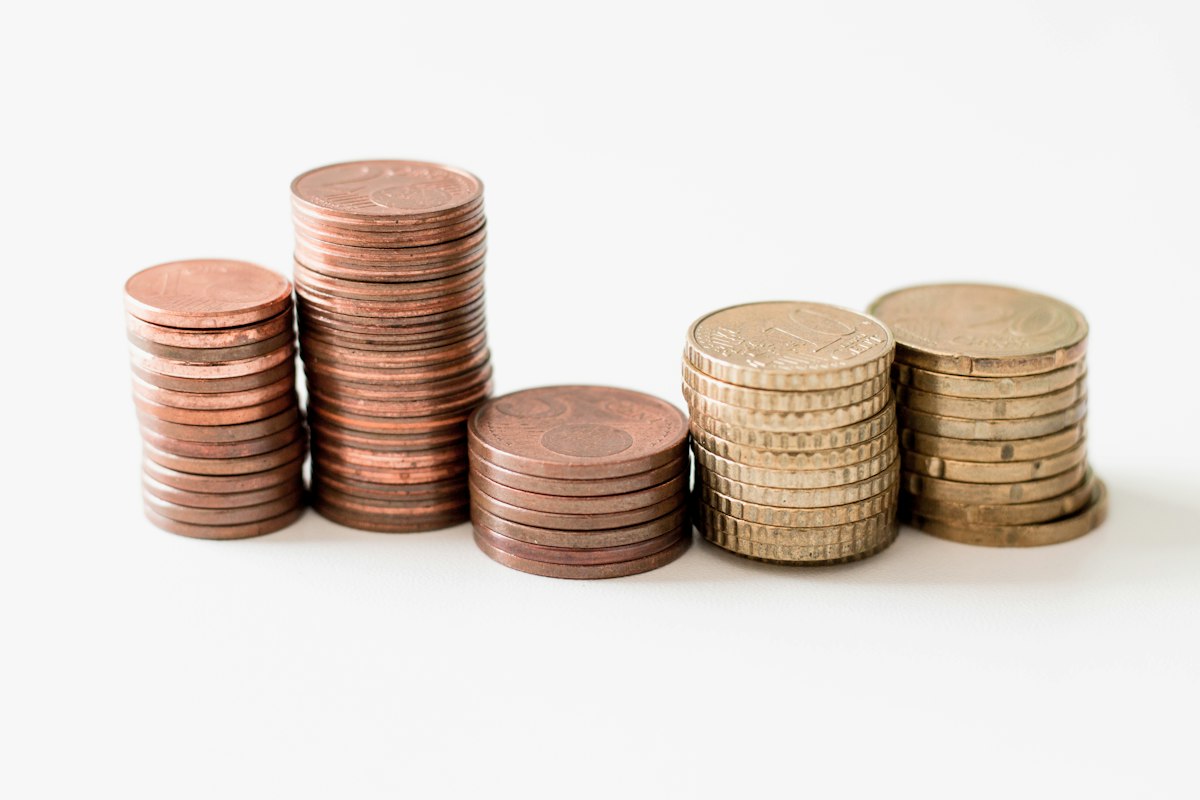
February 2025. I was at Eke Market in Delta State — one of those big four-day rotation markets where you see everything. Tomatoes piled high. Live chickens. Spare parts. Fabrics from Aba. And everywhere — cash. Wrinkled ₦200 notes. Coins passed back and forth. A trader using her wrapper pocket as a wallet.
I watched a woman called Mama Glory — she sells stockfish and dried pepper — turn away a customer. The guy wanted to pay with his phone. Transfer, he said. "I no do transfer," she said flatly, and turned to the next person in line. The customer stood there for a moment, genuinely confused, then walked to another stall.
I went and spoke to Mama Glory afterward. She wasn't hostile. She was practical. "Transfer take time," she said. "Sometimes e no enter. Then wetin? I go call who?" She lost a sale. She'd lose more. But from her perspective, she was managing risk — not refusing technology out of ignorance.
That conversation has stayed with me. Because it cuts through the surface-level narrative that says Nigerian market traders are "resistant to digital payments" because they're uneducated or technophobic. That framing is wrong, and the evidence is wrong, and the policy built on that framing has largely failed.
The real story is harder and more interesting. Digital payments are struggling in Nigeria's informal markets not because traders don't understand them — many do. They're struggling because the products being offered don't adequately solve the problems traders actually have. There's a difference. And understanding that difference is the beginning of actually fixing it.
As of February 2026, Nigeria's informal economy accounts for an estimated 57 percent of GDP, according to the National Bureau of Statistics. The people running that economy — market traders, roadside sellers, artisans, food vendors — process hundreds of billions of naira in transactions every single day. Almost none of it is digital. That's not a small gap. That's the central financial inclusion problem in Nigeria.
📊 The Scale of the Problem — Numbers That Matter
Before getting into the barriers, you need to understand the size of what we're talking about. This is not a niche fintech challenge. This is the main event.
| Indicator | Estimate (2026) | Source / Context |
|---|---|---|
| Nigeria's informal economy as share of GDP | ~57 percent | NBS estimates, IMF informal economy database |
| Nigerians working in informal sector | ~80 percent of workforce | ILO Nigeria Labour Force data |
| Registered market traders in Lagos alone | Over 5 million | Lagos State Markets Authority estimates |
| Digital payment transactions as share of informal market value | Under 8 percent | EFInA Financial Access Survey indicators |
| POS terminal failures reported monthly (industry) | Millions of failed transactions | CBN Payment System reports, industry estimates |
| Nigerians with bank accounts who still primarily use cash for market transactions | Over 60 percent | EFInA survey data |
That last row is the one that always gets me. More than 60 percent of Nigerians who have bank accounts still use cash when they're in markets. They have the accounts. They have the phones. They are not unbanked. But they revert to cash the moment they step into informal trade environments. That tells you the problem is not about account ownership — it's about the transaction experience in these specific contexts.
📍 Why Informal Markets Specifically?
Nigerian informal markets are not just places where poor people shop. They're complex economic ecosystems. A single major market like Onitsha Main Market or Alaba International generates more daily trade volume than many medium-sized Nigerian companies. The traders operating these stalls are running real businesses — managing inventory, credit, suppliers, and staff. They are not pre-modern. They are operating with modern sophistication in environments where the digital payment infrastructure does not adequately serve them. That's the distinction that matters.
🧱 The Real Barriers — Why Traders Reject Digital Payments
I want to go through these carefully. Because the barriers are not what most fintech decks say they are.
⚡ Barrier 1: Network Unreliability at the Transaction Moment
This is number one. Not literacy. Not trust. Not education. Network. In a busy market in Aba, Onitsha, or Ladipo in Lagos, dozens of people are on their phones simultaneously. Network congestion is severe. A transfer that works fine at home at 9pm fails repeatedly between 11am and 2pm in a crowded market.
A trader who has watched customers abandon sales after five minutes of "pending transaction" doesn't need to be told about fintech. They've experienced fintech. They made a rational business decision based on that experience. Blaming the trader for this is absurd.
⏱ Barrier 2: Transaction Speed vs Market Pace
Walk through a busy market. The pace is fast. A food vendor at Oyingbo Market in Lagos processes 60 to 100 transactions before noon. Each one takes seconds when paying cash. A digital transfer — selecting bank, entering account number, confirming — takes 45 seconds to 3 minutes under normal conditions. Multiply that by 80 customers and you've added over an hour to the morning that simply doesn't exist in the rhythm of market trade.
Mama Glory wasn't being stubborn. She was protecting her competitive speed.
💸 Barrier 3: The Cost Layer That Buyers and Sellers Both Hate
POS terminal rentals cost money. Transaction fees apply. Bank charges on the receiving end can eat into margins on small-value transactions. For a trader whose average transaction size is ₦500 to ₦2,000, a ₦50 or ₦100 platform fee is not small. It's 5 to 10 percent of the transaction — which for low-margin goods trading destroys profitability.
The cost of cash — carrying it, counting it, the risk of theft — is real. But for most informal traders, those costs are invisible and already embedded in how they operate. The cost of digital is visible and additional. Behavioral economics predicts the outcome: visible costs lose to invisible ones every time.
🔐 Barrier 4: The "Delayed Entry" Trust Problem
When a buyer completes a transfer, there is a gap. The notification arrives — sometimes. The confirmation comes — eventually. But the goods have already left the stall. For high-value items, this gap creates real fraud exposure. Traders have been shown fake transfer confirmations. They've received notifications that reversed later. They've dealt with "I've sent it, just check your phone" customers who hadn't.
Cash has none of this ambiguity. Notes in hand equals trade complete. No confirmation needed. No waiting for a bank server to process. No reversal risk in the next 24 hours. The certainty of cash has economic value that no amount of "just trust the tech" messaging can immediately replace.
📱 Barrier 5: Device and Data Literacy Gaps at Scale
This is the one that's real but often overstated. It is true that a segment of market traders — particularly older women in rural markets and those with limited formal education — face genuine barriers around smartphone use, reading USSD codes, or navigating banking apps. This is real. But it is not the primary barrier in most urban markets, where smartphone penetration among traders is high and rising.
In Abuja's Wuse Market or Lagos Island's Balogun Market, most traders have smartphones. The challenge there is not device literacy — it's network reliability, transaction costs, speed, and trust. Conflating all these barriers into one "digital literacy" problem leads to bad solutions — training programs that don't address why transactions actually fail.

🇳🇬 Did You Know?
Nigeria processes over 10 billion payment transactions annually through NIBSS (Nigeria Inter-Bank Settlement System), making it one of Africa's largest payment markets by volume. Yet according to EFInA's 2024 Access to Financial Services report, a majority of daily market transactions — especially those below ₦5,000 — still happen in cash. The paradox: Nigeria has sophisticated payment infrastructure at the top of the stack and near-zero penetration at the market level. The gap between these two realities is where financial inclusion actually lives.
💳 Why POS Terminals Haven't Solved It
Nigeria has seen an extraordinary expansion of POS terminals in recent years. By the end of 2025, NIBSS data showed over 3 million active POS terminals across the country. That sounds like progress. And in some contexts — supermarkets, fuel stations, pharmacies — it is. But in informal markets, POS adoption has stalled despite the hardware being physically available.
🚫 The POS Agent Model and the Market Mismatch
Most POS terminals in informal markets are not owned by traders themselves. They're operated by POS agents — individuals who charge a service fee (typically ₦100–₦200 per withdrawal or deposit) to process transactions on behalf of people who don't want to go to a bank branch. This is a brilliant last-mile solution for banking access. But it doesn't solve the market payment problem.
When you're at a market stall buying ₦1,500 worth of tomatoes, you're not going to walk to the POS agent in the corner of the market, pay ₦100 for a withdrawal, come back with cash, and then buy the tomatoes. You'll just use the cash you already have. The POS agent serves a different use case — banking access — not point-of-sale payments for individual market transactions.
🚨 The Specific POS Failure Modes in Nigerian Markets
- Hardware failures: POS terminals in humid, dusty market environments break down more frequently than in air-conditioned shops. Replacement processes are slow. A trader with a broken terminal doesn't get a same-day replacement — they go back to cash indefinitely.
- Network dependency: POS terminals require GPRS or internet connectivity. In congested market areas, connectivity failures are frequent. A failed POS transaction in front of a line of waiting customers is more damaging to trade than no POS at all.
- Debit card scarcity among buyers: POS terminals require the buyer to have a debit card. A significant portion of informal market customers — particularly older buyers in rural weekly markets — don't have debit cards, or their cards are expired, or they don't remember their PIN. The supply chain for digital payments breaks at the buyer side.
- Settlement delays: When POS transactions fail mid-processing, funds can be debited from the buyer but not credited to the seller — or vice versa. Resolving these disputes requires bank branch visits or lengthy phone support. The time cost is enormous.
- Cost of terminal rental: Merchants typically pay ₦5,000–₦30,000 upfront or in monthly fees for POS terminals, plus transaction fees. For a small trader with ₦150,000 monthly revenue, this is significant overhead for uncertain benefit.
📲 USSD and QR Codes — Promise vs Reality
When POS didn't solve the market payment problem, two alternative technologies got heavy promotion: USSD (*737#, *901#, and similar codes) and QR code payments. Both had genuine promise. Neither has delivered at scale in informal markets. Here's why.
📞 USSD — The Brilliant Technology That Nobody Wants to Use
USSD works without internet. It works on feature phones. It's theoretically perfect for informal markets. The CBN and fintech companies have invested significantly in promoting it. And yet in practice, USSD payment adoption in market trading remains low. The reasons are behavioral and practical.
USSD session timeouts happen frequently in busy areas. A session that times out mid-transaction requires starting over from scratch — re-entering bank codes, account numbers, amounts. For a buyer who is slightly unsure of the process, one timeout is enough to give up permanently. The mental transaction cost of USSD, for many users, is higher than the cost of getting cash from an ATM before entering the market.
USSD also still generates network charges in many configurations. Even if the transfer itself is free, some networks charge per USSD session. For traders processing many small transactions, these costs accumulate.
📷 QR Codes — Fixing a Problem That Doesn't Quite Exist Yet
QR code payments — where a trader displays a code and customers scan it to pay — solve the account number entry problem. They're fast. They work in several emerging markets extremely well (India's UPI system is perhaps the gold standard). In Nigeria, several fintechs and banks have launched QR payment products. Adoption has been modest at best in informal markets.
The challenge is not QR code technology. It's the ecosystem around it. QR payments require the buyer to have a specific banking app installed, have a working internet connection, and be familiar enough with the scan-and-pay flow to complete it quickly. In Nigerian markets, where the buyer base is enormously diverse in age, tech comfort, and phone type, building a payment flow that works for all of them simultaneously is genuinely difficult.
✅ Where QR Has Actually Worked in Nigeria
QR code payments have gained traction in specific Nigerian contexts: university campus cafeterias where student buyers are tech-comfortable, petrol stations with high-value transactions that justify the friction, and restaurants in commercial districts. These share a common factor: buyer homogeneity. When you know your buyers are all smartphone-comfortable young professionals, QR works. In a general market where your customers range from 18-year-old students to 70-year-old grandmothers, QR creates a two-tier system — some customers can use it, many can't.
✅ What Actually Works — Tools Gaining Real Traction in Nigerian Markets
This section matters most to practitioners. Because among all the approaches that have failed or underperformed, there are genuine green shoots — payment methods and tools that are actually gaining ground in informal Nigerian markets. They share specific characteristics.
📱 Bank Transfer via App or USSD — The Dominant "Digital" Method
The most adopted digital payment method among Nigerian market traders is not POS. It's not QR. It's direct bank transfer — either through a mobile banking app or USSD — from buyer to trader. It's informal, unsystematic, and not what payment companies mean when they say "digital payments." But it works.
Why does it work when POS doesn't? Because it requires no hardware. The trader just shares their account number. The buyer initiates the transfer from whatever app they use. The trader waits for the SMS notification. It's clunky — the verification lag is the main problem — but it matches the reality of what both buyer and seller actually have: a phone and a bank account.
The challenge with this method is verification speed and fraud exposure, as discussed earlier. But traders have developed their own workarounds — waiting for confirmation before releasing goods, requiring transfers only from trusted regular customers, capping transfer payments at certain amounts while requiring cash above that threshold.
🏆 Real Example: How Adewale's Hardware Stall in Ibadan Navigated Digital Payments
Adewale, 44, runs a hardware supply stall in Bodija Market, Ibadan. He sells nuts, bolts, pipes, and fittings — mostly to contractors and artisans. Average transaction: ₦3,000 to ₦25,000. By October 2025, he'd completely stopped requiring cash from returning customers.
His system: new customers pay cash until they've bought from him three times. After three successful transactions, he adds them to a WhatsApp group where he posts his account number daily (he rotates for security). Regulars transfer before coming to pick up goods — no waiting, no verification lag. Payment arrives, goods are ready.
For walk-in buyers above ₦5,000, he accepts transfers but doesn't release goods until his UBA app notification arrives — usually 30 to 90 seconds with MTN data in his area. Below ₦5,000, cash only — the verification time isn't worth the pace disruption.
Key insight: Adewale didn't wait for a fintech company to design the perfect product for him. He built his own hybrid system using tools he already had. This is what financial innovation actually looks like at the base of the pyramid — it's informal, adaptive, and built around real constraints.
🟢 Moniepoint and OPay's POS — Why These Specifically Are Gaining Ground
Among POS products, two stand out in informal market adoption: Moniepoint and OPay. Not because their technology is fundamentally different from bank-issued POS terminals, but because of specific operational advantages that directly address the barriers.
Moniepoint's POS devices have developed a reputation for reliability under poor network conditions. Their transaction success rate in low-connectivity environments is meaningfully higher than traditional bank-issued POS systems, according to merchant feedback circulating in trade communities. For a market trader, a terminal that works 90 percent of the time is worth more than one that works 99 percent of the time in a lab but 60 percent at peak market hours.
OPay's advantage is buyer familiarity. OPay has tens of millions of Nigerian users, many of whom are in the informal economy themselves. When a buyer already has the OPay app and OPay balance, the friction of paying an OPay-enabled merchant drops significantly. The payment stays within the ecosystem, reducing network dependency and settlement uncertainty.
🇳🇬 Did You Know?
According to CBN data published in its 2025 Payment System Report, Nigeria's mobile payment transaction value grew by over 40 percent year-on-year. But this growth is concentrated in urban professional and middle-class contexts — e-commerce, utility payments, school fees, and large transfers. Transaction value growth in informal market payments has been significantly slower, suggesting that the fintech boom is creating two separate payment economies: a growing digital one for formal transactions, and a persistent cash one for informal trade. Without specific policy and product focus on the informal sector, this gap is likely to widen.
🏛 Policy Failures — What CBN and Government Got Wrong
I want to be precise here, because "the government failed" is too vague to be useful.
💵 The Naira Redesign and Cash Scarcity Experiment — Lessons Not Learned
In late 2022 and early 2023, the CBN's naira redesign policy created an acute cash shortage across Nigeria. The intent included accelerating digital payment adoption — if people can't get cash, they'll use digital. What actually happened was more complicated and more instructive.
In urban areas with good bank infrastructure and tech-comfortable populations, digital payments did spike. But in rural markets, smaller towns, and informal trade environments, the cash scarcity created economic paralysis rather than digital adoption. Traders stopped selling because buyers couldn't pay. Food prices spiked because supply chains broke down. The experience demonstrated that you cannot force digital adoption in environments where the digital infrastructure cannot carry the transactional load.
The lesson should have been: fix the infrastructure first, then reduce cash. Instead, most policy discussion has continued to treat digital adoption as primarily a behavior change problem rather than an infrastructure problem. That framing is still wrong in 2026.
📋 The Agent Banking Rollout — Right Idea, Wrong Target
CBN's agent banking program — licensing non-bank businesses to provide basic financial services — has been a genuine success for banking access. Millions of Nigerians in underserved areas can now deposit, withdraw, and make transfers through local agents. This is real progress.
But agent banking solves banking access, not market payment fluidity. The distinction matters enormously. Financial inclusion policy has sometimes conflated these two goals — treating "more Nigerians have accounts" as equivalent to "more market transactions are digital." They're not the same thing, and tracking account ownership as a proxy for payment digitization has produced misleading progress reports.
⚠️ What Would Actually Help — Policy Recommendations Grounded in Reality
- Mandate telecoms to prioritize payment traffic in congested areas. If MTN, Airtel, and GLO were required to give payment USSD sessions priority over general data traffic in designated market zones, transaction failure rates would drop immediately.
- Create a zero-fee payment tier for transactions below ₦2,000. Low-value transactions — the backbone of informal market trade — need to be economically neutral for both parties. Subsidize this through telecoms licensing or payment infrastructure levy, not by passing costs to merchants.
- Build offline payment capability into national payment standards. Payment that works without real-time internet — using NFC, Bluetooth, or stored value on SIM cards — would directly address the connectivity barrier that underlies most other failure modes.
- Integrate market associations into fintech design processes. The leadership structures of Onitsha Main Market, Alaba International, and other major markets have real influence over trader behavior. Fintech companies that co-design products with market association leaders see adoption rates that cold rollouts never achieve.
🚨 Scam and Fraud Risks Market Traders Face With Digital Payments
This needs its own section because it's both common and under-discussed.
⛔ Warning: The Specific Fraud Patterns Targeting Nigerian Market Traders
1. Fake transfer alert SMS: Scammers send an SMS that looks exactly like a bank transfer notification — same format, same sender ID in many cases. The trader releases goods, the money never arrives. This is one of the most common scams in Nigerian markets. Traders who rely on SMS alerts are vulnerable. The solution: verify via your actual banking app, not just the SMS.
2. Reversed transaction scam: A payment is made legitimately, goods are released, then the buyer initiates a chargeback dispute with their bank, claiming fraud. The funds are reversed and the trader has neither goods nor money. This is harder to prevent but can be mitigated by getting buyer identification for high-value transactions and requiring ID photos for new customers paying large amounts digitally.
3. Overpayment scam: A buyer "accidentally" transfers too much (say ₦50,000 instead of ₦5,000) and asks for a cash refund of the difference. The original transfer later reverses, but the trader has already handed over ₦45,000 in cash. Real people have lost their entire daily trading capital to this. Never refund digitally received funds in cash before the transfer is fully settled in your account.
4. POS cloning at shared terminals: In markets where multiple traders share a POS terminal, card data from one customer can be compromised if the terminal has been tampered with. Traders accepting cards should verify their terminals haven't been physically modified, and request certified hardware directly from their bank or licensed fintech company.
What to do if you've been scammed: Report immediately to your bank's fraud line. File a complaint with the CBN Consumer Protection hotline (07002255226). For amounts above ₦100,000, file a report with EFCC. Keep records of all transactions, screenshots, and communication with the buyer. Nigerian traders have successfully recovered funds from some of these scenarios when they acted quickly and documented thoroughly.
🛠 What a Real Solution Looks Like — For Traders, Fintechs, and Policymakers
I want to be concrete here. Because "we need better solutions" is a sentence that has appeared in a thousand policy documents and changed nothing. Real solutions have specific features.
✅ The Five Characteristics of Digital Payment Products That Work in Nigerian Informal Markets
The fintech company that solves the Nigerian informal market payment problem will be worth billions of dollars and will have genuinely transformed financial inclusion for tens of millions of people. We know this. The reason it hasn't happened yet is not lack of interest or capital — it's underestimation of the specific infrastructure and behavioral complexity of the problem. Simplistic approaches continue to fail. The right approach is genuinely hard, but the path is becoming clearer.
For more on the broader payment landscape this sits within, our detailed comparison of Paystack vs Flutterwave vs Monnify in Nigeria gives useful context on the payment rails available to businesses building in this space. And if you're thinking about the mobile money and agent banking angle, the CBN's open banking framework article explains the regulatory environment shaping what's possible.

🔭 The Path Forward — Realistic Expectations for 2026–2028
I'm going to resist the temptation to be falsely optimistic here. The informal market payment problem in Nigeria is not going to be solved in the next 12 months. It probably won't be fully resolved in 24 months. But there are specific developments worth watching that could meaningfully shift the trajectory.
📡 5G Infrastructure and What It Changes
If 5G deployment extends meaningfully into commercial market areas in Lagos, Kano, and Port Harcourt by 2027 — which MTN and Airtel have both publicly targeted — network congestion in high-density informal markets could reduce significantly. This directly addresses Barrier 1. It's not guaranteed, and rural weekly markets will remain underserved for longer, but urban market connectivity could improve meaningfully within two years.
💰 The Merchant Payment Subsidy Window
Several Nigerian fintechs are currently operating merchant payment products at or below cost — subsidized by investor capital — to accelerate adoption. OPay, Moniepoint, and newer entrants are all competing on price in ways that aren't sustainable long-term but are generating real adoption data right now. The question is whether the adoption habits formed during this subsidized period persist when pricing eventually normalizes. Evidence from other markets suggests partial persistence — once digital payment behavior becomes habitual for a trader, they continue even when costs rise, but at lower volumes.
🤝 The Market Association Partnership Model
The most promising medium-term development is the emergence of fintech companies partnering directly with market association leadership to design and deploy payment solutions. Rather than building a product in a Lagos tech hub and pushing it to traders, some companies are co-designing with Iyaloja leaders and market union heads from the beginning. Early results from pilot programs using this model show significantly higher adoption and lower fraud rates. It takes longer to build but the products that emerge actually work for the people they're meant to serve.
🎯 Realistic 2028 Scenario
The most realistic positive scenario for 2028: digital payments account for 20 to 30 percent of informal market transaction value in major urban centers (up from under 8 percent today), driven primarily by mobile transfer and improved merchant payment apps rather than QR or traditional POS. Rural and periodic markets will lag significantly. The gap between formal and informal payment digitization will narrow but remain wide. The traders leading this shift will be those with higher average transaction values and more established customer relationships — not the smallest-scale vendors who face the most constraints.
This isn't the transformation story some fintech narratives promise. But it's honest. And honesty about the difficulty of this problem is what leads to solutions that actually work, rather than another generation of well-funded pilots that never scale.
Understanding how you've built something real over time — with patience, iteration, and honest assessment of what's working — matters in this industry too. I wrote about exactly that in how I built Daily Reality NG across 426 posts and 150 days. The lesson transfers: shortcuts that bypass real problems don't produce lasting results, in payment infrastructure or anywhere else.
Disclosure: This article covers fintech companies, payment products, and policy bodies based on publicly available data, field observation, and independent research. Daily Reality NG has no commercial relationship with any payment company, fintech platform, or market association mentioned. All analysis is independent editorial opinion.
Disclaimer: This article is for informational and educational purposes only. It does not constitute financial, legal, or business advice. Regulatory environments, market conditions, and product offerings change frequently — verify current information directly with relevant institutions before making business decisions.
✅ Key Takeaways — Digital Payments and Nigerian Market Traders in 2026
- ✔ Nigeria's informal economy represents roughly 57 percent of GDP and 80 percent of employment — digital payment penetration in this sector remains under 8 percent of transaction value despite years of fintech investment
- ✔ The primary barriers to digital payment adoption among market traders are network unreliability, transaction speed constraints, cost visibility, verification lag fraud risk, and device/literacy gaps — in that order of significance
- ✔ POS terminals have not solved the informal market payment problem — the hardware exists but the use case mismatch, connectivity failures, and cost structure prevent effective adoption at scale
- ✔ USSD has genuine promise for connectivity-limited environments but session timeouts, network charges, and behavioral friction have limited adoption
- ✔ QR code payments work well in homogenous buyer environments but struggle in diverse market settings where buyer age, tech comfort, and phone type vary enormously
- ✔ Direct bank transfer — informal, trader-initiated, with buyer sending account-to-account — is the most widely adopted "digital" method in Nigerian markets, despite its limitations
- ✔ Moniepoint and OPay's merchant tools have gained the most informal market traction, driven by reliability and buyer-side ecosystem familiarity respectively
- ✔ Specific fraud patterns targeting market traders include fake SMS alerts, transaction reversal scams, and overpayment cash refund schemes — traders must verify via banking app not SMS
- ✔ Effective solutions require: offline capability, zero visible small-transaction fees, instant verified confirmation, buyer-side ease, and integration with existing market association trust structures
- ✔ Realistic 2028 outlook: 20–30 percent digital payment penetration in major urban informal markets — meaningful progress, but far from the full transformation many narratives promise
📚 Related Articles Worth Reading

❓ Frequently Asked Questions
Why do Nigerian market traders prefer cash over POS or mobile payments even when they have bank accounts?
The primary reasons are practical, not cultural. Network unreliability in crowded market areas causes frequent transaction failures. Digital payments are slower than cash at market pace. Transaction fees reduce margins on small-value goods. Verification lag creates fraud exposure when releasing goods before funds clear. These are rational business decisions, not resistance to technology. Traders who use digital payments have typically found specific tools and transaction types where these barriers are manageable.
Is USSD payment actually useful for Nigerian market traders?
USSD has genuine advantages — it works on feature phones and doesn't require internet. But session timeouts, network charges in some configurations, and the mental effort of navigating codes during busy trading hours have limited adoption. USSD works better for pre-arranged payments between known parties than for rapid point-of-sale transactions with new customers. Where it has gained ground is in wholesale and supplier payments rather than retail market transactions.
How can market traders protect themselves from fake transfer alert scams?
Always verify payment arrival in your banking app or by checking your account balance directly — not just through SMS notifications. Fake SMS alerts can mimic legitimate bank messages exactly. For high-value transactions, wait until your app confirms funds before releasing goods. For regular customers, consider pre-payment arrangements where transfers are made before collection rather than at point of sale. Never refund digitally received funds in cash until the original transfer has been in your account for at least 24 hours and cannot be reversed.
What digital payment solution works best for Nigerian market traders right now in 2026?
Currently, the most widely functional approach for market traders is direct bank transfer for regular customers with pre-established trust, combined with cash for new customers and small-value transactions. Among technology products, Moniepoint's POS terminals have the strongest reputation for reliability in market environments, and OPay's merchant tools have gained traction where buyer familiarity with the OPay ecosystem is high. The optimal solution varies by market type, average transaction size, customer profile, and location — there is no single universal answer yet.

Samson Ese here — founder of Daily Reality NG, problem-solver by nature, writer by habit. I started this platform in October 2025 to tackle questions that actually matter to everyday Nigerians: why does the economy work this way, who does it serve, and what can ordinary people do about it? Born in 1993, I've spent years observing Nigerian markets, businesses, and financial systems — not from boardrooms but from ground level. That perspective shapes every article here, including this deep dive into why digital payments are still struggling where they matter most.
What you won't find on Daily Reality NG: cheerleading for industries without accountability. What you will find: honest analysis that helps you understand complex systems and make better decisions.
[Author bio maintained across all posts for editorial transparency and consistent authorship attribution — a core trust signal for serious digital publishing and AdSense compliance.]
📲 Nigeria's Economy Explained — Subscribe for Free
Every week, Daily Reality NG breaks down the financial systems, policies, and realities that shape Nigerian economic life. No jargon. No corporate spin. Just honest, practical analysis.
Subscribe Free💬 Let's Talk — Your Experience Matters Here
- If you're a market trader or you sell goods informally — what payment method do you currently prefer, and has anything ever made you consider switching to digital? What was the experience like?
- For buyers: have you ever lost a market sale because you only had your phone and the trader wouldn't accept a transfer? What did you do — find another stall, get cash, or just go without?
- The article argues that the primary barrier is infrastructure (network, speed, cost), not trader attitude or literacy. Do you agree, or have you seen situations where the resistance is genuinely behavioral? What happened?
- For fintech founders and developers in the room: what's the biggest thing this article gets wrong or misses about why digital payment adoption is slow in informal markets? Genuinely curious about on-the-ground observations.
- If you were CBN Governor for one week and could implement one specific policy change to accelerate digital payment adoption in Nigerian markets — just one — what would it be and why?
Drop your answer in the comments. The most valuable discussions on this platform come from people who've actually been in these markets — not from people who've read about them.
Look — if you read this far, you're not here for easy answers. You wanted to understand something genuinely complicated, and you stayed with it. That matters to me. The informal market payment problem in Nigeria isn't going to be solved by the next funding round or the next policy announcement. It's going to be solved by people who understand the problem deeply enough to build — or demand — solutions that actually fit. You reading and thinking about this critically is part of that. Genuinely, thank you. Go argue about it with someone. It's a conversation worth having.
— Samson Ese | Founder, Daily Reality NG


Comments
Post a Comment