FIRS Fintech Tax Nigeria 2026 — What It Means for You
How FIRS Is Planning to Tax Fintech Transactions in Nigeria — And What It Means for You
You've found Daily Reality NG — a platform built on real experience, honest analysis, and practical guidance for Nigerians navigating money and digital life. This article on FIRS and fintech taxation gives you the complete picture — what's already happening, what's being proposed, and what it means for your OPay, Kuda, PalmPay, and every other app in your phone. No corporate fluff. Just what you actually need to know.
🎖️ Why Trust This Article: This piece was researched using official FIRS documentation, Nigeria's Finance Acts (2019–2023), CBN circulars on fintech regulation, and Vanguard / ThisDay coverage of Nigeria's digital tax framework. The author has personally experienced and documented the EMTL deductions, VAT charges, and unexplained fintech fees that affect everyday Nigerians — not copied from international sources and rephrased. Every section is cross-checked against Nigerian regulatory reality as of February 2026.
⚡ Find Your Answer in 10 Seconds — Who This Affects and How
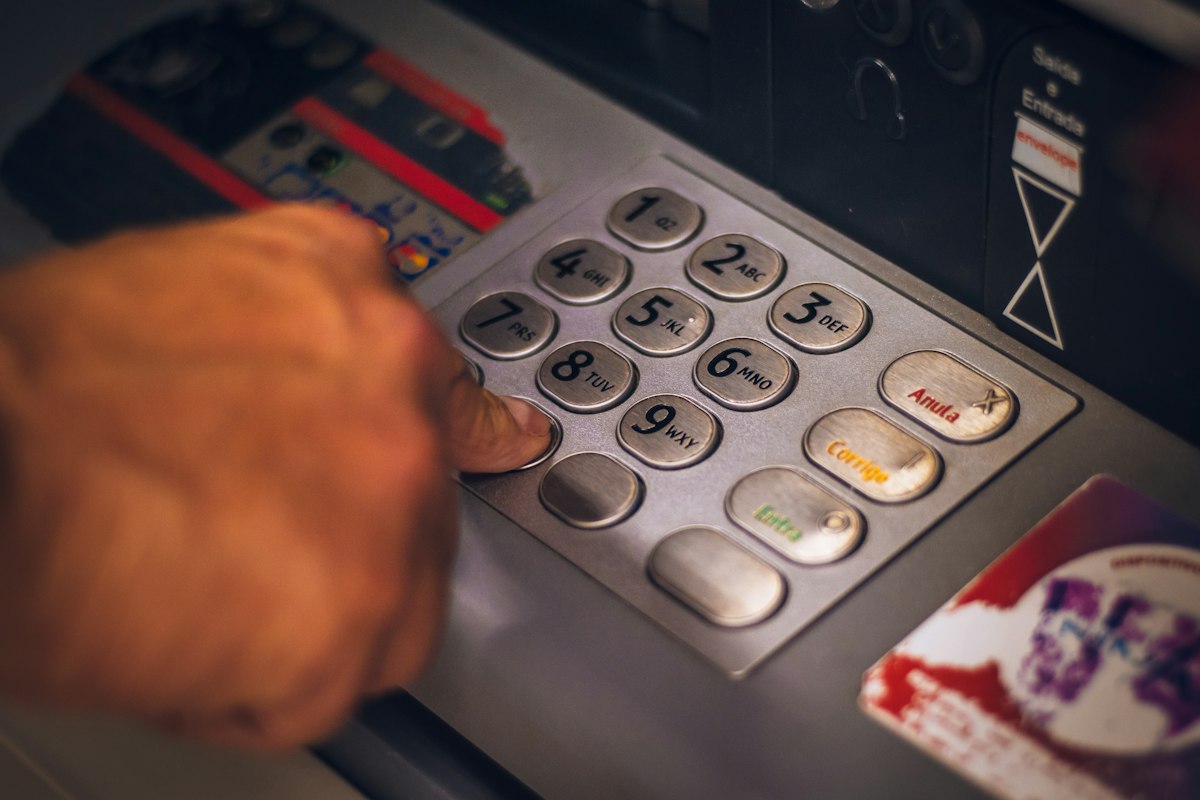
It was a Thursday evening around 7pm, January 2026. Emaka, a young graphic designer in Asaba, opened his OPay app to check his balance after a ₦50,000 transfer from a client in Lagos. The money had arrived — but it was short. Not by much. By ₦50. He dismissed it. "Na OPay deduction," he said to himself, and moved on.
What Emaka didn't know — what most Nigerians don't know — is that this ₦50 deduction has a name, a legal framework, and a government body collecting it. It's called the Electronic Money Transfer Levy (EMTL). And right now in 2026, the Federal Inland Revenue Service (FIRS) is quietly working on making sure they get a much bigger piece of Nigeria's booming digital transaction ecosystem.
This isn't a maybe. It's not a rumour from WhatsApp. FIRS has been building the legal and technical architecture to tax fintech transactions more aggressively — and most Nigerians are going to wake up to that reality the same way Emaka woke up to his ₦50 deduction. After the fact.
So let's talk about it. All of it. What FIRS is actually planning, what already exists in law, what the numbers mean for your everyday transactions, and what you need to do — not tomorrow, now.
📋 Table of Contents
- The Background — Nigeria's Digital Economy and Why FIRS Is Paying Attention
- What's Already There — Taxes Nigerians Are Already Paying on Digital Transactions
- Side-by-Side Breakdown — The Full Transaction Tax Picture
- What FIRS Is Planning — The Proposed Expansions in 2026
- The Real Naira Impact — What This Means for Your Wallet
- How Different Platforms Will Be Affected
- Did You Know? Nigerian Digital Finance Facts
- The Risks — What Could Go Wrong With Digital Transaction Taxation
- What to Do Right Now — 7 Steps to Protect Yourself
- Did You Know? FIRS Digital Economy Data
- Warning — Tax-Related Scams to Watch For
- What's Changed in 2026
- Key Takeaways
- Related Articles
- Frequently Asked Questions
🌐 The Background — Nigeria's Digital Economy and Why FIRS Is Paying Attention
Here's the number that explains everything: Nigeria's digital payment ecosystem processed over ₦600 trillion in transactions in 2024, according to the Nigeria Inter-Bank Settlement System (NIBSS). That number is growing. Fast. OPay alone reportedly processes millions of transactions daily. Kuda has millions of registered users. PalmPay, Moniepoint, Carbon, Cowrywise, Piggyvest — the list goes on.
Now look at it from FIRS's perspective. They are sitting across from a river of money — six hundred trillion naira flowing through digital rails — and their current levy mechanisms collect, at best, a small trickle from that volume. The EMTL collects ₦50 flat per qualifying transfer. VAT is charged on fintech services but not uniformly. Stamp duty is applied inconsistently across platforms.
And FIRS has a job. Collect revenue. Nigeria's fiscal position is under severe pressure — the country's debt service obligations consumed over 60 percent of federally collected revenue in recent periods. The Tinubu administration has been clear that it needs to grow tax revenue without necessarily hiking income tax rates on an already struggling population. So where do you turn? The digital economy. Because the money is there, it's traceable, and it's growing.
This isn't unique to Nigeria. Kenya's digital service tax, Ghana's electronic levy (E-Levy), and India's digital transaction tax all reflect the same global pattern: governments are realising that the informal-to-digital transition is creating taxable events that didn't exist in the cash economy. Nigeria is arriving at that conversation later than some — but it's arriving hard.
What makes this particularly sensitive in Nigeria's case is that fintech adoption exploded precisely because traditional banking failed ordinary Nigerians. People moved to OPay and Kuda because bank charges were too high, bank branches were too far, and bank apps were too unreliable. Now the government wants to tax the digital alternative that people ran to. That irony is not lost on anyone who's lived through NEPA's failure and now pays electricity bills through their phone.
📋 What's Already There — Taxes Nigerians Are Already Paying on Digital Transactions
Before we talk about what's coming, let's be honest about what's already happening. Because a lot of Nigerians don't realise they're already being taxed on digital transactions. They see the deductions and assume it's platform fees. It isn't. Most of it is law.
💳 The Electronic Money Transfer Levy (EMTL)
Introduced under the Finance Act 2020, the EMTL is a ₦50 flat charge on every electronic transfer of ₦10,000 or above. It applies to transfers done through banks, mobile money operators, and fintech platforms. The ₦50 is collected from the sender. The receiving bank or platform remits it to FIRS.
Think about Emaka's situation again. He received ₦50,000 — but actually the ₦50 comes from whoever sent it. If you're the one making transfers, every transfer of ₦10k or more costs you ₦50 on top of whatever your platform charges. Do two transfers per week? That's ₦400 per month, ₦4,800 per year. Just in EMTL.
🧾 VAT on Fintech Services
Since the Finance Act 2019 raised VAT from 5% to 7.5%, digital services have been squarely in scope. When you pay for a subscription, a transaction fee, or a service charge through a fintech platform, VAT should be applied at 7.5%. Not all platforms display this clearly — some bundle it into their service fee, others show it as a separate line item. But it's there.
The challenge has been compliance and collection. FIRS has had difficulty getting all fintech operators to remit VAT correctly. This is partly why they're now building a more systematic framework.
📜 Stamp Duty on Financial Transactions
Under the Stamp Duties Act (as amended by Finance Acts), certain financial transactions attract stamp duty at 0.1% (₦1 per ₦1,000 transacted). This applies to receipts for money paid of ₦1,000 and above. In practice, banks deduct this, but fintech platforms have been inconsistent.
₿ Crypto Taxes (Finance Act 2023)
The Finance Act 2023 introduced a 10% Capital Gains Tax on crypto asset disposals. If you bought Bitcoin at ₦10 million and sold at ₦15 million, FIRS wants ₦500,000 of that gain. This applies whether the disposal happens on a crypto exchange or through a peer-to-peer transaction that eventually touches a Nigerian bank or fintech account.
📊 Side-by-Side Breakdown — The Full Digital Transaction Tax Picture in Nigeria
📋 Current vs. Proposed Digital Transaction Taxes in Nigeria
| Tax / Levy | Legal Basis | Amount | Who Pays? | Status (Feb 2026) | Applies to Fintech? |
|---|---|---|---|---|---|
| Electronic Money Transfer Levy (EMTL) | Finance Act 2020 | ₦50 flat per transfer ≥₦10,000 | Sender | ACTIVE & ENFORCED | YES |
| Value Added Tax (VAT) on Digital Services | Finance Act 2019 | 7.5% on service fees | Consumer/Business | ACTIVE (inconsistent collection) | YES |
| Stamp Duty | Stamp Duties Act (amended) | ₦1 per ₦1,000 (0.1%) | Sender/Receiver | ACTIVE (partial enforcement) | PARTIAL |
| Crypto Capital Gains Tax | Finance Act 2023 | 10% on disposal gains | Crypto trader | LAW EXISTS (enforcement developing) | YES (on/off ramp) |
| Proposed: Expanded Fintech Transaction Levy | Under development | % of transaction value (TBD) | Platform users / operators | PROPOSED (not yet law) | TARGET YES |
| Proposed: Digital Services Tax (on foreign platforms) | OECD Pillar Two alignment | 7.5% of revenue from Nigeria | Foreign tech companies | FRAMEWORK BEING BUILT | INDIRECT IMPACT |
| Withholding Tax on Fintech Payments to Contractors | PITA / CITA | 5% or 10% (varies) | Business paying contractors | ACTIVE | YES |
⚠️ Data reflects regulatory status as of February 2026. FIRS may update implementation guidance without prior public notice. Always verify at firs.gov.ng.
🎯 What FIRS Is Actually Planning — The 2026 Expansion
Alright. Here's the part that's making fintech operators nervous and should make you pay attention.
FIRS, under its current leadership, has been pushing hard on several fronts simultaneously. Based on public statements from FIRS officials and coverage in Vanguard and BusinessDay, here's what's on the table as of February 2026:
🔑 1. Mandatory Tax Identification Number (TIN) Linkage to Fintech Accounts
FIRS has been lobbying CBN and the federal government to mandate that all fintech accounts be linked to a Tax Identification Number (TIN) before users can transact above certain thresholds. The logic is simple: if every OPay account is linked to a TIN (which is already linked to your BVN and NIN), FIRS can build a complete transaction trail for every Nigerian using digital finance.
This is not yet law. But the BVN-NIN linkage already exists, and TIN is the next layer. Once this is in place, every ₦200,000 transfer you make to your Kuda account becomes a documented income event that FIRS can examine against your declared income.
💸 2. Percentage-Based Transaction Levy (The Ghana E-Levy Model)
Ghana introduced its E-Levy in 2022 — a 1.5% charge on mobile money transfers above a daily threshold. It was deeply unpopular and partially rolled back, but the concept influenced other African governments. Nigeria's FIRS has been studying this model.
What Nigeria might do differently: rather than a flat percentage on all transfers, the proposal being discussed internally involves a tiered approach — low percentages (possibly 0.1% to 0.5%) on high-value transactions, with small transfers exempted. The exact numbers haven't been officially published, and FIRS has been careful not to announce specific rates publicly yet.
But let me be honest — 0.5% on a ₦500,000 business transfer is ₦2,500. Monthly. Per transfer. For a business doing 20 such transfers a month, that's ₦50,000 in additional levy. That's not small. That's rent for some people in Owerri.
🌐 3. Foreign Fintech Platform Taxation (Netflix, Spotify, and the Bigger Operators)
FIRS has already pursued foreign digital service providers — Netflix was compelled to charge Nigerian VAT, and Zoom, Microsoft, and other platforms are being brought into compliance. The next frontier is foreign fintech platforms serving Nigerian users: Wise, Lemfi, Sendwave, WorldRemit. These platforms currently operate in a Nigerian regulatory grey area. FIRS wants them registered as taxable entities.
📲 4. Expanded EMTL Application to Smaller Transactions
Currently the EMTL only applies to transfers of ₦10,000 and above. FIRS has informally discussed whether to lower this threshold. Lowering it to ₦5,000 — which would capture millions more daily transactions — would dramatically increase EMTL collections. This one is particularly sensitive given Nigeria's economic conditions. Even ₦50 on a ₦5,000 transfer is 1% — that's real money for someone buying groceries through a fintech app.

💡 The Real Naira Impact — What This Means for Your Wallet
I know people hate when articles talk about taxes without telling you what it actually costs. So let's do the maths. Right here. For different types of Nigerians.
💰 Annual Digital Transaction Tax Cost Scenarios (Nigeria 2026)
| User Type | Monthly Transfers | Current EMTL Cost | Current EMTL (Annual) | If 0.5% Levy Added (Annual est.) | Total Potential Annual Cost |
|---|---|---|---|---|---|
| Student (low usage) | 3 transfers × ₦15,000 | ₦150/month | ₦1,800 | ₦2,700 | ₦4,500 |
| Salaried worker | 8 transfers × ₦30,000 | ₦400/month | ₦4,800 | ₦14,400 | ₦19,200 |
| Freelancer (online income) | 15 transfers avg ₦80,000 | ₦750/month | ₦9,000 | ₦72,000 | ₦81,000 |
| Small business (POS + transfers) | 40 transfers avg ₦200,000 | ₦2,000/month | ₦24,000 | ₦480,000 | ₦504,000 |
| Medium-sized business | 100 transfers avg ₦500,000 | ₦5,000/month | ₦60,000 | ₦3,000,000 | ₦3,060,000 |
⚠️ Reality Check: The 0.5% additional levy figure is illustrative based on Ghana's E-Levy precedent and internal discussions reportedly happening at FIRS. This is NOT confirmed law. The actual rate if implemented could be higher or lower. But at 0.5%, a small business doing ₦200,000 average monthly transfers would pay ₦500,000 annually in this levy alone — more than many business owners' monthly rent.
📱 How Different Fintech Platforms Will Be Affected
Not all platforms will be affected equally. Here's the honest breakdown based on how each platform is structured and what FIRS's current regulatory reach covers:
🟠 OPay and PalmPay — Highest Exposure
These two platforms process the highest daily transaction volumes among Nigerian fintech apps. They also serve the most underbanked users — market traders, artisans, commercial vehicle operators. Any new levy that FIRS applies to mobile money transactions will hit these platforms' users hardest. OPay and PalmPay are already licensed by CBN as Mobile Money Operators, which means they're already in FIRS's compliance radar. They'll be required to remit whatever new levies are introduced.
🔵 Kuda — Moderate Exposure
Kuda operates as a microfinance bank, not a mobile money operator. This matters because some tax obligations differ based on your license category. But Kuda users still pay EMTL and VAT. Any expanded transaction levy would apply based on the transaction, not the institution's license category. Kuda's demographic — mainly salary earners and young professionals — means their exposure grows with the proposed levy on medium-value transactions.
🟢 Cowrywise, Piggyvest, Risevest — Investment-Focused, Lower Direct Impact
These platforms sit between savings tools and investment platforms. Direct transfer taxation affects the inflow and outflow transactions, but not the investment holding itself. Capital gains on investment returns, however, are already taxable. If FIRS tightens CGT collection on investment platform payouts, these users will feel it — but that's a slightly different mechanism from a transaction levy.
🟡 Grey, Geegpay, LemFi — Dollar Account Platforms for Freelancers
This is where it gets complicated. Freelancers and remote workers receiving dollar income through these platforms are already technically liable for income tax on those earnings. But FIRS's ability to monitor and tax these flows has been limited. The push for TIN linkage to fintech accounts is partly aimed at this population. If your Grey or Geegpay dollar account is linked to your BVN, and your BVN leads to a TIN, FIRS now has a data trail. Whether they act on it depends on enforcement capacity — which, honestly, remains uneven in Nigeria.
💡 Did You Know? Nigerian Fintech Facts
Nigeria's fintech sector attracted over $1.5 billion in investment between 2019 and 2024, making it Africa's most funded fintech ecosystem. Yet FIRS tax collection from digital financial services has historically been a fraction of potential revenue — a gap the agency is now actively working to close. According to the NCC, Nigeria had over 157 million active mobile subscribers as of mid-2025, and an estimated 40 million of them actively use fintech apps for financial transactions beyond simple airtime purchases.

⚠️ The Risks — What Could Go Wrong With Digital Transaction Taxation
This is the part most articles skip because it's uncomfortable. But I think it's the most important part. Because the risk isn't just to your wallet. It's structural.
Risk 1: People Moving Back to Cash
Ghana's E-Levy caused exactly this. Mobile money transaction volumes dropped significantly after the levy was introduced, as users switched back to cash to avoid the charge. Nigeria could experience the same reversal. The irony would be devastating — FIRS tries to tax digital transactions, people move to cash, and FIRS actually collects less than before while financial inclusion regresses by years.
Risk 2: Disproportionate Impact on Low-Income Nigerians
A flat ₦50 EMTL on a ₦10,000 transfer is 0.5%. That's regressive — it hits the person making a ₦10,000 transfer proportionally harder than the person making a ₦10,000,000 transfer. If FIRS expands this with additional percentage-based levies, the poorest users of digital finance carry the heaviest relative burden.
Risk 3: Fintech Compliance Cost Pass-Through
When FIRS increases obligations on fintech platforms — more remittance requirements, more reporting, more audits — those platforms will increase their fees to cover compliance costs. So even if you're not directly paying a new government levy, your OPay or Kuda charges might quietly go up.
Risk 4: Double Taxation for Business Owners
A business owner who receives payment through OPay, declares that as business income, pays Company Income Tax on the profit, and then gets hit with a transaction levy on every digital payment received — is effectively being taxed multiple times on the same money. This is a real concern that the business community has been raising. The Federation of Small and Medium-Scale Enterprises has flagged it. Whether FIRS structures the new levies to avoid double taxation remains to be seen.
🛡️ What to Do Right Now — 7 Steps to Protect Yourself
You can't stop FIRS from making policy. But you can be prepared. Here's what actually makes sense to do right now, as of February 2026, whether or not the proposed levies materialise.
Visit the FIRS taxpro-max portal at taxpromax.firs.gov.ng and register for a Tax Identification Number if you don't have one. It's free, it's quick (in theory — budget 30 minutes to an hour for the online process), and doing it voluntarily now is far better than doing it under pressure when FIRS links TIN to fintech access. I'll be honest: the portal doesn't always work perfectly. If it times out, try again early morning before Lagos wakes up. That's when server load is lowest.
Download your transaction history from every fintech app you use — OPay, Kuda, PalmPay, Cowrywise, whatever. Export it to a spreadsheet monthly. This takes 10 minutes. When FIRS comes knocking — or when you need to file — you have documentation. Don't wait until you need it to realise you can only access 6 months of history on some platforms.
Check your last 10 transactions on your most-used fintech app. Look for deductions beyond the stated transfer fee. The ₦50 EMTL, small percentage deductions, and service charges you've been dismissing as "platform fees" — understand each one. For most Nigerians, this will be the first time they actually see how much tax is leaving their digital accounts. It won't be comfortable viewing.
I know this is the advice nobody wants to hear. But here's the reality: when FIRS successfully links BVN to TIN and pulls transaction data from fintech platforms, undeclared income becomes visible. The risk of being caught with significant undeclared digital income is increasing, not decreasing. The penalty for tax evasion in Nigeria includes back taxes plus interest plus penalties. Getting ahead of this by declaring now — even if you owe less than you feared — is smarter than being assessed later.
If you're a business owner doing significant digital transaction volumes, sit down with a tax professional and review your current structure. Are there legitimate ways to reduce taxable digital transaction frequency? Could some payments be restructured? Could you benefit from any exemptions? This step is worth the consultation fee. Some businesses in Abuja and Lagos have already been doing this proactively since the FIRS digital economy agenda became clearer in late 2025.
Visit firs.gov.ng directly. Follow FIRS on their official social handles. The volume of false FIRS "announcements" circulating on Nigerian WhatsApp — claiming this fee is abolished or that levy is cancelled — is enormous. I've personally seen three different fake FIRS circulars shared in a single week. Every time you make a financial decision based on a WhatsApp-forwarded FIRS document, you're gambling. Go to the source.
Some people's response to digital transaction taxes is to go back to cash. That's an overreaction for most scenarios. The benefits of fintech — record-keeping, speed, security, accessibility — still outweigh the levy costs for most users. But it does mean choosing which transactions to route digitally and which to handle differently. A market trader in Port Harcourt making 50 small daily transactions should think about whether every one of those needs to be a digital transfer.
💡 Did You Know? FIRS Digital Economy Data
According to FIRS public disclosures, Nigeria's digital economy contributes an estimated 22 percent of GDP but has historically generated a disproportionately small share of tax revenue relative to its size. FIRS Executive Chairman has publicly stated that expanding digital economy taxation is a core priority of the agency's 2024–2027 strategic plan. Nigeria's VAT-to-GDP ratio is approximately 3 percent — one of the lowest in sub-Saharan Africa — compared to a regional average above 5 percent. Closing this gap through digital taxation is central to Nigeria's fiscal consolidation plan under the current administration.

🚨 Warning — Tax-Related Scams That Are Targeting Nigerian Fintech Users Right Now
⛔ These scam patterns are ACTIVE right now. Real Nigerians have lost real money. Read this before you dismiss it.
🔴 Scam 1: Fake FIRS Refund Calls
Scammers are calling Nigerians claiming to be from FIRS, saying they have an overpaid EMTL refund waiting. They ask you to provide your BVN, bank account details, and "processing fee" of ₦5,000–₦20,000. One woman in Benin City lost ₦37,000 this way in December 2025, believing the caller was genuine because he quoted real FIRS terminology. FIRS does not call you about refunds this way. Hang up immediately.
🔴 Scam 2: Fake "FIRS Digital Tax Clearance" Certificates
A new hustle is circulating where people sell "FIRS Digital Tax Clearance Certificates" for ₦15,000–₦50,000, claiming this document exempts you from fintech transaction levies. These are completely fake. There is no such exemption document. The sellers usually have FIRS-looking letterheads and WhatsApp profiles with government seals. If you bought one of these, it is worthless. Report to FIRS directly.
🔴 Scam 3: Fake Fintech Apps Claiming Tax Exemption
Several unofficial fintech apps on the Google Play Store have emerged marketing themselves as "FIRS-exempt digital wallets" or "no-levy transfer apps." These apps are data harvesting tools. Some are outright theft vehicles. No fintech app is FIRS-exempt. The levy is imposed on the transaction, not the app. Only use apps listed on CBN's official approved fintech operators list.
🔴 Scam 4: Phishing Emails Spoofing FIRS
Phishing emails with FIRS branding tell recipients their account is "flagged for digital tax non-compliance" and demand they click a link to "clear your status." The link leads to a fake portal that steals your BVN, account numbers, and passwords. Official FIRS communication comes from @firs.gov.ng email addresses only. Everything else is fake.
✅ If any of these have already happened to you: Report to FIRS at info@firs.gov.ng, report to EFCC at report@efcc.gov.ng, report to your bank immediately, and file a complaint with your state's police cybercrime unit. The EMTL scam specifically is being tracked by EFCC as of early 2026.
🗓️ What's Changed in 2026 — The Current State Right Now
As of February 2026, here's what's concretely different from where we were in 2024:
FIRS enforcement is becoming more digital-forward. FIRS launched an enhanced version of its Taxpro-Max platform in late 2025, with better API integration capabilities. This is the technical plumbing that allows FIRS to eventually receive automated transaction data from fintech platforms — similar to how financial institutions in more developed markets report to their tax authorities automatically.
The CBN-FIRS relationship is tighter than ever. Following the CBN's crackdown on OPay and PalmPay in 2024 over KYC concerns, both regulators have been working in closer alignment. When CBN mandated stricter NIN-BVN linkage for accounts, FIRS quietly noted that this creates a foundation for TIN linkage as the next step.
Nigeria's Finance Act for 2025 is being drafted. Every year's Finance Act amends existing tax laws and introduces new provisions. The 2025 Finance Act draft, reportedly being finalised, is expected to include provisions that expand digital economy taxation. Specific provisions have not been published publicly as of the time of writing this article, but FIRS officials speaking at industry events in late January 2026 confirmed that digital financial services are among the priority areas.
Fintech operators are preparing. Behind the scenes, major Nigerian fintech platforms have compliance teams working on how to implement expanded tax collection frameworks without driving users away. Some platforms have already quietly updated their terms of service to include broader language about tax collection obligations.
🔗 We covered the broader CBN regulation framework affecting OPay, Kuda, and PalmPay in detail — see our article on CBN Fintech Regulation 2025: What OPay, Kuda, and PalmPay Users Need to Know. Also worth reading alongside this: Hidden Bank Charges in Nigeria Explained — because the deductions you've been ignoring are real and documented.
📖 Also read: How I Built Daily Reality NG — 426 Posts in 150 Days: The Real Story — understanding how this publication operates and why we cover these topics without sponsored bias.
✅ Key Takeaways — What You Must Remember
- The ₦50 EMTL on transfers of ₦10,000 and above is already law and already being collected — this is not a rumour or a future proposal
- FIRS is actively building the infrastructure to expand digital transaction taxation in 2026 — TIN linkage, VAT enforcement on fintech, and potentially percentage-based transaction levies
- A 0.5% transaction levy would cost a small business owner doing ₦200,000 monthly transfers approximately ₦500,000 per year in new levies alone
- Crypto gains on disposals are already taxable at 10% CGT under the Finance Act 2023 — if you're trading crypto through Nigerian fintech rails, you have a legal obligation
- Ghana's E-Levy experience shows that poorly designed digital transaction taxes cause users to move back to cash — potentially reversing financial inclusion progress
- FIRS tax-related scams are active and dangerous — fake refund calls, fake exemption certificates, and fake apps have already cost Nigerians real money
- Getting a TIN now, keeping transaction records, and declaring freelance income are the three most protective steps you can take immediately
- The proposed expanded fintech transaction levy is not yet confirmed law — but the regulatory trajectory is clearly in that direction, and preparation now is smarter than panic later
📚 Related Articles You Should Read Next

❓ Frequently Asked Questions
What is the Electronic Money Transfer Levy and am I already paying it?
Yes, if you've made any digital transfer of ₦10,000 or more, you've already been paying the EMTL — ₦50 per transaction. It was introduced in the Finance Act 2020 and has been quietly deducted from eligible transactions ever since. Most people see it as an unexplained deduction and move on. It's not a platform fee. It's government tax collected on FIRS's behalf.
Will FIRS tax my OPay or Kuda transfers in 2026?
You're already being taxed via EMTL on qualifying transactions. As for new expanded levies, FIRS is developing the framework but no new percentage-based fintech transaction tax has been signed into law as of February 2026. The trajectory is clearly in that direction, and it's smart to prepare — but don't panic over proposals that aren't yet law.
How much stamp duty do Nigerians currently pay on bank transfers?
Under current law, the EMTL of ₦50 flat applies to electronic transfers of ₦10,000 and above. Separately, stamp duty at ₦1 per ₦1,000 (0.1 percent) applies to certain financial transaction receipts. Different transactions attract different charges — a qualified tax professional can clarify what applies to your specific situation.
Can FIRS legally tax fintech transactions in Nigeria?
Yes, absolutely. FIRS has legal authority under the Federal Inland Revenue Service Establishment Act and multiple Finance Acts to tax digital financial transactions. They've been exercising this authority through EMTL, VAT on digital services, and crypto CGT. The question isn't whether they can — it's how far and how fast they'll expand enforcement.
What should I do right now to prepare for potential new fintech taxes?
Get your TIN from the FIRS Taxpro-Max portal. Export and keep records of your digital transaction history monthly. If you're a freelancer receiving income through digital channels, declare it. Avoid making financial decisions based on WhatsApp-forwarded FIRS "announcements" — always verify at firs.gov.ng. And if you're a business doing significant digital transaction volumes, consult a tax professional now, not after the policy changes.

📬 Stay Ahead of Nigeria's Digital Economy Changes
FIRS, CBN, and Nigerian financial regulations change without warning. Subscribe to Daily Reality NG and get the breakdown delivered to you — in plain English, without the policy jargon.
Subscribe Free — No Spam Ever💬 Your Thoughts? We Want to Know
Drop your answers or thoughts in the comments. We read every one — and your experience from the ground matters more than any policy document.
- Have you noticed unexplained deductions from your OPay, Kuda, or PalmPay account that you couldn't identify? What amount was it and which platform?
- If FIRS introduced a 0.5% levy on your digital transactions, would you switch partially back to cash? Be honest — this is exactly the behaviour gap that policy analysts need to understand.
- Do you have a TIN? If not — what's been the barrier to getting one? Too complicated? Didn't think it applied to you? Or simply never needed it before?
- For business owners: how much would an additional ₦500,000+ annual transaction levy change your digital payment strategy? Would you restructure how you collect payments?
- Have you ever received a fake FIRS-related call, message, or email? What happened and what did you do?
You sat through a long one — and I mean that genuinely. Tax policy is not fun reading. It's not the article anyone opens looking for entertainment. But you finished it, which tells me you're the kind of person who'd rather understand what's happening to your money than be surprised by it later.
Here's what I want you to do in the next ten minutes: open your most-used fintech app, scroll back through your last 20 transactions, and count how many times you saw a ₦50 deduction you never questioned. That number is your EMTL total. It's the baseline. Whatever FIRS adds next is on top of that.
You've read it. Now you know. Act on it.
— Samson Ese | Founder, Daily Reality NG
dailyrealityng@gmail.com | www.dailyrealityngnews.com


Comments
Post a Comment