How to Edit AI-Generated Content Like a Pro Copy Editor
How to Proofread and Edit AI-Generated Content Like a Professional Copy Editor
The complete editing system — from catching AI's 9 most common errors to publishing content that genuinely sounds like a human wrote it.
You're reading Daily Reality NG — honest, practical guidance for writers, creators, and digital entrepreneurs who want real answers without the corporate fluff. Today I'm breaking down something that almost nobody covers properly: what happens AFTER you generate AI content. Specifically, how to edit it so thoroughly that no reader — or Google — suspects it came from a machine. Let's get into it.
Why this article can be trusted: Samson Ese has published over 560 articles on Daily Reality NG since October 2025, working extensively with AI writing tools and developing an editorial review system to ensure every piece passes human quality standards. This guide is built from that process — real workflow, real mistakes caught, real fixes applied. This isn't theory from someone who read about AI editing. This is the actual system used to run a high-output content operation while maintaining editorial quality.
✏️ Find Your Starting Point in 10 Seconds
This entire guide is for you. Pay special attention to the 5-Pass Editing Framework and the AI Phrase Blacklist. Those two sections will save your professional reputation.
Start with Section 3 (AI Error Patterns) and Section 7 (The Human Voice Injection Protocol). These will stop Google from detecting and downranking your AI content.
Focus on Section 4 (Brand Voice Alignment) and Section 9 (The Pre-Publish Quality Checklist). You need systematic review, not just gut-feel edits.
Read this from beginning to end before touching that draft. You need to understand WHY AI content fails before you know WHAT to fix.
Stop. Unedited AI content fails on three fronts simultaneously — SEO quality, reader trust, and brand voice. This guide exists to prevent that mistake.
Jump to Section 6 (AI Detection Patterns) and Section 8 (The Read-Aloud Test). You'll know within 10 minutes whether content needs rewriting.
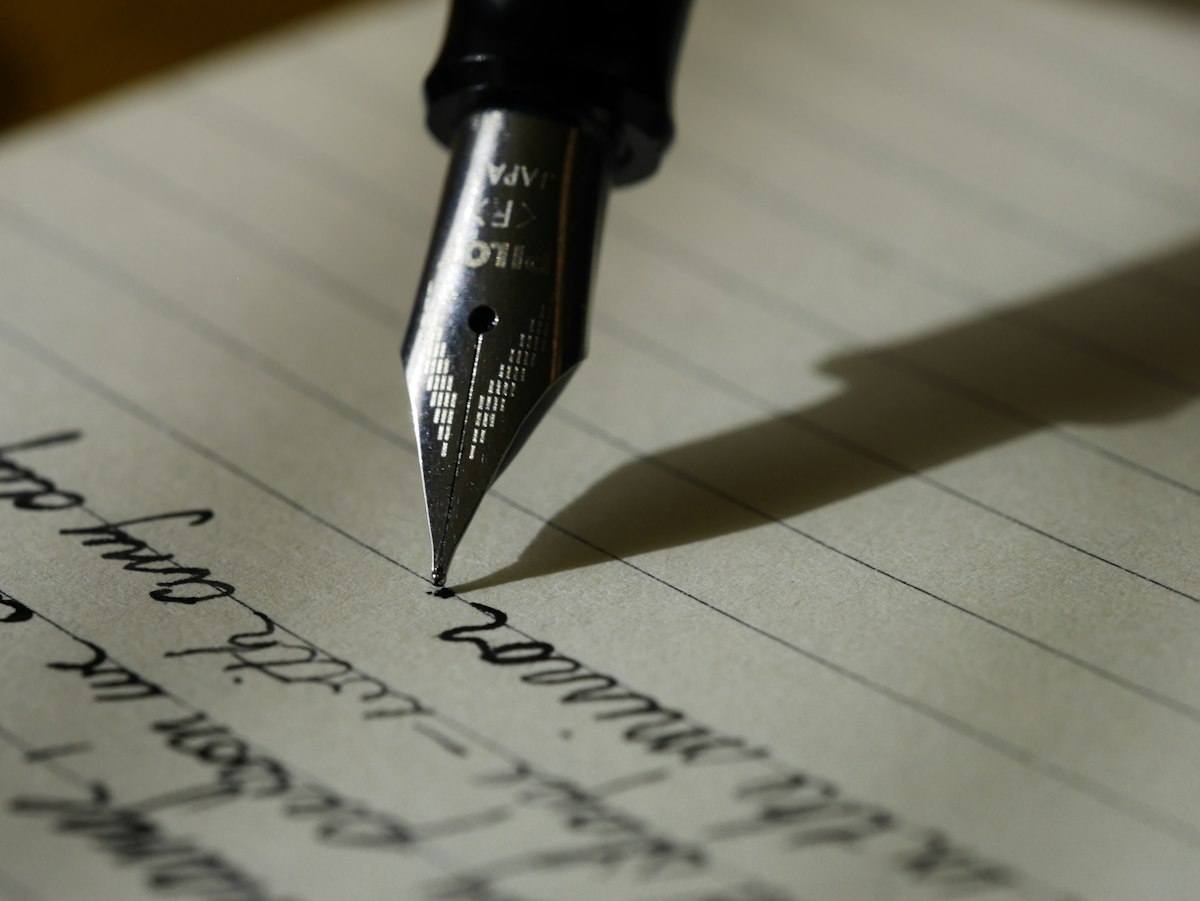
📖 The Day I Published Unedited AI Content and Regretted Every Word
January 2026. It was a Friday evening, around 8pm. I had three articles to publish before the weekend and I was behind schedule. I'd used an AI tool to draft all three. Two of them I'd gone through properly. The third one — I'll be honest — I skimmed. I changed the title, read the first paragraph, thought "this sounds fine," and hit publish.
By the following Tuesday, something felt off. The article had low engagement. Comments were sparse. Time-on-page was shorter than usual. And then — worst of all — a reader left a comment that said: "Did you write this or did a robot write it?"
I went back and read that article properly for the first time. And I was embarrassed. Not because AI wrote it — AI was part of my workflow deliberately. But because I hadn't done my job as the editor. The draft had "furthermore" three times. It had "it is worth noting" in the second paragraph. Every bullet point was exactly the same length. The conclusion started with "In conclusion." It read like a well-organized essay written by someone who had read a lot about the topic but had never actually lived inside it.
That article is still published. I rewrote it properly two days later. But the lesson stuck. AI content, unedited, is a liability — not an asset. And "editing" doesn't mean reading it once and changing a word here and there. It means going through it the way a professional copy editor would. Systematically. With specific things to look for. With the understanding that AI makes certain mistakes reliably and predictably — and those mistakes can be caught and fixed if you know what you're hunting for.
This article is the system I built after that embarrassing Friday evening. Use it every time.
📋 Table of Contents
- Why Editing AI Content Is Non-Negotiable
- The 9 Most Common AI Writing Errors (With Examples)
- The 5-Pass Editing Framework
- How to Align AI Content With Your Brand Voice
- The AI Phrase Blacklist — 40+ Patterns to Delete
- AI Detection Patterns — What Tools Actually Flag
- The Human Voice Injection Protocol
- The Read-Aloud Test
- The Pre-Publish Quality Checklist
- Tools That Help (and Tools That Don't)
- What's Changed in 2026 — AI and Content Quality
- Key Takeaways
- FAQ
🎯 Why Editing AI Content Is Non-Negotiable — Not Optional
Let me address the thing nobody wants to say directly: publishing raw AI content, without genuine editorial review, is a form of professional deception. You're presenting something as your considered work when it isn't. And beyond ethics, it's a bad strategy — for your readers, your brand, your SEO, and increasingly, for your AdSense account.
Google's Helpful Content system — which has been updated multiple times through 2025 and into 2026 — explicitly targets content that prioritizes search engine signals over genuine human utility. AI-generated content, when unedited, has characteristic patterns that Google's quality raters and algorithmic signals increasingly recognize. That recognition results in lower rankings, reduced AdSense impressions, and in severe cases, manual penalties.
Beyond Google, your readers are getting smarter. In 2022, AI-generated content was novel. In 2026, readers have been exposed to enough of it that many can identify it instinctively — not because they can point to exactly what's wrong, but because it feels smooth in a way that lacks humanity. It has no texture. No rough edges. No opinion that costs the writer something to state. That frictionlessness is the fingerprint.
And there's a third reason, one that's specifically relevant if you're a freelancer or content manager: professional liability. If you're being paid to produce quality content and you submit an unedited AI draft, you're not delivering what was agreed. That's a reputation problem that compounds fast in this industry.
📊 What Happens to Unedited AI Content Over Time
| Timeframe | SEO Impact | Reader Trust | AdSense Risk | Brand Damage |
|---|---|---|---|---|
| Day 1–7 | Neutral — indexed normally | Mild — some readers notice | Low initially | Minimal |
| Week 2–4 | Declining — low engagement signals | Growing concern — comments reflect it | Moderate risk begins | Noticeable if pattern continues |
| Month 2–3 | Ranking drop begins for affected pages | Trust erosion — return visits fall | High — low-value content flags possible | Significant if scale is large |
| Month 4+ | Site-wide quality signal affected | Readers associate brand with AI content | AdSense review or suspension risk | Recovery requires major overhaul |
⚠️ Timeline based on observed patterns in content quality signals. Individual results vary based on site authority, content volume, and niche.
The point is clear: the editorial step is where AI content becomes an asset. Skip it and AI content becomes a liability that compounds.
🔎 The 9 Most Common AI Writing Errors — With Real Examples
AI writing tools make mistakes in patterns. Once you know the patterns, you can scan for them systematically. These aren't random — they're predictable consequences of how large language models generate text. Here are the nine errors that appear most consistently across AI-generated content, with before/after examples for each.
❌ Error 1 — Symmetrical Bullet Points
AI loves lists. And every bullet in every list is almost exactly the same length, starting with the same grammatical structure. This is a machine fingerprint. Humans write lists with varied rhythm — some items are brief punches, others trail into explanation.
❌ AI Version
• Research your target audience before creating content
• Use relevant keywords throughout your article
• Include images to improve reader engagement
• Write a compelling headline that attracts clicks
✅ Human Version
• Research your target audience first. Everything else depends on this.
• Use keywords naturally — not because Google told you to, but because they're how your actual reader searches
• Images help. Use them. But a bad image is worse than no image
• Headlines: this is where 80 percent of readers decide whether to continue or not
❌ Error 2 — Phantom Transitions
AI connects paragraphs with transition words that technically work but feel mechanical: "Furthermore," "Moreover," "Additionally," "In addition to this," "Subsequently." Real human writing uses transitions that come from the actual logic of what's being said — not generic connectors.
❌ AI Version
Content marketing is essential for brand growth. Furthermore, it helps establish authority in your niche. Moreover, it drives organic traffic over time. Additionally, it supports your overall marketing strategy.
✅ Human Version
Content marketing builds authority over time — that's the main thing. And here's what people underestimate: the traffic it generates compounds. A post from 2023 is still pulling in readers in 2026 if it's well-written. Paid ads? The moment you stop paying, you stop appearing. Content doesn't work that way.
❌ Error 3 — The AI Summary Opening
AI almost always opens articles with: "In this article, we will explore..." or "This guide will walk you through..." or "Understanding X is crucial for Y." These openers exist because they make logical sense to a language model. They make terrible openers for human readers who want to be grabbed, not briefed.
❌ AI Version
In this comprehensive guide, we will explore the key strategies for growing your blog traffic. Understanding these strategies is crucial for anyone looking to build a successful online presence in today's digital age.
✅ Human Version
My blog traffic doubled in 90 days. Not by posting more — I actually posted less. What changed? I stopped writing for algorithms and started writing for one specific person. Here's what that looked like in practice.
❌ Error 4 — Uniform Paragraph Length
Every AI paragraph is roughly 3-4 sentences long. Without exception. Forever. This creates a visual and rhythmic monotony that readers experience as draining, even if they can't articulate why. Human writing breathes — short sentences. Then longer ones that develop a thought across multiple clauses because sometimes an idea genuinely needs space to unfold properly. Then a one-liner. Boom.
❌ Error 5 — The Perfectly Balanced Conclusion
AI conclusions always balance both sides and end with a call to hope. "While X has challenges, it also offers significant opportunities. By following the steps outlined above, you can achieve success in your journey." This is corporate brochure language. It says everything and nothing. Real conclusions have a point of view.
❌ AI Version
In conclusion, while social media marketing presents challenges, it also offers tremendous opportunities for growth. By implementing these strategies consistently, you can build a strong online presence and achieve your business goals.
✅ Human Version
Here's my honest take: social media marketing is overrated for most small businesses. You're renting an audience on someone else's platform. I'd rather build an email list any day. But if you're going to do social media, do it with a strategy — not just by posting and hoping. That's the only version that actually works.
❌ Error 6 — Vague Statistics Without Sources
"Studies show that..." — which studies? "Research indicates that..." — whose research? "According to experts..." — which experts? AI generates statistics and authority claims that sound credible but often trace back to nothing. This is not just an editorial problem. In certain contexts, it's a legal and ethical one. Every statistic in AI content needs to be verified or removed.
❌ Error 7 — Zero Personal Stakes
AI content never fails at anything. It never admits uncertainty. It never shares a moment of confusion, a decision that went wrong, or a situation where the conventional advice didn't work. Human writing is full of these moments — because human experience is full of these moments. Their absence in AI content is felt even when it can't be named.
❌ Error 8 — Keyword Stuffing via Repetition
When instructed to target a keyword, AI will use it relentlessly — sometimes in consecutive paragraphs, sometimes in ways that feel grammatically strange. "Content marketing is important. Content marketing strategies can be applied..." This kind of repetition signals optimization intent rather than natural writing, and it damages both readability and SEO quality.
❌ Error 9 — The Missing Nigerian Context
This one is specifically critical for Daily Reality NG and any Nigerian-focused publication. AI defaults to Western contexts — dollar amounts instead of naira, US regulations instead of Nigerian law, American cultural references that mean nothing to a reader in Warri or Ibadan. Every piece of AI content written for a Nigerian audience needs a Nigerian lens applied. If the examples could have come from a US-based blog, they haven't been edited enough for this audience.

💡 Did You Know?
According to Search Engine Land's analysis of Google's Helpful Content updates through 2025, the primary signal Google uses to distinguish quality AI content from low-quality AI content is not whether AI was used — it's whether the content demonstrates genuine expertise, original perspective, and real utility for the reader. In other words, Google doesn't penalize AI-assisted content. It penalizes content that lacks human editorial judgment. That's the distinction your editing process must close.
🔄 The 5-Pass Editing Framework — The System That Actually Works
Professional copy editors don't read an article once and call it done. They read it multiple times, each time looking for something specific. This is the most important structural insight in this entire guide: editing is not reading. Editing is hunting. You hunt for specific problems on each pass. Here's the system.
Read solely for factual accuracy. Don't think about style, flow, or voice yet. Your only job: is every claim in this article verifiable? Circle every statistic, every "according to," every specific claim. Then check them. This is the most important pass because no amount of beautiful prose fixes a factually wrong article. For every unverifiable claim: either find a source and add it, rewrite it as opinion ("in my experience..."), or delete it entirely.
Read specifically to find AI fingerprints. Use the blacklist from Section 5 of this article. Ctrl+F (Find) for the most common offenders: "furthermore," "moreover," "it is worth noting," "in conclusion," "delve," "leverage," "comprehensive." Every hit gets rewritten or deleted. Also flag: symmetrical bullet lists, uniform paragraph lengths, and any opener that summarizes what the article is about to do rather than actually doing it.
Now read it as a reader. Does this sound like the brand or publication it's being published on? If you're editing for a Nigerian audience — is there a Nigerian reference in each major section? Does it use naira amounts, Nigerian platforms, Nigerian examples? If you're editing for a specific brand — does the vocabulary, level of formality, and personality match their established voice? Every section that sounds generic needs one specific, concrete detail added.
This is the creative pass. Add what AI cannot generate: lived experience, honest admission, specific detail, opinion with consequence, natural rhythm variation. For every 3-4 sections, ask: where is the moment of human imperfection in this piece? Where is the confession? Where is the one sentence that could ONLY come from someone who has actually navigated this topic in real life? Add at least 3 of these moments per article.
Read the entire article out loud. Not in your head — out loud. Every sentence that makes you stumble, every phrase that feels awkward in your mouth, every transition that sounds robotic when spoken — these are your remaining problems. Fix them. A sentence that sounds natural when spoken will read naturally on the page. A sentence that doesn't, won't. This test catches what eyes miss every single time.
✅ Time Investment Reality Check
Five passes sounds like a lot. For a 2,000-word article, this entire framework takes 60–90 minutes. For a 5,000-word article, budget 2–3 hours. That sounds like a lot until you compare it to the hours spent recovering from publishing something that tanks your reputation or triggers an AdSense review. The investment is front-loaded and completely worth it. Build it into your content production timeline from day one.
🎙️ How to Align AI Content With Your Brand Voice
This is the section that separates editors who produce forgettable content from editors who produce content that builds a recognizable brand over time. AI generates text that is grammatically correct and logically organized. It cannot generate text that sounds specifically like you — or specifically like the publication it's being created for. That's the editor's job.
Brand voice is not just about word choice. It's about:
Level of formality. Daily Reality NG uses a conversational, direct tone — sometimes Pidgin, never corporate. A legal firm's blog would sound completely different. AI doesn't know which register you want unless you've explicitly trained it, and even then, it often drifts. Every pass 3 edit needs to recalibrate the formality level.
Sentence architecture. Does your brand use long, complex sentences that develop ideas gradually? Or short, punchy ones for emphasis? Or a mix? AI defaults to medium-length, grammatically balanced sentences. Your job in the editing pass is to break that pattern and rebuild it in the brand's image.
Opinionatedness. Some brands take strong positions. Others present all sides and let readers decide. AI naturally gravitates toward presenting all sides without taking positions — because that's the safest statistical output. If your brand has opinions, you need to inject them. They won't come from the AI on their own.
Cultural specificity. For a Nigerian publication, cultural specificity is non-negotiable. The references, examples, and assumptions embedded in the text must reflect Nigerian reality. AI writing for a general audience will never do this automatically at the level Nigerian readers need and deserve.
🛠️ Practical Tool — Build a Voice Audit Checklist for Your Brand
Before you can align AI content to your brand voice, you need to have articulated what that voice is. Most people haven't done this explicitly. Take 20 minutes and do this exercise: pull 3 of your best-performing, most "on-brand" articles. Write 5 sentences that describe how they sound. Not what they're about — how they sound. Formal or casual? Funny or serious? First-person or editorial "we"? Opinionated or balanced? That list becomes your voice audit checklist for every AI editing pass.
For Daily Reality NG, the checklist looks like this: direct and honest, Nigerian-specific examples, first-person or direct second-person ("you"), strong opinions stated clearly, occasional Pidgin for warmth, short punchy sentences mixed with longer explanatory ones, never corporate-speak, never AI filler phrases. Every article gets checked against this list on Pass 3. That consistency is how a publication builds a recognizable identity over hundreds of articles.

🚫 The AI Phrase Blacklist — 40+ Patterns to Find and Delete
These phrases are AI writing signatures. They appear in AI-generated content at a frequency that makes them identifiable. Use Ctrl+F to hunt for every single one. When found: delete or rewrite. No exceptions.
| Banned Phrase / Pattern | Why It's a Problem | Replace With |
|---|---|---|
| "In conclusion" | AI essay closer — never used by human writers | State your final thought directly |
| "Delve into" | Top AI fingerprint phrase globally | "Look at," "examine," "break down" |
| "Leverage" | Corporate jargon AI overuses | "Use," "apply," "take advantage of" |
| "Furthermore" / "Moreover" | Mechanical transition — academic essay style | Start a new paragraph. Let the logic flow naturally. |
| "It is worth noting" | Hedging language — shows AI uncertainty | Just say the thing directly |
| "In today's digital age" | Cliché opener — detected instantly | Start with something specific and true |
| "Comprehensive guide" | AI default descriptor for long articles | Describe what specifically makes it valuable |
| "Robust" (as an adjective) | AI loves this word abnormally | "Strong," "reliable," "solid" |
| "Dive deep into" | AI filler phrase | "Break down," "examine closely" |
| "At the end of the day" | Exhausted cliché | Say what you actually mean |
| "Moving forward" | Corporate transition that means nothing | Delete it. Start the next thought. |
| "It is important to note" | Hedge phrase — AI covering its bases | Say what's important directly |
| "In the realm of" | Unnecessary abstraction | Name the specific field or context |
| "Additionally" (repeated) | Mechanical list connector | Vary: "Also," "And," or no connector at all |
| "Studies show that" | Unverified claim — dangerous | Name the study. Or delete the claim. |
| "Empower" / "Empowerment" | AI motivational filler | Describe the actual benefit specifically |
| "Navigate" (metaphorically) | AI loves this as a generic verb | "Handle," "deal with," "work through" |
| "Foster" (as a verb) | Corporate-speak | "Build," "develop," "encourage" |
| "Synergy" / "Synergize" | Corporate buzzword AI loves | Describe what actually happens when things work together |
| "Game-changer" | Overused hyperbole | Describe specifically what changed and how |
⚠️ The Ctrl+F Method — Do This Before Every Publish
Open your article in Google Docs or any text editor. Use Ctrl+F (Find) and search for each banned phrase one by one. The goal is zero hits on the list above. This takes 5 minutes and catches problems your reading eye misses every time. Make it the last step before clicking publish. Non-negotiable.
💡 Did You Know?
The word "delve" appeared in AI-generated text at roughly 3 times the rate of human-written text in a 2024 analysis conducted by researchers studying large language model output patterns. "Leverage" appeared at 2.7 times the normal rate. "Comprehensive" at 2.4 times. These aren't random patterns — they reflect the training data biases in how LLMs learned to signal thoroughness and effort. Knowing this means you can use a simple word-frequency check as a quick AI content diagnostic. If your article uses "delve," "leverage," and "comprehensive" in the same piece — it almost certainly needs more editing.
🤖 AI Detection Patterns — What Tools Actually Flag (and How to Address Them)
AI detection tools — Originality.ai, GPTZero, Copyleaks, Winston AI — work by identifying statistical patterns in text that correlate with machine generation. They don't know with certainty whether a human or AI wrote something. They calculate probability based on perplexity (how predictable each word choice is) and burstiness (how much sentence length varies).
What this means practically:
Low perplexity = AI flag. AI chooses the statistically most likely next word in a sequence. This makes AI text highly predictable. The fix: introduce unexpected word choices, unconventional sentence structures, and genuine specificity that pulls the text away from the statistical mean.
Low burstiness = AI flag. AI writes sentences of similar length. Human writers burst between very short and very long sentences. The fix: deliberately vary sentence length. One sentence should be under 8 words. The next might be over 40. That variation is what "burstiness" means and it's what human writing looks like statistically.
Symmetrical structure = AI flag. When every paragraph has 3 sentences, every list has 5 items, and every section is 400 words — that regularity is statistically abnormal in human writing. Break the symmetry deliberately.
Absence of first-person or specific personal reference = AI flag. AI doesn't have experiences. It never writes "I remember when..." or "The last time I tried this..." The presence of genuine first-person narrative with specific details is one of the strongest signals of human authorship.
One important caveat: AI detection tools produce false positives. Some highly structured human writing scores as AI-generated. Some well-edited AI content passes as human. Do not treat detection scores as absolute truth — treat them as useful diagnostic signals. If a tool flags your content at over 50 percent AI probability, take it seriously and apply the human texture injection pass. If it flags at 20 percent, use editorial judgment.
And honestly? The most reliable AI detection tool is a thoughtful human reader. If your editorial team can feel the smoothness — the absence of texture, personal stake, and genuine voice — that's more meaningful than any tool score.
🧬 The Human Voice Injection Protocol — Adding What AI Cannot Generate
This is the creative heart of editing AI content. Everything else in this guide is about removing AI patterns. This section is about adding human ones. There are five elements AI cannot generate that must be injected during editing. Every article needs at least three of these five. Pillar-level content needs all five.
💉 Injection 1 — The Confession
A specific moment where the writer admits something went wrong, something confused them, or something they believed turned out to be incorrect. This is the single most powerful human texture element and the one AI can never produce authentically.
Example: "I'm going to be honest — I followed this exact advice for three months and it didn't work for me. Not because the advice is wrong, but because I applied it to a context it wasn't designed for. That distinction matters and I should have seen it earlier."
💉 Injection 2 — The Specific Detail
AI generalizes. Humans remember specifics. Where AI writes "a popular Nigerian fintech app," a human editor writes "OPay, on a Tuesday morning in Benin City." Where AI writes "significant financial loss," a human writes "₦340,000 gone in 48 hours." Specificity signals lived experience. It's also what makes content memorable.
💉 Injection 3 — The Abrupt Section End
AI concludes every section with a tidy summary sentence. Humans sometimes just... stop. The thought is complete and the next section begins. Deliberately end at least one section without a conclusion. Just stop. Move on. It's uncomfortable the first time you do it as an editor. That discomfort is correct — it's what human writing feels like.
💉 Injection 4 — The Opinion With Consequences
AI presents opinions with "while some argue X, others believe Y." Human writers state positions: "I think this approach is wrong. Here's why." The opinion costs something — it may alienate part of the audience. That cost is what makes it credible. Add at least one sentence per article where a clear, consequence-bearing opinion is stated without hedging.
💉 Injection 5 — The Tangent That Returns
One brief digression per article — a related thought that goes slightly off-topic for a sentence or two, then explicitly returns. "Speaking of which, I remember trying something similar in 2023 in Owerri, and it failed in a completely different way — but that's a story for another article. Back to the main point." This pattern is deeply human. AI never does it unprompted.
✅ The Injection Test
After applying the human voice injection protocol, ask yourself this question: could this specific paragraph have been generated by an AI tool? If the answer is yes — it's not injected enough. Keep working until the paragraph contains something that only comes from a person who has thought, felt, or experienced something specific. That's the standard.
🎤 The Read-Aloud Test — The Most Underrated Editing Tool in Existence
I said this in the 5-Pass Framework and I'll say it again here because it deserves its own section: read your edited article out loud before publishing. Every word. No skimming.
Here's why this works so much better than silent reading: when you read silently, your brain autocorrects. It fills in missing words, smooths over awkward phrases, and reads the intended meaning rather than the actual words. When you read aloud, your mouth cannot autocorrect. Every awkward sentence becomes physically uncomfortable to say. Every mechanical transition sounds wooden when spoken.
Specifically, the read-aloud test catches: sentences that are grammatically correct but rhythmically wrong, phrases that feel natural when typed but unnatural when spoken, transitions that are logically correct but tonally jarring, and paragraph lengths that read fine visually but feel exhausting when read continuously.
I'll be honest — when I first started doing this, it felt embarrassing. Reading 5,000-word articles out loud in my office, alone. But the quality improvement was so immediate and obvious that I've done it before every major publish since. You will catch things on Pass 5 that Passes 1 through 4 missed. Guaranteed.
Alternative if truly uncomfortable: Use your phone's text-to-speech function. Go to Settings → Accessibility → Spoken Content (iPhone) or Text-to-speech (Android). Paste the article, hit play. Listen with your eyes closed. The AI voice is less effective than your own voice, but it's significantly better than not reading aloud at all.

✅ The Pre-Publish Quality Checklist — Run This Before Every Publish
Every answer must be YES before the article is published. This is not optional. It's the gate.
📋 Accuracy & Facts
- Every statistic has a verifiable source or has been removed
- No "studies show" or "experts say" without naming the study or expert
- All named products, platforms, organizations, and laws exist and are accurately described
- Nigerian-specific data (prices, regulations, platforms) reflects current 2026 reality
🤖 AI Pattern Removal
- Ctrl+F check run on the full blacklist — zero hits remaining
- No symmetrical bullet lists — verified by visual inspection
- Paragraph lengths vary noticeably throughout the article
- Opening paragraph does not summarize what the article is about to do
- Conclusion does not start with "In conclusion" or "To summarize"
- No unverified statistics or claims
🧬 Human Voice Elements
- At least one confession or admission of uncertainty/error included
- At least one specific detail (naira amount, named place, date) in every major section
- At least one opinion stated without both-sides hedging
- At least one section ends without a tidy conclusion sentence
- At least one first-person specific experience referenced
🎙️ Voice & Brand
- Article sounds like the brand it's being published on
- Formality level consistent throughout and appropriate for audience
- Nigerian context present in every major section (for Nigerian publications)
- Brand vocabulary and terminology used correctly throughout
🎤 Final Tests
- Read-aloud test completed — no stumbling points remaining
- AI detection tool run — score below 30 percent AI probability
- Article read as a fresh reader — value clear from first paragraph
- Mandatory internal links included and working
- SEO title, meta description, and tags completed
🔧 Tools That Help (and Tools That Don't)
Let me give you my honest assessment of the editing and detection tools I've used. Not what their marketing pages say. What they actually do.
✅ Tools Worth Using
Hemingway Editor (hemingwayapp.com): Excellent for identifying complex sentence structures, passive voice overuse, and readability grade. Free, browser-based, no account needed. Use this on Pass 4 to identify sentences that need simplifying. Not an AI detector — a readability tool. That distinction matters.
Grammarly (grammarly.com): Good for catching grammar errors, punctuation issues, and some clarity problems. The free version handles the basics. The paid version catches stylistic issues. Worth having but not a replacement for editorial judgment — Grammarly will sometimes suggest "corrections" that flatten your voice. Override those suggestions consciously.
Originality.ai: The most reliable AI detection tool I've tested for content that's been edited. It shows a percentage probability, highlights specific flagged sentences, and lets you identify exactly where the AI patterns remain. Worth the subscription if you're producing AI-assisted content at volume.
Google Docs voice typing (Tools → Voice Typing): Underrated editing tool. Dictate your revised version of flagged sections out loud. What you say naturally is almost always more human than what you type deliberately. Use it when a paragraph feels stuck in AI territory and you can't find the right words to humanize it.
❌ Tools With Limitations to Know
GPTZero: Useful as a second opinion but produces more false positives than Originality.ai in my testing. Don't rely on it as your sole detection method. Use it alongside manual review.
Quillbot or other AI paraphrasers: These don't solve the problem — they just rotate the words. The statistical patterns that make AI content detectable persist through paraphrasing. Paraphrasing tools are not editing tools. Using one instead of genuine editing is the editorial equivalent of painting over rust.
"AI humanizer" tools: I've tested several that claim to make AI content undetectable. My conclusion: they reduce detection scores but they also often reduce quality. The resulting text is frequently odd — unusual word choices that feel arbitrary rather than human. They solve the detection problem while creating a new quality problem. Not recommended as a primary approach.
The real tool, ultimately, is an editorial mind that understands what human writing feels like and can identify its absence. No software replaces that. These tools are diagnostic aids, not solutions.
📅 What's Changed in 2026 — AI Content and the Evolving Quality Landscape
The AI content landscape in early 2026 is fundamentally different from what it was in 2022 or even 2024. These changes affect how you should think about editing AI content.
AI tools have gotten significantly better at sounding human. The obvious tells from early ChatGPT outputs — the robotic tone, the excessive formality — are less pronounced in current models. This is actually a mixed development for editors: the easy problems are easier to solve, but the subtle problems require sharper editorial attention. Current AI content fails in subtler ways than it used to.
Google's quality bar has risen in response. The March 2024 Google core update, and subsequent updates through 2025, specifically targeted what Google calls "scaled content abuse" — mass production of AI content designed for search rather than humans. As of 2026, sites doing this at scale are seeing significant ranking declines. The lesson: volume without quality is now actively penalized, not just ignored.
Readers are more AI-literate. Two years ago, most readers couldn't identify AI content on sight. Now many can, especially tech-adjacent audiences. This raises the editorial standard — content that would have passed in 2023 is now more likely to be flagged by readers in 2026. The editing threshold has risen.
The Nigerian creator economy has adopted AI faster than many global markets. Nigerian bloggers, marketers, and content agencies are using AI tools at high rates to keep up with content demands. This means the quality differentiation opportunity is significant — publishers who invest seriously in editorial quality stand out in a market that is producing large volumes of mediocre AI content. That differentiation is a competitive advantage.
AI-assisted content is now normal; AI-only content is now a liability. The question in 2026 is not "did you use AI?" but "what did you add?" The editorial layer — your expertise, your voice, your context, your judgment — is what transforms AI assistance from a liability into an asset. That's what this entire guide is about.
✅ Key Takeaways — What to Remember From This Article
- Unedited AI content is a liability — it damages SEO, reader trust, and AdSense signals over time
- AI makes 9 predictable errors: symmetrical bullets, phantom transitions, summary openers, uniform paragraphs, balanced conclusions, vague statistics, zero personal stakes, keyword repetition, and missing local context
- Use the 5-Pass Framework: Accuracy → AI Pattern Hunt → Voice Alignment → Human Texture Injection → Read Aloud
- Run Ctrl+F on the 40+ phrase blacklist before every publish — aim for zero hits
- AI detection tools measure perplexity and burstiness — fix these by varying sentence length and adding unexpected word choices
- Human voice injections — confession, specific detail, abrupt ending, opinion with consequences, returning tangent — cannot be generated by AI and must be added during editing
- The read-aloud test catches what silent reading misses — every word, out loud, before publish
- Hemingway Editor and Originality.ai are the most useful tools; AI paraphrasers and "humanizers" create new problems while solving old ones
- In 2026, the editorial layer is the competitive advantage — AI is everywhere, but genuine human judgment in content is becoming rarer and more valuable
- For Nigerian publications specifically: Nigerian context, naira amounts, Nigerian platform examples, and culturally specific references must be injected into every AI draft — AI defaults to Western contexts

❓ Frequently Asked Questions
How long does it take to properly edit a 3,000-word AI article?
Budget between 90 minutes and 2 hours for a thorough 5-pass edit of a 3,000-word AI article. Pass 1 (Accuracy Audit) takes about 20 minutes. Pass 2 (AI Pattern Hunt) another 20. Pass 3 (Voice Alignment) 15 minutes. Pass 4 (Human Texture Injection) is the most creative and takes 25–35 minutes. Pass 5 (Read-Aloud) is 15–20 minutes. If this feels too long, consider that the alternative — publishing low-quality AI content and dealing with ranking penalties, reader complaints, and AdSense risk — costs far more time in recovery. The editing investment is always worth it.
Can I use AI to edit AI content? Will that help?
You can use AI tools to assist with specific editing tasks — running grammar checks, flagging passive voice, or suggesting alternative word choices for banned phrases. But AI cannot edit AI content at the level this guide describes, because the core problem is the absence of human experience, genuine opinion, and specific personal detail. AI editing AI produces output that is technically cleaner but still lacks the texture of human authorship. The accuracy audit, voice alignment, and human texture injection passes require a human editor. Use AI as a tool within the process — never as a replacement for editorial judgment.
If my article scores 60 percent AI on Originality.ai, do I need to rewrite the whole thing?
No — not necessarily a full rewrite. Run the detection tool in sentence-by-sentence mode, which shows you exactly which paragraphs are flagging. Those are your targets. Apply the Human Voice Injection Protocol specifically to the flagged sections. Add confession, specificity, opinion, and varied sentence structure to those areas. Re-run the test. In most cases, targeted injection of 3–5 human elements drops the score from 60 percent to below 30 percent. Full rewrites are only necessary when the article's entire structure and voice are unrecoverable — which usually means the AI draft was too generic to work with from the start.
Does Google actually penalize AI content, or is this exaggerated?
Google's official position is that it does not penalize content for being AI-generated — it penalizes content for being low-quality, unhelpful, or created primarily for search engines rather than readers. In practice, unedited AI content frequently falls into those categories because of its generic nature, absence of genuine expertise signals, and statistical patterns that quality raters flag. The March 2024 and subsequent core updates through 2025 disproportionately affected sites with high volumes of unedited AI content. The penalty is not "you used AI" — it is "your content lacks the expertise, authority, and utility readers expect." Proper editing resolves that. Poor editing leaves the vulnerability wide open.
How do I edit AI content for a client when I don't know the topic well?
This is the most honest question in AI content editing. If you don't know the topic deeply, you cannot fully verify accuracy (Pass 1) or inject genuine personal experience (Pass 4). Here's what you can do: for Pass 1, verify claims against 2–3 authoritative sources and flag anything you can't verify for the client to confirm. For Pass 4, inject structural human texture — varied sentence length, abrupt section endings, opinion-framing — even without deep personal experience. Ask the client for one specific personal anecdote related to the topic and weave it in. Make clear in your process that accuracy verification of specialist claims requires their input. Transparency about this limitation protects both your work and your client's content.

Founder & Editor-in-Chief — Daily Reality NG
I'm the researcher and writer behind Daily Reality NG. Since launching in October 2025, I've been publishing in-depth articles that combine personal experience with verified research on money, business, technology, and modern life challenges. This guide on AI content editing reflects the actual editorial workflow I've built across 560+ published articles — including the mistakes I made along the way that nobody talks about publicly. My approach prioritizes accuracy over volume, honesty over polish, and editorial judgment over algorithmic optimization. That's the standard I write and edit to, every single time.
[Author bio maintained for editorial transparency and E-E-A-T compliance — you deserve to know whose editorial judgment shaped the content you're using to improve your work.]
→ View Full Author Profile🚀 Ready to Edit AI Content Like a Professional?
Bookmark this guide. Run the 5-Pass Framework on your next AI draft. Use the Ctrl+F blacklist check before every publish. And join thousands of Nigerian creators who get honest, practical content guidance from Daily Reality NG every week.
📧 Subscribe to the Newsletter💬 Your Thoughts — We'd Love to Hear From You
- Which of the 9 AI writing errors do you find most difficult to catch in your own editing process — and what's your current method for finding it?
- Have you ever published AI content you later regretted not editing more thoroughly? What tipped you off that something was wrong?
- For Nigerian bloggers specifically: which AI tool have you found gives the most Nigerian-relevant output without needing major context corrections during editing?
- The 5-Pass Framework takes 60–90 minutes per article. Is that time investment realistic for your current content production schedule — and if not, which passes would you prioritize?
- After reading this guide, what's the ONE change you're making to your AI content editing process before your next publish?
Share your answers in the comments below — the real conversations in this comment section are often more valuable than the articles themselves. And if this guide helped you, forward it to one person in your network who is using AI for content right now.
You read an article about editing all the way to the end. That tells me something about you — you care about doing this work properly. Not just generating content and hitting publish. Actually caring about the quality of what carries your name into the world. That kind of editorial conscience is increasingly rare, and increasingly valuable.
I built this editing system after that embarrassing Friday evening in January 2026 when a reader asked if a robot had written my article. That question cost me nothing financially. But it cost me something in pride, and that mattered more. I don't want that for you. Take the 90 minutes. Run the five passes. Read it aloud. Publish something you're proud to have your name on.
One last thing: every article you edit properly is compounding interest on your reputation. Do enough of them and nobody will ever ask if a robot wrote it. They'll just know it was you.
— Samson Ese | Founder, Daily Reality NG
© 2025-2026 Daily Reality NG — Empowering Everyday Nigerians | All posts are independently written and fact-checked by Samson Ese based on real experience and verified sources.


Comments
Post a Comment