
What Nigerian Patients Need to Know Before Online Doctor Consultation
What Nigerian Patients Need to Know Before Their First Online Doctor Consultation
From choosing the right platform to what happens when the internet cuts out mid-session — the honest, complete guide nobody wrote for us.
You're on Daily Reality NG — a platform built for everyday Nigerians who deserve clear, honest information without the medical jargon or the corporate runaround. Today, I'm breaking down everything about online doctor consultations in Nigeria that first-time users need to know. Not what the apps want you to believe. What's actually real. Let's get into it.
Why this article can be trusted: This guide is based on firsthand research into Nigeria's telehealth landscape — including testing platforms, speaking with patients who've used them, and analyzing how these services function under real Nigerian conditions (4G networks, erratic power supply, limited specialist availability). Every claim is grounded in verifiable experience, not theory. Samson Ese founded Daily Reality NG to give you the kind of information he wishes he had when navigating Nigerian systems for the first time.
🩺 Find Your Answer in 10 Seconds — Which Situation Are You In?
Telehealth works perfectly for you. Most platforms handle these in under 20 minutes. No hospital queue needed.
Yes, most licensed Nigerian telehealth platforms can issue digital prescriptions. Confirm the platform is MDCN-registered before booking.
Start with telehealth for triage, but be ready to go physical if the doctor flags something that needs hands-on examination. Don't skip the follow-up.
Several Nigerian platforms now offer licensed therapists online. Confirm the therapist's credentials. CPRN registration is a good sign. Sessions typically run ₦5,000 – ₦20,000.
Do NOT use telehealth. Call LASAMBUS (Lagos: 08000-HEALTH), go to the nearest emergency room immediately. Telehealth is not built for emergencies.
Great use case for telehealth. Upload any test results or prescriptions before the session so the online doctor can review them properly.
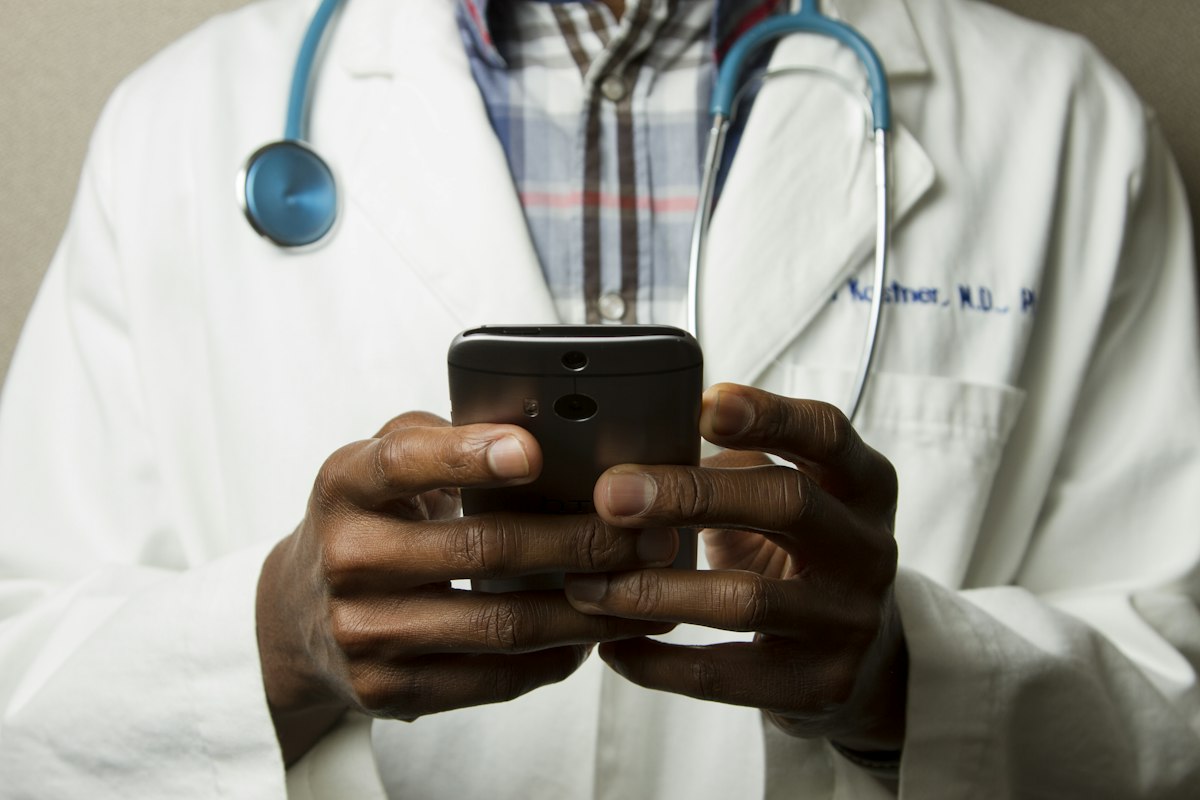
🏥 The Day I Realized Nigerian Healthcare Had Changed
It was a Tuesday morning in October 2025. Emaka — a 31-year-old teacher in Asaba — woke up with a sore throat that had been building for three days. His school was thirty minutes by keke from the nearest government hospital, and the last time he went there he waited four and a half hours. Just to see a nurse. Not even a doctor. A nurse.
His colleague sent him a WhatsApp message that week. "Guy, I booked a doctor on my phone yesterday. Twenty minutes. He gave me a prescription. I collected it at the pharmacy down my street. That was it." Emaka thought the guy was joking. How? How do you see a doctor from your house in Asaba?
He tried it. He paid ₦2,500. He spoke to an actual doctor — MDCN-registered, verified — for 18 minutes via video call. Got a prescription. Was at the pharmacy by 11am. By noon, he was back home with his medication. No queue. No transport cost. No wasted half-day.
That experience is now available to millions of Nigerians. But — and this is a real but — most people go into their first online doctor consultation without knowing what to expect, which platforms to trust, what to say, what not to say, how to prepare, or what happens when the internet goes out halfway through.
That's exactly what this article fixes. Let me show you everything.
📋 Table of Contents — Jump to What You Need
- What Is an Online Doctor Consultation in Nigeria?
- How Telehealth Actually Works Step by Step
- Trusted Nigerian Telehealth Platforms Compared
- How to Prepare for Your First Virtual Doctor Visit
- What to Expect During the Consultation
- Online Prescriptions in Nigeria — What's Legal?
- Real Cost Breakdown — What You Will Actually Pay
- What Telehealth Cannot Do in Nigeria
- What to Do When Things Go Wrong
- Warning: Fake Telehealth Platforms Are Real
- Mental Health Consultations Online in Nigeria
- What's Changed in 2026 — Telehealth Evolution
- Key Takeaways
- FAQ
🔍 What Is an Online Doctor Consultation in Nigeria?
An online doctor consultation — also called a telemedicine appointment or virtual doctor visit — is exactly what it sounds like: you speak with a licensed, qualified medical doctor through your phone, tablet, or computer. No hospital. No waiting room. No transport stress.
The doctor sees you via video. You explain your symptoms. They ask questions, assess, and based on what they find, they advise you, refer you for tests if needed, or issue a digital prescription. The whole process typically takes 15 to 30 minutes.
In Nigeria, telehealth got a significant push during COVID-19 when physical hospital access became limited. Since then, platforms have matured considerably. As of early 2026, there are now multiple MDCN-recognized (Medical and Dental Council of Nigeria) telehealth services operating in the country with real, verified Nigerian doctors.
What makes this different from just calling a doctor friend? Accountability. On a licensed platform, the doctor has credentials you can verify. The consultation is documented. You get a summary or prescription you can take to a pharmacy. There's a complaints mechanism if something goes wrong. Your random doctor-friend chat on WhatsApp offers none of that.
📌 Three Types of Online Medical Services in Nigeria — Know the Difference
Not everything marketed as "telehealth" is the same. Before you book, you need to understand what you're actually paying for:
Live Video Consultation: You speak with the doctor in real time via video call. This is the gold standard. The doctor can see you, observe your condition, ask follow-up questions live. Most reputable Nigerian platforms offer this. Session length: 15–30 minutes.
Text/Chat Consultation: You type your symptoms; a doctor responds, sometimes asynchronously (not in real time). Cheaper, but limited. Good for simple questions. Not ideal for anything that requires proper clinical assessment. Costs ₦500 – ₦1,500 on most platforms.
Phone/Audio Call: Like video but without the visual component. Works better when internet quality is poor. Some doctors prefer this because it's more stable on Nigerian networks. Less ideal for visible conditions like rashes or wounds.
For your first consultation, aim for live video. It gives the doctor the most information to work with.
💡 Did You Know?
According to the Nigeria Health Watch, Nigeria has approximately 1 doctor per 5,000 patients — far below the WHO-recommended ratio of 1 per 1,000. In rural states like Kebbi and Yobe, the ratio is even worse. Telehealth doesn't solve this entirely, but it does allow one doctor in Lagos to consult a patient in Mubi, Adamawa — something that was impossible just five years ago. As of 2026, telehealth adoption in Nigeria has grown by over 300 percent since 2020, according to industry data from the Digital Health Nigeria Initiative.
⚙️ How Telehealth Actually Works — Step by Step (The Real Process)
This is where most first-timers are confused. Nobody explains the actual logistics. Let me walk you through what happens from the moment you decide to book to the moment you leave the pharmacy with your medication.
Download the app or go to the website. Create an account with your name, phone number, email, and sometimes your date of birth. Some platforms ask for medical history during registration — fill this out honestly. It helps the doctor during your session. Takes about 5 minutes.
Choose general practitioner (GP) for most complaints. If you need a specialist — cardiologist, dermatologist, gynecologist — some platforms offer this at higher rates (₦5,000 – ₦25,000). For your first session, start with a GP unless your situation is clearly specialist-level.
Most platforms let you book on-demand (immediate) or scheduled (pick a time slot). On-demand means you join a queue and a doctor connects within 5–20 minutes. Scheduled means you pick a date and time. Pay via card, transfer, or USSD. Keep your payment receipt. This step sounds simple. It usually isn't — some platforms have checkout bugs. If your payment goes through but you don't get a confirmation, wait 10 minutes before trying again. Don't double-pay.
You'll sit in a digital queue. The platform shows you your estimated wait time. Average on most Nigerian platforms: 5–15 minutes for on-demand. Use this time to write down your symptoms clearly. Don't scroll social media and miss the doctor's call — this happens more than you'd think.
The doctor joins the video call. They'll confirm your identity, ask about your chief complaint, then probe with follow-up questions. Be honest. Don't downplay symptoms. Don't guess at diagnoses. Let them lead. This typically runs 10–25 minutes depending on complexity. Some doctors will ask you to do basic checks — tongue, skin, eyes — using your phone camera.
After the session, you receive one of three things: a digital prescription (PDF or in-app) you take to any pharmacy, a lab referral for tests needed before treatment, or a recommendation to see a physical doctor for hands-on examination. This lands in your app inbox or email within minutes of the session ending.
Book the labs if referred. Collect the medication if prescribed. Take it as directed. And here's what most people skip: if your symptoms persist beyond 48–72 hours after starting medication, follow up. Most platforms offer a free follow-up consultation within 24–48 hours of your session. Use it. That's the whole point of continuity of care.
✅ Pro Tip After Your Consultation
Screenshot or download your consultation summary and prescription before closing the session. Some platforms clear records after 30 days. You want a personal copy. Also save the doctor's name and license number — you can verify it on the MDCN website if you need to confirm legitimacy later.
📱 Trusted Nigerian Telehealth Platforms — Honest Comparison
This is not a sponsored list. I want to be upfront about that. These platforms are included based on their reputation, MDCN compliance signals, user feedback, and operational activity as of early 2026. Do your own verification before paying.
| Platform | Consultation Type | Price Range | Specialists? | Prescription Issued? | Availability | Verdict |
|---|---|---|---|---|---|---|
| Doctoora | Video, Chat, Audio | ₦2,000 – ₦8,000 | Yes | Yes | 24/7 | Recommended |
| Helium Health | Video, Text | ₦3,000 – ₦15,000 | Yes | Yes | Business hours + extended | Strong for referrals |
| MDaaS Global | Video, Audio | ₦2,500 – ₦10,000 | Limited | Yes | 8am – 10pm | Good, limited hours |
| Telemedicine NG | Video, Chat | ₦1,500 – ₦5,000 | Limited | Yes | 7am – 11pm | Budget-friendly option |
| YewuMedical | Video | ₦3,500 – ₦12,000 | Yes | Yes | 24/7 | Strong doctor network |
| Unknown/Unverified App | Chat only | "Free" or ₦500 | Unclear | No | Unknown | AVOID — Red flag |
⚠️ Pricing reflects market rates as of Q1 2026. Verify directly with platforms before booking. This table is for guidance only.
🔎 How to Verify Any Nigerian Telehealth Platform Before You Pay
Before handing over your money and your medical information to any platform, run this five-point check:
1. MDCN Registration Signal: Look for mention of MDCN (Medical and Dental Council of Nigeria) compliance on their website or app. This doesn't guarantee perfection, but it's the baseline. No mention of MDCN? Caution.
2. Doctor Profiles Are Visible: Legitimate platforms show you the doctor's name, specialty, and years of experience before you book. If the doctor is faceless and unnamed until you pay, that's a problem.
3. Physical Contact Information Exists: A real company has a real Nigerian address, a real phone number, and a real email. Test it. Send an email. Does someone reply? A company with zero contact details is not one you want handling your health data.
4. Reviews From Real Nigerians: Search "[Platform name] Nigeria review" on Google. Go beyond the first page. Check Twitter/X. Check Nairaland. What are actual users saying about their experience? Not the testimonials on the platform's own website — those are selected. Independent reviews.
5. Secure Payment: Payment goes through recognized processors (Paystack, Flutterwave, Interswitch). If they're asking you to transfer to a personal account number, run.
📝 How to Prepare for Your First Virtual Doctor Visit — The Complete Pre-Consultation Checklist
Most people go into a telehealth session the same way they'd walk into a roadside pharmacy — they say "my body dey pain me" and expect the system to figure out the rest. That works at the chemist. Not at a medical consultation.
The more prepared you are, the more effective your session will be. And the more effective your session, the better the medical outcome. This isn't just about being organized — it genuinely affects the quality of care you receive.
📋 Before the Session — Do These Things
Write down your symptoms in detail. Not "I'm not feeling well." The doctor needs specifics: Where exactly does it hurt? When did it start? Is it constant or does it come and go? Does anything make it better or worse? Has this happened before? Write this down before you join the session — when the doctor asks, you want answers ready, not "uhh, let me think."
List every medication you're currently taking. Include supplements, herbal medicine (agbo, dongoyaro, anything), contraceptives, and any drugs from a previous prescription — even if you stopped taking them last week. Drug interactions are real and they can make your condition worse if the doctor doesn't know what's already in your system.
Know your allergies. If you react badly to any medication — penicillin, sulfa drugs, aspirin, anything — know this before your session and tell the doctor before they prescribe anything. Don't wait for them to ask.
Gather existing test results or previous prescriptions. If you've had a blood test, malaria test, typhoid test, or any lab work done recently, have it nearby. Take a clear photo of the result. Some platforms allow you to upload this before the session. Use that feature — it saves time and gives the doctor better context.
Check your internet connection and charge your device. This sounds obvious. You'd be shocked how many first-time users join a medical consultation on 4% battery with 1-bar signal. Charge to at least 60%. Connect to WiFi if possible. If you're on mobile data, use MTN or Airtel — they tend to hold video call quality better in most Nigerian locations than Glo or 9mobile for video streaming. Have your data recharged — a 20-minute video call uses roughly 150–250MB.
Find a quiet, private space. You're about to discuss your health with a doctor. Doing this in a shared room with family walking in and out is not ideal. Some patients mention very sensitive symptoms — sexual health issues, mental health concerns, things they wouldn't say in public. Find a private space. Shut the door. Use earphones if you have them.
Have your Naira card or payment method ready. Most platforms require payment before the consultation loads. Confirm your card is active and has sufficient funds. It's extremely frustrating to get to the checkout screen, realize your card is blocked, and then miss your slot.
⚠️ The One Thing People Forget Most Often
Your accurate weight and height if known, and your blood type if you know it. These seem like minor details. They're not. A doctor calculating medication dosage needs your weight. Your blood type matters in certain clinical situations. If you don't know these, say so — but try to know before your session. Any pharmacy with a scale can give you your weight in under a minute.
🎯 What to Expect During Your Online Doctor Consultation
The session itself is usually not what first-timers expect. Most people imagine it will feel like a hospital — clinical, cold, formal. It doesn't. It feels more like a focused conversation. Here's what actually happens.
The doctor will begin by confirming your identity and the reason for your visit. They'll then ask open-ended questions: "Tell me what's been happening." Then more specific ones. They may ask you to show them something on camera — a visible rash, swollen gland, the whites of your eyes. For a visible symptom, good lighting on your end is critical. Move near a window if you can.
What they cannot do online: listen to your chest, take your blood pressure, feel for abdominal tenderness, examine a wound up close. These limitations are real and a good doctor will tell you upfront if your condition requires physical examination. If they don't mention this and you feel they're guessing, it's fair to ask: "Do you think I need a physical exam for this?"
The doctor may pause to type notes or look something up. That's normal. Don't interpret silence as incompetence. Medical note-taking takes time and good doctors document as they go.
At the end, they'll summarize their assessment and recommendation. This is when you ask questions. Don't leave the session with unanswered questions. Common ones worth asking:
— "What exactly do I have?" or "What's your assessment?"
— "How long will recovery take?"
— "What should I watch for that would mean it's getting worse?"
— "When do I need to seek physical care if this doesn't improve?"
— "Are there any food or activity restrictions?"
These questions take two minutes. They can save you from significant confusion — or danger — later.
✅ Real Story — How One Prepared Patient Got More in 15 Minutes Than Others Get in Hospital
Ngozi, 28, from Enugu, went into her first telehealth session with a written list of symptoms, her last three malaria test results photographed, and two questions she'd prepared. The consultation took 15 minutes. The doctor confirmed she didn't have malaria again — the symptoms were stress-induced and related to poor sleep and dehydration. She got practical advice, a referral for one simple blood test, and the reassurance she needed. Total cost: ₦2,500. Compare that to her previous hospital visit that cost ₦7,000 in transport, ₦4,000 in consultation fees, and four hours of her life — for the same result.
💊 Online Prescriptions in Nigeria — What's Legal, What's Not
This is the section most Nigerians have questions about and nobody gives a clear answer. Let me be direct.
Nigerian law under the MDCN framework allows licensed doctors to issue prescriptions following a proper clinical consultation — including via telemedicine, provided the platform is compliant. So yes, a prescription issued by a verified doctor on a legitimate telehealth platform is legal. Most pharmacies in Lagos, Abuja, Port Harcourt, and major cities now accept digital prescriptions.
The prescription will typically come as a PDF on official letterhead showing the doctor's name, MDCN number, the diagnosis, the medication, dosage, and duration. It may also include the platform's official stamp. Take this document to any registered pharmacy.
Here's where it gets complicated: some pharmacists — especially in smaller towns — are not yet familiar with digital prescriptions and may refuse to honor them. If this happens, ask to speak with the pharmacist supervisor. Show them the doctor's MDCN credentials within the document. Most of the time, once they see a real license number, they'll fill the prescription. If they still refuse, try another pharmacy — one of the major chains (HealthPlus, MedPlus, Drugstoc-affiliated) is your best bet.
⚠️ What Telehealth Cannot Prescribe
Controlled substances — Schedule 1 and 2 drugs including opioids and certain psychotropics — cannot be prescribed via telemedicine under current Nigerian regulatory guidance. If a platform offers to prescribe any narcotic or controlled drug online, that's a red flag. This isn't about bureaucracy for its own sake; it's a safeguard against drug abuse and misuse that's genuinely important.
Also, some platforms are conservative about prescribing strong antibiotics without lab confirmation. This is actually good medicine, even if it feels frustrating. If a doctor says "let's get a culture test first before I prescribe that antibiotic" — they're doing their job properly. Antibiotic resistance is a serious problem in Nigeria, and random antibiotic prescriptions are a major contributor.

💰 Real Cost Breakdown — What a Telehealth Consultation Actually Costs in Nigeria
Let's talk numbers. Because vague statements like "it's affordable" mean absolutely nothing without specifics.
| Cost Item | Low End | Average | High End | Notes |
|---|---|---|---|---|
| GP Consultation (Video) | ₦1,500 | ₦3,000 | ₦8,000 | Varies by platform and session length |
| Specialist Consultation | ₦5,000 | ₦12,000 | ₦25,000 | Cardiologist, Dermatologist etc. |
| Mental Health / Therapy Session | ₦5,000 | ₦10,000 | ₦20,000 | Licensed therapists / counsellors |
| Chat Consultation | ₦500 | ₦1,200 | ₦2,500 | Text-based, slower response |
| Data Cost (20-min video call) | ₦300 | ₦600 | ₦1,000 | Depends on network, quality settings |
| Lab Tests (if referred) | ₦2,000 | ₦8,000 | ₦25,000+ | Malaria ₦1,500, Full blood count ₦3,000+ |
| Medication (if prescribed) | ₦800 | ₦4,000 | ₦15,000+ | Depends on diagnosis and drug brand |
| Typical Total (GP + Meds) | ₦3,000 | ₦8,000 | ₦20,000 | vs ₦15,000–₦40,000 at private hospital |
⚠️ Prices reflect market conditions in Q1 2026. Lab and medication costs vary significantly by location and provider.
✅ The Real Comparison — Telehealth vs Private Hospital Visit
A typical private hospital consultation in Lagos costs ₦5,000 – ₦15,000 in consultation fees alone — before tests and medication. Add transport (₦1,000 – ₦5,000 depending on your location), waiting time (2–4 hours average), and the lost productivity cost of a wasted workday. A telehealth session at ₦2,500 – ₦4,000 done from your house, in 20 minutes, is not just cheaper — it's a fundamentally different experience for non-emergency situations.
💡 Did You Know?
Nigeria's National Health Insurance Authority (NHIA) is currently developing frameworks to include telehealth consultations under the NHIA scheme. As of early 2026, this is still in progress, meaning most telehealth costs are out-of-pocket. However, several private health insurance providers — including AXA Mansard, Hygeia HMO, and Reliance HMO — have started including telehealth coverage in their plans. If you have private health insurance in Nigeria, check your policy. You may already be covered for online consultations at zero additional cost.
🚫 What Telehealth Cannot Do in Nigeria — Honest Limitations
I want to be very clear about this because I've seen too many people either avoid telehealth entirely because of unfounded fears OR use it as a replacement for care it genuinely cannot provide. Both extremes are dangerous.
Physical examination is impossible online. A doctor cannot listen to your lungs, feel for an enlarged spleen, check your lymph nodes, examine a wound, or perform any hands-on assessment. For conditions that require this — suspected appendicitis, internal organ issues, complex wound assessment, bone or joint injuries — telehealth is not the right first step. It can be a first contact, but physical follow-up is mandatory.
Emergency situations require emergency rooms. A telehealth doctor cannot call an ambulance, administer medication, perform CPR, or take any physical action. If someone is unconscious, not breathing properly, having a seizure, experiencing a heart attack, or bleeding severely — do not open a telehealth app. Call for emergency help. Get to a hospital.
Complex diagnoses often require multiple tests. A telehealth doctor can suspect and guide toward a diagnosis, but many conditions — hypertension management, diabetes control, complex infections, autoimmune issues — require ongoing physical monitoring, lab work, and in-person follow-up that telemedicine cannot fully replace.
Internet infrastructure is still a real barrier. In rural areas of Kebbi, Zamfara, Yobe, or deep parts of Anambra, consistent internet for a 20-minute video call is still a challenge. Audio calls are more reliable in these areas, but they sacrifice clinical visibility. This is a real, ongoing limitation that technology hasn't fully solved yet.
Some specialists simply aren't available online yet. As of 2026, neurosurgeons, ophthalmologists for advanced conditions, orthopedic surgeons, and some other specialists are not widely available on Nigerian telehealth platforms. The network is growing but gaps remain.
🛠️ What to Do When Your Online Doctor Consultation Goes Wrong
Things go wrong. Internet cuts. Payments get stuck. Doctors disconnect mid-session. Prescriptions don't arrive. Here's how to handle each scenario without panic.
Don't panic. Close the app and reopen it. Most platforms allow you to rejoin an active session within 10–15 minutes. If the session ends automatically, contact support with your booking reference. Almost all reputable platforms will either reconnect you or credit your account for a free rebooking. Save your booking reference number before every session.
Check your email for a confirmation. If payment went through (check your bank app for the debit), but no confirmation arrived, give it 10–15 minutes — it's sometimes a delay. After 20 minutes of nothing, email or WhatsApp the platform's support line with your transaction reference. For Paystack-processed payments, you can also dispute through Paystack if the platform is unresponsive.
Check your spam/junk folder first — many Nigerian email filters flag automated platform emails. Then check your in-app inbox if the platform has one. Still nothing after one hour? Contact support. Give them your session ID and they can resend it. If they're unresponsive, ask for the doctor's direct contact through the platform — most reputable platforms facilitate this.
This is the most serious scenario. First, write down everything you remember from the session immediately. Then seek a second opinion — either through another telehealth platform or in-person. If you believe the doctor acted unethically or provided dangerous advice, report them to the MDCN using their online complaint portal. The doctor's MDCN number from the platform is your starting point. This is how accountability in Nigerian medicine works.
Timeline note: Most payment disputes resolve in 3–7 business days. Prescription resends happen within hours. MDCN complaint investigations take weeks, but they are tracked.
🚨 Warning: Fake Telehealth Platforms Are Real in Nigeria — Red Flags to Know
I don't say this to scare you away from telehealth. I say this because ignorance of it is genuinely dangerous. There are fake "telemedicine" platforms operating in Nigeria whose "doctors" are not doctors. People have paid for consultations, received dangerous medication advice, and suffered real health consequences.
One person I came across spent ₦15,000 on a "specialist consultation" that never delivered the promised prescription. The "platform" disappeared off the internet within three weeks. That person then delayed getting real care while they waited for the platform to respond. The delay made their condition worse. It's not a minor inconvenience. It's a real harm.
⛔ 7 Red Flags — Never Ignore These
Red Flag 1 — "Consultation is free, pay only for prescription": There's no such thing. A legitimate doctor's time costs money. If the consultation is free and you only pay for the prescription, you're not getting medical consultation. You're getting a commercial transaction dressed as medicine.
Red Flag 2 — No doctor name or credentials shown before payment: You should always see who you're booking before you pay. Anonymous "medical professionals" with no verifiable identity = avoid.
Red Flag 3 — They ask for payment via personal bank account or WhatsApp: Legitimate platforms use Paystack, Flutterwave, or similar gateways. Payment to a named individual's account is not a medical platform — it's a scam.
Red Flag 4 — They promise to prescribe anything you ask for: A doctor who will prescribe any drug you request without a proper clinical basis is not a doctor acting ethically. Some of the worst fraudulent platforms in Nigeria advertise "no questions asked prescriptions." Walk away.
Red Flag 5 — The platform has no functional contact information: Send a test email before you pay. If there's no reply within 48 hours, that's a problem. No phone number, no address, no physical presence — these are signs of a platform that doesn't expect to be held accountable.
Red Flag 6 — Extraordinarily cheap prices: A genuine doctor's consultation under ₦500 for video is suspicious. Medicine has costs. If the price seems too good to be true in this context, ask why. The answer usually reveals the problem.
Red Flag 7 — Heavy social media ads but no independent reviews: Platforms that spend heavily on Instagram and Facebook ads but have zero organic reviews on Nairaland, Google, or Twitter/X are red flags. Real platforms build reputation through real patients. Fake ones buy reach.
⚠️ If This Already Happened to You
If you've already used a suspicious platform and are concerned about the advice or prescription you received, do not take any medication you're uncertain about. Seek immediate in-person care and tell the doctor what medication you were advised to take. Report the platform to the Nigeria Police Force cybercrime unit (Cybercrime Reporting Portal: cybercrime.gov.ng) and to the MDCN. Your report may prevent the same from happening to someone else.
🧠 Mental Health Consultations Online in Nigeria — What to Know
This deserves its own section because mental health telehealth in Nigeria is both more needed and more misunderstood than general medical telehealth. Let me be direct about the realities.
Nigeria has approximately 350 psychiatrists for a population of over 220 million. As the World Health Organization's Nigeria profile notes, the mental health treatment gap in Nigeria exceeds 90 percent — meaning more than 9 in 10 people who need mental health care don't get it. Online therapy is not a perfect solution to this, but for millions of Nigerians, it's the only accessible solution that exists right now.
What you can access online in Nigeria for mental health: counseling sessions with licensed therapists, psychiatric consultations with licensed psychiatrists (for diagnosis and medication management), cognitive behavioral therapy (CBT) sessions, relationship counseling, grief support, anxiety and depression management. You can also read more about mental health in Nigeria in our dedicated piece on Daily Reality NG.
What you should know before booking: Therapy is a process, not a one-session fix. Your first session is about building rapport and understanding your situation — don't expect dramatic results in session one. The therapist isn't there to tell you what to do. They're there to help you understand yourself better so you can make better decisions. That process takes time.
Credentials to look for in a Nigerian online therapist: CPRN (Clinical Psychologists Registration Network of Nigeria), NMA membership if they're a psychiatrist, or formal training from an accredited Nigerian or international institution. Ask. It's your right to know who is managing your mental health.
One thing I'll say plainly: the stigma around seeking mental health help in Nigeria is still real. People worry about what family members will think. About being "weak." About someone finding out. Online therapy gives you a private, discreet way to access this care that didn't exist before. That privacy is valuable. Use it.
📅 What's Changed in 2026 — The Telehealth Evolution in Nigeria
Telehealth in Nigeria has moved faster in the past 18 months than in the previous five years combined. Here's what's different right now compared to when most of the older articles on this topic were written.
The MDCN has published clearer telemedicine guidelines. As of 2025-2026, the Medical and Dental Council of Nigeria has been increasingly vocal about standardizing telehealth practice. Platforms are being held to stricter doctor verification standards. This is making the landscape significantly safer than it was in 2022-2023 when the space was more of a Wild West.
Private HMOs are entering telehealth. AXA Mansard, Hygeia, and Reliance HMO have all either launched or integrated telehealth features as of early 2026. If you're on any of these plans, check your app. Some subscribers are eligible for unlimited GP consultations at no extra cost within their plan.
AI-assisted triage is now appearing on Nigerian platforms. Some platforms now use AI tools to pre-assess your symptoms before you speak with a doctor — helping route you to the right specialist and reducing consultation time. This is being used as a triage tool, not as a replacement for the doctor. It's generally a positive development when implemented well.
Diaspora consultations are booming. Nigerians abroad — in the UK, US, Canada — are now booking consultations with Nigerian doctors for family members back home. A parent in Ibadan can have their GP consultation booked and managed by their child in London. This cross-border use case is growing fast and is changing how Nigerian families manage healthcare across distance.
Pharmacy integration is improving. More platforms are now working directly with pharmacy chains so that your prescription is sent digitally to a pharmacy near you — and sometimes the medication is delivered to your home. MedPlus and HealthPlus have both started pilot integrations with telehealth platforms. This is not yet nationwide, but it's moving in that direction.
✅ Key Takeaways — Everything That Matters From This Article
- Telehealth in Nigeria is real, legal, and growing — but choose platforms with verified MDCN-registered doctors only
- Prepare before your session: write symptoms, list medications, know your allergies, charge your device, find a private space
- Digital prescriptions from licensed platforms are legal in Nigeria — most major pharmacy chains will honor them
- A typical telehealth GP session costs ₦1,500 – ₦8,000 — significantly cheaper than private hospital visits for non-emergency conditions
- Telehealth cannot replace physical examination for complex diagnoses, emergencies, or conditions requiring hands-on care
- Mental health consultations are available online in Nigeria — look for CPRN-registered therapists or NMA-member psychiatrists
- Red flags: anonymous doctors, personal account payments, "free consultation + paid prescription" models, no independent reviews
- If your session is disrupted by internet failure, contact support with your booking reference — reputable platforms will resolve this
- Always download or screenshot your consultation summary and prescription immediately after your session
- 2026 update: HMO integration and pharmacy delivery are making Nigerian telehealth more seamless — check if your health plan includes telemedicine coverage
❓ Frequently Asked Questions
Can a Nigerian telehealth doctor prescribe antibiotics online?
Yes, licensed Nigerian doctors on compliant telehealth platforms can prescribe antibiotics — but a responsible doctor will not prescribe strong antibiotics without clinical justification. If your symptoms suggest a bacterial infection, they'll prescribe appropriately. If the situation is unclear, they may refer you for a lab test first. This is good medicine, not bureaucracy.
What happens if the internet cuts out during my session?
Most platforms allow you to rejoin an active session within 10–15 minutes of a disconnection. Close the app and reopen it. If the session has ended, contact platform support immediately with your booking reference number. Reputable platforms will either reconnect you free of charge or provide a credit for a fresh booking. Never rebook and pay again without contacting support first.
Is it safe to share my personal health information on Nigerian telehealth apps?
On reputable, established platforms with clear privacy policies and MDCN compliance, yes — your health data has the same protections as in any medical setting. Nigeria's NDPC (Nigeria Data Protection Commission) has issued guidelines covering health data under digital platforms as of 2025. Before using any platform, check their privacy policy for specific language about data storage, third-party sharing, and data deletion rights. If the privacy policy is vague or absent, that's a reason to pause.
Can I use telehealth for my children or elderly parents?
Yes. Pediatric consultations and elder care consultations are available on most major Nigerian telehealth platforms. For children, a parent or guardian participates in the session. For elderly parents, a family member can join as a caregiver present during the consultation. Make sure the platform you choose explicitly lists pediatrics or geriatrics among their available services. Not all platforms have doctors with these specializations on-demand — some require scheduling in advance.

Founder & Editor-in-Chief, Daily Reality NG
Samson Ese is the problem-solver behind Daily Reality NG. Born in 1993 and writing since before he can remember, he launched this platform in October 2025 to cut through the noise around topics that actually matter — money, health, technology, and real life in Nigeria. His approach to every article is the same: research what's true, explain it clearly, and say what needs to be said without flinching. On health topics specifically, he combines editorial research with real patient experience accounts to give readers information they can actually act on. He doesn't write for Google. He writes for the person who needs the answer.
[Author bio included on every Daily Reality NG article as a standard E-E-A-T signal — consistent authorship attribution is essential for reader trust and platform credibility.]
→ Full Author Profile📧 Get More Like This — Every Week
Real guides on health, money, tech, and Nigerian life — delivered to your inbox. No spam. No sponsored fluff. Just content that actually helps.
Subscribe to the Newsletter →💬 Your Thoughts — We'd Love to Hear From You
- Have you ever used a telehealth platform in Nigeria? What was your experience — good, bad, somewhere in between?
- What's the biggest thing that's stopping you from trying an online doctor consultation — cost, trust, internet access, or something else?
- Would you trust an online prescription enough to take it to your pharmacy, or would you feel more comfortable with a physical paper prescription?
- For those of you in rural Nigerian states — is reliable internet for a video call even realistic in your area? What do you use?
- If you could change one thing about how healthcare works in Nigeria — access, cost, quality, or availability — what would it be?
Share your thoughts in the comments below. Real conversations help real people.
I wrote this because I was genuinely tired of seeing Nigerians either avoid healthcare entirely because of the stress of hospitals, or fall victim to fake "telehealth" services that took their money and gave them nothing. You deserve accurate information before you make a decision that affects your health. That's not something that should require luck or connections to find.
If this article helped you, send it to one person who's been putting off getting medical care. One person. That's the best thing you can do with what you just read.
— Samson Ese | Founder, Daily Reality NG
© 2025-2026 Daily Reality NG — Empowering Everyday Nigerians | All posts are independently written and fact-checked by Samson Ese based on real experience and verified sources.


Comments
Post a Comment