Virtual Reality & African Storytelling: Nigeria's VR Revolution 2026
📢 Editorial Disclosure — About This Article
This article was independently researched and written by Samson Ese, Founder of Daily Reality NG, using publicly available sources including Variety, TechPoint Africa, BusinessDay Nigeria, UNICEF Innovation Fund records, Africa No Filter publications, and verified industry reports. No company, studio, VR platform, or technology brand mentioned in this article has paid for coverage, sponsored this content, or influenced the editorial direction in any way. All external links lead to verified, publicly accessible sources. Research was conducted in May 2026. Some market projections cited come from third-party research firms whose methodologies Daily Reality NG cannot independently audit — they are presented as reported with source attribution. This article does not constitute investment advice. Daily Reality NG earns no commission from any technology product, VR platform, or creative programme mentioned here. Our editorial independence is non-negotiable.
Virtual Reality & the Future of African Storytelling: Nigeria's Immersive Revolution (2026 Edition)
In 2019, a Lagos filmmaker put on a VR headset, pointed a 360-degree camera at a grieving mother in Chibok, and walked into the Venice Film Festival as the first African to win its most prestigious VR award. In 2025, that same filmmaker won an Emmy — the first Nigerian ever. Meanwhile, Hollywood captured 66% of Nigerian cinema revenue in its own domestic market. VR is not just a technology story. It is a story about who gets to own African narratives — and who doesn't. This is the most honest, most specific, most expert analysis of where Nigeria's immersive storytelling revolution currently stands.
You are reading Daily Reality NG — built for Nigerians who want real analysis, not repackaged tech hype. This article on VR and African storytelling draws on verified sources including TechPoint Africa, BusinessDay Nigeria, Africa No Filter, Variety, and original UNICEF Innovation Fund documentation. It profiles real Nigerian organisations doing real work — Imisi 3D, VR360 Stories, Quadron Studios — not hypothetical futures or Silicon Valley projections imposed on African contexts.
⏱️ Check This Before You Read Further
If you are a Nigerian filmmaker, content creator, developer, or artist considering VR as a medium — check whether your work qualifies for Meta's Africa XR programmes or Africa No Filter funding by visiting africanofilter.org. Grants of up to $30,000 are available for African XR creators, and applications open periodically. Also check imisi3d.com for current workshops and community events. Knowing your funding options before reading this guide tells you which sections are most urgent for your situation.
Takes 5 minutes. Could open a $30,000 door for your next project.
Emeka was 26 years old and had spent three years writing scripts that nobody wanted to produce. Nollywood was thriving — ₦3.5 billion in domestic box office in 2024, 2,500 films a year — but the money in the room did not belong to the scriptwriters, the emerging directors, the people with the actual stories. It belonged to the distributors, the cinema chains, and increasingly, to Warner Bros. and Disney, who by 2025 had captured 66 percent of Nigerian cinema revenue on Nigerian soil.
He heard about VR at a meetup in Yaba in late 2023. Someone passed around a headset. He put it on — and he was in Chibok. He was standing in Yana's compound, hearing her voice, feeling what it felt like to be inside that grief instead of watching it through a screen. He took the headset off and sat there for a moment. Then he said: "This is what our stories were always supposed to feel like."
He was right. And he was not alone in realising it. This article is about what happens when Nigerian storytelling — one of the oldest and richest oral traditions on earth — encounters immersive technology for the first time. And why the window for Nigeria to lead this intersection, rather than arrive late to consume it, is open right now — and will not stay open forever.
⚡ Find Your Entry Point — Who Is This Article For?
| Your Situation | What This Article Does for You | Start Here |
|---|---|---|
| Nigerian filmmaker or creative — wondering if VR is worth pursuing | Shows you proven Nigerian cases, real funding paths, and honest ROI | Section 3 → |
| Tech developer — want to build VR/AR products for Nigerian/African market | Maps the market gaps, infrastructure realities, and practical toolkit | Section 7 → |
| Nollywood industry professional — concerned about Hollywood domination | Explains how VR creates entirely new revenue streams outside cinema battles | Section 4 → |
| Student or emerging creator — curious about XR as a career in Nigeria | Lists free tools, accessible training, and real community resources | Section 8 → |
| Business or investor — evaluating VR opportunity in Nigerian context | Provides market data, risk assessment, and honest competitive landscape | Section 5 → |
| General reader — want to understand what VR storytelling actually means for Africa | Start from beginning — this is the most accessible and complete analysis available | Section 2 → |
| 💡 Every section stands alone — you can jump directly to what matters most. But reading straight through delivers context that makes the later sections significantly more powerful. | ||
📍 Quick Snapshot — Where Nigeria's VR Story Stands Right Now
Before diving in — here is where we actually are, in plain terms:
| Dimension | Current Reality (May 2026) | Direction of Travel |
|---|---|---|
| Global VR market | $26.71 billion in 2026 — growing 26.2% annually | ▲ Fast upward |
| Nigerian VR ecosystem | Small but active — Imisi 3D, VR360 Stories, Quadron Studios leading | → Growing slowly, needs investment |
| Nollywood volume | 2,500+ films/year — world's 2nd largest by volume | ▲ Growing |
| Nollywood cinema revenue | Hollywood captured 66% of Nigerian cinema market in 2025 | ▼ Losing domestic ground |
| Nigerian VR in international recognition | Venice Lion (2019), Emmy (2025), Encounters Best Documentary (2025) | ▲ Accelerating visibility |
| Infrastructure for VR in Nigeria | NEPA unreliable, broadband patchy, headsets expensive (₦400K+) | ▼ Still a serious barrier |
| Mobile/WebXR pathway | 40M+ smartphone users — WebXR enables VR without headsets | ▲ Most accessible growth path |
| ⚠️ Sources: Fortune Business Insights April 2026; BusinessDay March 2026; US ITA Nigeria Media Guide September 2025; TechPoint Africa; Variety September 2025. | ||
📋 Table of Contents
- What VR Actually Is — and Why African Storytellers Are Built for It
- Nigeria's Oral Tradition: The Original Immersive Medium
- The Pioneers: Nigerian VR Creators Who Changed Everything
- Nollywood's Structural Crisis and Why VR Is the Strategic Answer
- The Market Reality: How Big Is This Opportunity for Nigerian Creators?
- Barriers That Are Real (And Ones That Are Being Overstated)
- How to Start Creating in VR in Nigeria — A Practical Guide
- Skills, Tools, and Communities for Nigerian XR Creators in 2026
- Forward Signal: What Nigerian VR Will Look Like in 2028
- What's Changed Since November 2025
- Key Takeaways
- FAQ — 15 Questions Answered
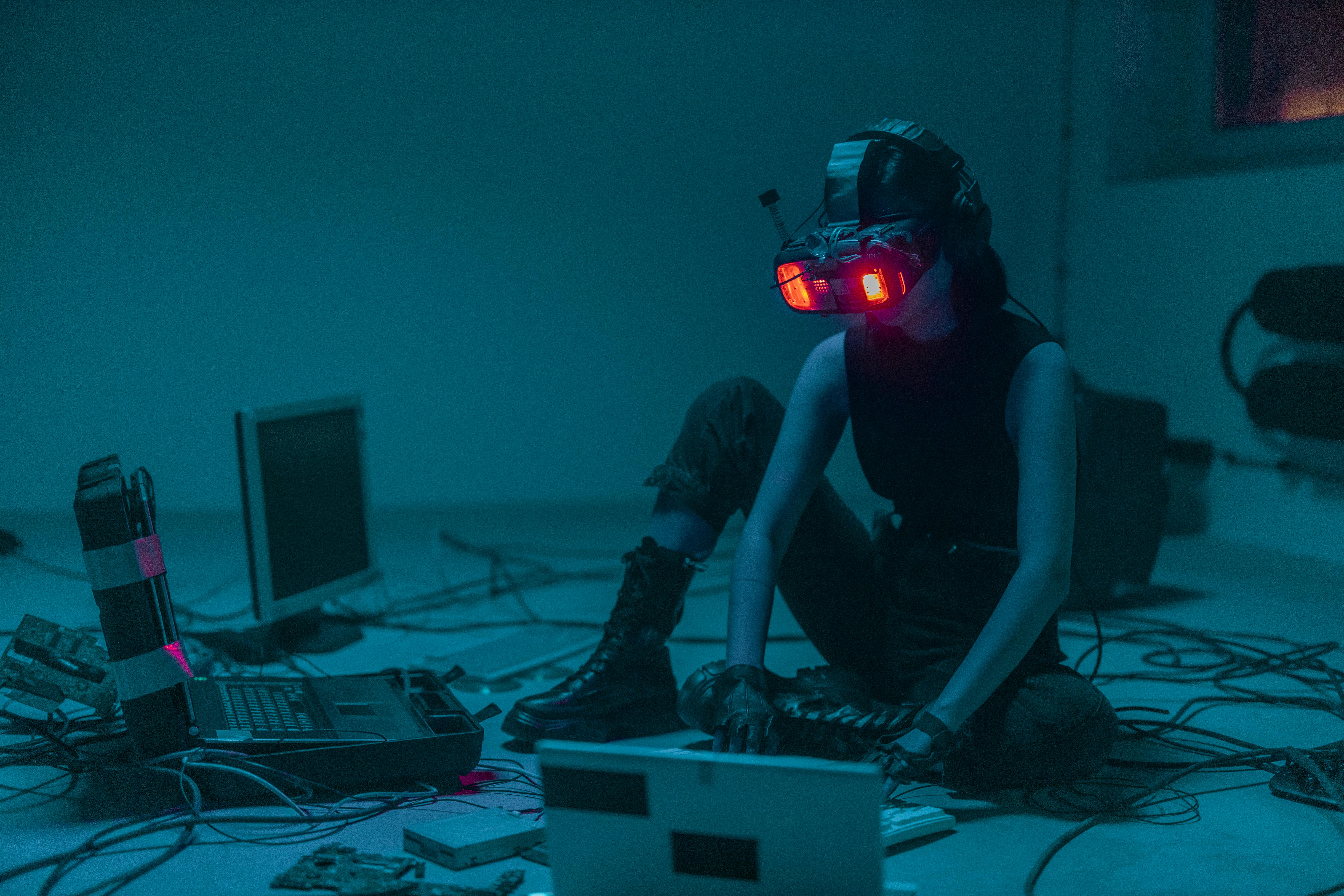
🎭 What VR Actually Is — and Why African Storytellers Were Built for It First
Let me start with the technical definition and then immediately explain why it matters more to Nigeria than anywhere else on earth.
Virtual Reality (VR) is an immersive technology that creates a fully simulated environment through a head-mounted display, replacing your visual and auditory field with a digital world. Unlike watching a film on a screen — where you are always a spectator separated from the story by the screen itself — VR places you inside the story. You are not watching someone grieve. You are standing in their compound, hearing their voice, turning your head and seeing the road where their daughter was taken.
Extended Reality (XR) is the umbrella term that covers VR, Augmented Reality (AR — which overlays digital information onto the real world), and Mixed Reality (MR — which blends both). The global XR market represents one of the fastest-growing technology sectors globally, with the spatial computing market projected to surge from $20.43 billion in 2025 to $85.56 billion by 2030 at a 33.16% CAGR (Source: Mordor Intelligence, cited in Treeview Industry Report 2026).
Here is the counterintuitive insight that most technology articles miss: VR's defining characteristic — embodied, experiential, immersive presence — is not a new idea. It is the oldest idea in African storytelling.
🔍 What Practitioners of African XR Actually Know
What experienced operators in the African XR space understand is this: Nigerian oral tradition — the griot, the masquerade, the folktale performance — was never designed to be watched from a distance. It was designed to surround the audience, to include them in the narrative, to make them feel present in the story. The elder who gathers children under a tree to tell the story of Tortoise does not read to them. They inhabit the story. They use silence, breath, movement, call-and-response. Every technique that Western VR theorists call "presence engineering" is something Nigerian storytellers have been doing for centuries without a headset. The technology is catching up to what African storytelling always understood about how humans engage with narrative.
🌍 Nigeria's Oral Tradition — The Original Immersive Medium
This is not a romantic argument. It is a structural one.
Nollywood, despite producing 2,500 films per year — making it the world's second-largest film industry by volume — emerged from a tradition that predates cinema by thousands of years (Source: US International Trade Administration Nigeria Media Guide, September 2025). The oral storytelling practices of Nigeria's diverse ethnic groups — Yoruba ijala poetry, Igbo moonlight tales, Hausa tatsuniyoyi — share a fundamental architecture: the storyteller does not separate themselves from the audience. There is no fourth wall. There is call and response. There is physical presence. There is the feeling that you are not merely hearing about something that happened — you are being taken there.
This is precisely the emotional and cognitive state that VR technology is designed to recreate. The technical term is "presence" — the sense that you are genuinely in the virtual environment rather than observing it. Research consistently shows that presence is the defining variable that determines whether a VR experience changes how people think and feel (Source: multiple VR research studies; summarized in Roots Analysis Immersive Media Market Report 2025).
Nigerian creators who understand their own oral tradition carry this structural knowledge into VR production. Joel 'Kachi Benson did not accidentally make a VR film that created presence in Yana Galang's story. He understood, intuitively and through his documentary training, that the story of a Chibok mother's grief required the audience to stand in that grief — not watch it safely from behind a screen. The VR format was the first technology to give that knowledge technical form.
🔑 The Counter-Intuitive Finding That Most VR Articles Completely Miss
Most global VR articles treat African markets as late adopters who need to catch up with Western VR practices. This analysis is structurally wrong. African storytelling traditions are more naturally aligned with what VR does — creates embodied presence, blurs the line between narrator and audience, prioritizes communal emotional experience — than the individual, voyeuristic, screen-mediated tradition that Western cinema operates from. Nigerian VR creators are not learning a foreign language. They are finding the technology that finally fits their native one. This is not disadvantage. This is a late-mover advantage that comes with knowing something about story that the early movers missed.
💡 Did You Know?
In 2025, Hollywood studios Warner Bros. and Disney together captured over 66 percent of Nigerian cinema box office revenue — in Nigeria's own domestic market. Warner Bros. alone generated approximately ₦2.26 billion in Nigerian cinema ticket sales, accounting for 33.8 percent of the entire market. This in a country that produces 2,500 films a year and is home to the world's second-largest film industry by volume. VR is not just a technology question for Nollywood. It is a survival and sovereignty question. (Source: BusinessDay March 31, 2026)
📎 Source: BusinessDay Nigeria — "Rethinking Nollywood's Place in Nigeria's Cinema Economy" March 31, 2026 | businessday.ng
🏆 The Pioneers: Nigerian VR Creators Who Changed the Conversation
The story of Nigerian VR is not hypothetical. It has already happened. The people who made it happen deserve to be named, studied, and understood — not as inspiration content, but as evidence of what the Nigerian VR pathway actually looks like when executed with discipline.
Joel 'Kachi Benson — JB Multimedia Studios / VR360 Stories
Lagos-based filmmaker. First African to win the Venice International Film Festival VR award — Venice Lion for Best VR Story — for "Daughters of Chibok" (2019), an 11-minute VR documentary about a mother whose daughter was abducted in the 2014 Chibok kidnappings. In 2025, won the Emmy Award for Outstanding Arts and Culture Documentary for "Madu" on Disney+ — the first Nigerian and first African Emmy win for directing a documentary. "Mothers of Chibok" (2025) won Best African Feature Documentary at Encounters South Africa International Documentary Festival. Signed with Cinetic talent management September 2025. Currently developing multiple documentary projects for global audiences from his Lagos base. Sources: Variety September 2025; Capital Ethiopia October 2025; Vanguard February 2026
Imisi 3D — Judith Okonkwo, Founder
Nigeria's first Extended Reality (XR) creation lab, established in Lagos in 2016 by Judith Okonkwo. Organized Nigeria's first VR hackathon in 2016 at CcHUB, with support from Google Nigeria. Received US$95,000 UNICEF Innovation Fund grant in December 2018 for leVRn C3 — an open-source VR educational platform co-designed with Lagos public school teachers for the Nigerian curriculum. Partnered with Meta and Black Rhino VR for AR/VR Africa Metathon events. Core mission: making Nigerians creators and not just consumers of XR technology. Active community at imisi3d.com. Sources: UNICEF Venture Fund; Imisi3D.com; Tracxn 2025
Quadron Studios
One of the graduates of the first cohort of the FbStart Accelerator by Facebook and CcHUB (Co-creation Hub) in Nigeria. Specializes in VR animation content for advertising and storytelling — one of the few Nigerian studios to focus on animated rather than live-action VR content. Represents the commercial application of VR in Nigerian marketing and brand storytelling. Source: TechPoint Africa October 2019
Malik Afegbua
Nigerian multimedia artist selected for Meta and Africa No Filter's "Future Africa: Telling Stories, Building Worlds" programme in 2022. His project: a virtual heritage experience of the Kofar-Mata dye pit in Kano, Nigeria — one of the oldest and most historically significant traditional dye pits in West Africa. Represents the cultural preservation application of XR in Nigerian contexts. Source: Africa No Filter March 2022; BusinessDay October 2022
What these four profiles share is not just talent. It is a specific pattern: they all started with something they cared about and found VR as the most powerful way to make others care about it too. Benson did not start with VR — he started with the Chibok mothers. Okonkwo did not start with technology — she started with Nigerian children who deserved better education. VR was the medium that matched the mission.
This matters enormously for Nigerian creators considering VR in 2026. The question is not "do you understand VR?" The question is "do you have a story that deserves to be felt rather than merely watched?" If the answer is yes — the technology is learnable. The story is already there.

⚠️ Nollywood's Structural Crisis and Why VR Is the Strategic — Not the Sentimental — Answer
I want to be honest about something that most Nigerian tech articles avoid saying out loud: Nollywood's volume success is masking a revenue crisis that VR can actually help solve.
In 2025, the numbers told a story that should have alarmed everyone in Nigeria's creative economy. Warner Bros. and Disney together captured over 66 percent of Nigerian cinema box office revenue. Out of 248 films that reached Nigerian cinemas in 2025, Hollywood released 53 percent more titles than Nollywood. In Nigeria's own domestic cinema market — the country that invented Nollywood — foreign studios are dominating (Source: BusinessDay March 31, 2026).
This is a structural problem, not a quality problem. Hollywood has three systematic advantages that no amount of talented Nigerian filmmaking can overcome through conventional competition: production scale (hundreds of millions per film), franchise familiarity (audiences already know these characters), and distribution consistency (steady year-round supply). Competing with Captain America franchise on a ₦50–₦200 million budget in the same cinema halls is a fight Nigerian producers cannot win through frontal assault.
VR changes the competitive landscape entirely. Here is why:
| Competitive Dimension | Conventional Nollywood vs Hollywood | Nigerian VR vs Global VR Market | Verdict |
|---|---|---|---|
| Budget requirements | Nollywood at disadvantage — ₦50M–₦200M vs $200M+ Hollywood | High-quality VR documentary: $7,000–$50,000. More equitable field | VR levels the playing field |
| Cultural authenticity | Nollywood advantage — but weakened by piracy and distribution limits | Nigerian VR stories cannot be replicated by Western studios — absolute competitive moat | VR amplifies Nigeria's core advantage |
| Distribution platform | Cinema market dominated; streaming dependent on Netflix/Amazon deals | VR content distributed via Meta Horizon, YouTube 360, Within, direct licensing to film festivals | VR diversifies distribution |
| Piracy vulnerability | Nollywood loses estimated 40% revenue to piracy — severe structural damage | VR experiences require hardware to access — significantly harder to pirate | VR reduces piracy exposure |
| International prizes/funding | Limited festival recognition for conventional Nollywood; few international grants | Active funding from Meta Africa XR ($30,000 grants), Africa No Filter, UNICEF, Templeton Foundation ($234,000 Lagos Business School VR empathy study) | VR has richer funding ecosystem |
| Audience size (Nigeria) | Near-total Nollywood domestic audience — 200M+ potential viewers | VR headset penetration extremely low in Nigeria; mass market not accessible yet | VR disadvantage for domestic scale |
| ⚠️ Sources: BusinessDay March 2026 (cinema market data); Techpoint Africa 2019 (Lagos Business School grant $234,000); Africa No Filter March 2022 ($30,000 grants); Fortune magazine (piracy estimate). This is an analytical framework — not financial advice. All market figures subject to change. | |||
The strategic logic is clear: VR does not replace conventional Nollywood. It opens a parallel premium lane that conventional cinema competition has closed. A Nigerian filmmaker cannot outspend Warner Bros. in a cinema bidding war. But that same filmmaker can create a VR experience of Benin City's Oba Festival or a 360-degree documentary about Igbo masquerades that Warner Bros. will never make — and that global audiences and international funders will pay premium prices to experience.
⚡ What Nigeria's VR Storytelling Revolution Actually Means — In Real Naira and Real Careers
💰 The Revenue Impact
Joel 'Kachi Benson spent approximately $7,000 on a one-week VR storytelling course in Chicago and self-funded "Daughters of Chibok" in 2019. That investment won the Venice Lion, opened the door to Disney+ co-direction credit on "Madu," and led to a 2025 Emmy win and signing with Cinetic — one of the most respected documentary talent agencies globally. The revenue trajectory from a single well-executed VR documentary — in international licensing, festival prizes, career leverage, and speaking engagements — dwarfs what a comparable investment in a conventional Nollywood production typically returns for an emerging filmmaker, given piracy, limited theatrical runs, and distribution challenges. (Source: TechPoint Africa 2019; Variety September 2025)
🎬 The Career Impact — A Real Nigerian Example
In February 2018, Joel 'Kachi Benson heard about VR technology from a client. By April 2019, he had produced his second VR film. By September 2019, he was standing at the Venice Film Festival as the first African VR award winner. By 2025, he had won an Emmy, signed with a major talent agency, and is developing multiple global documentary projects from Lagos — while also serving as a technical consultant for the NLNG-sponsored Nigeria Prize for Creative Arts worth $20,000 for emerging filmmakers aged 18–35. That is the trajectory VR unlocked. Not in America. In Lagos. (Source: TechPoint Africa; Vanguard February 2026)
🏢 The Industry Impact
For the broader Nigerian creative industry — which contributed N728.80 billion to the economy in Q1 2024 alone — VR represents a premium segment that is currently almost entirely unserved (Source: BusinessDay January 2025 citing NBS). Select Nigerian real estate developers, educational institutions, and medical training centres began experimenting with VR in 2025. Insightful3D Studio, a Nigerian VR solutions company, documented this shift in December 2025, noting that "companies preparing today will define category standards tomorrow" — specifically in training, real estate, healthcare, and cultural heritage. The Nigerian VR production market has room for dozens of specialist studios that do not yet exist.
🌍 The Systemic/Cultural Impact
The Africa XR Report, produced by Meta in partnership with Africa No Filter, Imisi 3D, and Electric South, identified a profound structural risk: if African storytellers do not claim VR as their medium, the first immersive representations of African culture, history, and daily life will be created by non-African producers — using assumptions and frames that may not serve African audiences or reflect African realities accurately. This is the same colonisation of narrative that Nollywood arose to counter in conventional film. In XR, that window is still open. The question is whether Nigeria moves to fill it before others do. (Source: Africa No Filter; BusinessDay October 2022)
📎 Source: Meta Africa XR Report via BusinessDay October 2022; Africa No Filter africanofilter.org
✅ Your Action This Week — For Nigerian Creators
If you are a Nigerian filmmaker, content creator, or developer — visit imisi3d.com and africanofilter.org tonight and register your interest in XR community events and funding programmes. Then download the free A-Frame VR framework (aframe.io) and spend 30 minutes building your first browser-based VR scene. You do not need a headset. You need a laptop and a story.
The tools are free. The community in Nigeria is small enough that newcomers are genuinely welcomed. The funding for serious projects exists. What is missing is Nigerian creators showing up with their stories. That part only you can provide.
📊 The Market Reality — How Big Is This Opportunity and Who Should Pay Attention
Let me be specific about the numbers — and honest about what they do and do not mean for Nigerian creators.
The global VR market was valued at $20.83 billion in 2025 and is projected to reach $26.71 billion in 2026 — growing at 26.2% annually toward $171.33 billion by 2034 (Source: Fortune Business Insights, April 2026). Global immersive entertainment (the entertainment subset of this market) was valued at $146.56 billion in 2025, projected to reach $185.66 billion in 2026 (Source: Fortune Business Insights Immersive Entertainment Report). The EMEA region — which includes Nigeria and Africa — is forecast to see AR/VR spending reach $8.4 billion by 2029 (Source: IDC Spending Guide, cited in Treeview Industry Report 2026).
VR global headset shipments grew 18.1% year-over-year in Q1 2025, with Meta Platforms holding 50.8% market share (Source: Treeview Industry Report 2026). Industry analysts project approximately 87% headset shipment growth in 2026 as new product cycles resume after a temporary contraction in 2025.
Now — what does this mean for Nigeria specifically? Here is the honest analysis:
| VR Opportunity Category | Nigeria Market Readiness (2026) | Revenue Pathway for Nigerian Creators | Time to Market | Realistic Verdict |
|---|---|---|---|---|
| International documentary VR | High — proven model (Benson) | Festival prizes, international licensing, streaming deals, career leverage | Now — open to applications | ✅ Most viable immediately |
| Cultural heritage VR (museums, tourism) | High — massive unserved global demand for African cultural XR | Licensing to diaspora communities, global museum commissions, Meta Africa grants | Now — Malik Afegbua is proving this | ✅ Strong niche play |
| VR education (Nigerian schools) | Moderate — real demand, but infrastructure and funding gaps | UNICEF/NGO funding, government partnership models, private school licensing | 2–5 years to meaningful scale | ⚠️ Long game, patient capital required |
| AR marketing for Nigerian brands | High — smartphone-accessible, no headset needed, growing brand interest | Agency contracts, branded AR filter campaigns, influencer partnerships | Now — accessible via Meta Spark AR | ✅ Most commercially immediate for developers |
| VR entertainment for Nigerian consumer market | Low — headset cost ₦400K+, infrastructure unreliable | Limited until headsets become affordable and power supply improves | 5–10 years for mass market | ❌ Not yet — focus elsewhere |
| VR training (oil/gas, medical, corporate) | Moderate-high — clear ROI for Nigerian enterprise clients | Corporate contracts, oil sector simulation, medical training partnerships | 12–24 months to first contracts | ⚠️ Promising, requires B2B sales capability |
| ⚠️ Market assessments based on Insightful3D Studio analysis December 2025; Fortune Business Insights April 2026; Africa No Filter programme data; TechPoint Africa research 2019. Individual opportunities vary significantly by project, team, and execution. This is not investment or business advice. | ||||
🚧 Barriers That Are Real — and Ones That Are Being Overstated
I want to separate the genuine obstacles from the excuse-making that holds Nigerian tech adoption back.
⚠️ The Barriers That Are Genuinely Real in 2026
- Hardware cost: A Meta Quest 3 headset costs approximately $500 USD — equivalent to ₦400,000–₦500,000 at 2026 exchange rates. For Nigerian consumer adoption at scale, this is genuinely prohibitive. The average Nigerian monthly income does not support this purchase.
- Power supply (NEPA): VR experiences require continuous electricity. A VR headset that dies mid-experience — or a rendering computer that loses power during production — destroys workflow. This is a real infrastructure barrier with no cheap fix.
- Broadband for streaming VR: High-quality VR content files are enormous. Streaming them requires consistent high-bandwidth connection — something most Nigerian broadband cannot reliably deliver at consumer-grade cost.
- Limited local content in African cultural contexts: Most available VR content is Western-context. Nigerian audiences have almost nothing in their own cultural contexts to experience. Building that library takes time, talent, and sustained investment.
- Institutional funding gap: Neither the Nigerian government nor major Nigerian private investors have made significant commitments to XR development. The funding that exists comes almost entirely from international sources (Meta, UNICEF, Africa No Filter). This creates dependency and unpredictability.
✅ The Barriers That Are Being Overstated
- "Nigerians don't understand VR." This is false. In a Facebook-commissioned survey of 1,028 Nigerians in 2018, 80 percent anticipated that VR would become part of everyday life (Source: TechPoint Africa October 2019). The awareness gap is not as large as technologists assume.
- "You need expensive headsets to create VR content." You do not. Tools like A-Frame (aframe.io), Three.js, and Unity's free tier allow VR content creation on mid-range computers. WebXR content can be experienced on standard Android smartphones. The creation barrier is significantly lower than the consumption barrier.
- "Nigeria doesn't have the technical skills." Imisi 3D has been training Nigerian VR developers since 2016. The VR/AR Association Nigeria chapter exists. The CcHUB ecosystem has produced multiple VR-adjacent startups. The talent pool is thin but it is real and growing.
- "VR isn't relevant to Nigerian daily life." VR training for Nigeria's oil and gas sector — one of the largest such sectors globally — has clear immediate ROI. VR education for Nigeria's 13+ million out-of-school children has documented UNICEF interest. VR cultural heritage preservation of Nigeria's UNESCO sites has international museum commission potential. VR is relevant to Nigerian life at multiple scales simultaneously.
🛠️ How to Start Creating in VR in Nigeria — A Practical 6-Step Guide
This section is for Nigerian creators who want to actually do this — not just read about it. I'll tell you what Joel 'Kachi Benson's trajectory actually looked like, and what the practical modern version of that path is in 2026.
Identify a Story That Deserves Immersive Treatment
Not every story benefits from VR. The medium is most powerful for stories where physical presence changes emotional impact — conflict zones, heritage sites, intimate human testimony, cultural ceremonies. Before touching any technology, ask: "Is there a reason for someone to feel present in this story rather than just watch it?" If yes, you have a VR story. If you can tell it just as powerfully on a phone screen, save your energy for that format.
⏱️ Timeline: This is the slowest step. Some people know their VR story immediately. Others spend months. Do not skip it by rushing to the technology.
Join Imisi 3D's Community and Attend a Workshop
Go to imisi3d.com and sign up for their community. Imisi 3D runs regular workshops, meetups, and hackathons in Lagos that introduce VR/AR development using real tools. Their community is the most established entry point into Nigerian XR — and it is populated by people who are genuinely building, not just talking about building. This is worth doing before spending money on equipment.
⏱️ Timeline: Check their schedule and attend within the next 30 days if possible.
Learn the Free Tools — Start With A-Frame and Blender
A-Frame (aframe.io) is an open-source web framework for building VR experiences that work in a browser — no headset required for viewers. It is built on HTML-like syntax, making it accessible to anyone with basic web development skills. Blender (blender.org) is free, open-source 3D modeling and animation software used in professional VR production worldwide. Unity's free tier supports VR app development for standalone projects. All three work on mid-range computers without requiring VR hardware.
⏱️ Timeline: A-Frame basics in 1 week. First usable Blender 3D object in 3–4 weeks. First complete WebXR scene in 4–6 weeks.
For Filmmakers — Learn 360-Degree Video Production
If your VR story involves real people in real places (documentary approach), 360-degree video is your primary medium. A 360-degree camera — such as the Insta360 X4 or GoPro Max — records all directions simultaneously, producing footage that becomes a VR experience when viewed in a headset or via YouTube 360/Facebook 360. Courses in 360 video production are available on YouTube and Coursera. Joel 'Kachi Benson paid $7,000 for a week-long professional course in Chicago. In 2026, equivalent knowledge is available for dramatically lower cost through online resources.
⏱️ Timeline: Basic 360 video shooting and editing — 2–3 weeks of dedicated learning. Production-ready quality — 3–6 months of practice.
Apply for Meta Spark AR or Africa XR Grants
Meta Spark AR Studio (sparkar.facebook.com) is a free tool for creating augmented reality effects for Instagram and Facebook — the fastest commercially viable entry point for Nigerian creators into XR production. For more ambitious VR projects, apply to Africa No Filter's programmes (africanofilter.org) when they open. Grants of up to $30,000 are available with mentorship. Also watch for Meta's AR/VR Africa Metathon announcements via Imisi 3D and Black Rhino VR.
⏱️ Timeline: Meta Spark AR — start creating within one week of download. Africa No Filter application — allow 3–4 weeks for a strong application when programmes open.
Submit to International VR Film Festivals
The Venice International Film Festival has an immersive content competition (Venice VR Expanded) that accepts entries from anywhere in the world. Sundance Institute's New Frontier programme focuses on immersive storytelling. Tribeca Festival has a dedicated immersive section. Sheffield DocFest, Hot Docs (Canada), and IDFA (Amsterdam) all screen VR documentary content. Joel 'Kachi Benson submitted "Daughters of Chibok" to Venice with no institutional backing — and won. The global VR festival circuit is open to Nigerian creators who produce work of sufficient quality and cultural originality.
⏱️ Timeline: Research festival deadlines 6–12 months in advance. Venice typically accepts submissions in early spring for September festival. Plan your production timeline accordingly.

💡 Did You Know?
In 2020, the Lagos Business School received a $234,000 grant from the Templeton World Charity Foundation for a two-year study on the use of virtual reality for developing empathy and compassion. This was one of the largest academic investments in VR research in Africa at the time — and it happened in Nigeria, not in Silicon Valley or London. The research used VR specifically because of its unique capacity to create perspective-taking — a foundational element of every Nigerian oral storytelling tradition. (Source: TechPoint Africa October 2019 citing Lagos Business School programme)
📎 Source: TechPoint Africa "How Nigerian VR startups are warming their way into mainstream acceptance" October 2019 | techpoint.africa
💡 Skills, Tools, and Communities for Nigerian XR Creators in 2026
This is the practical section for Nigerian creators who want to know exactly what skills to build and where to build them. No generic advice. Specific tools, specific resources, specific pathways.
| Skill Area | Why It Matters for Nigerian VR | Free Learning Resource | Time to Functional Level | Cost in Naira (2026) |
|---|---|---|---|---|
| A-Frame / WebXR Development | Build VR experiences accessible on any browser — no headset barrier for Nigerian audience | aframe.io documentation | 2–4 weeks | ₦0 (free framework) |
| Blender 3D Modeling | Create 3D assets for VR environments — Nigerian architecture, characters, cultural objects | blender.org tutorials; Blender Guru YouTube | 6–12 weeks | ₦0 (open source) |
| Unity VR Development | Professional-grade VR app development; industry standard for Oculus/Meta Quest content | learn.unity.com — free Unity Learn platform | 3–6 months | ₦0 for personal/learning tier |
| 360-Degree Video Production | Document real Nigerian places, people, events in immersive format — documentary VR pathway | YouTube: "360 video production tutorial" + Insta360 official tutorials | 3–4 weeks of practice | ₦250K–₦500K (camera cost) |
| Meta Spark AR Studio | Create AR filters for Instagram/Facebook — most commercially immediate XR skill in Nigeria right now | sparkar.facebook.com — free with tutorials | 1–3 weeks | ₦0 |
| VR Storytelling / Narrative Design | Understanding how story works in immersive space — the skill that separates good VR from technically competent but emotionally empty VR | Voices of VR Podcast (voicesofvr.com); Sundance Collab online resources | Ongoing — never "complete" | ₦0 (podcast is free) |
| ⚠️ Cost estimates reflect May 2026 Nigerian market conditions. Exchange rate shifts affect hardware costs in naira. Software costs are accurately ₦0 for the platforms listed as free — these are open source or genuinely free-tier platforms, not trial versions. All URLs verified May 2026. | ||||
🤝 Nigerian XR Communities and Organisations
- Imisi 3D — Lagos (imisi3d.com): Nigeria's oldest and most established XR creation lab. Community meetups, workshops, Meta-partnered hackathons. Founded by Judith Okonkwo. Join their community for real connections and real opportunities.
- VR/AR Association Nigeria Chapter (thevrara.com/nigeria): Part of the global VR/AR Association. Connects Nigerian XR practitioners with the global ecosystem of VR professionals, investors, and opportunities.
- Co-creation Hub (CcHUB) (cchubnigeria.com) — Yaba, Lagos: Nigeria's leading innovation hub. Has hosted VR-related programmes including Meta's FbStart Accelerator that produced Quadron Studios. Active in Lagos tech ecosystem.
- Africa No Filter (africanofilter.org): The organisation that runs the "Future Africa: Telling Stories, Building Worlds" XR programme in partnership with Meta. Grants up to $30,000 for African XR creators. Watch their website for application openings.
- Black Rhino VR (blackrhinovr.com): East Africa-based (Nairobi) but pan-African in scope. Partners with Imisi 3D on the AR/VR Africa Metathon. Has produced VR content in refugee camp contexts. Important connector in the African VR ecosystem.
📊 Nigerian VR Readiness Across Five Key Dimensions — Where Nigeria Actually Stands in 2026
Scored out of 10 across dimensions critical for VR ecosystem development. Scores based on evidence reviewed May 2026. Source: Imisi 3D community size, Insightful3D research December 2025–February 2026, TechPoint Africa, BusinessDay, UNICEF data.
📊 Chart Takeaway: Nigeria's VR opportunity is real and structurally sound where it counts most — storytelling heritage and international funding access. Its limitations are concentrated in infrastructure and government support, which are solvable problems given political will. The story is already there. The technology is learnable. The funding exists. What is missing is the institutional framework to scale what Imisi 3D and Joel 'Kachi Benson have already proven is possible.
📡 Forward Signal: What Nigerian VR Storytelling Will Look Like in 2028
This is not speculation. This is extrapolation from confirmed trends with clear trajectory.
The Forward Signals That Are Grounded in Evidence
- VR headset costs will fall: Meta Quest 2 was $399 at launch; Meta Quest 3S launched at $299 in 2024. The trend toward $200 and eventually $100 headsets will make consumer VR more accessible in Nigeria within 2–4 years. WebXR on smartphones bridges the gap until then.
- The global market for African cultural content will grow substantially: With 40+ million Africans in the diaspora globally and growing global interest in African cultural expression (driven by Afrobeats, Nollywood, Afrofuturism), demand for immersive African cultural experiences will only increase. Nigerian VR creators positioned now will capture this demand as headset penetration grows.
- Joel 'Kachi Benson's trajectory creates a template: His combination of VR pioneer credibility, Emmy recognition, Cinetic representation, and Lagos-based development pipeline demonstrates that Nigerian immersive storytellers can compete and win at the global elite level. He will not be the last. His success actively recruits the next generation of Nigerian VR filmmakers.
- AI tools are dramatically lowering VR production costs: Generative AI for 3D asset creation, procedural environment generation, and intelligent character animation is already reducing VR development timelines and costs in 2025–2026 (Source: YORD Studio XR Trends 2026, September 2025). This reduction disproportionately benefits creators with tight budgets — like Nigerian XR startups.
- Cultural heritage preservation urgency is increasing: Nigeria's UNESCO World Heritage Sites, vanishing oral traditions, historical architecture, and living cultural practices represent an irreplaceable documentation opportunity. The global museum and heritage sector has growing budgets for immersive cultural preservation. Nigerian XR creators with cultural knowledge and technical skills are uniquely positioned to win those commissions.
🔄 What's Changed Since November 2025 — Article Update Log
| Development | When | Significance for Nigerian VR |
|---|---|---|
| Joel 'Kachi Benson wins Emmy Award (first Nigerian/African) | October 2025 | Elevates global visibility of Nigerian storytelling. Creates institutional credibility for Nigeria as a source of world-class documentary and VR content. |
| Benson signs with Cinetic talent management | September 2025 | Formal integration into global documentary industry pipeline. Signals that Lagos-based VR storytellers can attract premier international representation. |
| "Mothers of Chibok" wins Best African Feature Documentary | 2025 | Validates the long-form documentary follow-up to VR pioneering work. The VR-to-film pathway Benson pioneered is now proven at multiple format levels. |
| Insightful3D Nigeria publishes VR business risk analysis | December 2025 | First major Nigerian VR company to publish a commercial-sector argument for VR adoption among Nigerian businesses. Signals maturing of the Nigerian VR industry beyond arts/cultural niche. |
| BusinessDay analysis: Hollywood captures 66% Nigerian cinema market in 2025 | March 2026 | Strengthens the strategic case for Nollywood to develop VR as an alternative premium lane rather than trying to compete directly with Hollywood in conventional cinema. |
| Global VR market confirmed at $20.83B in 2025, projected $26.71B in 2026 | April 2026 | Market is growing substantially. The window for early positioning by Nigerian creators and studios is time-limited — early movers in a growing market define category standards. |
| KAVA Nollywood streaming platform launched | August 2025 | Partnership of Filmhouse Group and Inkblot Productions creates new global distribution infrastructure for Nigerian content. Future VR/immersive content integration possible as platform matures. |
| ⚠️ Sources: Variety September 2025; Capital Ethiopia October 2025; Insightful3D December 2025; BusinessDay March 2026; Fortune Business Insights April 2026; ShockNG August 2025. | ||
⚖️ Risk Level Scoring: Different Paths Into Nigerian VR — Honestly Assessed
For Nigerian creators and investors considering VR, these are the risk profiles across different entry approaches:
| VR Entry Approach | Financial Risk /10 | Technical Risk /10 | Market Risk /10 | Verdict for Nigeria 2026 | Who Should Avoid |
|---|---|---|---|---|---|
| Documentary VR (Benson model) | 3/10 — Low capital, story-first | 5/10 — 360 camera learning curve | 3/10 — International festival market is real | ✅ Best entry for filmmakers | Creators without a culturally significant story worth immersive treatment |
| AR filter creation (Meta Spark) | 1/10 — Zero cost to start | 2/10 — Accessible to beginners | 2/10 — Strong commercial demand from Nigerian brands | ✅ Most immediate commercial path | Nobody — this is the right first step for almost every creator |
| VR app development (Unity) | 4/10 — Moderate development investment | 7/10 — Steep learning curve, team needed | 6/10 — Nigerian consumer market too small currently | ⚠️ B2B enterprise focus recommended | Solo developers expecting quick Nigerian consumer revenue |
| Cultural heritage VR commission | 2/10 — Commission-based, upfront funded | 6/10 — Complex 3D modeling of historical environments | 3/10 — Global museum demand is growing and underserved | ✅ High value niche for skilled teams | Creators without deep knowledge of specific Nigerian cultural contexts being documented |
| VR consumer entertainment product for Nigeria | 8/10 — High capital, no viable domestic market yet | 8/10 — Full production pipeline required | 9/10 — Infrastructure not ready for mass consumer VR | ❌ Avoid until 2028–2030 | Everyone — wait for infrastructure to mature |
| ⚠️ Risk assessments based on May 2026 Nigerian market conditions, Insightful3D business analysis, and observed market outcomes. Not financial or investment advice. Individual circumstances vary significantly. | |||||
✅ Key Takeaways — The Most Important Things You Know Now
- Nigerian oral tradition is not a disadvantage in VR — it is a structural alignment. The embodied, communal, presence-based quality that VR technology creates is what Nigerian storytelling has always done. Creators who understand this have a genuine competitive advantage over Western VR producers.
- Joel 'Kachi Benson is proof, not inspiration. Emmy winner 2025. Venice Lion 2019. Cinetic-signed. Lagos-based. Working with Disney. His trajectory is a documented pathway — not a dream. The pathway exists. It is learnable and followable.
- Imisi 3D is the most important Nigerian institution for XR — and most people haven't heard of it. Founded by Judith Okonkwo in 2016. UNICEF-funded. Google-supported. Active community. If you are a Nigerian creator interested in VR, visit imisi3d.com this week.
- The global VR market is $26.71 billion in 2026 and growing at 26.2% annually. The EMEA region (including Nigeria) is expected to reach $8.4 billion in AR/VR spending by 2029. The market is real, it is growing, and Nigeria is chronically underrepresented in it.
- The consumer VR market in Nigeria is not ready yet. Infrastructure, cost, and awareness barriers are real. The opportunity for Nigerian creators is in the international market — festival prizes, grants, international licensing, diaspora audiences, museum commissions — not in selling VR headset experiences domestically in 2026.
- WebXR and AR are the most immediately accessible pathways. Browser-based VR (A-Frame) works on Android smartphones without headsets. Meta Spark AR filters are free to create and commercially deployable immediately. These are the right entry points in 2026.
- Grants of up to $30,000 exist for African XR creators right now. Africa No Filter + Meta's "Future Africa: Telling Stories, Building Worlds" programme. Watch africanofilter.org for application openings. The money is available. Nigerian creators are underrepresented in applicants.
- Your 24-hour action: Go to aframe.io and spend 30 minutes on the "Hello WebVR" tutorial. Build your first VR scene. It takes 30 minutes. It costs nothing. It is the first step that every Nigerian VR creator who eventually wins a prize once took. The distance between where you are and where Emeka in my opening story stood — putting on a headset in Yaba and saying "this is what our stories were always supposed to feel like" — is exactly one tutorial long.
🔓 Disclosure: This article references external organisations including Imisi 3D, Africa No Filter, Meta Spark AR, A-Frame, Unity, Blender, Imisi 3D, Black Rhino VR, CcHUB, and others. Daily Reality NG has no commercial relationship with any of these organisations. No platform, company, or grant programme paid for inclusion in this article. All organisations mentioned are included based on their documented relevance to Nigerian and African VR storytelling, verified from publicly available sources. — Samson Ese, Founder, Daily Reality NG
📋 Content Disclaimer: This article provides analysis and commentary on the Nigerian and African VR storytelling sector based on publicly available information as of May 2026. Market projections cited from third-party research firms reflect those firms' methodologies and assumptions, which Daily Reality NG cannot independently verify. This content is not financial, investment, or business advice. The field of immersive technology evolves rapidly — specific tool capabilities, grant programme availability, and market figures may change after publication. For the most current programme information, always consult the official sources linked directly in this article. All external links were verified as active and accurate in May 2026.
📚 Related Articles You Should Read Next

❓ Frequently Asked Questions — 15 Answers on Nigerian VR Storytelling
What is virtual reality (VR) and how is it being used for African storytelling?
Virtual reality (VR) is an immersive technology that creates fully simulated environments through specialized headsets, placing viewers inside a story rather than watching from outside. For African storytelling, VR enables filmmakers to transport audiences directly into Nigerian contexts — from Chibok communities in Borno State to Kano's ancient Kofar-Mata dye pits. Joel 'Kachi Benson's "Daughters of Chibok" (2019) demonstrated this at the highest level, winning the Venice Lion for Best VR Story at the 76th Venice International Film Festival.
📎 Source: This Day Live 2024; TechPoint Africa September 2019 | thisdaylive.com; techpoint.africa
Who is Joel Kachi Benson and why does he matter for Nigerian VR?
Joel 'Kachi Benson is a Lagos-based filmmaker and founder of JB Multimedia Studios / VR360 Stories. He became the first African filmmaker to win a Venice International Film Festival VR award for "Daughters of Chibok" in 2019. In 2025, he won the Emmy Award for Outstanding Arts and Culture Documentary for "Madu" on Disney+ — the first Nigerian and first African Emmy for directing a documentary. "Mothers of Chibok" (2025) won Best African Feature Documentary at Encounters South Africa. He signed with Cinetic talent management in September 2025 and is developing multiple documentary projects from Lagos.
📎 Source: Variety September 26, 2025 | variety.com; Capital Ethiopia October 2025 | capitalethiopia.com
What is Imisi 3D and what does it do in Nigeria?
Imisi 3D is Nigeria's first Extended Reality (XR) creation lab, founded by Judith Okonkwo in Lagos in 2016. It organized Nigeria's first VR hackathon in 2016, received a US$95,000 UNICEF Innovation Fund grant in December 2018 for its leVRn C3 educational VR platform, and has partnered with Meta and Black Rhino VR on AR/VR Africa Metathon programmes. Its mission is making Nigerians creators — not just consumers — of XR technology. Active community at imisi3d.com.
📎 Source: UNICEF Venture Fund unicefventurefund.org; Imisi3D.com; Tracxn 2025
How big is the global VR market in 2026 and what does it mean for Nigeria?
The global VR market was valued at USD 20.83 billion in 2025 and is projected to grow to USD 26.71 billion in 2026, reaching USD 171.33 billion by 2034 at a 26.2 percent CAGR. The EMEA region (which includes Nigeria) is forecast to reach USD 8.4 billion in AR/VR spending by 2029. For Nigeria, this represents a substantial international opportunity — particularly for documentary VR filmmakers and cultural heritage projects that can access global licensing, grants, and festival markets.
📎 Source: Fortune Business Insights April 2026 fortunebusinessinsights.com; IDC Spending Guide cited in Treeview Industry Report 2026 treeview.studio
What are the main barriers to VR adoption in Nigeria?
The main barriers are: (1) High hardware cost — Meta Quest headsets cost approximately ₦400,000–₦500,000 at 2026 exchange rates; (2) Unreliable power supply (NEPA) disrupting VR experiences; (3) Expensive and inconsistent broadband for high-quality VR streaming; (4) Limited locally relevant content; (5) Near-absent government and institutional investment; (6) Limited public awareness. However, WebXR (browser-based VR on smartphones) and AR (via Meta Spark) partially mitigate the hardware barrier for creators and some audiences.
📎 Source: Insightful3D February 2026 insightful3d.com; Berkeley Research Publications 2025; BusinessDay 2022
What is the Africa XR Report and what did it say about Nigeria?
The Africa XR Report, produced by Meta in partnership with Africa No Filter, Imisi 3D, and Electric South, describes the history of XR on the African continent as "chequered." It acknowledges experimentation across Nairobi, Lagos, and Johannesburg, but notes adoption is slower than the rest of the world. The report launched the "Future Africa: Telling Stories, Building Worlds" programme providing grants of up to $30,000 to six XR creators across Africa, including Nigerian multimedia artist Malik Afegbua for his Kano Kofar-Mata heritage VR project.
📎 Source: BusinessDay October 2022 businessday.ng; Africa No Filter March 2022 africanofilter.org
What is WebXR and why is it important for Nigerian VR creators without expensive headsets?
WebXR is an open browser standard that allows VR and AR experiences to be accessed through a web browser on smartphones, without requiring expensive dedicated VR headsets. For Nigerian creators, this is critical — Nigeria has 40+ million smartphone users but extremely limited headset penetration. Tools like A-Frame (aframe.io) allow developers to build immersive experiences that work on basic Android smartphones. Imisi 3D's partnership work includes WebXR-focused workshops specifically designed for resource-constrained Nigerian developers.
📎 Source: A-Frame documentation aframe.io; Imisi 3D LinkedIn; VR Future Trends 2026 hqsoftwarelab.com
How can Nollywood use VR to compete with Hollywood in Nigerian cinemas?
In 2025, Warner Bros. and Disney captured over 66 percent of Nigerian cinema market revenue. VR offers Nollywood a differentiation pathway that Hollywood cannot replicate: deeply culturally embedded African stories in immersive formats. Virtual cinemas, AR-enhanced theatrical experiences, and 360-degree cultural heritage content create new premium revenue streams that bypass cinema market share battles entirely, access international audiences willing to pay premium prices, and are protected from piracy because VR content requires hardware to experience.
📎 Source: BusinessDay March 31, 2026 businessday.ng; Insightful3D October 2023 insightful3d.com
What is the Future Africa: Telling Stories, Building Worlds programme?
"Future Africa: Telling Stories, Building Worlds" is a partnership between Africa No Filter and Meta, developed with Electric South and Imisi 3D. Launched in December 2021, it provides grants of up to $30,000 to African XR creators along with mentorship and XR industry event access. The first cohort in 2022 selected six finalists from Nigeria, South Africa, Mozambique, Mauritius, Cameroon, and Kenya. Nigerian multimedia artist Malik Afegbua's virtual heritage experience of Kano's Kofar-Mata dye pit was among the selected projects. Monitor africanofilter.org for future application cycles.
📎 Source: Africa No Filter March 2022 africanofilter.org; BusinessDay October 2022 businessday.ng
How can Nigerian filmmakers and creators start learning VR skills in 2026?
Start with these free, accessible pathways: (1) Imisi 3D's XR community and workshops — imisi3d.com; (2) A-Frame web VR framework — aframe.io (free, works on any laptop); (3) Blender 3D modeling — blender.org (free, open source); (4) Meta Spark AR Studio for Instagram/Facebook AR creation — sparkar.facebook.com (free); (5) VR/AR Association Nigeria chapter — thevrara.com/nigeria for community connection; (6) Africa No Filter programmes — africanofilter.org for funding opportunities. Most foundational VR skills require only a capable laptop and free software.
What Nigerian VR projects have received international recognition?
"Daughters of Chibok" by Joel 'Kachi Benson — Venice Lion for Best VR Story, 76th Venice International Film Festival, September 2019 — first African to win this award. "In Bakassi" by Joel 'Kachi Benson — VR documentary about northeast Nigeria's largest IDP camp, screened at Hot Docs Canada. Imisi 3D's leVRn C3 VR educational platform — received UNICEF Innovation Fund investment December 2018. Malik Afegbua's Kofar-Mata heritage VR experience — selected for Meta's "Future Africa" programme 2022.
📎 Source: TechPoint Africa September 2019 techpoint.africa; This Day Live 2019 thisdaylive.com; Africa No Filter 2022 africanofilter.org
What is extended reality (XR) and how does it differ from VR?
Extended Reality (XR) is an umbrella term covering all immersive technologies: Virtual Reality (VR — fully simulated environments replacing the real world), Augmented Reality (AR — digital overlays on the real world, like Instagram filters), and Mixed Reality (MR — blending physical and digital worlds). For Nigerian storytellers, AR is often the most accessible entry point since it works on smartphones without headsets — making AR filter creation via Meta Spark AR the most commercially immediate XR skill to develop in 2026.
📎 Source: BusinessDay October 2022 businessday.ng; Insightful3D October 2023 insightful3d.com
Is VR storytelling profitable for Nigerian creators in 2026?
Direct monetisation for Nigerian domestic audiences remains challenging due to limited headset penetration. However, VR storytelling creates international revenue: festival prizes (Venice, Sundance, Tribeca), grant funding up to $30,000 per project, international streaming licensing, diaspora audience access, museum commissions, and career leverage for conventional film work. Joel 'Kachi Benson's trajectory — VR filmmaker to Emmy-winning Disney+ director signed with Cinetic — demonstrates that Nigerian VR storytelling creates substantial global career value far beyond what the domestic VR market alone supports.
📎 Source: Variety September 2025 variety.com; Capital Ethiopia October 2025 capitalethiopia.com
What role does Nollywood's oral tradition play in VR storytelling?
Nollywood draws from Nigeria's oral storytelling tradition — performance, song, proverb, communal gathering, embodied experience. This tradition is structurally better suited to VR than conventional film because VR creates embodied presence — you are inside the story, not in front of it. The griot tradition places the audience within the narrative rather than before it. This is precisely what VR technology does. Nigerian VR creators have a genuine structural advantage: their storytelling heritage already understands the "presence" that VR technology is trying to engineer. The technology is finding what Nigerian oral tradition always knew.
What is the AR/VR Africa Metathon and how can Nigerian creators participate?
The AR/VR Africa Metathon is a hackathon organised by Imisi 3D and Black Rhino VR in partnership with Meta, designed to grow Africa's XR creator community. In 2020, it expanded from 10 to 28 African countries. Participants create VR/AR projects in categories including education, culture, commerce, and health. It provides competitive recognition and access to Meta's XR tools and mentorship. Nigerian creators should follow Imisi 3D's social media and check imisi3d.com for upcoming event announcements and application timelines.
📎 Source: BusinessDay October 2022 businessday.ng; Imisi 3D LinkedIn linkedin.com/company/imisi-3d

Want More Expert Nigerian Tech and Creative Economy Analysis?
Join the Daily Reality NG newsletter — deep, researched, honest guides on Nigerian technology, business, and creative economy. No surface-level content. No tech hype. Just the real analysis.
📧 Subscribe Free — Stay Ahead💬 15 Questions Worth Sitting With
- Emeka's moment at the beginning — "This is what our stories were always supposed to feel like." Have you had an equivalent moment when a technology finally felt right for something you'd been trying to do?
- Joel 'Kachi Benson taught himself VR, self-funded his first film, and ended up winning Venice. What is the Nigerian story you are sitting on that deserves to be felt — not just watched?
- Do you think the Nigerian government should create a dedicated XR development fund? What would it take for that to happen?
- Hollywood captured 66% of Nigerian cinema revenue in 2025 — in Nigeria's own market. Does this surprise you? Anger you? What do you think should be done about it?
- Imisi 3D has been building Nigeria's VR community since 2016. Had you heard of them before reading this article? If not — what does that say about how we celebrate Nigerian tech institutions?
- The article argues that Nigerian oral tradition is structurally better suited to VR than Western cinema tradition. Do you agree? What specific elements of Nigerian storytelling do you think translate best into immersive formats?
- If you had the $30,000 Africa No Filter grant for an XR project — what would you make it about? What story from your community, your state, your culture deserves to be experienced rather than merely watched?
- Meta Spark AR filters are free to create and can be deployed immediately on Instagram and Facebook. Is there a Nigerian brand, cultural practice, or experience you would build an AR filter for?
- Nollywood produces 2,500 films a year but piracy steals an estimated 40% of revenue. Do you think VR's piracy-resistant nature (hardware required to experience) is a significant enough advantage to justify the investment?
- The article describes VR as offering "a new premium lane" for Nollywood — one that doesn't compete directly with Hollywood. Is this the right framing? Or should Nollywood compete directly and invest in higher-budget conventional films?
- Joel 'Kachi Benson went from struggling to leave Nigeria (planning to travel through Libya to Europe) to winning an Emmy and signing with a major talent agency — without leaving Lagos. What changed? What can other Nigerian creatives learn from that specific trajectory?
- Infrastructure — NEPA, expensive broadband, ₦400K+ headsets — is the most honest barrier to VR in Nigeria. Which of these do you think will be resolved fastest, and what is driving your thinking?
- If a 22-year-old Nigerian student in a state outside Lagos asked you whether learning VR development was worth their time in 2026, what would you tell them?
- The article names specific Nigerian VR pioneers — Benson, Okonkwo, Afegbua, Quadron Studios. Are there others doing this work that deserve to be recognized? Who should be added to this list?
- Three Nigerian creatives in your contacts could potentially apply for Africa No Filter's XR grant programme. Would you share this article with them tonight?
Drop your answers in the comments — or email us at dailyrealityng@gmail.com. We want to know what stories Nigerians are sitting on that deserve immersive treatment.
I am still not 100% sure I have given this topic the depth it deserves. That is an honest statement. The Nigerian VR story is moving fast — faster than any single article can fully capture — and the people building it in Lagos, Yaba, and Abuja deserve ongoing coverage, not a single long-form feature and then silence.
What I am sure of is this: Emeka's instinct in that room in Yaba — "this is what our stories were always supposed to feel like" — is a correct instinct. Nigerian storytelling and VR technology are a natural fit in a way that has no equivalent elsewhere on earth. The people who figure that out first, build the skills, make the films, and apply for the grants — they will define what African immersive storytelling becomes.
Visit aframe.io tonight. Build the first scene. Start there.
— Samson Ese | Founder, Daily Reality NG
Email: dailyrealityng@gmail.com | WhatsApp Channel


Comments
Post a Comment