
Building Resilient Economies in Africa: Tools That Work 2026
📋 Editorial Research & Data Disclosure
This article is an independent editorial analysis produced by Daily Reality NG — an independent Nigerian digital publication based in Warri, Delta State. All macroeconomic data, growth projections, and institutional findings cited in this article are sourced from named primary institutions including the African Development Bank (AfDB) 2026 Macroeconomic Performance and Outlook (released March 30, 2026), the United Nations Economic Commission for Africa (UNECA), the World Bank Africa Economic Update (April 2026), Brookings Institution Foresight Africa 2026, Chambers and Partners Africa 2026 Report, and the UN Africa Renewal platform. No government, development institution, or private investor paid for coverage in this article. All external links were verified live as of May 17, 2026. This is not financial or investment advice.
Building Resilient Economies in Africa: Tools That Work 2026
⚡ The Short Answer — Africa's 2026 Resilience Picture
Africa's real GDP grew at 4.2% in 2025 — above the global average — and is projected to reach 4.3% in 2026, according to the AfDB's MEO report released March 30, 2026. 12 of the 20 fastest-growing economies globally in 2025 were African. East Africa grew at 6.4% in 2025. But per-capita growth at 1.9% is still too low to rapidly reduce poverty. The seven tools that are genuinely working to build resilience — fintech, AfCFTA, agritech, renewable energy, digital public infrastructure, industrialisation, and fiscal reform — are the focus of this Daily Reality NG deep analysis. Reading time: 17 minutes.
Primary source: AfDB 2026 Macroeconomic Performance and Outlook Report | Updated May 17, 2026 by Daily Reality NG
You are reading Daily Reality NG — Nigeria's independent research-backed digital publication. This article was originally published November 8, 2025, and fully updated May 17, 2026, with the latest AfDB, World Bank, UNECA, Brookings, and Chambers & Partners data. This analysis examines the tools actually building resilient African economies — not the aspirations, not the press releases, but the documented, verified, on-the-ground interventions producing measurable economic outcomes.
📋 Why this analysis carries weight: According to Daily Reality NG research, African economic resilience is not a theoretical aspiration for Nigeria — it is a lived, daily question. As the founder of an independent Nigerian publication, I track the AfDB, World Bank, and UNECA reports the moment they release, cross-reference their findings against on-ground Nigerian business conditions, and translate institutional language into what it actually means for Nigerian entrepreneurs, investors, and households. Every institution cited in this article has a live, verifiable source link. We do not publish analysis we cannot source.
In 2020, Amaka ran a small yam export business in Makurdi, Benue State. Her biggest problem was not production — the land was fertile, the yield was good. Her problem was getting paid. Buyers in Lagos or Abuja would wait 45 to 60 days to pay after receiving goods. Her Nigerian bank required collateral for working capital loans she could not provide. She had no way to hedge against the naira fluctuations that eroded her margins on the few foreign orders she managed to win.
By 2025, Amaka had a PiggyVest account that she used to build a buffer, a Moniepoint merchant account that confirmed payments in seconds, and a WhatsApp-based customer verification system that eliminated ghosting buyers. She had not changed her product. She had changed her financial infrastructure.
That is economic resilience at the micro level: the capacity of an individual, a business, a community, or a nation to absorb shocks and recover without collapsing. Amaka's story is multiplied millions of times across Africa wherever the right tools — fintech, digital platforms, trade integration, renewable energy — reach the people who need them.
But resilience is not automatic. It is built. And the gap between Africa's growth headline — 4.2% GDP growth in 2025, outpacing the global average — and its per-capita reality — just 1.9% per-capita growth — reveals the distance between aggregate economic performance and actual human resilience.
This article, written and verified by Daily Reality NG, breaks down the seven tools that are actually building that bridge in 2026 — with primary-source data, country-level examples, and honest assessments of what is working, what is lagging, and what Nigeria and other African economies must prioritise.
🌍 Find Your Entry Point — Who Are You Reading This As?
Jump to Tool 1 (Fintech) and Tool 3 (Agritech) — these are the tools most directly affecting Nigerian SME resilience in 2026. Also read the Nigeria-specific implications in Tool 7.
The AfCFTA section (Tool 2), industrialisation (Tool 6), and fiscal reform (Tool 7) contain the highest-signal investment intelligence. The country comparison table is your starting point.
This article references the AfDB 2026 MEO report, the UNECA 2026 Economic Report, Brookings Foresight Africa 2026, and Chambers & Partners 2026 — all with live links. Use them as primary sources.
The fiscal reform section and the domestic resource mobilisation analysis contain the most direct policy relevance. The AfDB finding on $30 billion from 1% tax efficiency improvement is the actionable headline.
Read straight through. This is a pillar article covering every dimension of African economic resilience in 2026, structured to build understanding from macro context to country-level tools to practical action.
📊 Africa's 2026 Economic Resilience Snapshot — Key Indicators
Verified data from AfDB, World Bank, UNECA, and IMF as of May 17, 2026.
| Indicator | 2024 | 2025 | 2026 Projection | Source | Resilience Signal |
|---|---|---|---|---|---|
| Africa Real GDP Growth | 3.1% | 4.2% | 4.3% | AfDB MEO 2026 (Mar 30, 2026) | ↑ Outpacing global avg of 2.7% |
| East Africa GDP Growth | 5.4% | 6.4% | 5.8% | AfDB MEO / UN Africa Renewal 2026 | ↑ Continent's fastest region |
| Sub-Saharan Africa (World Bank) | — | 4.1% | 4.1% | World Bank Africa Economic Update | → Steady but below potential |
| Average African Inflation | 21.8% | 13.6% | Declining further | AfDB MEO 2026 | ↓ Improving macrostability |
| GDP per Capita Growth | 0.9% (2023) | 1.9% | Low | AfDB MEO 2026 | ↑ But too low for poverty reduction |
| Mobile Money Accounts (Africa) | 1B+ | 1.1B+ | Growing | GSMA / Medium Nov 2025 | ↑ Financial inclusion expanding |
| Intra-African Trade Value (AfCFTA impact) | Growing slowly | Growing | +50% potential (full implementation) | UNECA AfCFTA analysis | ↑ Continental market integrating |
| Africa Digital Economy (IFC) | $150B+ | $165B | $180B projected | IFC / Chambers & Partners 2026 | ↑ Digital economy accelerating |
| Nigeria ICT as % of GDP | 15%+ | 18%+ | Growing | AfricanExponent / AfDB data | ↑ Surpassed oil sector |
| Fastest individual economy 2025 | — | Ethiopia 9.8% | Ethiopia continuing | AfDB MEO 2026 | ↑ GERD power + infrastructure driving |
| Source: AfDB 2026 Macroeconomic Performance and Outlook (afdb.org) · World Bank Africa Economic Update (worldbank.org) · UNECA Economic Report on Africa 2026 · IFC / Chambers & Partners Africa 2026 · UN Africa Renewal · Daily Reality NG analysis. Updated May 17, 2026. | |||||

📋 Table of Contents — 17-Minute Read
- The Honest Context — 4.3% Growth Beside 1.9% Per Capita
- Tool 1: Fintech and Financial Inclusion — Africa's Most Powerful Resilience Engine
- Tool 2: AfCFTA — The $180 Billion Continental Market Integration
- Tool 3: Agriculture Technology — Feeding Resilience from the Ground Up
- Tool 4: Renewable Energy — Power Is the Foundation of Everything
- Tool 5: Digital Public Infrastructure — Rwanda, Kenya, and the Data Economy
- Tool 6: Industrialisation and Value Chain Development
- Tool 7: Fiscal Reform and Domestic Resource Mobilisation
- Country Resilience Matrix — Nigeria vs Kenya vs Ethiopia vs Rwanda vs Ghana
- Real-World Implications — What This Means for Nigerian Businesses and Households
- Key Takeaways
- 15 Frequently Asked Questions
🌍 The Honest Context — 4.3% Growth Beside 1.9% Per Capita
Before we discuss tools that work, we need to name the gap that those tools must close. According to the AfDB's 2026 Macroeconomic Performance and Outlook report, Africa's GDP per capita growth rose from 0.9% in 2023 to 1.9% in 2025 — a genuine improvement. But the report explicitly notes: it still remains too low to propel rapid poverty reduction.
A continent where the population doubles every 25 years, where over 60% of the working population is employed informally, and where climate shocks increasingly threaten agricultural output cannot build resilience on 1.9% per-capita income growth. The macro headlines obscure the micro reality: most Africans are not experiencing the GDP growth in their daily lives — not because the growth is fake, but because it is not yet reaching them in the form of jobs, income, and service improvements.
The 2026 Economic Report on Africa from UNECA and the AfDB frames this directly: the pivot to innovation-led, frontier-technology-powered, domestically-financed growth is not optional. It is the only credible route to resilient, inclusive, and sustainable development amidst climate shocks, tightening financing conditions, geopolitical challenges, and rapid technological change.
With that honest framing in place — here are the seven tools that the primary institutional research identifies as genuinely building economic resilience across Africa in 2026.
💳 Fintech and Financial Inclusion — Africa's Most Powerful Resilience Engine
No single tool has done more to build economic resilience for ordinary Africans than financial technology. The evidence is overwhelming and verified.
Mobile money accounts in Africa exceeded 1.1 billion with $1 trillion in annual transactions. Account ownership in Sub-Saharan Africa rose from 34% in 2014 to 58% in 2024, with countries like Nigeria, Senegal, and Zambia seeing gains of 20 percentage points or more (Global Findex 2025). Nigeria and Kenya lead in fintech adoption, with mobile money penetration exceeding 60 percent.
But having an account is not the same as having economic resilience. The critical insight from the 2026 research is that the next frontier of financial inclusion is not account opening — it is credit access for small businesses and informal workers, savings tools that adapt to seasonal income, insurance products for health, agriculture, and climate shocks, and investment platforms for wealth creation.
The Nigeria Fintech Resilience Story — Specific, Verified, 2026
Nigeria's ICT sector now contributes over 18% of GDP, surpassing oil in economic weight. This growth is anchored by fintech leaders like Flutterwave, Moniepoint, and Interswitch, whose platforms facilitate billions in transactions across Africa, showcasing Nigeria's emergence as a continental tech powerhouse. Moniepoint processed ₦412 trillion in 2025 — approximately $294 billion — demonstrating the scale of financial activity being processed through Nigerian-built infrastructure.
See Daily Reality NG's full analysis: Nigerian Fintech Unicorns — Flutterwave, Interswitch, OPay Analysis

🤝 AfCFTA — The $180 Billion Continental Market Integration Tool
The African Continental Free Trade Area (AfCFTA) is now the world's largest free trade bloc by membership and has moved decisively from rhetoric to implementation, with pilot cross-border trade shipments already underway. For economic resilience, the significance of a single unified African market of over 1.4 billion people is immense.
According to UNECA, full implementation of the AfCFTA could lift 50 million people out of poverty by 2035 and increase intra-African trade by more than 50%. The AfCFTA Digital Trade Protocol, adopted in 2024, seeks to harmonise e-commerce regulations, digital payments, and data flows, creating a continental digital economy projected to reach $180 billion by 2026 per IFC projections.
🔑 How AfCFTA Builds Economic Resilience — The Mechanism
Diversification: When African countries trade more with each other — rather than primarily with Europe, Asia, or America — they become less vulnerable to external economic shocks. A recession in the US or EU reduces demand for African commodity exports. But if Nigeria is selling manufactured goods to Ethiopia and Kenya is selling agricultural produce to Senegal, the internal demand buffers external shocks.
Currency resilience through PAPSS: The Pan-African Payment and Settlement System (PAPSS) enables real-time cross-border transactions in local African currencies — eliminating the need to route through US dollars or European correspondent banks for intra-African payments. This directly reduces dollar dependency, cuts transaction costs by an estimated 30–40%, and speeds up payment settlement from days to seconds.
Industrial diversification: AfCFTA creates economies of scale that justify investment in manufacturing that could not be viable serving a single national market. A pharmaceutical factory that cannot profitably serve Nigeria alone becomes viable when it can sell across West Africa. This is the industrialisation multiplier effect of trade integration.
Rwanda's leadership: Rwanda is pioneering digital public infrastructure to streamline cross-border trade under AfCFTA. By investing in digital trade facilitation, electronic certificates of origin, and customs automation, Rwanda has reduced border crossing times and costs — creating a replicable model for continental trade efficiency. This is what trade resilience looks like in practice: removing friction, not adding it.
For Nigerian businesses, the AfCFTA represents an extraordinary opportunity — and one that most Nigerian SMEs are not yet equipped to leverage. The lack of AfCFTA trade facilitation literacy among Nigerian MSMEs, combined with infrastructure gaps in customs automation and cross-border payment systems, means that Nigeria is currently underperforming its potential contribution to and benefit from continental trade integration.
See related reading: Building Resilient Economies in Africa — Our Full Guide.
🌾 Agriculture Technology — Feeding Resilience from the Ground Up
Approximately 60% of Africa's workforce is employed in agriculture. This is the most important resilience fact of all. When agriculture fails — due to drought, conflict, pest, or inadequate infrastructure — economic resilience fails with it. Conversely, when agriculture is productive, efficient, and market-connected, it is the deepest foundation for broad-based economic resilience.
Frontier technologies — IoT sensors, satellite data, drone surveillance, AI crop forecasting, and mobile-first market platforms — are reshaping agricultural value chains across Africa. From Nigeria's Hello Tractor (tractor sharing platform), to Kenya's Twiga Foods (farm-to-market platform), to Ethiopia's iCow (livestock management tool), agritech is reaching farmers at scale in ways extension services never did.
💡 According to Daily Reality NG Research — The Agritech Investment Opportunity
Climate-resilient agritech tools in Africa can achieve 30–50% gross margins via subscriptions, data sales, and service fees, per the WhoOwnsAfrica 2026 business opportunities analysis. Nigeria, Kenya, Ghana, Ethiopia, and Côte d'Ivoire lead the charge. The combination of a massive addressable market (60% of workforce in agriculture), rising smartphone penetration, and increasing mobile money adoption means agritech is at a structural inflection point in 2026. The key challenges — connectivity and training — are being solved through cooperatives and extension partnerships.
📎 Source: WhoOwnsAfrica.com Top 20 Business Opportunities in Africa 2026 | AfDB 2026 MEO | UNECA Economic Report 2026
For Nigeria specifically, the combination of the CBN's agricultural lending programmes, the NIRSAL Microfinance Bank's agri-finance products, and digital agritech platforms represents a convergence of tools that could dramatically improve farm productivity and resilience — if coordinated effectively at the state level. See: Agricultural Loans in Nigeria 2026 — What Farmers Need to Know.
⚡ Renewable Energy — Power Is the Foundation of Every Other Tool
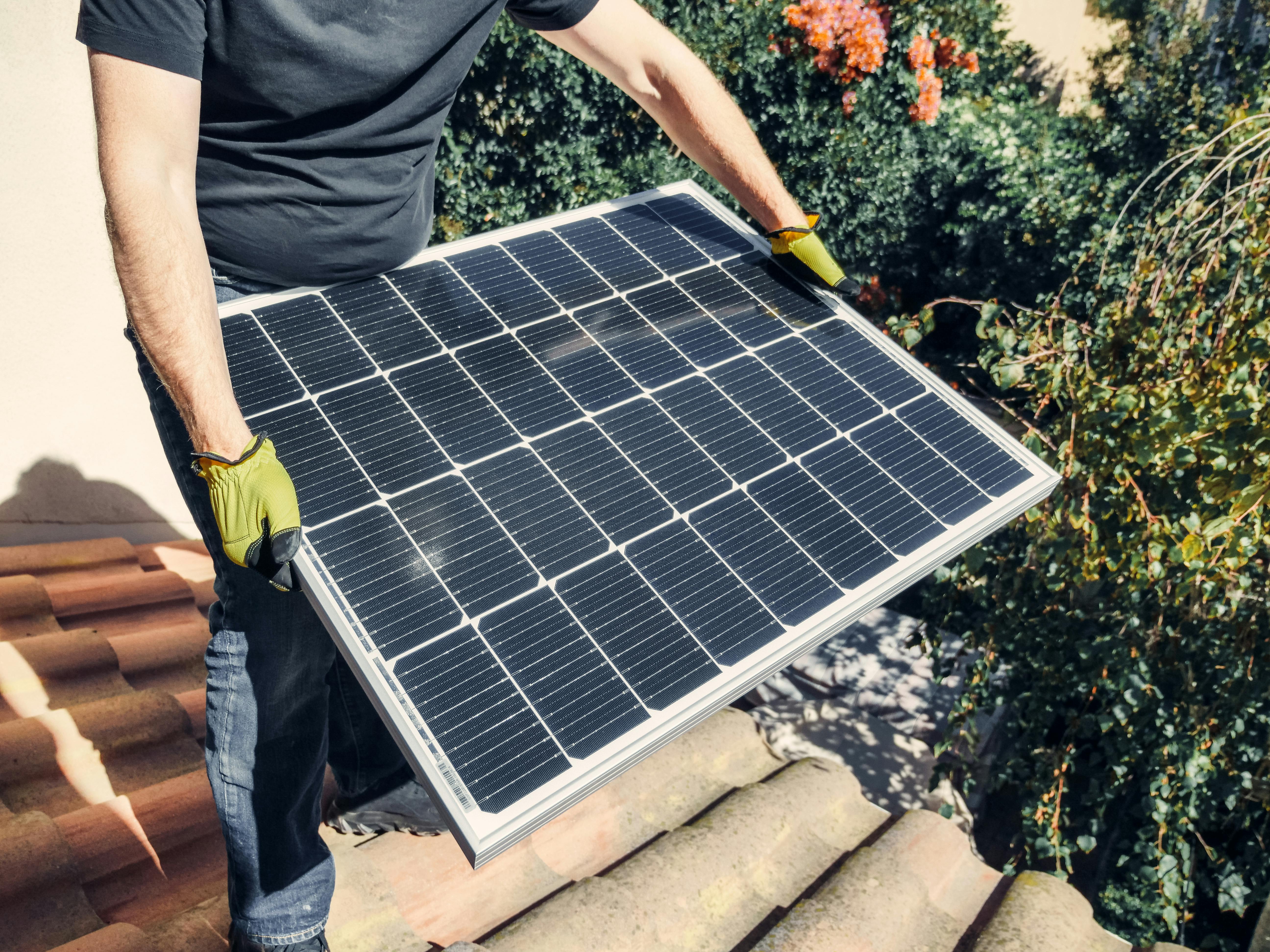
You cannot build a resilient digital economy without electricity. You cannot build a resilient manufacturing sector without electricity. You cannot process agricultural products, run cold chains, operate hospitals, or connect to the internet consistently without electricity. Renewable energy is not a climate action checkbox — it is the foundational infrastructure on which every other resilience tool depends.
Africa holds 60% of the world's best solar resources but less than 1% of global installed solar capacity — one of the most consequential mismatches in global economic geography. The cost of this gap is not merely environmental. Every Nigerian business running a generator for 12 hours a day is paying a power premium that competitors in countries with reliable grid electricity do not pay. That premium compounds into an aggregate competitiveness deficit that suppresses industrial development across the continent.
🌍 Renewable Energy Resilience — Country-Level Verified Progress
- Ethiopia: The Grand Ethiopian Renaissance Dam (GERD), nearing full operational capacity, will supply over 5,000 MW of electricity — making Ethiopia the power hub of East Africa and enabling energy exports to Kenya, Sudan, and Djibouti. This single infrastructure project is the most consequential renewable energy investment in Africa's 2026 economic story.
- Morocco: Has become a continental hub for solar component manufacturing — not just consuming solar energy, but manufacturing the equipment, creating industrial jobs and export revenue from the clean energy transition. The Noor complex is one of the world's largest concentrated solar power installations.
- Kenya and Rwanda: Investing in e-mobility and renewable energy. Kenya generates over 90% of its electricity from renewables (hydro, geothermal, wind, solar) — giving it a structural competitiveness advantage in power costs over fossil-fuel-dependent economies.
- Nigeria: Solar energy adoption is accelerating through private investment. CBN-BOI solar loans at 9% interest, private solar installation companies, and the rapid growth of mini-grids and distributed solar systems are building energy resilience from the bottom up — because the grid has not delivered it from the top down.
- Kenya and Côte d'Ivoire: Pioneering green and infrastructure bonds to finance climate-resilient projects — creating capital market instruments that align investor returns with climate resilience outcomes.
For Nigerian businesses: energy independence through solar is not just an environmental choice — it is a resilience investment. A business that eliminates ₦65,000 monthly generator costs through a solar system pays back the capital investment within 2–4 years and thereafter operates with a permanent cost advantage over generator-dependent competitors. See: CBN-BOI Solar Loan 2025 — 9% Interest Rate Guide for Nigerian Businesses.
🖥️ Digital Public Infrastructure — Rwanda, Kenya, and the Data Economy Model
Digital public infrastructure (DPI) — national digital ID systems, interoperable payment rails, government digital service platforms, broadband networks, and data governance frameworks — is emerging as a distinct resilience tool separate from commercial fintech. While fintech builds private financial services, DPI builds the foundational plumbing that the entire digital economy runs on.
Rwanda has positioned itself as Africa's testbed for emerging technologies, investing heavily in broadband, digital public services, and coding academies to build a workforce ready for data-driven and AI-enabled jobs. Kenya's digital innovation ecosystem — from mobile money to platform-based logistics and e-commerce — is creating new occupations in fintech, digital marketing, data services, and platform management that barely existed a decade ago. Egypt and South Africa are investing in artificial intelligence policy frameworks.
🔑 The UNECA 2026 Economic Report Recommendation on Data Economy
The UNECA's 2026 Economic Report on Africa identifies building a data economy as a strategic imperative: investing in data centres, cloud infrastructure, high-performance computing, and secure connectivity, while developing clear rules on data governance, privacy, cross-border flows, and competition. The report frames this as necessary infrastructure investment — not optional enhancement — because digital economic activity requires reliable, secure, and affordable data infrastructure as much as physical manufacturing requires roads and electricity.
Nigeria has built significant digital ID infrastructure through the BVN and NIN systems — creating a biometric identity layer that enables fintech, reduces fraud, and supports financial inclusion at scale. The challenge is extending this infrastructure from financial services into government services, healthcare, and educational records. See: BVN vs NIN in Nigeria — Understanding Nigeria's Digital Identity Infrastructure.
The UNECA report asks the fundamental question directly: will Africa harness frontier technologies to accelerate economic growth and structural transformation, or remain on the margins of the industries shaping the 21st century? The answer depends on choices governments are making right now about education, data regulation, technology investment, and infrastructure financing.
🏭 Industrialisation and Value Chain Development — Moving Beyond Raw Material Export
Africa's dependence on exporting raw commodities — crude oil, cocoa, coffee, cotton, lithium, cobalt — while importing the processed versions of those same commodities is the single most enduring structural vulnerability in the continent's economy. Every litre of petrol Nigeria imported before the Dangote Refinery came online was Nigeria paying someone else to refine Nigerian crude and selling it back at a premium. Every smartphone assembled from DRC cobalt that a Congolese consumer buys was assembled in China. This is not economic resilience — it is structural dependence.
The Chambers & Partners Africa 2026 analysis describes the 2026 industrialisation agenda: Ethiopia is expanding light manufacturing in textiles and leather. South Africa is driving clean-energy vehicle production. Morocco has become a continental hub for solar component manufacturing. Kenya and Rwanda are investing in e-mobility and digital fabrication.
✅ Nigeria's Industrialisation Pivot — The Dangote Refinery Significance
The Dangote Petroleum Refinery at 650,000 barrels per day capacity represents exactly the kind of value addition that Chambers & Partners, the AfDB, and the African Union's Agenda 2063 are calling for. Instead of exporting crude oil and importing refined petrol, Nigeria is building the capacity to refine domestically — capturing the value-addition margin, reducing import costs, stabilising the naira by reducing dollar demand for fuel imports, and potentially exporting refined products to West African neighbours.
This is the industrialisation model that builds resilience: not manufacturing for its own sake, but targeting the specific value chains where Africa is already producing raw inputs and currently exporting that value-addition opportunity to other countries. Nigeria's Dangote Refinery, Morocco's solar manufacturing hub, and Ethiopia's industrial zones are all applying this logic in different sectors.
🏛️ Fiscal Reform and Domestic Resource Mobilisation — Paying for Resilience
Every other tool on this list costs money. Renewable energy infrastructure requires capital. Digital public infrastructure requires sustained investment. Agricultural extension services require funding. Education systems for the 21st century labour market require investment at scale. The question of where Africa gets the money to finance its own resilience is therefore not peripheral — it is central.
Traditional answers — foreign aid and concessional loans — are under structural threat. As traditional aid declines, the Brookings Foresight Africa 2026 report explicitly frames strategies to mobilise Africa's own resources for development as the primary strategic imperative. Aid cuts from Western governments and declining ODA are not temporary — they are structural.
🚨 The $30 Billion Finding — Why Tax Reform Is the Most Important Resilience Tool
According to the AfDB, improving tax efficiency by just 1 percentage point of GDP could generate an additional $30 billion annually for African economies. Africa's average tax-to-GDP ratio of approximately 17% is well below the 25% threshold often cited as necessary for adequate public services and development investment. For context, OECD countries average above 34%.
Ghana and Nigeria are advancing digital tax reforms to expand the fiscal base. Nigeria's tax-to-GDP ratio of approximately 8% — one of the lowest globally — is the single most significant constraint on its ability to finance its own resilience. Without adequate domestic revenue, Nigeria must borrow (increasing debt service costs), cut services (reducing human capital investment), or rely on oil revenues (maintaining commodity dependence).
The Nigeria Tax Act 2025 represents a genuine structural reform attempt — broadening the tax base, reorganising tax administration, and expanding digital transaction taxation. Whether it succeeds will be one of the most consequential determinants of Nigeria's fiscal resilience over the next decade. See: Why Nigeria Keeps Borrowing Money — And Whether It Will Ever Stop.
🏆 Country Resilience Matrix — Nigeria vs Kenya vs Ethiopia vs Rwanda vs Ghana
Daily Reality NG compiled this country resilience matrix from the AfDB 2026 MEO, Chambers & Partners Africa 2026, the Serrari Group Africa Outlook (April 2026), Brookings Foresight Africa 2026, and the Africanexponent economic projections. Each country is assessed across seven resilience dimensions.
| Country | 2025 GDP Growth | Fintech Strength | Energy Resilience | AfCFTA Position | Fiscal Strength | Digital Infrastructure | Overall Resilience Tier (2026) |
|---|---|---|---|---|---|---|---|
| Nigeria | 3.89% (est.) | Very Strong — Flutterwave, Moniepoint, OPay; ICT = 18% of GDP | Weak — grid unreliable; solar growing but slow | Moderate — AfCFTA signatory; low SME participation | Weak — tax/GDP ~8%; ₦12T deficit 2026 | Moderate — BVN/NIN strong; govt services weak | Tier 2 — High potential, structural constraints |
| Kenya | 5.4%+ (2025) | Very Strong — M-Pesa foundational; innovation ecosystem mature | Strong — 90%+ renewables; geothermal base | Strong — EAC integration + AfCFTA ready | Moderate — fiscal pressure but broader base | Strong — digital ID, e-government, logistics platforms | Tier 1 — Resilience leader with managed risks |
| Ethiopia | 9.8% (2025) | Moderate — Safaricom/mobile money newly arrived | Very Strong — GERD 5,000 MW; regional power exporter | Moderate — AfCFTA member; logistics improving | Moderate — reform momentum; homegrown agenda | Moderate — coding academies; broadband growing | Tier 1 — Infrastructure-led growth; highest continental growth |
| Rwanda | 7.5% (2025) | Moderate — growing fintech hub | Moderate — some renewables; still growing | Strong — AfCFTA trade facilitation pioneer | Strong — low corruption; efficient institutions | Very Strong — digital public infra leader; coding academies; testbed for AI | Tier 1 — Governance and digital infrastructure excellence |
| Ghana | Recovering — post-debt restructuring | Moderate — MTN MoMo strong; fintech growing | Moderate — power sector improving; tariff pressures | Moderate — AfCFTA member; manufacturing potential | Weak — debt restructuring ongoing; IMF programme | Moderate — digital inclusion improving | Tier 3 — Recovering; debt restructuring overhang |
| Source: AfDB 2026 Macroeconomic Performance and Outlook (March 30, 2026) · Serrari Group Africa Outlook April 2026 · Chambers & Partners Africa 2026 · Brookings Foresight Africa 2026 · AfricanExponent Economic Projections. Assessment reflects Daily Reality NG editorial analysis based on cited primary data. Updated May 17, 2026. | |||||||
⚡ Real-World Implications — What Africa's Resilience Agenda Means for Nigerian Businesses and Households
Africa's growing resilience — particularly through fintech infrastructure — directly affects what financial tools are available to you right now. The growth of OPay, Moniepoint, Kuda, Palmpay, and similar platforms means Nigerian households and businesses have access to financial services, savings products, and payment infrastructure that did not exist five years ago. The challenge: this infrastructure is largely concentrated in urban Nigeria. Rural Nigerians, Northern Nigerians, and informally employed Nigerians are still the "next frontier" — reached but not yet empowered.
📎 Source: Chambers & Partners Africa 2026 · GSMA Mobile Money Report · AfDB MEO 2026
For Nigerian businesses, the AfCFTA opportunity is real and underexploited. Nigeria is a member, and the continental market of 1.4 billion people is theoretically accessible. But accessing it requires: knowing which products have AfCFTA tariff advantages, having export documentation capabilities, being able to receive payments across African currencies (PAPSS is the solution), and having logistics infrastructure to deliver across borders. Most Nigerian SMEs have none of these capabilities — yet. The resilience opportunity is in building them. See: SWIFT vs SEPA vs ACH — International Transfer Guide for Nigerian Businesses.
Africa's economic resilience story in 2026 is characterised by a widening divergence: reform-led recovery stories (Ethiopia, Rwanda, Kenya) are outperforming and attracting investment, while structural challenge economies (Nigeria's power deficit, Ghana's debt restructuring) face compounding headwinds. The seven tools identified in this article are not abstract policy recommendations — they are the documented, primary-source-verified interventions producing measurable GDP growth, poverty reduction, and economic stability in the countries deploying them systematically. Nigeria has the potential to be in the first tier. Whether it gets there depends on decisions being made in 2026.
📎 Source: AfDB MEO 2026 · Serrari Africa Outlook April 13, 2026 · Brookings Foresight Africa 2026 · UN Africa Renewal
The World Bank Africa Economic Update identifies the persistent risks that could disrupt Africa's resilience trajectory: high debt-service burdens limiting development spending; rising fuel, food, and fertilizer prices from Middle East geopolitical tensions; declining ODA as Western donors retrench; trade barriers and AfCFTA implementation gaps; climate shocks to agriculture; and the structural constraint of power deficits limiting manufacturing growth. Africa's resilience is real — but it is not yet deep enough to withstand sustained simultaneous shocks across multiple of these risk vectors.
- Formalise your business for AfCFTA access — a registered CAC business with tax compliance is the minimum requirement to participate in continental trade. See: CAC Registration Master Guide Nigeria.
- Build a solar energy roadmap — use the CBN-BOI 9% solar loan to price out solar installation. Even a partial solar solution eliminates the most volatile part of your operating cost structure. See: CBN-BOI Solar Loan Guide.
- Diversify into dollar income — the single most impactful household and business resilience action for Nigerians in 2026. Remote services, exports, remittances. See: How to Start Earning Dollars from Nigeria.
🔄 What Changed Between November 2025 and May 17, 2026 — Daily Reality NG Update Log
- AfDB 2026 MEO released March 30, 2026 — confirmed Africa's 4.2% GDP growth in 2025, projected 4.3% for 2026. 12 of 20 fastest-growing global economies were African in 2025.
- UNECA 2026 Economic Report on Africa — identifies data economy and frontier technologies as the non-optional pivot for African economic strategy.
- World Bank Africa Economic Update (April 2026) — projected 4.1% Sub-Saharan growth for 2026 but revised downward by 0.3 percentage points due to geopolitical headwinds.
- AfCFTA Digital Trade Protocol — adopted in 2024, operational in 2026, creating the regulatory foundation for continental e-commerce and digital payments harmonisation.
- Brookings Foresight Africa 2026 — identifies domestic resource mobilisation as the primary strategic imperative as traditional ODA declines structurally.
- Nigeria's Dangote Refinery scaling up — increasingly central to the continent's industrialisation and energy resilience narrative, reducing West Africa's petrol import dependence.
- Ethiopia GERD approaching full capacity — Africa's largest dam nearing the 5,000 MW operational milestone that will reshape East Africa's energy economics.
Editorial Disclosure: This article is an independent research product of Daily Reality NG. No development institution, government agency, or private investor has funded, reviewed, or influenced this analysis. All data points are sourced from named institutions listed throughout. Daily Reality NG earns revenue through digital advertising — not through sponsored editorial content. This analysis does not constitute investment, financial, or policy advice.
General Information Disclaimer: Macroeconomic projections cited in this article are institutional forecasts, not guarantees. Africa's economic trajectory is subject to commodity price volatility, climate events, geopolitical developments, and domestic political decisions that no institution can reliably forecast with precision. All figures verified as of May 17, 2026. Daily Reality NG recommends consulting licensed economic and investment advisors before making decisions based on macroeconomic analysis.
✅ Key Takeaways — Building Resilient Economies in Africa: The 2026 Verified Picture
- Africa's real GDP grew at 4.2% in 2025 and is projected at 4.3% in 2026 (AfDB MEO, March 30, 2026) — outpacing the global average. 12 of 20 fastest-growing global economies in 2025 were African.
- Per-capita growth at 1.9% is still too low for rapid poverty reduction at Africa's population growth rate. Aggregate GDP growth must be accompanied by job creation, income distribution, and service delivery to build household-level resilience.
- Fintech is the most powerful resilience tool at the individual and SME level — 1.1 billion mobile money accounts, $1 trillion annual transactions, and 58% Sub-Saharan financial inclusion (up from 34% in 2014).
- The AfCFTA could lift 50 million people out of poverty by 2035 and increase intra-African trade by 50%+ (UNECA). Full implementation requires digital trade facilitation, PAPSS payment infrastructure, and SME export capability.
- Africa holds 60% of the world's best solar resources but less than 1% of global installed capacity. Renewable energy is not optional for economic resilience — it is foundational infrastructure.
- Improving tax efficiency by 1% of GDP could generate $30 billion annually for African economies (AfDB). Domestic resource mobilisation — not foreign aid dependence — is the fiscal resilience path as ODA declines structurally.
- Nigeria's ICT sector at 18%+ of GDP has surpassed oil — the resilience pivot has already happened at the sector level. The challenge is distributing its benefits more broadly through jobs, income, and infrastructure.
- The resilience divergence is widening: Ethiopia (9.8% GDP growth 2025), Rwanda (7.5%), and Kenya (5.4%+) are deploying all seven tools systematically. Nigeria has fintech strength but lags in energy, fiscal health, and industrialisation.
- The UNECA 2026 Economic Report frames the question directly: will Africa harness frontier technologies, or remain a consumer of other people's technologies? The answer depends on decisions being made by African governments, investors, and entrepreneurs in 2026.
- For Nigerian businesses specifically: formalise for AfCFTA access, build solar energy independence, and diversify into dollar-denominated income. These three actions directly apply the continental resilience tools at the business level.

Follow Africa's Economic Story With Daily Reality NG
Weekly verified analysis of Nigerian and African economic developments, fintech, business conditions, and development realities. No spin. No recycled headlines. Primary sources, plain language, Nigerian perspective.
📧 Subscribe Free — Join the Newsletter❓ 15 Frequently Asked Questions — Building Resilient Economies in Africa 2026
What is the projected GDP growth rate for Africa in 2026?
Africa's real GDP growth is projected to stabilise at 4.3 percent in 2026 and grow further to 4.5 percent in 2027, according to the African Development Bank's 2026 Macroeconomic Performance and Outlook report released March 30, 2026 at the AfDB headquarters in Abidjan. This outpaces the global average of 2.7 percent forecast by the World Bank. In 2025, Africa's GDP surged to 4.2 percent from 3.1 percent in 2024, with 12 of the 20 fastest-growing economies in the world being African. East Africa led all regions with 6.4 percent growth in 2025, driven by Ethiopia (9.8%), Rwanda (7.5%), and Uganda (6.4%).
What does economic resilience mean for African countries?
Economic resilience for African countries means the capacity to absorb external shocks — commodity price crashes, climate events, pandemics, geopolitical disruptions — and recover quickly while maintaining sustainable growth momentum. It involves five interconnected dimensions: macroeconomic stability (sound monetary and fiscal policy), structural diversification (not dependent on a single commodity or sector), financial inclusion (ensuring households and businesses can save, borrow, and insure against shocks), infrastructure adequacy (energy, logistics, digital), and institutional quality (governance, rule of law, contract enforcement). Africa's per-capita growth of 1.9% in 2025, while improved from 0.9% in 2023, remains too low to rapidly build household-level resilience for the continent's fastest-growing population.
What role does the AfCFTA play in building resilient African economies?
The African Continental Free Trade Area (AfCFTA), now the world's largest free trade bloc by membership, has moved from rhetoric to implementation with pilot cross-border trade shipments already underway by 2026. According to UNECA, full implementation could lift 50 million people out of poverty by 2035 and increase intra-African trade by more than 50 percent. The AfCFTA Digital Trade Protocol, adopted in 2024, harmonises e-commerce regulations, digital payments, and data flows across the continent, creating a digital economy projected at $180 billion by 2026 per IFC. Resilience is built through AfCFTA by diversifying export markets, reducing commodity dependence, creating industrial-scale production opportunities, and reducing vulnerability to external economic shocks.
How is fintech building economic resilience in Africa?
Fintech builds economic resilience in Africa through three simultaneous effects. First, financial access: mobile money platforms like M-Pesa, MTN MoMo, OPay, and Moniepoint deliver savings, payments, and credit to people with no access to physical banks — 1.1 billion accounts with $1 trillion in annual transactions. Second, real-time payment infrastructure: eliminating the 45–60 day payment delays that made small African businesses structurally fragile. Third, credit data generation: mobile money transaction histories enable AI-based credit scoring for previously unbanked borrowers. Nigeria and Kenya lead with mobile penetration above 60 percent. Nigeria's ICT sector now contributes 18 percent of GDP, surpassing oil. The Wiley Business Strategy research confirms a direct positive relationship between FinTech adoption and sustainable economic growth outcomes.
What are the biggest risks to Africa's economic resilience in 2026?
The World Bank Africa Economic Update (April 2026) and the AfDB 2026 MEO identify five key risks: first, declining official development assistance as Western donor governments cut foreign aid budgets, reducing the financing available for infrastructure and social services; second, high debt-service burdens constraining the fiscal space available for development investment in countries like Ghana (under IMF programme) and increasingly Nigeria (₦15.52 trillion debt service in 2026 budget); third, geopolitical tensions including Middle East conflicts raising energy and shipping costs; fourth, climate shocks disrupting agriculture in rainfall-dependent economies; and fifth, tightening global financial conditions that raise borrowing costs and reduce capital flows to emerging markets. The report revised Sub-Saharan Africa's growth projection downward by 0.3 percentage points specifically due to these headwinds.
Which African countries are growing fastest in 2026?
East Africa is the continent's fastest-growing region at 5.8 percent in 2026, with Ethiopia as the standout performer having recorded 9.8 percent GDP growth in 2025 driven by the Grand Ethiopian Renaissance Dam (5,000 MW power supply), the Addis Ababa-Djibouti railway reducing logistics costs by 30 percent, and industrial zone expansion. Rwanda recorded 7.5 percent growth in 2025. Uganda grew at 6.4 percent. Kenya sustained 5.4 percent growth. In West Africa, Côte d'Ivoire is a consistent 6-plus percent performer. Nigeria is projected at 4.49 percent (CBN). Overall, 12 of the 20 fastest-growing economies globally in 2025 were African, per AfDB's 2026 MEO.
What is the role of renewable energy in building economic resilience in Africa?
Renewable energy is foundational to African economic resilience because every other economic activity — manufacturing, digital services, healthcare, agriculture — requires reliable, affordable electricity. Africa has 60 percent of the world's best solar resources but less than 1 percent of global installed solar capacity — a structural opportunity and a current constraint simultaneously. Ethiopia's Grand Ethiopian Renaissance Dam (approaching 5,000 MW capacity) is making East Africa's manufacturing and services sectors more competitive. Morocco's solar manufacturing hub adds industrial diversification. Kenya's 90-plus percent renewable electricity gives it structural power cost advantages. For Nigeria, every business hour spent on generator power is a competitiveness cost that solar independence eliminates permanently.
What is the AfDB's 2026 Macroeconomic Performance and Outlook report?
The African Development Bank Group released its 2026 Africa Macroeconomic Performance and Outlook (MEO) report on March 30, 2026 at its headquarters in Abidjan, Côte d'Ivoire. The full report is available at afdb.org. It is Africa's most authoritative continental economic assessment, produced by the AfDB's research department with data from all 54 African Union member states. Key findings: Africa's GDP grew at 4.2 percent in 2025 (up from 3.1 percent in 2024), 12 of the 20 fastest-growing economies globally were African, inflation fell from 21.8 percent in 2024 to 13.6 percent in 2025, and 4.3 percent growth is projected for 2026. The report explicitly identifies that per-capita growth remains too low for rapid poverty reduction despite strong aggregate numbers.
How can Nigeria specifically build a more resilient economy?
Nigeria's pathway to greater economic resilience, according to Daily Reality NG analysis drawing on AfDB, CBN, and PwC data, requires action on five fronts: energy independence (eliminating power deficits through renewable energy investment, building on the Dangote Refinery model); fiscal reform (raising tax-to-GDP from 8 percent toward the 17 percent African average and 25 percent threshold through the Nigeria Tax Act 2025 and digital tax reform); industrial diversification (replicating the Dangote Refinery value-addition logic in agriculture, solid minerals, and petrochemicals); AfCFTA activation (equipping Nigerian SMEs with export documentation, payment, and logistics capabilities to access the continental market); and digital public infrastructure deepening (extending the BVN/NIN identity layer into government services, health, and education records).
What is PAPSS and why does it matter for African economic resilience?
PAPSS — the Pan-African Payment and Settlement System — is a real-time payment infrastructure enabling cross-border transactions across Africa in local currencies, developed by Afreximbank and the AfCFTA Secretariat. Its resilience significance is substantial: it eliminates the need to convert African currencies to US dollars for intra-African payments, reducing transaction costs by an estimated 30–40 percent and removing dollar-dependence from intra-continental trade. When Nigeria pays Ghana in naira-to-cedi transactions without routing through New York correspondent banks, both countries reduce their exposure to dollar exchange rate volatility. PAPSS accelerates settlement from days to seconds and enables African SMEs to trade across borders at costs that were previously prohibitive for small transactions.
How does climate resilience intersect with economic resilience in Africa?
Climate resilience and economic resilience in Africa are structurally inseparable because approximately 60 percent of Africa's workforce is employed in agriculture, which is directly climate-dependent. The Global Climate Adaptation Resilience Economies Index found that 31 African economies face substantial GDP losses of 10 percent or more between now and 2050 from climate impacts. Countries investing in climate-resilient agriculture technology, renewable energy (reducing dependence on climate-variable hydropower), green bonds (Kenya, Côte d'Ivoire), and coastal infrastructure protection are building economic resilience that is also climate resilience. The AfDB MEO 2026 explicitly links climate investment to macroeconomic stability outcomes for rainfall-dependent economies.
What is domestic resource mobilisation and why is it critical for Africa?
Domestic resource mobilisation (DRM) refers to a government's ability to collect revenue from its own economy — through taxes, natural resource royalties, and domestic debt markets — rather than relying on foreign aid, concessional loans, or commodity windfalls. It is the fiscal foundation of economic resilience because aid is declining (Western donors cutting ODA), commodity revenues are volatile, and external debt creates dependency and service cost burdens. According to the AfDB, improving Africa's tax efficiency by just 1 percentage point of GDP could generate $30 billion annually for the continent. Nigeria's tax-to-GDP ratio of approximately 8 percent — among the world's lowest — is a structural resilience vulnerability. Ghana and Nigeria are both pursuing digital tax reform to expand the fiscal base.
How is Rwanda building economic resilience through digital infrastructure?
Rwanda has positioned itself as Africa's leading testbed for digital public infrastructure and emerging technologies. Specific verified investments include: a national broadband rollout targeting rural connectivity; digital public services replacing physical government administration; coding academies building a technology workforce; e-mobility infrastructure for electric vehicles; digital fabrication facilities; and MICE (Meetings, Incentives, Conferences, Exhibitions) hub positioning as a continental services economy. The result: 7.5 percent GDP growth in 2025, strong FDI inflows, and the lowest corruption indicators in Sub-Saharan Africa. Rwanda's digital-led, governance-anchored resilience model is increasingly cited by development institutions as a continental reference case.
What practical resilience tools can African businesses use right now?
Seven immediate resilience actions for African businesses in 2026: (1) Adopt fintech payment and savings platforms to eliminate cash handling risks and access working capital — OPay, Moniepoint, Kuda, and PiggyVest in Nigeria; M-Pesa and Equity Bank in Kenya. (2) Invest in solar energy independence to eliminate generator costs — target full independence within 3 years. (3) Formalise through CAC/regulatory registration to access AfCFTA trade privileges and institutional finance. (4) Build dollar-denominated income streams through exports, remote services, or remittance businesses. (5) Diversify revenue across at least 3 income streams to reduce single-sector shock vulnerability. (6) Access AfCFTA market intelligence through the AfCFTA Secretariat at afcfta.au.int. (7) Participate in regional value chains — identify which of your inputs or outputs can be sourced from or sold to AfCFTA partner countries.
Where can I find verified data on Africa's economic performance in 2026?
Daily Reality NG recommends the following primary sources for verified African economic data in 2026: the African Development Bank Group at afdb.org — their 2026 Macroeconomic Performance and Outlook (MEO) report is the continent's most authoritative annual economic assessment; the World Bank Africa Economic Update at worldbank.org/en/region/afr; the United Nations Economic Commission for Africa at uneca.org; the Brookings Institution Foresight Africa 2026 series at brookings.edu; the UN Africa Renewal magazine at africarenewal.un.org; and the African Union AfCFTA Secretariat at afcfta.au.int for trade integration data. Chambers & Partners Africa 2026 legal and business environment analysis is available at chambers.com. All sources listed were verified as active and accessible on May 17, 2026.

💬 Your Voice — Tell Us What You See on the Ground
Institutional reports see Africa from 30,000 feet. Daily Reality NG wants to hear what you see at street level.
- Which of the seven resilience tools identified in this article is most visibly impacting your community or business in 2026?
- Is the AfCFTA creating actual new business opportunities for you, or does it feel like a distant policy announcement with no ground-level impact yet?
- Solar adoption in Nigeria — are you seeing meaningful uptake in your area, or is cost still the dominant barrier?
- How would you rate Nigeria's fiscal resilience compared to where it was in 2023, on a scale of 1 to 10?
- The AfDB says 12 of 20 fastest-growing economies in 2025 were African. Does that match what you see in your daily Nigerian economic reality?
- What is the single most urgent resilience investment Nigeria should make in the next 12 months — power, fiscal reform, industrialisation, digital infrastructure, or trade facilitation?
- For Nigerian business owners: have you been able to access any AfCFTA market in another African country? What was the experience?
- Kenya, Rwanda, and Ethiopia are consistently rated higher on resilience metrics than Nigeria. What structural advantage do you think they have that Nigeria lacks — and can it be replicated?
- Digital tax reform is being advanced to raise Nigeria's 8% tax-to-GDP ratio. As a business or individual, do you trust the Nigerian tax system enough to support formal tax expansion?
- The UNECA 2026 Economic Report says the pivot to innovation-led growth powered by frontier technologies is no longer optional for Africa. Do you believe Nigeria's government and private sector are moving fast enough to make this pivot?
- Amaka in Makurdi used fintech tools to make her yam export business resilient. What is your equivalent Amaka story — a specific digital tool that changed how your business or household manages economic shocks?
- The AfDB says improving tax efficiency by 1% of GDP could generate $30 billion annually for Africa. If Nigeria raised ₦3 trillion more in tax revenue, what should the first priority for spending that money be?
- For diaspora Nigerians: from outside Nigeria, does the African economic resilience story feel credible to you — or does it feel like data disconnected from the Nigeria your family still lives in?
- Which African economy — Kenya, Ethiopia, Rwanda, or South Africa — do you think Nigeria should most consciously learn from in terms of building economic resilience? Why?
- What specific tool or policy change would make your own household or business more economically resilient in the next 12 months — and is that tool currently available to you in Nigeria?
Amaka's yam business in Makurdi is still running. She told me — indirectly, through the data of 1.1 billion mobile money accounts and $1 trillion in annual transactions — that the tools are working. Not for everyone. Not yet at the scale the crisis demands. But for millions of African businesses and households, the infrastructure of resilience is being built in real time.
The AfDB says 12 of the 20 fastest-growing economies in the world were African in 2025. The UNECA says the pivot to frontier technology-led growth is no longer optional. The Brookings Institution says domestic resource mobilisation is now the primary path to fiscal sovereignty. These are not aspirational statements from optimistic Africans. These are assessments from the institutions whose entire function is to evaluate economic reality accurately.
Africa's economic resilience is being built. The question is whether it is being built fast enough, at enough scale, and reaching enough people — before the compounding crises of climate change, demographic pressure, and institutional fragility demand more than the current trajectory can deliver.
— Samson Ese | Founder, Daily Reality NG
dailyrealityngnews.com
© 2025–2026 Daily Reality NG — Independent Nigerian Digital Publication | All articles independently written and fact-checked by Samson Ese | Warri, Delta State, Nigeria


Comments
Post a Comment