Hidden Truth Behind Your Struggles in Nigeria: Uncomfortable Reality
Disclosure: This article does not promote or recommend any product, service, or investment. It reflects independent editorial analysis of publicly available economic data. Daily Reality NG has no commercial relationship tied to this content.
Disclaimer: This article presents cited macroeconomic and labour data for informational and educational purposes. It is not financial, economic, or professional advice, and does not diagnose or speak to any individual's personal circumstances or mental health. If economic stress is affecting your wellbeing, consider speaking with a trusted professional — this article can help explain the system, not replace personal support.
📰 Independent Nigerian Digital Publication — Editorial Research Notice
Hidden Truth Behind Your Struggles in Nigeria: The Uncomfortable Reality
📅 Originally published December 1, 2025 · 🔄 Updated July 29, 2026 · ✍️ Samson Ese · ⏱️ 22 min read · 📂 Nigerian Economy & Society
⏱️ Check This Before You Read Further
Ask yourself honestly: have you ever blamed yourself — your discipline, your choices, your "laziness" — for a financial struggle that, once you actually look at the numbers below, was never really about you at all?
Takes 20 seconds. This article exists to answer that question with real data, not vague comfort.
Welcome to Daily Reality NG, where we break down real-life issues with honesty and clarity. This is not another "believe in yourself" piece dressed up as an economics article. Every number in this piece comes from the World Bank, Nigeria's National Bureau of Statistics, the Nigeria Labour Congress, and Numbeo's global quality-of-life data. Once you see them lined up together, "hidden truth" stops being a dramatic phrase and starts being a literal description of what's happening.
Editorial Research Notice — Daily Reality NG: This feature is grounded in the World Bank's April 2026 Nigeria Development Update, National Bureau of Statistics inflation and wage data, Nigeria Labour Congress public statements, Trading Economics macroeconomic data sourced from NBS, and Numbeo's 2025 Quality of Life Index — sourced and dated throughout, verified July 2026.
📍 Which Part of Your Struggle Is This Explaining?
| What You've Been Feeling | Jump To |
|---|---|
| "Prices supposedly fell but my money still doesn't stretch" | The Inflation-Poverty Disconnect |
| "My salary hasn't moved in years and I feel behind" | The Minimum Wage Illusion |
| "They say unemployment is low but everyone I know is struggling" | The Unemployment Number Nobody Trusts |
| "I want to understand what I can actually do about this" | What This Actually Means for You |
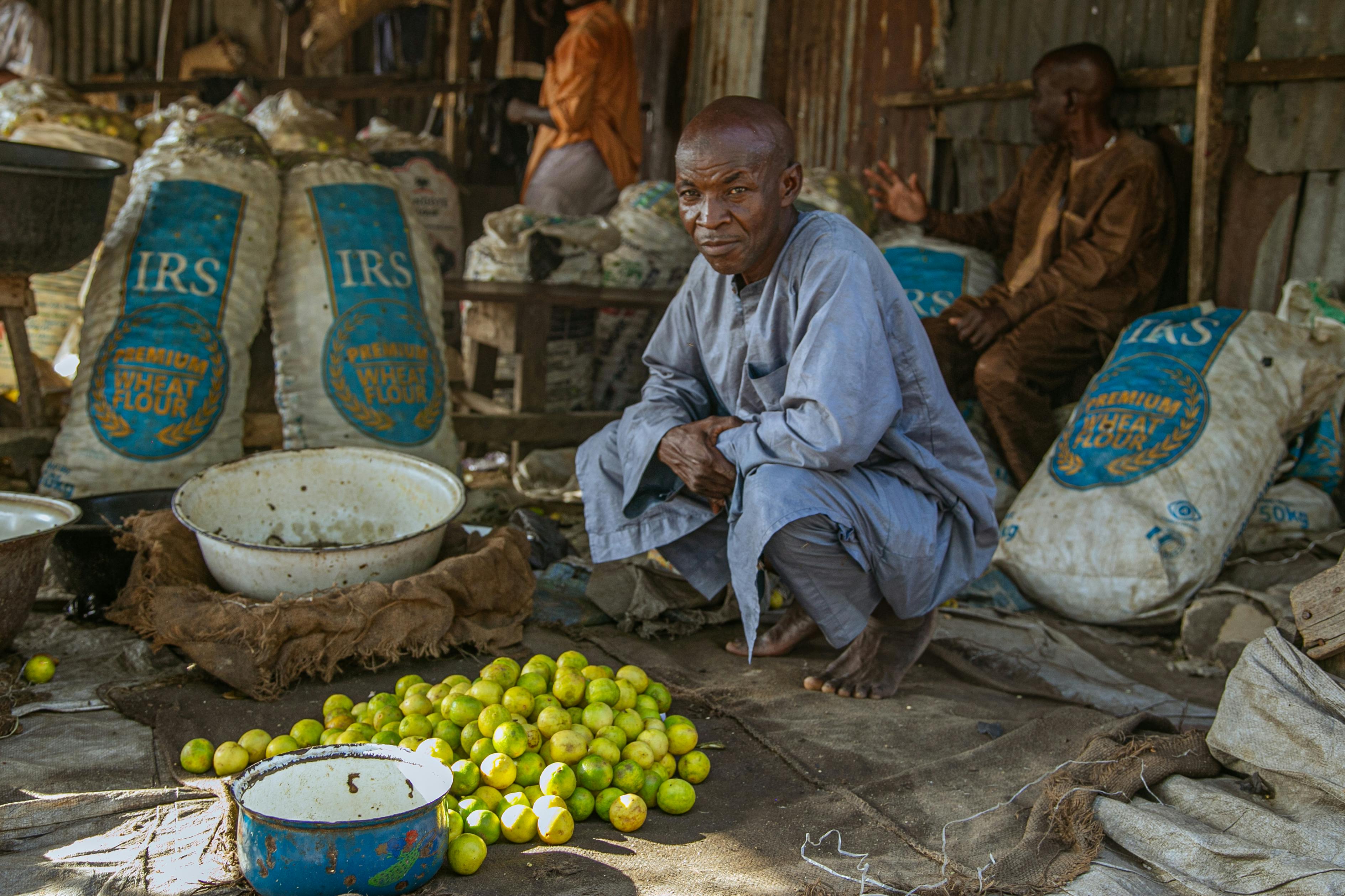
Godspower had done everything right. Woke up at 5am in Warri, worked a full shift as a sales assistant earning the state's minimum wage, took a side gig fixing phone screens on weekends, and still ended most months staring at an account balance that made no sense to him. He genuinely believed, for a long time, that the problem was him — that he wasn't disciplined enough, wasn't hustling hard enough, wasn't managing money wisely enough. Everyone around him seemed to believe the same thing about themselves.
Nobody had shown him the actual numbers. That Nigeria's headline inflation fell from 34.80% to 15.15% between December 2024 and December 2025 — genuinely good macroeconomic news — while the country's poverty rate climbed to 63% over that same broad period, an increase of roughly 140 million people below the poverty line. Nobody had told him the World Bank's own explanation for that contradiction: "Household incomes have not grown fast enough to offset still-elevated inflation, and poverty has yet to begin declining." Once Godspower saw that sentence, something shifted. It wasn't him. It was math.
📋 Table of Contents
- The Inflation-Poverty Disconnect
- The Minimum Wage Illusion
- The Unemployment Number Nobody Trusts
- Where Nigeria Actually Ranks Globally
- Why This Keeps Happening — The Structural Reasons
- What People Get Wrong About "Just Work Harder"
- What This Actually Means for You
- What's Changed Since December 2025
- Frequently Asked Questions
📊 The Inflation-Poverty Disconnect
Here is the single most important number in this article, and almost nobody puts it this plainly: Nigeria's poverty rate has risen every single year since 2023, even while the government's key inflation-fighting measures were actually working.
| Year | Poverty Rate | Headline Inflation (Dec) | What This Means |
|---|---|---|---|
| 2023 | 56% | — | Baseline year cited in World Bank's 2026 report |
| 2024 | 61% | 34.80% | Both poverty and inflation rising together — the expected pattern |
| 2025 | 63% (~140 million people) | 15.15% | Inflation fell sharply, but poverty still rose — the counter-intuitive part |
| 2028 (projected) | ~59% | Expected further easing | World Bank projects slow, not rapid, improvement |
⚠️ Source: World Bank Nigeria Development Update, "Nigeria's Tomorrow Must Start Today," April 2026; National Bureau of Statistics inflation data. Some poverty projections have been publicly disputed by the Nigerian presidency; figures reflect World Bank's published analysis as of April 2026.
The Uncomfortable Truth: Food inflation fell from 39.84% to 10.84% in the same period — a genuinely dramatic drop. But "food inflation fell" doesn't mean food got cheaper. It means food got expensive more slowly than before. Layered on top of years of already-elevated prices, a slower rate of increase still leaves most households worse off than they were, not better. That's the sentence most headlines skip.
The World Bank's explanation, straight from its own report: the persistence of poverty "reflects the cumulative effects of earlier inflation spikes, which had already weakened real incomes before the recent easing in prices." In plain terms — the damage from 2023 and 2024's brutal price surges didn't reverse just because 2025's price increases were smaller. Add global shocks like the Middle East conflict pushing up energy, food, and transport costs, and you get exactly what Nigerians have been living: official good news that doesn't translate into felt relief.
💰 The Minimum Wage Illusion
Nigeria's National Minimum Wage (Amendment) Act 2024 set the legal minimum at ₦70,000 per month — about $42 — more than doubling the previous ₦30,000 floor. On paper, that sounds like real progress. Here's what the paper doesn't show you.
| Reality Check | What It Actually Shows |
|---|---|
| What the NLC itself says about ₦70,000 | "Not sustainable" — cannot keep a family going 10 days once electricity tariffs and transport are factored in, per NLC Acting General Secretary Benson Upah |
| How many workers this wage actually protects | Only 12.7% of Nigeria's working population is in salaried employment covered by minimum wage law |
| Its real value vs. 1981's minimum wage | 1981's ₦125 minimum wage, converted to today's naira, is worth considerably more in real terms than today's ₦70,000 |
| State-level variation | Lagos pays ₦85,000; Imo pays ₦104,000 (highest in Nigeria); some states still struggle to pay even ₦70,000 |
| What labour is now demanding | NLC is pushing for ₦154,000 — more than double the current floor |
⚠️ Sources: National Minimum Wage (Amendment) Act 2024; NLC statements reported by News Agency of Nigeria; Guardian Nigeria, March 2026; WithinNigeria, July 2026; Channels TV, Punch, Nairametrics wage coverage, March 2026.
What Practitioners in This Space Know: The "minimum wage debate" that dominates Nigerian news cycles technically affects a small fraction of workers. With only 12.7% of the working population in salaried jobs, roughly 99% of Nigerian workers — traders, artisans, freelancers, informal service providers — see zero direct benefit from a minimum wage increase, even when it makes headlines as a national economic victory.

📉 The Unemployment Number Nobody Trusts
This might be the single most misleading statistic in Nigerian public life right now. Government data puts Nigeria's unemployment rate at roughly 4.9% as of late 2024 — a number that, on its face, would suggest Nigeria has one of the healthier labor markets in the developing world. It doesn't feel that way to almost anyone living here, and there's a specific, documented reason why.
The Uncomfortable Truth: The methodology behind that low number counts people doing even small amounts of informal, unstable work as "employed." It doesn't distinguish between a salaried professional with benefits and someone who sold ₦3,000 worth of recharge cards this week. Both count as "employed" in the headline figure. That single methodological choice is why a 4.9% unemployment rate and a 63% poverty rate can both be technically true at the same time — they're measuring completely different things, and only one of them reflects how most Nigerians actually experience their financial lives.
This isn't a conspiracy theory or an attack on Nigeria's statistics agencies — it's a widely acknowledged limitation of how labor force surveys work almost everywhere, made especially distorting in an economy where informal, unstable work is the norm rather than the exception. Youth unemployment specifically sat around 6.5% by the same government methodology as of mid-2024 — again, a figure that describes something narrower than most people mean when they ask "how many young Nigerians can't find real work."
🌍 Where Nigeria Actually Ranks Globally
If macroeconomic statistics feel too abstract, here's a more human measure. Numbeo's Quality of Life Index for mid-2025 — which weighs safety, healthcare access, cost of living, climate, purchasing power, and overall wellbeing across surveyed countries — ranked Nigeria as the country with the lowest quality of life in the world among nations included in that survey.
💡 Did You Know? Nigeria's GDP per capita was estimated at roughly $6,542 in 2024 by the IMF — a figure that, taken alone, would suggest a reasonably functioning middle-income economy. That number is an average across the entire population, which is exactly why it can coexist with a 63% poverty rate: a relatively small number of very high earners can pull an average upward while telling you almost nothing about what a typical Nigerian household actually experiences. 📎 Source: IMF World Economic Outlook Database; World Bank Nigeria Development Update, April 2026.
🔍 Why This Keeps Happening — The Structural Reasons
The World Bank's April 2026 report doesn't just describe the problem — it names specific structural causes, and naming them matters because it moves the explanation away from individual failure and toward identifiable, addressable systems.
- Weak job creation. Economic growth has been driven largely by services and industry, while agriculture — where a large share of poor Nigerians actually work — has lagged, meaning growth hasn't reached the sectors employing the most vulnerable people.
- Low agricultural productivity. Without productivity gains in farming, rural incomes stay flat even as national growth numbers look positive on paper.
- Persistent inequality. Growth benefits have concentrated among people already positioned to capture them, rather than spreading broadly across income levels.
- The lag effect of past inflation spikes. Real incomes weakened significantly during 2023-2024's inflation surge, and that damage doesn't reverse simply because the rate of increase has since slowed.
- Global shocks. The Middle East conflict and related disruptions have pushed up energy, food, and transport costs worldwide, compounding Nigeria's domestic pressures rather than existing in isolation from them.
💭 What People Get Wrong About "Just Work Harder"
| What People Assume | What the Data Actually Shows | What This Means |
|---|---|---|
| "If I just work harder, I'll get ahead" | 63% of Nigerians are below the poverty line despite most working, often multiple jobs — effort and outcome are structurally disconnected for the majority | Individual effort still matters, but it's operating against a headwind most people never see quantified |
| "Falling inflation means things are getting better" | Poverty rose to 63% in the same period inflation fell sharply — the World Bank explicitly calls this a "disconnect" | Slower price increases are not the same as relief; both can be true simultaneously |
| "The low unemployment rate means jobs are available" | 4.9% unemployment coexists with the vast majority of workers in informal, insecure employment never captured properly by that figure | The headline number describes something much narrower than "can find a stable, adequate job" |
| "The minimum wage increase fixed the wage problem" | Only 12.7% of workers are even covered by minimum wage law, and the NLC itself says ₦70,000 isn't sustainable | A wage policy win for organized labour isn't the same as a wage win for most Nigerian workers |
⚡ What This Actually Means for You
The Real Point: None of this data exists to tell you there's nothing you can do — it exists to correct a specific, harmful lie many Nigerians quietly believe: that their financial struggle is primarily a personal failing. A 63% poverty rate, a minimum wage the NLC itself calls unsustainable, and an unemployment figure that measures something different from what most people assume — these are structural facts, not verdicts on your discipline or intelligence.
What genuinely helps: Budgeting against realistic inflation trends rather than optimistic ones; exploring formal financial inclusion tools even in small amounts, since informal savings offer no protection against inflation the way even basic formal instruments can; and recalibrating expectations so that a hard month reads as "the environment is genuinely difficult right now," not "I am failing."
✅ Something Worth Doing This Week: If you've been quietly blaming yourself for a financial setback this year, take five minutes to reread the table under "The Inflation-Poverty Disconnect" above. Then ask honestly whether the story you've been telling yourself still holds up against it.
🔄 What's Changed Since December 2025
This piece was first published in December 2025. Updating it in July 2026, the World Bank's full April 2026 Nigeria Development Update has since confirmed and sharpened the picture — poverty at 63% for 2025, up from earlier partial estimates, with a projected slow decline toward 59% by 2028. FCMB and other institutions completed CBN recapitalisation in March 2026 amid broader macroeconomic stabilisation efforts, yet that stabilisation has not yet reached household-level poverty figures. The NLC's push for a ₦154,000 minimum wage has continued through mid-2026 without resolution. If anything, the gap this article describes between macroeconomic headlines and lived reality has become more, not less, documented since this piece first went live.
📌 Key Takeaways
- Nigeria's poverty rate rose to 63% (~140 million people) in 2025, even as headline inflation fell from 34.80% to 15.15% — a documented disconnect, not a contradiction in the data.
- The ₦70,000 minimum wage is called "not sustainable" by the NLC itself, and only covers the 12.7% of workers in salaried employment.
- 1981's minimum wage, adjusted to today's naira, was worth more in real terms than today's ₦70,000 — wages have fallen behind cost of living over four decades.
- Nigeria's low official unemployment rate (~4.9%) reflects a methodology that counts minimal informal work as employment, masking the reality most people live.
- Numbeo's 2025 Quality of Life Index ranked Nigeria lowest in the world among surveyed countries.
- The World Bank names specific, addressable structural causes — weak job creation, low agricultural productivity, inequality — not individual failure.
❓ Frequently Asked Questions
Why does it feel like things are getting worse even though inflation is falling?
Falling inflation means prices rise more slowly, not that they drop. The World Bank found poverty still climbed to 63% even as inflation fell from 34.80% to 15.15%, because incomes haven't grown fast enough to offset years of prior price increases.
What is Nigeria's actual poverty rate right now?
63% of Nigerians, roughly 140 million people, were below the poverty line in 2025, per the World Bank's April 2026 Nigeria Development Update.
Is Nigeria's minimum wage actually enough to live on?
No — the NLC itself has said ₦70,000 monthly cannot sustain a family for even 10 days once electricity and transport costs are factored in.
Why does Nigeria's unemployment rate look low if so many people are struggling?
The official ~4.9% rate counts even minimal informal work as "employed," which coexists with a 63% poverty rate and most workers in insecure jobs.
How many Nigerian workers actually benefit when the minimum wage increases?
Only about 12.7% of Nigeria's working population is in salaried employment covered by minimum wage law — most workers see no direct benefit.
Was Nigeria's minimum wage actually worth more decades ago?
Yes — 1981's ₦125 minimum wage, converted to today's naira, holds more real value than the current ₦70,000, showing wages have fallen behind cost of living.
Where does Nigeria rank globally on quality of life?
Numbeo's mid-2025 Quality of Life Index ranked Nigeria lowest among surveyed countries worldwide.
What does the World Bank say is causing Nigeria's poverty to keep rising?
Weak job creation, low agricultural productivity, persistent inequality, the lag effect of earlier inflation spikes, and global shocks like the Middle East conflict raising energy and food costs.
Is the Nigerian government disputing these poverty figures?
Some World Bank poverty projections have been publicly disputed by the presidency, though the broader pattern has been reported consistently across World Bank releases and Nigerian financial media.
Is Nigeria's poverty rate expected to improve?
The World Bank projects a gradual decline to around 59% by 2028, but warns the pace will remain slow.
How much do Nigerian food prices actually increase year to year?
Food inflation fell from 39.84% to 10.84% between December 2024 and December 2025 — still an increase, just a slower one, layered on already-elevated prices.
What can an individual actually do about structural problems this big?
Budget around real inflation trends, explore formal financial inclusion tools, and recalibrate self-blame — understanding the structural picture supports more realistic financial decisions.
Is this article saying individual effort doesn't matter in Nigeria?
No — it's saying effort operates inside a specific, measurable environment, and understanding that environment honestly leads to more realistic expectations, not less effort.
Why do some states pay a higher minimum wage than others?
States like Lagos (₦85,000) and Imo (₦104,000) chose to pay above the federal ₦70,000 floor citing local cost of living; other states cite revenue constraints for lagging.
Is this article meant to be discouraging?
No — it replaces vague explanations for hardship with specific, sourced data, which is generally more useful and less isolating than either blind optimism or unexplained despair.
If you read this and felt something shift the way it shifted for Godspower, that was the point. This isn't a call to stop working hard or stop planning for a better life — it's a call to stop carrying blame that was never yours alone to carry. The numbers above are real, dated, and verifiable. Your exhaustion isn't imaginary, and it isn't a character flaw. It's a documented, structural reality that millions of people are navigating alongside you right now.
— Samson Ese | Founder, Daily Reality NG

Related reading: if the wage data here resonated, our breakdown of why Nigerian banks reject loan applications and our piece on financial minimalism in Nigeria go deeper into practical responses. For the informal economy angle, see why POS agents stay broke despite daily transactions. If financial stress is weighing on you specifically, our piece on the psychology of financial panic is worth reading next. For the emergency planning side, see how to build an emergency fund in Nigeria. And if you want the full story behind this publication, here's how I built Daily Reality NG.

Samson Ese — Founder, Publisher & Editor-in-Chief, Daily Reality NG. Warri, Delta State, Nigeria. I write about Nigerian life backed by real data, because vague motivation has never paid anyone's rent.
[Author bio included on every article for E-E-A-T transparency and AdSense compliance.]
© 2025–2026 Daily Reality NG — Empowering Everyday Nigerians | All posts are independently written and fact-checked by Samson Ese based on real experience and verified sources.


Comments
Post a Comment