When Children Arrive: How It Changes Marriage & How to Fix It
This article is editorial analysis and educational content drawn from peer-reviewed relationship research — not professional couples therapy, marriage counselling, or psychological advice. Sources include the Gottman Institute (January 2026), PLOS ONE international marital satisfaction study, Frontiers in Psychology meta-analysis 2022, and Nigerian-specific divorce research. If your marriage is experiencing serious distress, please seek qualified professional support. Every relationship is different — what works for one couple may not apply to another. This article discusses relationship decline, intimacy changes, and divorce risk statistics. Read with care.
📅 Originally published: January 8, 2026 | Updated: May 28, 2026
When Children Arrive — How It Changes Your Marriage and How to Fix It (2026 Guide)
You are reading Daily Reality NG — Nigeria's independent, research-backed digital publication. This article on marriage after children was built from verified peer-reviewed research and Nigerian-specific data — not from personal opinion or generic relationship tips. Daily Reality NG analysis of the Gottman Institute, Frontiers in Psychology, PLOS ONE, and Nigerian divorce research provides the evidence base for every claim in this guide. For the story of how this publication was built, read the 426-post, 150-day building story here.
🔍 Primary sources for this analysis: Gottman Institute — How Children Impact a Relationship, January 2026; PLOS ONE — Number of Children and Marital Satisfaction, 7,178 individuals, 33 countries; Frontiers in Psychology Meta-Analysis 2022; American Psychological Association — Babies and Marital Discord; Nigeria Divorce Trends 2000–2025 Analysis; Guardian Nigeria — Why Nigeria's Divorce Rate Keeps Rising, December 2025. All statistics dated and attributed.
Adaeze and Chukwuebuka had been married for three years before their first child came. They described those first three years as easy — not perfect, but genuinely easy. They cooked together on Sundays. They argued about things that didn't matter and laughed about it afterward. They knew each other's moods before words were spoken. They had a language between them.
The baby arrived and the language changed.
Not immediately. Not dramatically. But over the first twelve months, something quietly shifted. Adaeze was breastfeeding every two hours. Chukwuebuka was doing the 3am feeds but also leaving for work at 6am. They were both exhausted in ways they had never been exhausted before. They stopped finishing sentences. They stopped asking how each other's day was. The Sunday cooking became another chore. Arguments happened over things that were never really about what they said they were about — the nappies, the money, whose turn it was to put the baby down.
By the time the baby was eighteen months old, they were living parallel lives inside the same apartment. Not fighting. Just... absent from each other. Two people managing a shared project, not two partners building a shared life.
They didn't know this was a documented pattern affecting 67% of couples. They thought something was wrong with their marriage specifically. They didn't know that the problem had a name, a cause, and a fix. They just knew it hurt.
This article is for every Nigerian couple who recognises something of Adaeze and Chukwuebuka in their own story. The data is clear. The causes are understood. The fix is available. The only question is whether you reach for it before or after the damage becomes irreversible.
⚡ Quick Answer: Does Having Children Damage Your Marriage?
For 67% of couples — yes, measurably. The Gottman Institute's research across thousands of couples found that relationship satisfaction drops significantly for two-thirds of couples within the first three years after the first baby. For 33% — no. The couples who maintain satisfaction share specific, learnable protective habits. Nigeria ranks 11th globally for divorce rate (Divorce.com 2024), and Nigerian divorce data shows most divorces involve couples aged 30–39 with 2–3 children — exactly the post-baby years. The decline is common, predictable, and — for most couples — reversible with deliberate action.
🎯 Find Your Most Relevant Section
This is a pillar guide covering the complete picture. Jump to what matters most to you right now.
💑 We just had our first baby
Start at What Actually Changes — the documented shifts to prepare for before they surprise you.
😰 We're already struggling
Go directly to The 7 Evidence-Based Fixes — actionable steps that work even from a difficult starting point.
🇳🇬 I want the Nigerian context
Read Nigerian-Specific Pressures — extended family, japa, economic stress, cultural dynamics.
⚠️ We're close to breaking point
See The Four Horsemen — the specific patterns that predict divorce and how to interrupt them.
📍 Where Are You Right Now?
| Your Situation | What This Article Addresses | Start Here |
|---|---|---|
| Expecting your first child and anxious about what it means for your marriage | The predictable changes you can prepare for vs the ones that catch couples off guard | What Changes Section |
| Baby under 12 months — exhausted, disconnected, arguing over small things | Sleep deprivation, role overload, the identity shift — and the specific habits that help | First Year Crisis Section |
| Toddler years — the romance feels completely gone | The intimacy gap, the mental load problem, and how couples rebuild it | 7 Fixes Section |
| Multiple children — things have compounded beyond the first-baby issues | Why each additional child compounds the pressure and what the data says about large families | More Children Section |
| In a Nigerian marriage with extended family and cultural pressures layered on top | Nigeria-specific factors including family interference, japa, economic stress, and cultural role expectations | Nigeria Section |
| 💡 This article draws on research covering 7,178+ married individuals across 33 countries, with specific Nigerian data from the Guardian Nigeria and peer-reviewed divorce trend analysis 2000–2025. | ||

🔄 What Actually Changes When Children Arrive — The Full Picture
The transition to parenthood is not one change. It is a simultaneous reconfiguration of almost every dimension of a couple's shared life. Understanding each change specifically — not as a vague sense of things being harder — is the starting point for addressing them.
| What Changes | How It Changes | Why It Affects the Marriage | When It Peaks |
|---|---|---|---|
| Sleep architecture | Both partners lose multiple hours of consolidated sleep, often for 12–18 months | Sleep deprivation impairs emotional regulation, patience, conflict resolution, and empathy — creating chronic irritability directed at the closest available person | Months 1–12 |
| Time structure | Unscheduled couple time disappears; all time becomes task-oriented | The conversations, spontaneity, and unstructured connection that built the relationship lose their space | Months 3–36 |
| Financial pressure | Costs increase (medical, nappies, formula, school fees ahead) while often one income reduces temporarily | Financial stress is the #1 driver of divorce in Nigerian data; it creates anxiety that spills into all interactions | Years 1–5 |
| Identity of each partner | Both partners become 'parents' — an identity that absorbs significant cognitive and emotional energy, particularly for mothers | The person your partner fell in love with undergoes a transformation; the relationship must be renegotiated around new identities | Year 1–3 |
| Sexual and physical intimacy | Frequency decreases; energy, time, and hormonal changes (breastfeeding) reduce availability; postpartum recovery adds physical dimension | Physical intimacy is both a symptom and a cause of connection; its decline creates feedback loop of distance | Months 1–18 |
| Communication pattern | Conversations shift from couple-centred to logistics and child-management | The friendship and knowing-each-other that underpins relationship satisfaction erodes when it stops being fed | Ongoing |
| Division of labour | Even couples with equal intentions often default to traditional gender splits in practice | Perceived unfairness is a powerful driver of resentment; the mental load research shows it affects women disproportionately | Months 3–24 |
| Extended family involvement | Grandparents, siblings, in-laws all acquire new stakes in the couple's decisions | In Nigerian contexts, this creates a specific pressure vector — particularly when the couple's approach conflicts with family expectations | Year 1 and ongoing |
| Source: Gottman Institute January 2026; Daily Reality NG analysis of Nigerian context factors | |||
💡 The Change Nobody Tells You About
Research from the Gottman Institute shows that the most damaging change is not the visible ones — sleep, sex, money. It is the invisible shift from being partners to being co-managers. Couples who were deeply connected friends begin relating primarily as operational colleagues managing a shared project. The friendship — which Gottman research identifies as the single strongest foundation of lasting marriage — stops being tended because every available moment goes to the baby. Protecting the friendship is not a luxury. It is the architecture on which everything else depends. (Source: Gottman Institute, January 2026)
🔬 The Science: Why 67% of Couples Struggle — and What Research Says
The 67% figure from the Gottman Institute is not a sample of troubled couples — it is the documented experience of couples across decades of longitudinal research. Understanding why this is the statistic helps couples stop blaming themselves or their partner for what is essentially a predictable structural challenge.
| Research Finding | What It Shows | Source |
|---|---|---|
| 67% decline in marital satisfaction | Most couples experience measurable drop in relationship satisfaction within the first three years after the first baby — not because of individual failure but because of structural overload | Gottman Institute, January 2026 |
| Women decline more than men | The meta-analysis confirmed the decline is consistently higher for women than for men — attributed to disproportionate labour increase, identity disruption, and physical demands of birth and feeding | Frontiers in Psychology Meta-Analysis, 2022 |
| Younger parents decline more | Couples who have their first child younger show greater marital satisfaction decline than those who have children later in their marriage — thought to reflect less established relationship foundation | Frontiers in Psychology, 2022 |
| More children = more decline | The number of children was a significant negative predictor of marital satisfaction in a 7,178-person study across 33 countries — largely due to financial strain, less couple time, and increased stress | PLOS ONE, 2021 |
| "U-shaped" satisfaction curve | Marital satisfaction tends to decline through the early parenting years and begins rebounding as children become more independent — meaning the current pain is not permanent | Gottman Institute, 2026 |
| Babies transfer parental conflict | Persistent marital conflict negatively impacts babies' development — increasing chances of later depression, poor social skills, and conduct disorder. The stakes of the marriage extend to the child. | APA Monitor, October 2011 |
| 7 women who pushed husbands into parenthood — all divorced by child's 6th birthday | Berkeley research by Cowan and Cowan found that the quality of how couples negotiate the decision to have children predicts relationship outcomes — it is a template for how they handle all major life decisions | Berkeley California Magazine; Cowan & Cowan research |
| ⚠️ All findings are population-level statistics from research studies. Individual couples may experience different outcomes. The purpose of this data is to normalise the challenge — not to predict individual outcomes. | ||

👶 The First Year Crisis — Why It Hits So Hard
The first year after a baby arrives is the period of maximum structural disruption. Taking Cara Babies research updated April 2026 documents that the first year post-baby is where the "shift in dynamic" is felt most acutely — and where couples are most vulnerable to patterns that become difficult to reverse.
🔴 Challenge 1 — Sleep Deprivation as a Relationship Weapon
Sleep deprivation is not just tiredness. Clinical sleep research documents that losing more than two hours of consolidated sleep impairs emotional regulation in ways comparable to alcohol intoxication. A person who is chronically sleep-deprived is less patient, less empathetic, more reactive, and less able to repair conflict. Now put two chronically sleep-deprived people in a space together, both feeling underappreciated, both running on empty, and ask them to be warm partners to each other. This is the first-year reality for most new-parent couples — and understanding it as a physiological reality rather than a character failure changes how both partners relate to their own reactions and each other's.
🔴 Challenge 2 — The Role Redistribution That Wasn't Planned
Most couples enter parenthood with broadly egalitarian intentions. Research consistently shows that regardless of those intentions, the division of childcare and domestic labour shifts significantly toward more traditional gender roles after a baby arrives — particularly in the first year. Mothers typically take on more of the direct infant care; fathers typically take on more of the provider role. The problem is not the division itself — in many contexts it is pragmatic — but the resentment that builds when the division was never explicitly agreed and when one partner's contribution is invisible or unacknowledged. *(Source: Frontiers in Psychology 2022)*
🔴 Challenge 3 — The Mental Load Nobody Acknowledges
The mental load is the invisible cognitive work of managing a family — tracking the baby's feeding schedule, remembering the paediatrician appointment, anticipating when nappies are running low, planning what the baby will eat when solids begin, knowing which friend to call in an emergency. Research documents this burden falls disproportionately on mothers. The husband who is "doing his fair share" of physical tasks may not be doing his share of the cognitive labour that makes those tasks possible. When the mental load is invisible and unacknowledged, the person carrying it experiences chronic exhaustion and resentment while the other person genuinely does not understand why their partner is perpetually depleted and frustrated.
🔴 Challenge 4 — The Postpartum Identity Disruption
Becoming a mother is one of the most significant identity transitions a person can experience — and it is not often named as such. A woman who was a professional, a partner, a daughter, an individual woman with her own desires and ambitions, suddenly has an identity that society (and often her own internal voice) tells her should subordinate everything else to motherhood. This identity disruption is associated with postpartum depression, loss of sense of self, and — critically for the marriage — a shift in how she relates to her partner. She may feel unseen by someone who relates to her primarily as the mother of his child rather than as the woman he fell in love with. *(Source: Gottman Institute January 2026)*
👨👩👧👦 Does More Children Mean More Problems?
The PLOS ONE study of 7,178 married individuals across 33 countries found that the number of children was a significant negative predictor of marital satisfaction. *(Source: PLOS ONE 2021)* This is not a reason to not have children — millions of people with large families have deeply satisfying marriages. But it is a reason to understand what compounds.
| Number of Children | Specific Compounding Factor | What Research Shows |
|---|---|---|
| First child | Maximum structural disruption — entire life reorganised for the first time | 67% decline in marital satisfaction (Gottman) — the transition itself is the shock |
| Second child | Attention divided between children; the first child now has needs AND the newborn does; the couple is running a more complex operation | Financial strain compounds; the brief recovery period from first child is cut short; research shows satisfaction continues declining |
| Third child and beyond | Multiple simultaneous school stages, multiple cost centres, severe constraint on couple time | Nigerian divorce data shows most divorces involve 2–3 children — this is the peak-strain family size in Nigerian divorce trends 2000–2025 |
| Source: PLOS ONE 2021; Nigeria Divorce Trends 2000–2025 | ||
The relationship satisfaction then starts to rebound as children become more independent — typically from the primary school years. (Source: Gottman Institute January 2026) This U-shaped curve means that the difficult years are not the whole story — but couples who allow the decline to deepen without intervention may reach points of contempt and disconnection that outlast the children's dependent years.
⚠️ The Four Horsemen — When Decline Becomes Danger
The Gottman Institute's most famous contribution to relationship science is the identification of four communication patterns — called the Four Horsemen — that predict divorce with high accuracy when they become habitual. These patterns often emerge or intensify during the post-baby period, when sleep deprivation and stress lower both partners' emotional regulation capacity.
| Horseman | What It Looks Like After Children | The Antidote | Danger Level |
|---|---|---|---|
| 1. Criticism | Attacking the partner's character: "You never help" / "You're irresponsible" / "You don't care about this family" — rather than addressing a specific behaviour | Gentle start-up: "I feel overwhelmed when I'm doing everything alone. Can we talk about sharing the bedtime routine?" | ⚠️ Warning sign |
| 2. Contempt | Eye-rolling, mockery, sarcasm, disgust: "Typical. I should have known you'd forget again." The partner is treated as lesser than | Building a culture of appreciation: active, genuine expressions of admiration for specific things about the partner, daily | 🔴 HIGHEST predictor of divorce — address immediately |
| 3. Defensiveness | Responding to complaints with counter-complaints: "Well what about what YOU did?" / "That's not fair, I did [other thing]" — preventing accountability from either person | Taking responsibility: "You're right, I did forget. I'm sorry. What can I do right now to help?" | ⚠️ Warning sign |
| 4. Stonewalling | Shutting down completely — becoming unresponsive, leaving the room, giving the silent treatment for extended periods. Often happens when a partner is physiologically overwhelmed | Self-soothing: "I need 20 minutes to calm down and then I want to talk about this properly." (Not abandonment — scheduled return) | 🔴 High danger — physiological overwhelm must be addressed |
| Source: Gottman Institute January 2026; APA Monitor October 2011. If these patterns appear consistently in your relationship, professional support is strongly recommended. | |||
🔴 Contempt Is the Emergency
Of the Four Horsemen, contempt is the one that most clearly indicates a relationship in danger. Contempt means you see your partner as beneath you — not merely frustrating, but unworthy of basic respect. It corrodes the foundational friendship that keeps marriages stable under pressure. When contempt becomes the default mode of interaction, it requires active, sustained work to reverse — and the earlier it is caught, the more reversible it is. If you are reading this and recognising contempt in your relationship — from either direction — the time to act is now, not when things feel worse. *(Source: Gottman Institute)*
🇳🇬 Nigerian-Specific Pressures That Compound Everything
Nigerian marriages face all the universal post-baby pressures plus a specific set of cultural, economic, and structural pressures that compound them significantly. Daily Reality NG analysis of the Nigerian context identifies the following as the most significant:
🇳🇬 The Nigerian Post-Baby Marriage Pressure Stack
1. Extended Family Interference in Child-Rearing
In Nigerian culture, the arrival of a child dramatically increases the involvement of extended family — particularly grandparents and in-laws — in the couple's daily decisions. When grandparents insist on specific feeding, sleeping, or naming practices that conflict with the couple's approach, it creates a fault line that can split the couple's united front. The pressure is typically directed more intensely at the wife, who may feel caught between her husband and her mother-in-law in ways that erode couple solidarity. *(Source: Guardian Nigeria December 2025)*
2. Financial Stress Under Nigerian Economic Conditions
The CBN's monetary tightening cycle pushed inflation above 34% at its peak — and Nigerians with new babies were managing rising food costs, rising fuel costs, school fees, and the one-income reduction that often accompanies childbirth. Nigerian divorce analysis confirms financial stress as the number-one driver — and post-baby financial pressure in Nigeria is compounded by an economic environment that would be difficult even without a new child. *(Source: Nigeria Divorce Trends 2000–2025)*
3. The Japa Effect on Young Nigerian Families
The large-scale emigration of young Nigerians has created specific marital stress for couples where one spouse japa'd and one stayed, or where both parents are navigating parenthood in a new country without extended family support, or where the network of friends who would normally provide child support has dissolved. The isolation of new parenthood without a village is significantly harder than with one — and the japa wave has removed that village for many Nigerian families. See also: Daily Reality NG's mental wellbeing article on the documented psychological impact of japa.
4. Cultural Gender Role Expectations
Nigerian cultural expectations around what a wife and mother should do versus what a husband and father should do create specific friction when couples' actual preferences or capacities differ from those expectations. A husband who genuinely wants to be an equal participant in infant care may face family pressure not to do "women's work." A wife who wants to return quickly to professional work may face pressure about abandoning her child. When cultural expectations conflict with the couple's own values, the friction is directed inward — at the relationship itself.
5. The Stigma Against Seeking Help
Nigeria ranked 11th globally for divorce rate — yet marriage counselling remains culturally stigmatised for many Nigerian couples, particularly men. The Gottman research found the average couple waits 6 years before seeking counselling. For Nigerian couples, this gap is likely longer. The implication: by the time most Nigerian couples seek professional help, patterns of contempt, defensiveness, and disconnection are deeply entrenched. Seeking help earlier — especially through religious institutions where the stigma is lower — is one of the most important decisions an at-risk Nigerian couple can make. *(Source: Guardian Nigeria December 2025)*
⚖️ Who Suffers More — Husbands or Wives? What Research Confirms
The meta-analysis published in Frontiers in Psychology (2022) is unambiguous: the decline in marital satisfaction after the first child's birth is consistently higher for women than for men. This is not a cultural claim — it is documented across multiple studies and confirmed in meta-analysis. Understanding why matters for how couples address the asymmetry.
| Factor | Why It Affects Women More | What Men Can Do |
|---|---|---|
| Domestic and childcare labour increase | Even in couples with equal intentions, the increase in childcare and domestic work falls disproportionately on women — creating more exhaustion and less available relationship energy | Actively take tasks without being asked — learning, not waiting. The goal is equity of invisible load, not just visible tasks |
| Identity disruption | Becoming a mother often involves a more total identity shift than becoming a father — she may feel she has "lost herself" in the role while he has added a role to his existing identity | Continue to see and relate to her as the woman she was before — not only as mother. Ask about her interests, ambitions, and inner life |
| Physical demands | Pregnancy, birth, and breastfeeding impose physical costs — recovery, pain, hormonal disruption — that affect energy and libido in ways men do not experience equivalently | Physical patience, without pressure. Affection without expectation of sexual reciprocity during recovery and breastfeeding periods |
| Career interruption | The "motherhood tax" research documents that women typically lose more career ground post-baby than men — creating financial dependence and professional identity costs | Actively support her return to or maintenance of professional identity — not as a favour, but as a partnership commitment |
| Source: Frontiers in Psychology Meta-Analysis 2022. This data is presented to help couples understand and address asymmetry — not to assign blame. | ||
🛠️ The 7 Evidence-Based Fixes That Actually Work
These are not relationship blogger suggestions. They are the specific protective behaviours identified by the Gottman Institute research as distinguishing the 33% of couples who maintain satisfaction after children from the 67% who experience decline. Each is actionable, specific, and evidence-backed.
Have the Parenting Philosophy Conversation — Before or Immediately After Birth
The Gottman research found that couples who explicitly discussed their approach to parenting — how they would divide care, what their values around child-rearing were, what roles they expected each to play — maintained higher satisfaction than couples who assumed they would figure it out as they went. This conversation is not a single discussion. It is an ongoing negotiation. But starting it explicitly, before exhaustion and resentment have accumulated, is dramatically more effective than having it after a conflict has already emerged. The Berkeley research by Cowan and Cowan found that the quality of how couples negotiate the decision to have children is a template for how they handle all major decisions — making this conversation foundational. *(Source: Gottman Institute January 2026)*
Protect the Friendship — Even in Micro-Doses
The Gottman Institute identifies friendship quality as the single most powerful predictor of lasting marriage. After children, friendship stops being maintained because every available moment goes to the baby. The fix is not to wait for time to appear — it is to create it deliberately in whatever form is available. This might be a 20-minute conversation after the baby sleeps that is explicitly not about logistics. It might be reading the same book and discussing it for 10 minutes. The size of the investment matters less than its consistency. Couples who regularly ask how each other are doing — genuinely — and who remember and ask about things their partner mentioned — maintain the friendship infrastructure. *(Source: Gottman Institute)*
Make the Mental Load Visible and Explicitly Share It
The person who cannot see the mental load cannot share it. Making it visible — through an actual list, a shared digital tool, or an honest conversation — is the first step. "I need you to own the medical appointments completely — that means knowing when they are, booking them, attending them, and tracking what was said. Not because I asked you to, but because it is now yours." Explicit ownership of specific responsibilities, rather than a general agreement to "help more," is what research shows actually redistributes the invisible burden. *(Source: Frontiers in Psychology 2022; Gottman Institute)*
Maintain Physical Affection Without Pressure for Sex
Sexual intimacy will decline after a baby arrives — this is normal, physiologically documented, and temporary. What is not inevitable is the loss of all physical affection. The six-second kiss, the deliberate hug, holding hands, physical closeness that does not carry the pressure of expectations — these maintain the physical language of connection that sexual intimacy requires a foundation of. Couples who maintain physical affection during low-intimacy periods return to satisfying sexual intimacy faster than couples who allow all physical contact to stop because full sexual intimacy is temporarily unavailable. *(Source: Taking Cara Babies April 2026; Gottman Institute)*
Express Genuine Appreciation Daily — Specifically
The antidote to contempt — the most dangerous of the Four Horsemen — is a culture of appreciation and admiration. This is not generic positivity. It is specific, genuine acknowledgment: "I noticed you got up at 3am even after a difficult day. That means something to me." Research by the Gottman Institute shows that couples who express appreciation for specific things about each other and for specific efforts maintain the respect that prevents contempt from forming. In the post-baby exhaustion period, when both partners feel invisible and unacknowledged, this simple daily practice has outsized protective power. *(Source: Gottman Institute January 2026)*
Learn and Use Repair Attempts — The Most Underused Tool in Marriage
A repair attempt is any gesture that de-escalates conflict before it spirals — a touch on the hand, "I know I'm being difficult right now," a moment of humour that acknowledges shared absurdity, "Can we start over?" Research shows that couples who successfully use repair attempts during conflict maintain connection even through disagreements. The effectiveness of a repair attempt does not depend on the absence of conflict — it depends on both partners recognising and accepting the attempt. In the post-baby period, teaching each other what repair attempts look like for each of you — and agreeing to accept them even mid-argument — is one of the most practical relationship skills available. *(Source: Gottman Institute)*
Protect Weekly Couple Time — Even When It Feels Impossible
Research on marriage statistics published in 2026 found that regular date nights and deliberate couple time produce 84% higher odds of perceived relationship stability. The constraint is real: with a baby, a weekly date night seems like a luxury. But couple time does not require leaving the house. A weekly evening after the baby sleeps — phones down, deliberate presence, a topic other than logistics — serves the same protective function as an expensive night out. The investment is attention, not money. Premarital counselling reduces divorce risk by 30%; regular check-ins are among the strongest predictors of lasting satisfaction. *(Source: Marriage Statistics 2026)*
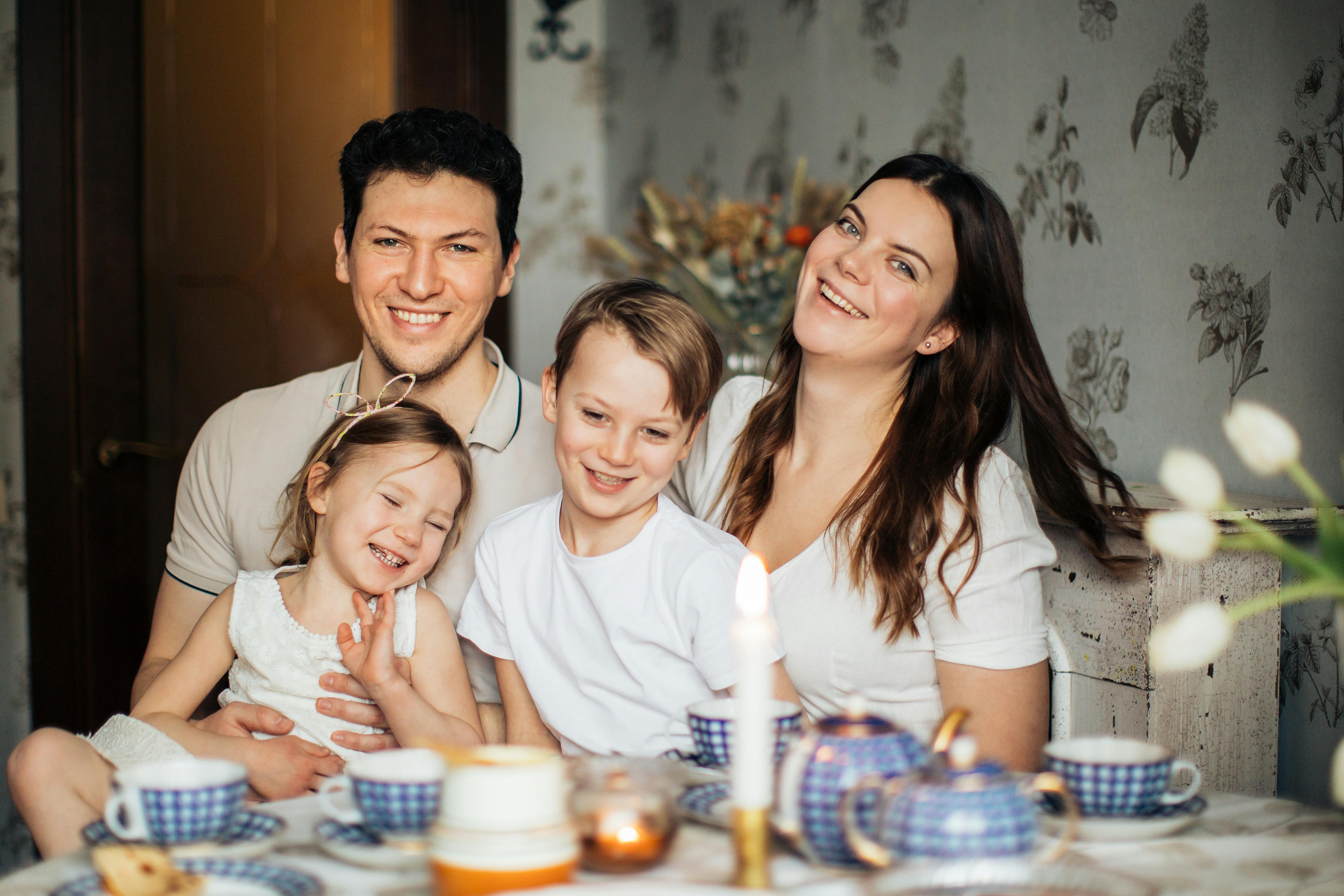
⭐ What the 33% Who Stay Happy Do Differently
The Gottman Institute deliberately studied the minority who maintained satisfaction — because understanding what they did differently was more useful than more research on what goes wrong. Their findings provide a specific, actionable profile of the relationship practices that protect marriage through the parenting years.
| What They Do | What This Looks Like | Why It Works |
|---|---|---|
| They talked about parenting philosophy | Explicitly discussed roles, values, and expectations before or immediately after birth — not just assumed alignment | Reduces the resentment that comes from unmet, unstated expectations |
| They maintained their couple friendship | Protected time for non-baby, non-logistics conversations even in small doses | Friendship is the architecture that makes disagreement survivable |
| They used repair attempts | De-escalated conflict before it spiralled with specific gestures or words | Conflict is not the problem — unrepaired conflict is |
| They turned toward each other in stress | When exhausted and overwhelmed, defaulted to connection rather than withdrawal | Stress bids — turning toward vs. turning away — determine relationship bank balance |
| They expressed admiration | Regularly expressed genuine, specific appreciation for each other | Builds the positive sentiment override that makes negative interactions survivable |
| They planned together | Made decisions about parenting as partners — presenting a unified front to extended family | Solidarity prevents the couple-splitting that extended family dynamics can cause |
| Source: Gottman Institute, January 2026; APA Monitor, October 2011 | ||
"Babies don't come along and disrupt totally well-functioning relationships in dramatic ways. What the research shows is that the quality of how couples negotiate major life decisions — including whether to have children — is a template for how they approach all of life's changes together. Couples who consider each other's concerns, who make decisions together, who maintain respect through disagreement — they tend to stay together."
Philip & Carolyn Cowan, Berkeley Clinical Psychology Professors Emeriti — from their research on 96 couples across the transition to parenthood🏥 When to Get Professional Help — The Honest Guide for Nigerian Couples
The average couple waits 6 years after problems begin before seeking professional help. The Gottman research shows this is far too long — patterns of contempt, defensiveness, and disconnection that are relatively easy to address at year one become deeply embedded by year six. For Nigerian couples who also face cultural stigma around counselling, this guide is the honest version of when to seek help and where.
| Sign | What It Means | Urgency |
|---|---|---|
| Contempt in regular interactions | Eye-rolling, mockery, treating partner as lesser — from either direction | 🔴 Seek help now |
| Stonewalling regularly (not one incident) | Complete shut-down during conflict as a pattern — physiological flooding that needs tools to address | 🔴 Seek help soon |
| Absence of positive interactions for weeks | When you cannot remember the last time you laughed together, touched warmly, or simply enjoyed each other's company | ⚠️ Address proactively |
| Every conflict escalates to the same unresolved argument | Perpetual problems that cycle without resolution — indicating a values or need difference that requires mediation | ⚠️ Address proactively |
| Complete loss of physical intimacy for months | Beyond normal postpartum recovery — persistent distance that reflects emotional disconnection | ⚠️ Have the conversation |
| One or both partners considering leaving | The thought has moved from fleeting to sustained — research shows couples who seek help at this stage still have good outcomes with skilled support | 🔴 Seek help now |
| 💡 For Nigerian couples: marriage counselling is available through licensed therapists in Lagos and Abuja, through religious institutions (pastoral counselling), and increasingly through online platforms. The stigma around seeking help costs far more than the help itself. *(Source: Guardian Nigeria December 2025)* | ||
🔄 May 2026 Update — What Changed Since January 2026
- Gottman Institute updated its research page (January 2026) — confirming the 67% decline figure as current and adding new analysis of specific protective factors by relationship phase. Source: Gottman Institute January 2026
- Taking Cara Babies relationship guide updated April 2026 — new research reference: Eldemire A. (2026) "Romantic Relationships Take a Dive After Baby Arrives (According to Research)" added to evidence base. Source: Taking Cara Babies April 2026
- Guardian Nigeria December 2025 — new expert analysis confirming Nigeria ranked 11th globally for divorce rate (Divorce.com 2024 data), with experts at the Single Ladies Conference Abuja identifying self-awareness and emotional grounding pre-marriage as critical factors. Source: Guardian Nigeria
- Marriage Statistics 2026 research published confirming regular date nights produce 84% higher odds of relationship stability; premarital counselling reduces divorce risk by 30%. Source: Connected Couples Marriage Statistics 2026
- Nigerian Divorce Trend analysis 2000–2025 (published August 2025) confirmed most divorces involve 2–3 children and peak in the 30–39 age group — directly confirming the post-baby peak risk period with Nigerian-specific data. Source: Deborah Afolayan, Nigeria Divorce Trend 2000–2025
⚡ What This Means for Your Marriage — Honest Implications
📊 The Statistical Reality
Two out of three couples are experiencing what you are experiencing right now — the disconnection, the resentment, the exhaustion, the loss of the easy companionship that defined the relationship before. You are not a uniquely failing couple. You are the majority statistic in a well-documented challenge. That matters enormously — because a pattern with a documented cause has a documented solution. The 33% who stay satisfied are not better people. They are people who learned and applied specific skills. Those skills are learnable.
🇳🇬 The Nigerian Dimension
Nigeria's 11th global ranking for divorce rate, combined with the Nigerian divorce data showing peaks in the 30–39 age group with 2–3 children, means this is not an abstract international research problem. It is what is happening in Nigerian homes, in Lagos apartments and Warri family houses and Abuja duplexes — right now. The universal pressures of new parenthood are compounded by Nigeria-specific pressures that no imported self-help book addresses. The data, the cultural context, and the solutions in this article are built for you specifically.
⏱️ The Timing Implication
The 6-year counselling gap is one of the most important findings in this article. The time to act on the information in this guide is now — not when the marriage feels irreparably broken. Every one of the seven fixes described above is more effective applied at year one than at year three. Every one is more effective at year three than at year six. The couples who protect their marriages successfully are not the ones who waited to see if things would improve on their own. They are the ones who acted while improvement was still accessible.
✅ One Action for Today
Tonight — not eventually, not this weekend, not when things feel better — find 10 minutes to sit with your partner and say one specific thing you genuinely appreciate about them. Not "you're a good parent." Something specific about who they are, not what they do for the baby. Something you might have said in the first year of your relationship. It costs nothing. It takes 10 minutes. And according to the best relationship research available, it is the most important 10 minutes you can spend on your marriage this week.
📢 Editorial Disclosure: This article was independently researched and written by Samson Ese of Daily Reality NG using publicly available peer-reviewed research. No relationship counselling service, therapy platform, or marital organisation has paid for or influenced this content. All sources are linked directly to their primary documents.
⚠️ Content Disclaimer: This article provides educational analysis based on peer-reviewed research. It does not constitute professional couples therapy, relationship counselling, or psychological advice. Relationships are complex and individual circumstances vary significantly. If you or your partner are experiencing serious relationship distress, domestic conflict, or mental health difficulties, please seek qualified professional support.
✅ Key Takeaways — When Children Arrive: The Research Summary
- 67% of couples experience a measurable decline in relationship satisfaction within the first three years after the first child — documented in Gottman Institute research updated January 2026
- 33% of couples maintain or improve satisfaction after children — by applying specific, learnable protective habits including friendship maintenance, shared parenting philosophy, and regular appreciation
- Nigeria ranked 11th globally for divorce rate (Divorce.com 2024); Nigerian divorce data 2000–2025 shows most divorces involve couples aged 30–39 with 2–3 children — the post-baby peak
- The decline in marital satisfaction is consistently higher for women than men — attributed to disproportionate domestic labour, identity disruption, and physical demands of birth and feeding (Frontiers in Psychology 2022)
- The number of children is a significant negative predictor of marital satisfaction — each additional child compounds financial strain, less couple time, and stress (PLOS ONE, 7,178 individuals, 33 countries)
- The Four Horsemen — Criticism, Contempt, Defensiveness, Stonewalling — are the specific patterns that convert normal post-baby difficulty into serious relationship danger. Contempt is the most urgent warning sign
- The average couple waits 6 years before seeking counselling — by which point patterns are deeply entrenched. The time to act on the 7 fixes in this article is now, not later
- Regular date nights produce 84% higher odds of perceived relationship stability; premarital counselling reduces divorce risk by 30% (Marriage Statistics 2026)
- Nigerian-specific compounding pressures — extended family interference, economic stress, japa isolation, gender role expectations, and counselling stigma — are documented additional factors not addressed in most international relationship content
- The marriage-after-children challenge is common, predictable, and for most couples reversible — with the right tools applied before the patterns become entrenched
📚 Related Reading on Daily Reality NG
- How I Built Daily Reality NG — 426 Posts, 150 Days
- Mental Wellbeing in Nigeria — The Full 2026 Picture
- Practical Ways Nigerians Can Manage Daily Stress
- Why Most Nigerian Marriages Fail Within the First Years
- Setting Healthy Boundaries in Relationships
- Why Financial Stress Is Quietly Damaging Nigerian Relationships
- How Nigerians Are Overcoming Burnout and Workplace Stress
- Why Rushing Into Marriage Can Be Dangerous
📰 Related Articles

❓ Frequently Asked Questions
Why does marriage feel different after having children?
Marriage changes after children because the entire structure of daily life reorganises around a completely dependent new person. Sleep deprivation, financial pressure, role redistribution, and the loss of spontaneous couple time all hit simultaneously. Research from the Gottman Institute documents that 67% of couples experience a measurable decline in relationship satisfaction within the first three years after the first child arrives. The change is not a failure of love — it is a structural adjustment to a fundamentally different life.
Does having children always damage a marriage?
No. Approximately 33% of couples maintain or improve their relationship satisfaction after children arrive. The Gottman research identified specific protective factors: friendship quality, having an explicit parenting philosophy conversation, using repair attempts during conflict, maintaining admiration, and protecting couple time. The decline is common but not inevitable — and it is reversible for most couples who address it directly. *(Source: Gottman Institute January 2026)*
What are the biggest marriage problems caused by children?
Research identifies the main problems as: sleep deprivation creating chronic irritability; unequal division of childcare particularly affecting women; financial stress from increased costs; loss of romantic and sexual intimacy; identity shift especially for mothers; extended family interference (particularly significant in Nigerian contexts); and communication breakdown as couples shift from partners to co-managers. *(Sources: Gottman Institute; Frontiers in Psychology meta-analysis 2022)*
How does this affect Nigerian marriages specifically?
Nigerian marriages face all the universal challenges plus Nigerian-specific pressures: extended family interference in child-rearing; financial stress amplified by inflation and economic instability; the japa effect separating spouses or removing support networks; gender role expectations; and cultural stigma preventing early counselling. Nigeria ranked 11th out of 26 countries with the highest divorce rate (Divorce.com 2024), and Nigerian divorce data 2000–2025 shows most divorces involve couples aged 30–39 with 2–3 children — exactly the post-baby years. *(Sources: Guardian Nigeria December 2025; Nigeria Divorce Trends 2000–2025)*
What is the 6-year counselling gap and why does it matter?
The Gottman Institute found the average couple waits 6 years between when serious relationship problems begin and when they first seek professional counselling. By that point, patterns of contempt, stonewalling, and defensiveness have become deeply entrenched. For Nigerian couples, this gap is often longer due to cultural stigma. The implication: the time to address post-children relationship challenges is in the first 1–2 years, not when the marriage feels on the verge of collapse. *(Source: Gottman Institute research statistics)*
How do you protect your marriage after having a baby?
The Gottman Institute's research on the protective 33% identified these specific factors: (1) explicit conversation about parenting roles before or soon after birth; (2) continuing to prioritise friendship even in micro-doses; (3) maintaining physical affection without pressure; (4) making repair attempts during conflict; (5) protecting weekly couple time; (6) sharing the mental load explicitly; and (7) expressing genuine, specific appreciation daily. *(Sources: Gottman Institute January 2026; Taking Cara Babies April 2026)*
Is it normal for sexual intimacy to decrease after having children?
Yes — it is both normal and well-documented. Sleep deprivation, postpartum physical recovery, hormonal changes from breastfeeding, and the constant physical touch of infant care all reduce libido. The critical factor is not the reduction itself — which is universal — but how couples navigate it. Maintaining non-sexual physical affection during this period produces significantly better long-term outcomes. *(Source: Taking Cara Babies April 2026)*
What is the mental load and why does it destroy marriages?
The mental load is the invisible cognitive work of managing a family — tracking appointments, anticipating needs, planning meals, knowing when supplies run low. Research documents this burden falls disproportionately on mothers. It destroys marriages by creating chronic exhaustion in the person carrying it, resentment when the effort is invisible, and asymmetry in available energy. Making the mental load visible and explicitly redistributing ownership of specific domains — not just agreeing to "help more" — is what actually works. *(Source: Frontiers in Psychology 2022)*
How long does it take for a marriage to recover after having a baby?
Research describes a "U-shaped" satisfaction curve — declining through the early parenting years and rebounding as children become more independent. Couples who actively apply protective factors see faster recovery than those who wait passively. The Gottman research shows couples who applied protective strategies in year one showed measurably better outcomes at year three compared to those who did not. Recovery is not automatic — it requires deliberate investment. *(Source: Gottman Institute January 2026)*
When should Nigerian couples consider marriage counselling after having children?
Earlier than you think necessary. Signs warranting professional support include: contempt or regular mockery; stonewalling as a pattern; absence of positive interactions for extended periods; every conflict cycling to the same unresolved argument; complete loss of physical affection; or either partner persistently considering leaving. In Nigeria, counselling is available through religious institutions (pastoral counselling), private therapists in Lagos and Abuja, and increasingly through online platforms. *(Source: Guardian Nigeria December 2025)*
What does research say about who is more affected — husbands or wives?
The meta-analysis in Frontiers in Psychology (2022) found the decline in marital satisfaction after the first child is consistently higher for women than men — attributed to disproportionate domestic and childcare labour, greater identity disruption, physical demands of birth and breastfeeding, and career interruption. The practical implication: the husband actively working to reduce the invisible load, rather than waiting to be asked, is one of the most impactful things a man can do to protect the marriage. *(Source: Frontiers in Psychology 2022)*
Does the number of children matter for marital satisfaction?
Yes. The PLOS ONE study of 7,178 married individuals across 33 countries found the number of children was a significant negative predictor of marital satisfaction — largely due to financial strain, less couple time, and increased stress. Nigerian divorce data confirms this: most divorces involve 2–3 children. This does not mean large families cannot have happy marriages — many do — but the protective strategies become increasingly important as family size grows. *(Source: PLOS ONE 2021)*
What are the Four Horsemen of relationship breakdown?
The Gottman Institute identified four communication patterns that predict divorce: (1) Criticism — attacking character rather than behaviour; (2) Contempt — disrespect, mockery, eye-rolling — the single strongest predictor of divorce; (3) Defensiveness — responding to complaints with counter-complaints; (4) Stonewalling — complete shutdown during conflict. Their antidotes: gentle start-up, culture of appreciation, taking responsibility, and self-soothing. These patterns intensify under post-baby sleep deprivation and stress. *(Source: Gottman Institute January 2026)*
Is divorce after children more damaging than staying together unhappily?
Both outcomes carry serious consequences. Gottman research shows persistent marital conflict negatively impacts children's development — increasing risk of depression, poor social skills, and conduct disorder. Divorce with young children also causes documented emotional distress and, in Nigerian contexts, carries significant social and economic costs. The research consensus: neither an unhappy high-conflict marriage nor unnecessary premature divorce is a good outcome — and early, skilled intervention gives most couples better options than either. *(Source: APA Monitor October 2011)*
What is the best daily habit for maintaining a strong marriage after children?
Research supports several micro-habits: the 6-second kiss (long enough to be genuinely connecting); a 20-minute daily conversation not about logistics or children; one specific genuine expression of appreciation or admiration; and a weekly minimum of deliberate couple time. Regular check-ins are among the strongest predictors of lasting satisfaction, and regular date nights produce 84% higher odds of perceived relationship stability. *(Source: Marriage Statistics 2026; Gottman Institute)*

📧 Get Weekly Insights on Nigerian Life, Finance & Relationships
Honest, research-backed weekly intelligence on the realities Nigerians are actually navigating — free, no spam, written personally by Samson Ese.
Subscribe to the Newsletter →💬 Real Questions Worth Asking Together
- When did you last have a conversation with your partner that was purely about getting to know each other — not logistics, not the children, not a problem to solve?
- The research shows 67% of couples experience decline after children. Does knowing this was a documented majority pattern change how you think about what you've been experiencing?
- Which of the Four Horsemen — Criticism, Contempt, Defensiveness, or Stonewalling — do you most recognise in your own conflict patterns? What would it take to address it this week?
- The mental load data shows it falls disproportionately on mothers. For Nigerian couples specifically — how much of the invisible management work in your household is genuinely shared?
- The 6-year counselling gap research shows most couples wait too long. What is it about seeking help for your marriage specifically that would feel uncomfortable — and what is that discomfort costing you?
- What is one specific thing you genuinely appreciate about your partner that you have not expressed recently?
- The Berkeley researchers found that couples who maintained satisfied marriages after children shared a key characteristic: they considered each other's concerns in every major decision. What major decisions are coming in your family that you could handle differently using this principle?
Adaeze and Chukwuebuka found their way back to each other. Not dramatically — not through a grand gesture or a single breakthrough conversation. But through a series of small deliberate choices made over several months. A weekly evening when the baby slept and they talked about things other than the baby. A commitment to saying one specific true thing they appreciated about each other every day. Chukwuebuka taking complete ownership of paediatrician appointments without being reminded. Adaeze telling him, specifically, what she was proud of him for.
The language they lost came back. Not the same as before — richer, actually, for having been through something hard together. The 33% are not the lucky ones. They are the deliberate ones. The choice of which group you belong to is still available to you — probably today.
— Samson Ese | Founder, Daily Reality NG, Warri, Delta State, Nigeria, May 28, 2026
© 2025–2026 Daily Reality NG — Empowering Everyday Nigerians | All content independently researched and written by Samson Ese, Warri, Delta State, Nigeria.


Comments
Post a Comment